
Use the rating your competition asks for. USTA adult leagues require an official NTRP. UTR-rated events follow the organizer's UTR placement rules. Conversion charts apply only inside the programs that publish them, and USTA eligibility follows USTA rating and self-rating rules. Check your rating status against the event's entry requirements before you register.
You're rated 3.5 in a USTA league, but someone at your club has a 5.2 UTR. Does that tell you who would win? What if a tournament asks for one rating and you only have the other?
No on the first question. The two numbers come from different records on different scales, so you can't compare them directly. Knowing how each is built helps you choose a competition and judge a matchup.
UTR vs NTRP: the differences that matter
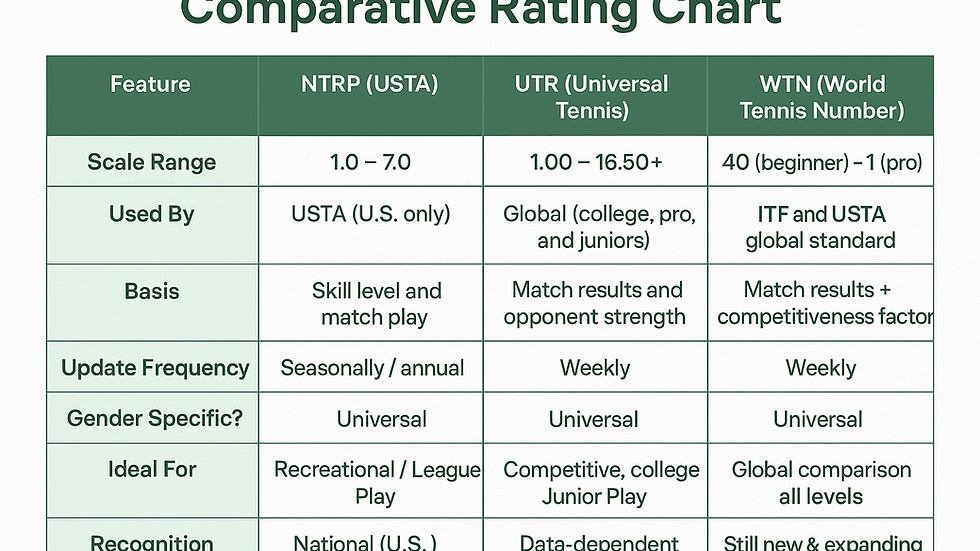
NTRP, the National Tennis Rating Program, is the USTA's classification of playing ability. UTR, the Universal Tennis Rating, is a separate match-performance system run by UTR Sports.
| Feature | NTRP | UTR Rating |
|---|---|---|
| Organization | United States Tennis Association (USTA) | UTR Sports |
| Published scale | 1.5 to 7.0, in 0.5 steps | 1.00 to 16.50 |
| Where it matters | USTA adult leagues and events that specify NTRP | UTR-rated events, profiles and competitive matching |
| How it starts | Official self-rating for eligible entrants; computer ratings from qualifying results | Estimated or projected rating until a fuller match record develops |
| How results count | USTA processes eligible results against expected performance | Match rating uses the opponent-rating difference and percentage of games won; weighting then considers format, competitiveness, reliability and recency |
| Public display | Half-point category; internal dynamic values stay private | Granular rolling number with a rating status |
| Singles and doubles | USTA competition rules decide which matches count | Separate singles and doubles ratings |
Say the club captain asks, “We need another 4.5.” A 4.5 NTRP and a 4.50 UTR are different levels. Which one the captain means depends on the league.

A rating estimates your playing ability. A ranking is your position on a particular list. World Tennis Number (WTN) is another separate system used in US tennis. USTA adult-league eligibility follows NTRP rules.
How NTRP works for USTA adult leagues
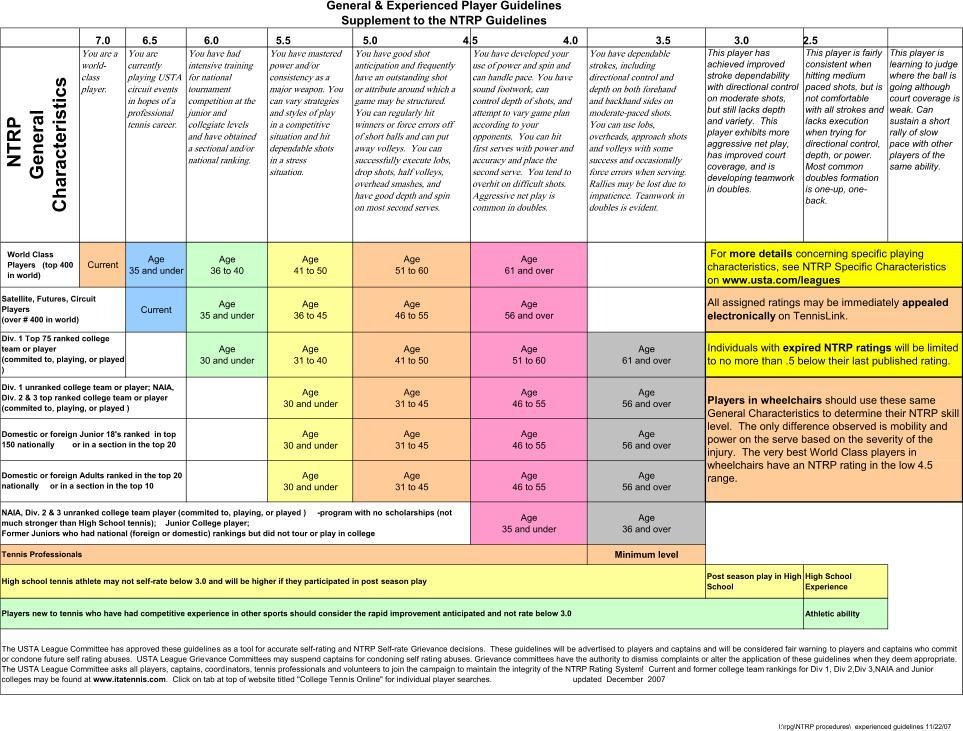
USTA publishes NTRP categories in half-point steps, such as 3.0, 3.5, 4.0 and 4.5. The letter after a player's number tells you how that category was assigned.
- S, self-rated: The player received a level through USTA's official self-rating process.
- C, computer-rated: The player has a computer-generated year-end level.
- A, appealed: The published level reflects an official rating appeal.
So 3.5 C is a 3.5 category with computer-rated status, and 3.5 S is a self-rated player. Only USTA assigns your official status. A coach or online calculator gives you an estimate.
Behind the published categories, USTA computes dynamic ratings from eligible results and performance against expected scores. It does not display those exact values as your ordinary NTRP rating.
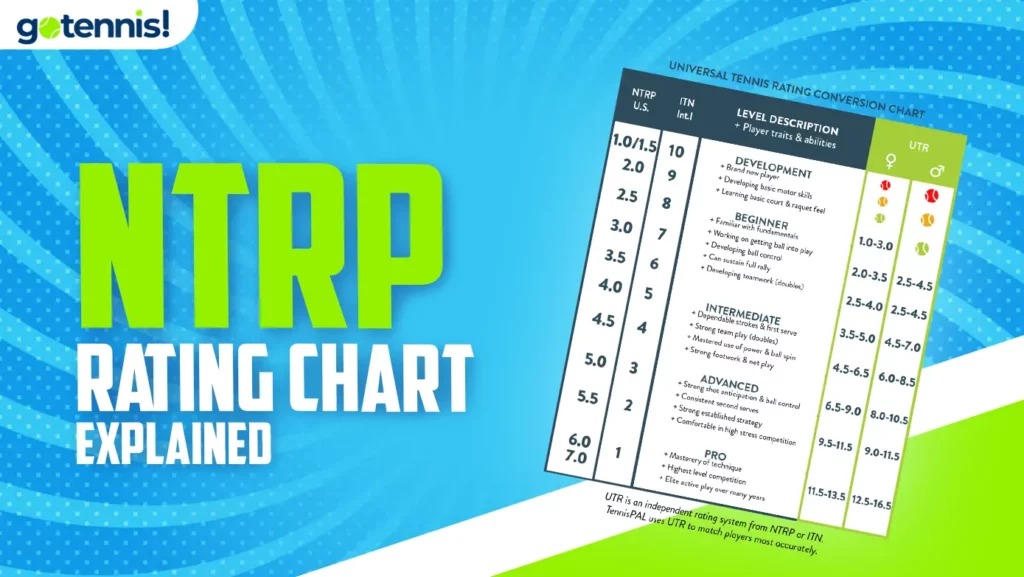
Players in the same public category can sit at different underlying values. The USTA NTRP Ratings FAQ gives an internal range of 3.01 to 3.50 for a published 3.5 level.
If you already have an official USTA rating, that rating counts. An adult without one may need the USTA self-rate process. This decides your entry. For the fuller rating system, see how USTA NTRP levels work.
How UTR is calculated and what its rating status means
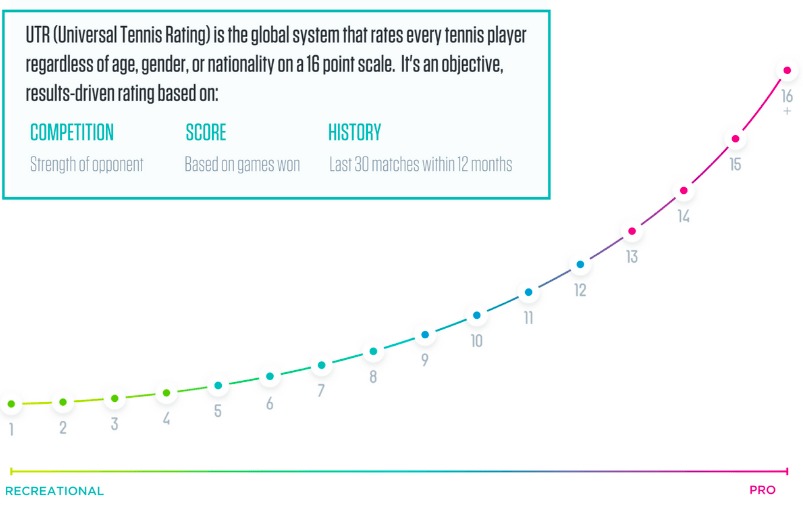
UTR Sports calculates a match rating from two inputs: the difference between opponents' ratings and the percentage of games won compared with the expected share. It then weights that rating by match length or format, competitiveness, opponent reliability and recency.
The published UTR calculation guidance describes a weighted average of up to 30 recent match ratings from the past 12 months. New results and the changing influence of older matches move the displayed number.
| UTR designation | What the designation communicates |
|---|---|
| Estimated | A questionnaire-based starting estimate, shown before any eligible match results. |
| Projected | An early result-based rating, shown after the first match. |
| Verified UTR | A distinct rating display based on qualifying results from vetted event providers. |
A result-based rating grows more reliable as eligible results accumulate.
Say a newcomer's profile shows a projected number after one recorded match. A few more results against different opponents could change it considerably.
On a UTR Sports profile, check the displayed status and the results behind the number. They show whether you're looking at an initial estimate, an early projection or a fuller match history.
Which rating do you need for your next match or event?

The organizer's rules decide which rating governs entry. You might use an official NTRP for one competition and a UTR Sports profile for another.
| Playing situation | Rating or basis for placement | Who sets the requirement |
|---|---|---|
| USTA adult league | Official NTRP classification or the required USTA self-rating | USTA and the league rules |
| UTR Sports rated event | UTR status and the event's stated placement pathway | The UTR event organizer |
| Private club or community league | Whatever skill grouping its rules publish | The club or community organizer |
| Casual hitting session | Shared rating context, recent play and preferred format | The participants |
A player with a 4.5 UTR who wants a place on a USTA 3.5 team goes through the USTA eligibility process for that level.
Players without an established UTR have one exception. UTR Sports' Tennis Flex League rules describe division placement using a UTR or an NTRP/equivalent rating, with a separate recommendation for UTR-unrated entrants during registration. That is a Flex League procedure. Other UTR events set their own entry terms.
To follow the USTA path from rating to a team, see how to join a USTA adult league.
Can you convert a UTR rating to an NTRP level?
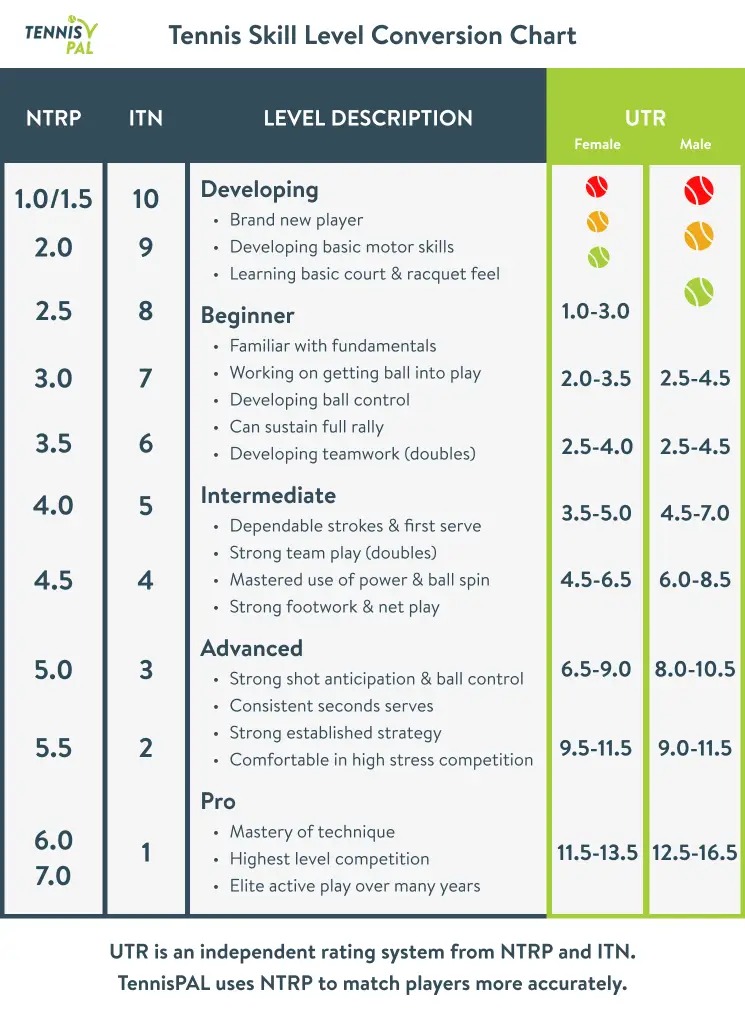
No official universal NTRP-to-UTR conversion exists. Organizers sometimes publish rating ranges to place entrants in their own events.
One example is the USTA Northern California Generation Gap event.
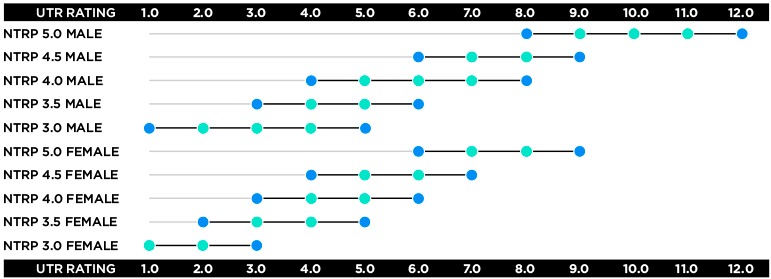
For that event, the published guidance pairs men's NTRP 4.0 with UTR 6 to 8, and women's NTRP 4.0 with UTR 4 to 6. These are placement bands for that event only.

If someone hands you an NTRP-to-UTR chart, find out who published it, which competition it serves, which players it covers and when it applied. An unlabeled chart is easy to mistake for a general eligibility rule.
Why your UTR and NTRP may not agree
Your NTRP category and your UTR often come from different stretches of competition, different opponent pools and different match formats. A provisional UTR adds uncertainty because fewer results stand behind it.
One recreational player described the frustration of facing opponents whose UTR seemed far from their playing ability:
It seems like the other women in the club are also struggling to get their UTR up. One woman I play with fairly regularly has a UTR of 2.0 after over a year of competitive play. She would have been a top player on my 3.0 USTA league team, but the NTRP equivalent of her UTR would put her at 2.0-2.5 which just doesn’t make sense! I used to really love comp tennis, but it’s starting to get really frustrating always playing against what is equivalent to a sandbagger. I just want to play competitive matches where I can get some good rally’s in. Not really sure if there is a solution. More wondering if this is something common with UTR. Playing NTRP I felt like the level of play was fairly consistent. I was never paired against someone who could beat me in their sleep..
That is one player's account.

| What to compare | Possible difference | Why it matters |
|---|---|---|
| Record date | Published NTRP category versus rolling UTR results | Each covers a different period |
| Eligible matches | USTA league record versus matches UTR Sports counts | Opponent pools and included scores differ |
| Rating status | Computer or self-rated NTRP versus projected or estimated UTR | The numbers rest on different bases |
| Result detail | Published NTRP category versus a game-share-based UTR calculation | Each keeps different match information |
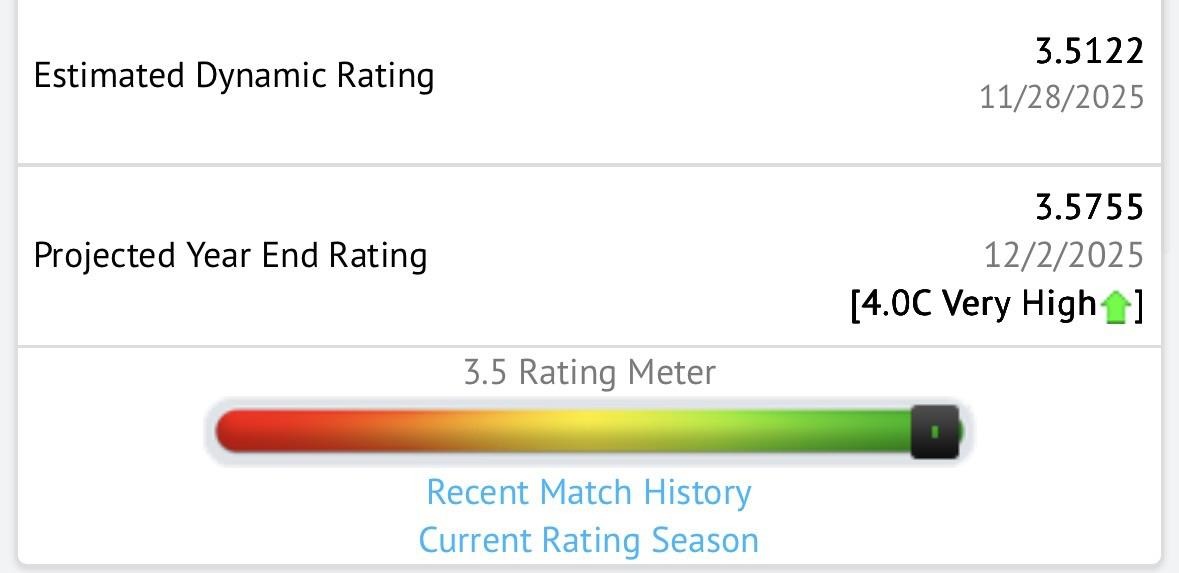
Check the year and status of your NTRP against the match window and opponents behind your UTR. Look for missing results and format differences. Without another player's verified records, you can't tell why their rating looks the way it does.
Why singles and doubles ratings can tell different stories

UTR Sports produces separate singles and doubles ratings on the same scale, using different calculations. Its doubles methodology lets a strong singles history influence the doubles rating, so the two interact. If most of your UTR results are singles while your USTA league play is mostly doubles, identify the formats before you compare the two numbers.
UTR Sports says its doubles data includes USTA adult-league mixed doubles and some USTA adult tournament mixed doubles results. If a mixed doubles score is missing, its doubles FAQ directs you to contact support with the tournament URL. Import coverage depends on the qualifying competition and result type.
Why your rating can move after a win or stay flat while you improve
UTR compares the percentage of games won with the expected share against that opponent. Beating a lower-rated player by a closer score than expected contributes differently from a comfortable win.
Some recorded matches show on a UTR profile without counting toward the rating. UTR excludes a match when the players differ by more than 2.00 points and the higher-rated player wins as expected. An upset by the lower-rated player can count.
Older results lose weight and eventually leave the window. Changes in your previous opponents' ratings can also move your UTR when you haven't played another match.
USTA's public half-point categories update on a different schedule. You can get more competitive during a season while your displayed year-end NTRP classification stays the same.
Check the right rating before you register

Choose the route that fits your situation:
- Already have a USTA rating: Open the official USTA registration path for your NTRP category.
- Eligible unrated USTA entrant: Complete the USTA Adult NTRP Self-Rate procedure if the program requires it.
- UTR event entrant: Follow that event's registration and division-placement instructions, including any allowed unrated-player pathway.
- Looking for a hitting partner: Discuss recent singles or doubles play and your rating context with the other player.