
For recreational players who can already rally, start with one repeatable, high-margin pattern, recover after each shot, and attack when the ball and your balance give you a manageable chance. If that pattern repeatedly fails, or if doubles changes your court responsibilities, adjust one tactical choice rather than rebuilding your strokes mid-match. Before your next set, write your plan in one sentence and test it on court.
A ball floats toward your forehand. It looks slow enough to crush, so you swing for the sideline. The shot sails long. Two points later, you get almost the same ball and make almost the same mistake.
Check the decision, not just the swing. Did the ball, your position, and the likely reply justify that target?
A recreational match plan has to hold up against imperfect footwork, awkward bounces, and an opponent who keeps getting the ball back.
How to make an achievable game plan
A strategy gives your shots a purpose. A tactic is a single choice inside it: aiming crosscourt, targeting a backhand, returning deep, or approaching the net after a good ball.
Start with a pattern you can hit under match pressure. For one player that is a controlled crosscourt forehand. For another it is a steady backhand through the middle. Then ask whether you can recover after that shot and handle the likely reply.
“With my [shot], I'll aim [target] and watch [response]. If [cue] repeats, I'll change [one thing].”
For example: “With my steady crosscourt forehand, I'll aim deep with room inside the lines and watch whether the reply lands short. If my crosscourt shots keep landing wide, I'll aim through the middle for more room for error.” Treat an opponent's weakness as a guess until it shows up over several exchanges.
In one recreational-league account, a player who had struggled against an opponent's forehand tried directing more balls to the backhand.
In this April 2026 league account, the opponent requested a substitute after a run of points, and the format allowed mid-set replacements.
So I went in last night with a plan — since she had an insane FH that was really hard to return, I decided I would just hammer her BH and see what happened. ... her BH was pretty weak. She started missing shots. I was up 2-0. She battled back to 2-2. Then I chipped it short a couple of times and she REALLY didn’t like that. She lost a few points and whacked the ball back at me, and I realized she was getting pissed. When I was up 4-3 she asked to be subbed out. As she walked off the court she yelled at me, “You’re a pusher! You’re not playing real tennis!” Then to her teammates: “She’s just giving me junk balls! It’s not real tennis!” Then her sub came in and I won the next two games and won the set 6-3.
The player picked the weaker side, stuck with the plan, and won the set 6-3.
Neutral, attack, defend: when to take risk
Judge your position at contact. A ball that looks easy from the sideline feels different when you are running, reaching, or off balance. Three cues sort the situation: where you will contact the ball, whether you are balanced, and what court position the shot leaves you in. The labels below are shortcuts, and no fixed speed or distance puts every ball in one category.
| Situation | What you notice | Sensible first choice | Mistake to avoid |
|---|---|---|---|
| Defend | You are stretched, late, or off balance | Give yourself time and a playable recovery | Trying to finish the point from a poor position |
| Neutral | You are balanced, but the opponent has no obvious opening | Rally with room for error and retain court coverage | Forcing a narrow target without an advantage |
| Attack | You are prepared, the incoming ball is easy to handle, and useful space is available | Choose a controlled target or approach that creates pressure | Assuming the first attacking shot must be a winner |
A slow ball pulls you wide to your forehand, and you reach it while still running. The pace is low, but your contact position makes it a defensive moment. Hit a higher, safer ball to buy time and get back into position.
Now take a similar ball while balanced inside the baseline, with time to prepare and a clear opening. You can redirect it or move in.
Use safer targets, depth, and recovery
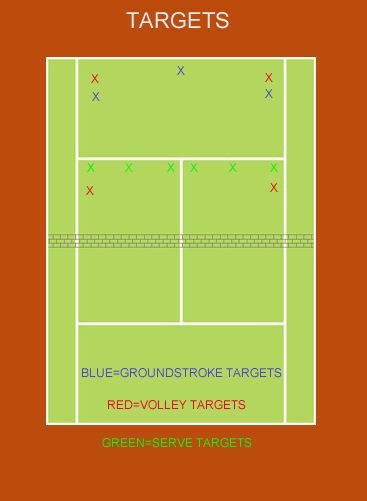
Direction decides the rally you play next. A good target gives you enough room for the stroke you can control and a real route back to the likely reply.
Crosscourt, middle, and down-the-line targets each have a place. Choose by the incoming angle, the opponent's location, and the position you can regain after contact.
| Target choice | When it may fit | What it asks of your recovery |
|---|---|---|
| Crosscourt | A stable rally pattern with a workable angle and depth | Prepare for the opponent's likely crosscourt or redirected reply |
| Down the middle | A simple target when directional control is uncertain or a narrower reply angle is useful | Stay ready for either side of the next exchange |
| Down the line | A clear opening exists and you are balanced enough to change direction | Account for the court exposed by the directional change |
Depth makes the ball harder to attack. Net clearance and space inside the lines cover your mistakes. The safe target shifts as the ball and the opponent move.
Recovery matters as much as placement. USTA's Court Positioning guide teaches a Ready, Rally and Recover drill with a return toward a home-base position in the middle of the baseline. In a live point, the best recovery spot also depends on the opponent's available reply.

Take a neutral crosscourt exchange. Your shot lands deep, but you admire it and stay near the sideline. The opponent redirects the next ball, and you chase it.
Approach when your shot creates an opening you can cover. Moving forward without that advantage leaves you exposed. More patterns are in the singles strategy guide.
Make the serve and return part of the plan
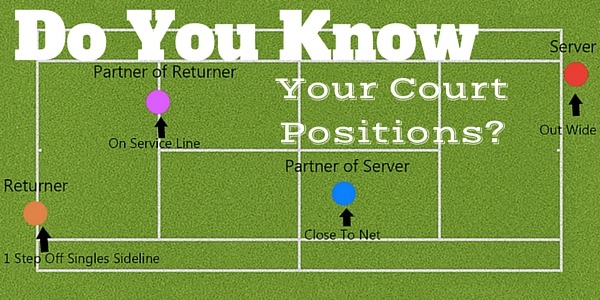
On your serve, choose a placement you can hit and anticipate a plausible return. The opponent may send it elsewhere, so be ready for the next ball.
Against a difficult first serve, block or guide the return to a playable target and get into the rally, as USTA describes in its first- and second-serve return guidance.
A slower second serve allows a more assertive return when its placement, bounce, and your balance give you time.
When your usual shots stop working
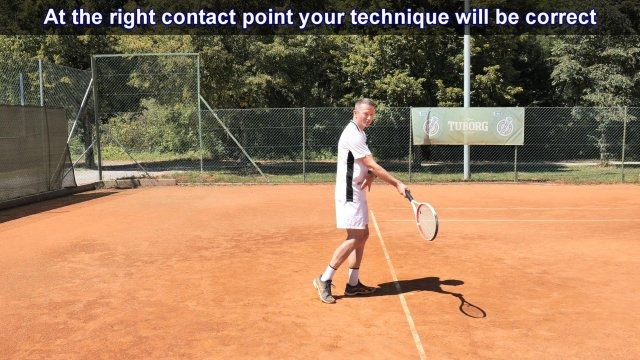
Some opponents give you very little pace and return every ball. That is hard for a player used to hitting against strong, predictable shots.
A high, slow ball invites an immediate winner, but you still supply the pace, prepare your contact, choose a target, and get into position for the reply. Swinging harder leaves you fighting the same awkward ball.
One recreational player described this after returning to tennis following a long absence. The opponent's low-pace returns disrupted an attacking approach, and the player changed tactics during the match.
Having only got back into tennis after a 25+ year break recently, have been really enjoying it. Then yesterday had the 5th match in my box league to play, and for the first time met someone who played with zero pace, but 90% consistency. My serves, usually a solid weapon - no aces, but lots of high chipped returns, nothing came back with pace, but they ALL came back. Not constant moonballs, but lots of high, slow balls which made coming to the net a risk as I'm no giant so got lobbed fairly easily. Tried to "beat" them, so insane amount of UFEs - long and into the net. Lost first set 2-6. Then, made the mental flip - stop trying to hit winners, just move them around, anticipate the high slow ball, and come mid-court for the overhead. Won the next 6-3. Closed out the tie-break to cinch the win.
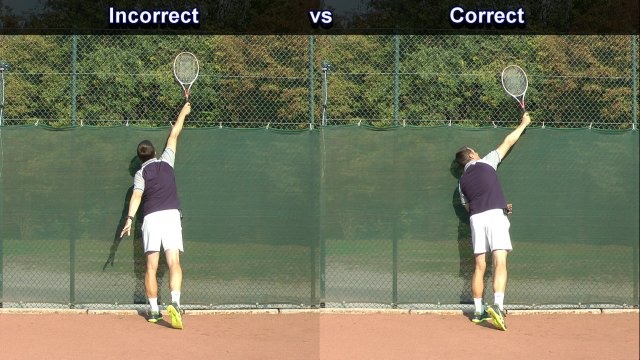
Against a steady, low-pace opponent, watch the balls coming back over several rallies. Note how deep they land, whether they sit up short, how much pace you must generate, and how quickly the opponent recovers from your first attacking shot.
Then pick one calm response. A deep ball keeps the rally steady, a change of direction creates space, and a short ball you can attack justifies moving forward. An opponent who lobs well makes an immediate approach riskier.
Specific rally and positioning options for this style are in playing against a steady, low-pace opponent.
Singles and doubles call for different plans
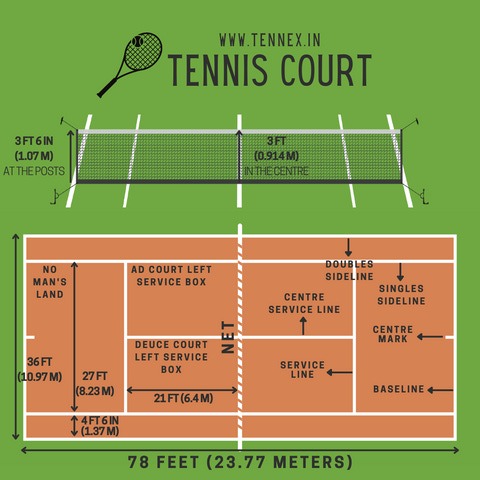
In singles you cover the court yourself. Doubles adds a partner, an opposing net player, and shared responsibility for balls through the middle and over either player's head.
| Tactical question | Singles | Doubles |
|---|---|---|
| Who covers the next ball? | One player recovers for the likely reply | Partners divide coverage based on their positions and the ball |
| What threatens the return? | The opponent's court position and available angles | The return must also account for the opposing net player's reach |
| How is a difficult ball handled? | The player chooses the response and recovery alone | Both partners need a workable understanding of middle balls and lobs |
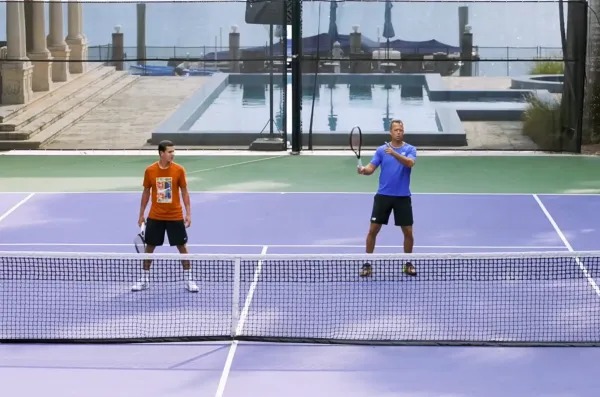
Return serve crosscourt in singles and you mainly watch the server and the next shot. In doubles, an opposing net player can intercept the same return if it travels through a reachable area.
Partner communication starts before the point. Agree on who covers the middle and overhead lobs, and how your starting positions split the court. The best setup changes with serving and returning roles, each partner's ability, and the point itself.
The doubles positioning guide explains the formations and movements behind those shared responsibilities.
How to read and change a plan
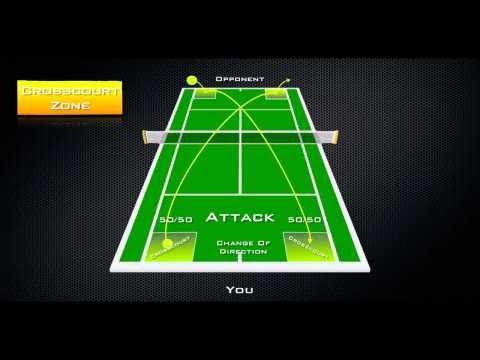
Revise the plan when a result repeats and points to the target, the ball quality, or your recovery. One missed forehand tells you too little to know which part failed.
Three things can be wrong. The tactic may suit the opponent poorly. The idea may be sound while the shot misses its target. Or the opponent has started answering the pattern.
At the next changeover, make a narrow adjustment:
- Observe the recurring failure. Name what has happened more than once: a direction change landing short, a rushed approach, or a return that keeps leaving you out of position.
- Identify the controllable variable. Decide whether target, depth, height, or court position is the main problem.
- Change one choice. Simplify the direction, pick an easier target, or allow more room, and keep the rest of the plan.
- Watch the next exchanges. Look for a difference in the ball you receive and the position you reach after your shot.
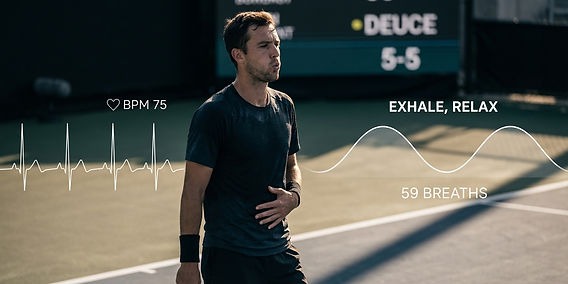
USTA's match-focus guidance treats between-point routines and changeovers as moments to restore attention and review a plan. After a frustrating error, a short refocusing cue brings your attention back to the next choice.
Sometimes the limit is stroke execution or fatigue, and a new target will not fix that. If pressure keeps changing decisions you normally make comfortably, match-pressure strategy deserves separate attention.
Practice decisions under match conditions
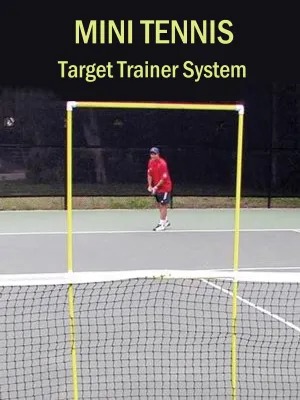
A post-match review separates your decisions from the score, including on points you lost.
Ask three questions: What was my planned choice? When did I attempt it? Which one decision should I practice next? A player who lost several rallies while choosing safe targets needs different work from someone who kept abandoning the plan for low-margin winners.
USTA's Target Practice exercise sets four five-minute stages: deuce-side crosscourt, ad-side crosscourt, half-court down the line, and Half Court Switch. Aim to land each ball beyond the service line. The complete sequence lasts 20 minutes.
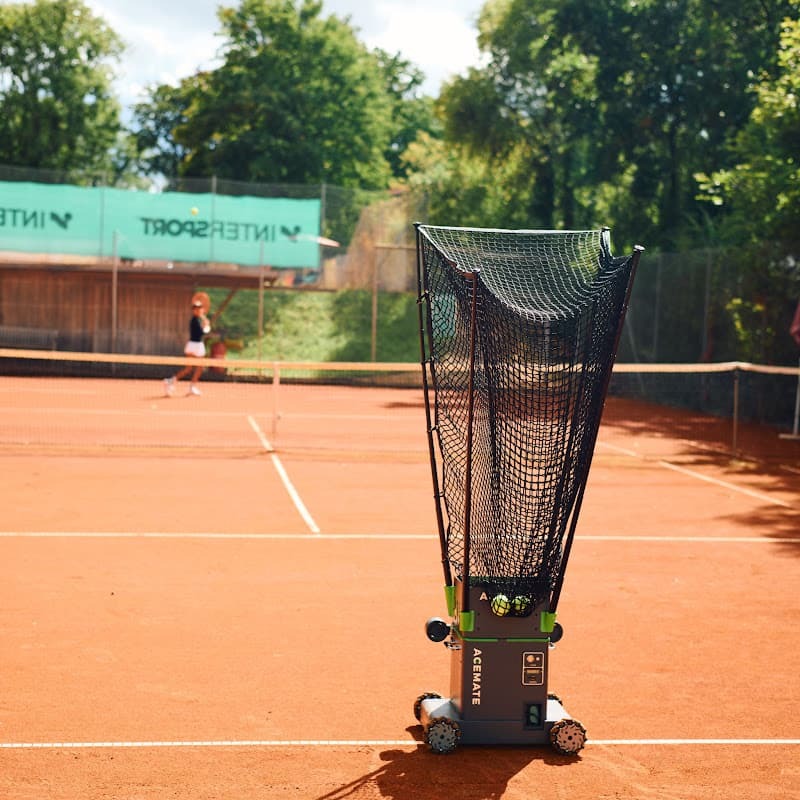
Afterward, play a few scored points starting with a serve. On your first groundstroke, pick the defend, neutral, or attack response that matches the incoming ball and your balance, then finish the point.