
Name the stroke, then start with the standard grip for that shot. If a grip problem remains after you check preparation, spacing, racket-face direction, and timing, take it to a coach and pick the lesson for that shot.
A tennis ball comes toward your hip. You have a moment to move, set the racket, and make contact. If the shot goes wrong, it's tempting to think you held the racket incorrectly.
Sometimes you did. Other times, the grip was fine and the ball got too close, arrived earlier than expected, or met a racket face pointing somewhere you hadn't intended.
Start by separating those possibilities. The stroke tells you what you're trying to do. The grip shapes how the racket meets the ball. Your feet, preparation, and contact decide the rest.
Which Tennis Stroke Are You Hitting?
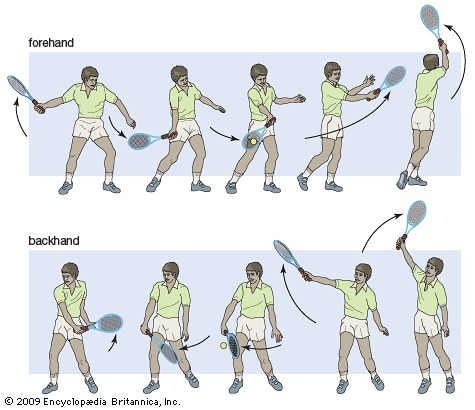
Start with the situation: has the ball bounced, which side are you hitting from, and what does the shot need to do?
Forehand and backhand are the two groundstroke families. In a baseline rally you usually play them after the bounce. The forehand uses your forehand side. The backhand uses the opposite side, with one hand or two.
The serve starts the point. The return answers your opponent's serve, so you set up for a forehand or a backhand depending on where the ball arrives.
At the net, a volley usually intercepts the ball before it bounces. An overhead handles a reachable high ball, often after a lob.
An approach shot is any shot you hit while advancing toward the net to put pressure on your opponent. You can hit it with a forehand, a backhand, or a slice.
Think of a recent ball you missed. Had it bounced? Were you starting the point? Which side was it on?
Which Grip Is Commonly Used for Each Tennis Shot?
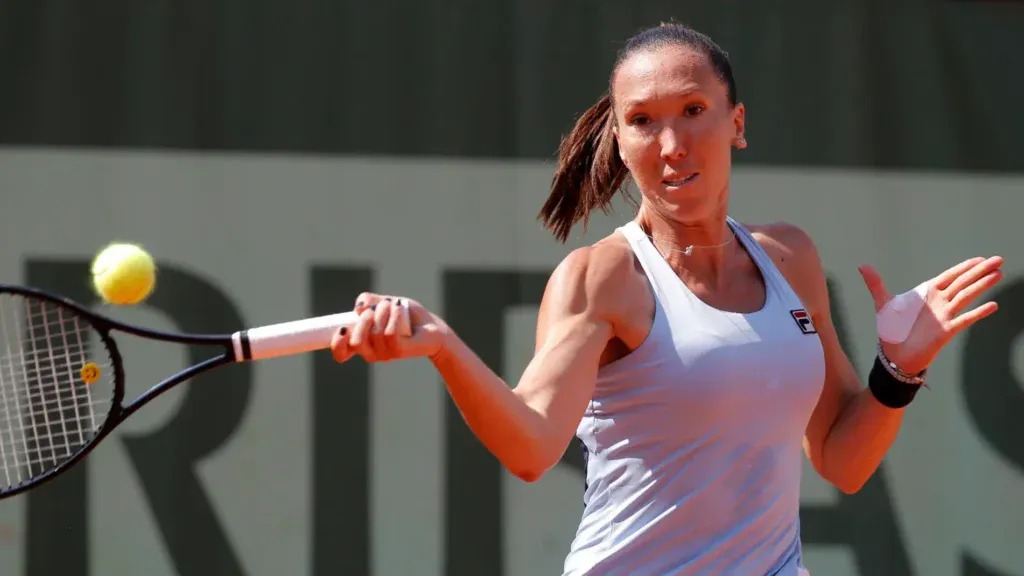
Continental is the usual starting grip for serves, volleys, overheads, and slice backhands. Forehand groundstrokes use Eastern or Semi-Western, with Western as another established option. Backhands depend on whether you use one hand or two.
The USTA's Continental grip instruction explains why that hand position appears in several service and net strokes.
| Shot or situation | Starting grip or arrangement | What to check | Focused lesson |
|---|---|---|---|
| Forehand groundstroke | Eastern or Semi-Western; Western is another option | Contact distance, incoming height, racket-face direction | Forehand and forehand grips |
| Backhand groundstroke | One-handed grip or two-handed arrangement | Preparation and contact on the backhand side | One-handed or two-handed backhand |
| Serve | Continental | Preparation and service contact | Serve technique |
| Return of serve | Forehand or backhand grip, depending on where the serve lands | Incoming side and early preparation | Return of serve |
| Forehand or backhand volley | Continental | Racket-face direction and contact side | Volley technique |
| Overhead | Continental | Balanced position beneath a reachable high ball | Overhead technique |
| Slice backhand | Continental | Contact and movement, which differ from a volley | Backhand slice |
In the right-handed diagram of the USHSTA grip guide, the base knuckle of your index finger shows your position on the racket handle's bevels. The guide uses bevel 2 for Continental, 3 for Eastern forehand, 4 for Semi-Western forehand, and 5 for Western forehand. Left-handed illustrations reverse the orientation.
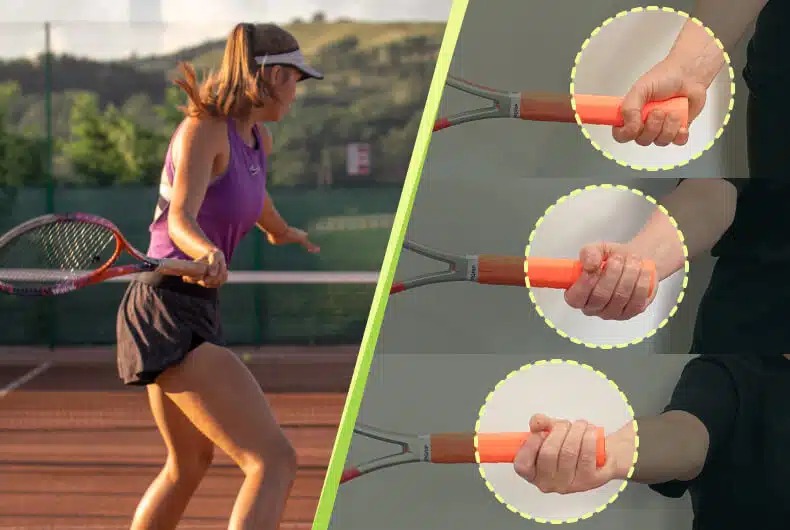
Expect to switch grips during play: one for baseline rallies, another for serving or volleying, and a forehand or backhand grip on returns, depending on the ball.
Grip Position, Handle Size, and Holding Pressure
Three players can talk about changing their grip and mean three different things. One wants to rotate a hand around the racket handle. Another thinks the handle is too large. A third is squeezing the racket too tightly.
| Term | What it describes | Typical question |
|---|---|---|
| Grip position | Where the hand sits around the handle's bevels | Should I use Eastern or Continental? |
| Grip size | The circumference of the racket handle | Does this handle fit my hand? |
| Grip pressure | How firmly the hand holds the racket | Am I squeezing too hard during contact? |
| Replacement grip or overgrip | Material wrapped around the handle | Is this a handle-wrap or equipment issue? |
Grip pressure is separate from hand placement, and no universal setting exists. A firm feel on a volley or a relaxed feel on a groundstroke is just a sensation.
Questions about the physical handle belong in the separate guide to racket grip size.
Preparation, Spacing, Contact, and Recovery
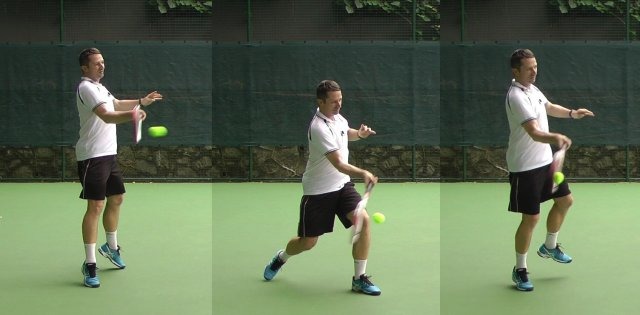
A grip needs room to work, and even a good one fails when the ball is too close.
Say a forehand arrives closer to your body than expected. You spot the ball but take too few adjustment steps. Your hitting arm has no room, and the racket meets the ball cramped. Turning your hand on the handle won't fix that.
Preparation starts with reading the ball and getting into position. On a forehand, coaches often describe a unit turn, where the upper body turns as part of preparation. The USTA forehand instruction emphasizes this coordinated turn.
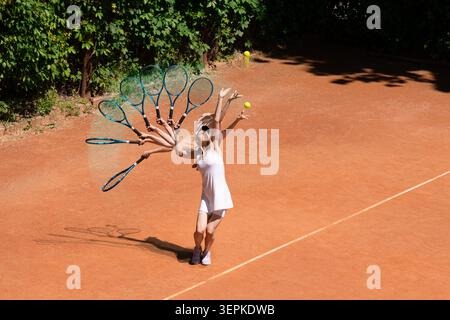
Small adjustment steps put you at the right distance from the ball. At contact, racket-face direction, meaning where the strings point, decides how the ball leaves: an unexpectedly open or closed face sends it somewhere you didn't plan. Contact point and ball height change the stroke even if your grip stays put.
Follow-through and recovery set up your next move. Baseline rallies, serves, returns, and net volleys use these phases differently because their contact situations differ.
Before Changing Your Grip, Check the Type of Miss

A missed shot gives you a symptom. Pick one thing to look at that could explain it.
| What you notice | First thing to check | What to look for |
|---|---|---|
| Contact happens late | Preparation and timing | Whether the racket and body are ready before the ball reaches the contact area |
| The ball crowds your body | Adjustment steps and spacing | Whether you have room to move the racket comfortably |
| The ball flies in an unexpected direction | Racket-face direction | Where the face points at contact and how the ball leaves it |
| A high bounce becomes difficult | Position, contact height, and grip preference | Whether you can find a good spot to hit that ball |
A late hit can come from preparation, movement, contact judgment, or several of these together, so one symptom won't pinpoint the cause.
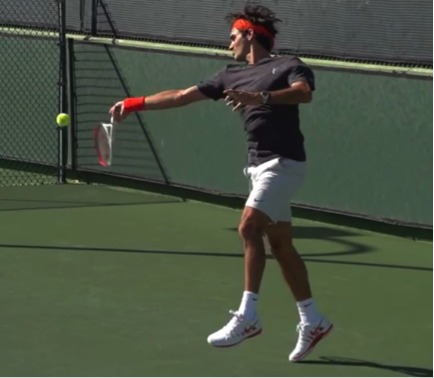
Say a high forehand keeps landing badly. Check whether you stood too close to the bounce or let the ball climb to an awkward height. That points to footwork, timing, or a grip comparison.
A stroke-specific lesson or a qualified coach can help with persistent errors that are hard to see yourself.
Eastern vs. Semi-Western: Is a Forehand Grip Change Worth It?
An Eastern forehand works well for a player who controls contact and depth with it. A Semi-Western forehand puts the hand in a different position relative to the racket face and can suit some players' preferred contact heights or swing patterns.
The catch is that a change that helps one part of your game can disturb another.
One player tried a Semi-Western grip after years with an Eastern forehand. Topspin came easier, while familiar depth control became less predictable.
I've played with the eastern grip my whole life, but I always find myself trying to deliberately generate extra topspin to keep up with other players who hit baseline shots with a lot of drive. I tried playing with the semi-western grip yesterday and, damn, the topspin comes so naturally. Supposedly, the semi-western grip will also help with hitting shots near the shoulder level and above, and I'm starting to see that too. In situations where I don't have time to move into a better position, I can still hit pretty good shots when the ball is near shoulder height. In long baseline rallies, I feel like the semi-western grip provides a bit of extra security with keeping my shots in, as I have more leeway with my swing and I can rely on the topspin to drag the ball in. I can also return with enough drive that the opponent can't attack on my shot as easily. On the other hand, I'm having a lot more trouble placing the ball onto the court with the intended depth, but maybe this just takes time to get used to.
A 2024 study by Busuttil and colleagues used qualitative interviews with 11 accredited tennis coaches to investigate grip development and modification. The coaches discussed grip changes as part of the larger stroke-learning process, and the study did not experimentally measure performance gains from switching grips.
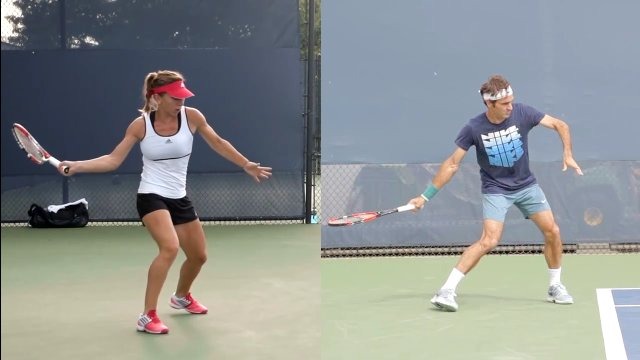
When you test a change, watch three things: comfort on higher balls, shot depth, and whether the ball goes where you aim. A grip that disrupts several familiar shots costs relearning time, so weigh that before you commit.
Western is another forehand grip with different contact demands. The detailed comparison is in the guide to Eastern, Semi-Western, and Western forehand grips.
One-Handed or Two-Handed Backhand: Which Should You Learn?
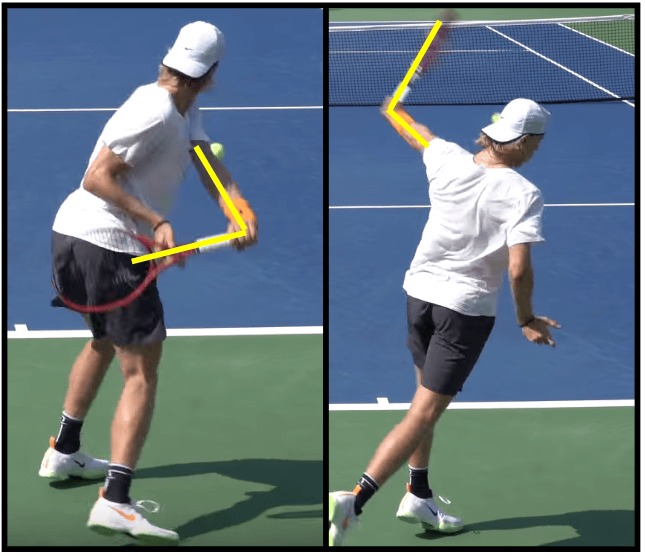
Two hands give most beginners a sense of stability. A one-handed backhand is a legitimate technique with a different setup and different coordination demands. If you're returning to the game and already comfortable with one hand, start there. Otherwise, practice the two-handed backhand, see the one-handed backhand sequence, or compare the two approaches if you haven't decided.
What Changes Between Forehand and Backhand Volleys?
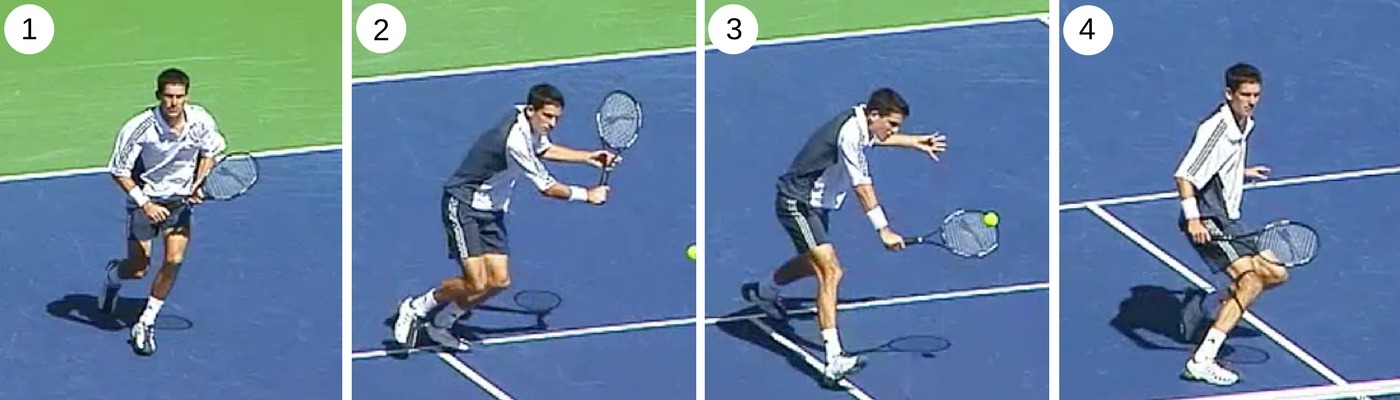
A volley meets the ball before it bounces, usually near the net. Forehand and backhand volleys share that job, but the side of your body and the angle of the racket face change.
Coaches teach a Continental grip for both. New players often struggle to picture how the face should meet the ball on the backhand side, especially when it arrives high.
One beginner put that confusion directly to other recreational players:
Forehand volleys I can understand at least a little bit, but I’m so lost on backhand volleys. I’m not really sure what the movement should be. Is it a high to low slice motion? How should the racket face be? What swing path? Mostly struggle with high backhand volleys. I don’t understand how to hit a ball downwards with a backhand volley Any advice would be appreciated :( beginner here. I also don’t understand the backhand slice still
A backhand slice is its own stroke, with its own preparation and swing pattern. A backhand volley intercepts the ball near the net with a compact movement.
For a backhand volley, start with a Continental grip and set the racket to meet the ball off your backhand side. Point the racket face at the incoming ball and make a short, controlled movement through contact. A big swat or an automatic downward chop makes the ball harder to control, especially a high one.
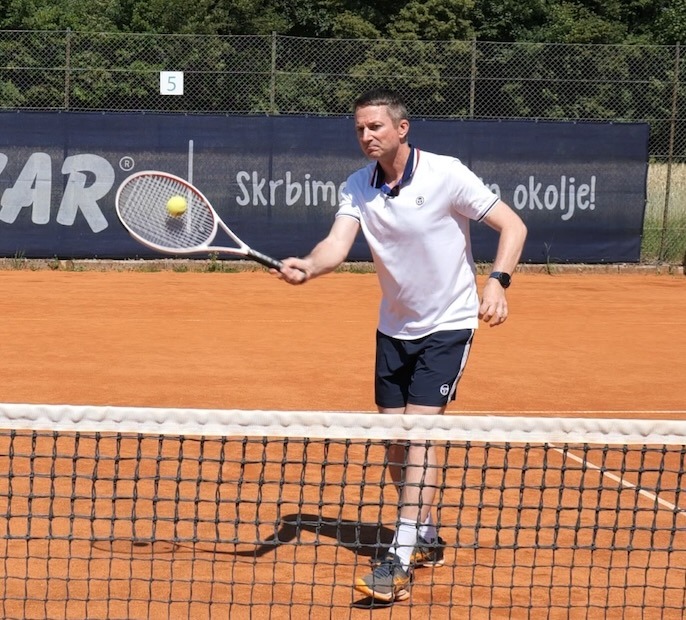
Compare the racket face and contact side between forehand and backhand volleys. Ball height and your position at the net change the adjustment you need.
Practice One Cue, Check What Happened, and Choose Your Next Lesson
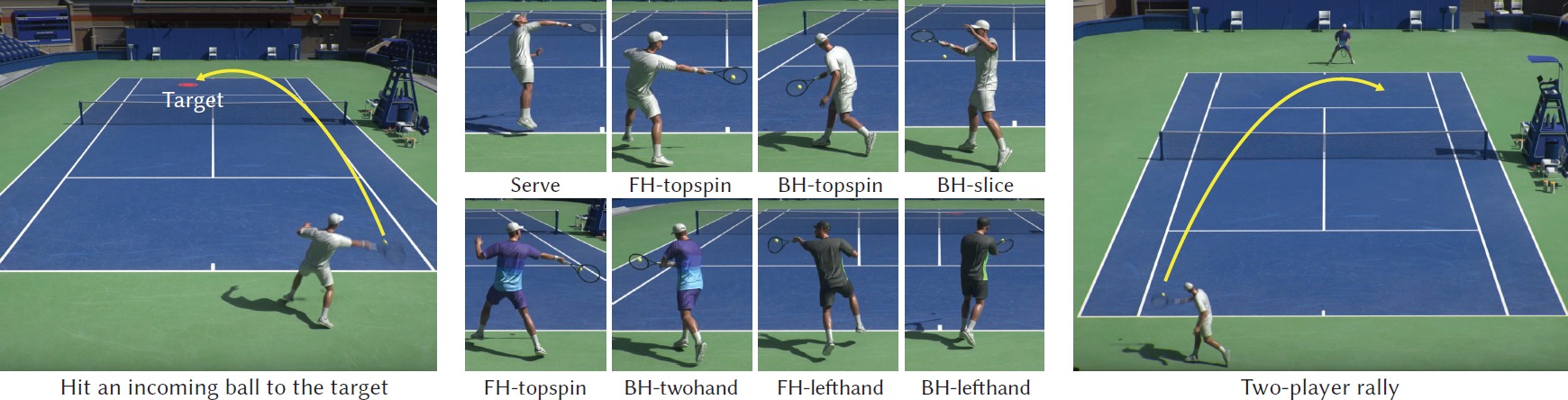
A small test makes a technique question concrete. Use a comfortable stroke with an easy cooperative feed or gentle rally, and keep the incoming balls similar:
- Record a baseline. Count clean contacts and mishits across ten easy feeds for the shot you're testing.
- Change one cue. Prepare earlier, create more space, or watch racket-face direction. Hit ten more under similar conditions.
- Compare. Look at clean-contact counts and comfort. A different bounce, feeding rhythm, or partner delivery can change the result.
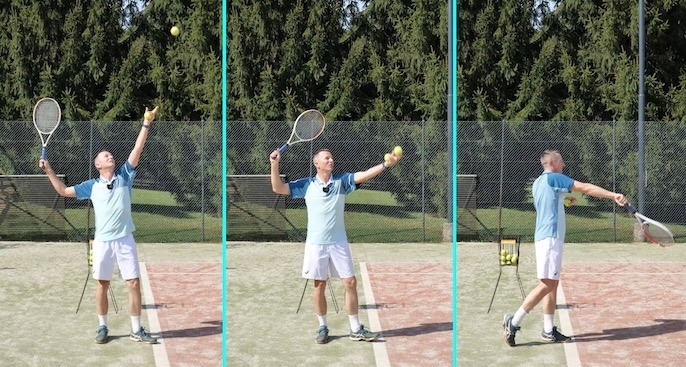
If a cue makes contact feel worse, drop it. If practice causes pain or lasting discomfort, stop and get a qualified assessment.
For forehand preparation and timing, learn the forehand swing. For movement and distance, work on tennis footwork.
When serving is the obstacle, study the service motion. When incoming serves rush you, practice the return of serve. For net contact problems, learn forehand and backhand volleys. A reachable high ball calls for overhead technique, and backhand slice questions belong in the backhand slice lesson.