
Use a ruler to narrow down your tennis racket grip size, then choose the handle that feels secure and comfortable with the grip you normally use during actual strokes. If two neighboring sizes feel equally good, compare them on the same racket setup. If you can't, take the smaller one, because you can build it up later.
The confusing part of grip sizing starts after you've found a number. Your hand measurement says one size, the finger test says another, and the racket you already play with feels fine. You may even like two neighboring sizes equally.
A good fit lets you hold the racket securely and change your hand position naturally, without squeezing hard to keep the handle steady.
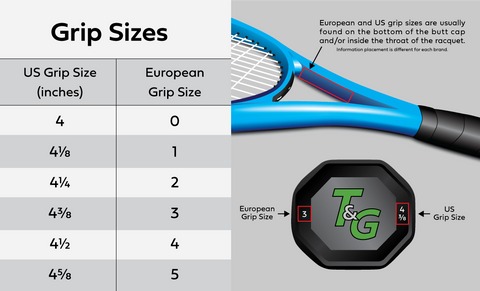
Tennis Grip Size Chart: US Inches and L0 to L6
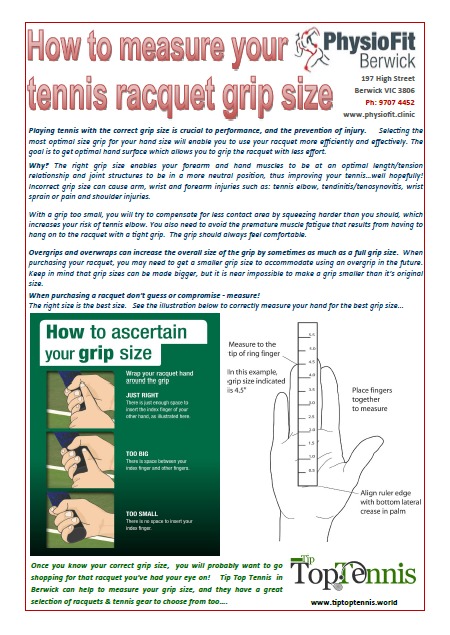
Tennis racket grip size is the nominal circumference of the handle. US labels use inches. European labels use numbers such as L2 or G3.
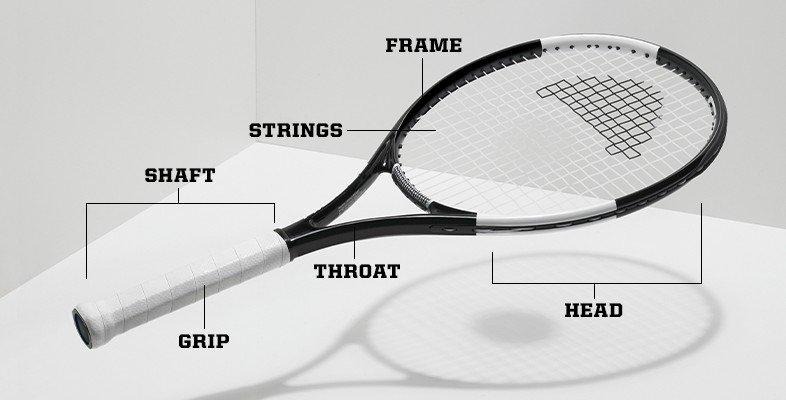
The size is printed on the butt cap at the bottom of the handle. Some rackets also list it on the packaging or specs.
| European size | US grip circumference | Decimal inches |
|---|---|---|
| L0 / G0 | 4 in | 4.000 |
| L1 / G1 | 4⅛ in | 4.125 |
| L2 / G2 | 4¼ in | 4.250 |
| L3 / G3 | 4⅜ in | 4.375 |
| L4 / G4 | 4½ in | 4.500 |
| L5 / G5 | 4⅝ in | 4.625 |
| L6 / G6 | 4¾ in | 4.750 |
Each step adds ⅛ inch. L2 is 4¼ inches and L3 is 4⅜ inches.
The marking shows the racket's original handle size. A replacement grip or an extra overgrip changes the circumference your hand feels. Availability varies by model, especially at the ends of the size range.
How to Measure Your Hand with a Ruler
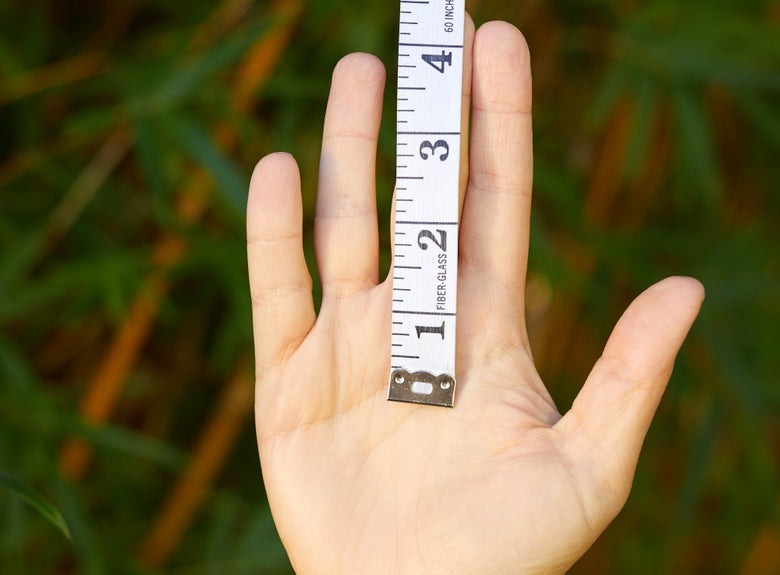
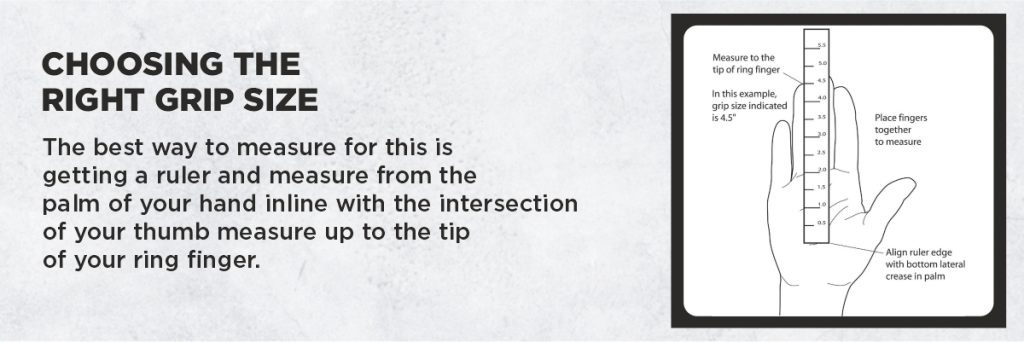
A ruler gives you a starting estimate before you have a racket to hold. The result depends on where you start measuring, so use the palm crease named in the sizing chart you follow.
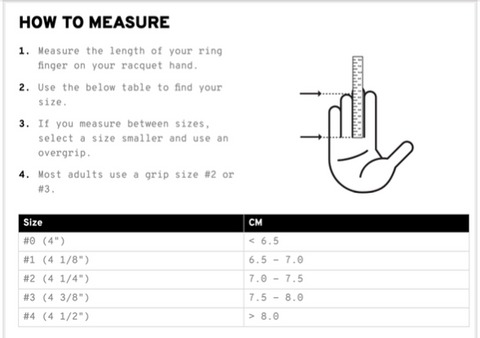
For Babolat's guide and the table below, open your dominant hand with the fingers extended. Measure from the middle or second palm line to the tip of the ring finger, as shown in Babolat's instructions. Hold the ruler straight and repeat the measurement from the same landmarks.
HEAD and Tennis Warehouse describe another common method that starts at the lower lateral palm crease and runs to the ring-finger tip. The starting landmarks differ, so keep each measurement with its own guide. The lengths aren't interchangeable.
The table lists the adult hand-length bands from Babolat's grip-size guide.
| Hand measurement | Babolat suggested grip size |
|---|---|
| 100 to 102 mm | L0 |
| 103 to 105 mm | L1 |
| 106 to 108 mm | L2 |
| 109 to 111 mm | L3 |
| 112 to 114 mm | L4 |
| 115 to 117 mm | L5 |
These millimeter values are a length measured on your hand. The 4¼-inch spec for L2, by contrast, is the circumference of the racket handle.
If repeated measurements land on opposite sides of a size boundary, both neighboring sizes fit. The ruler has still narrowed your search, but you need to check a real handle.
What the Finger-Gap Test Tells You
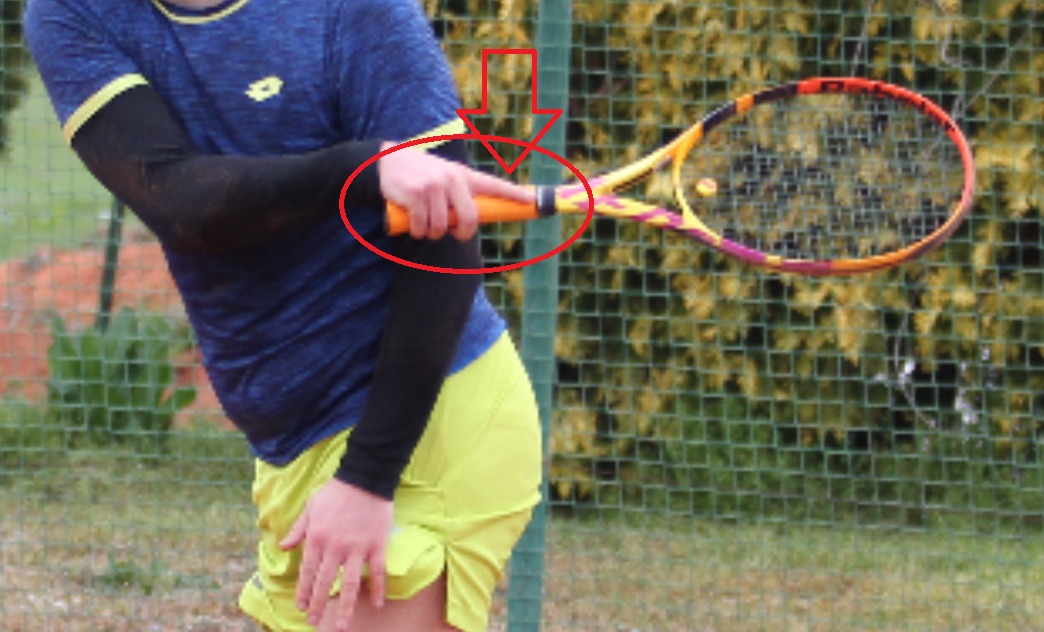
The familiar finger-gap test checks how your fingers wrap around an actual racket handle. Hold the racket in a natural forehand grip, then try to fit the index finger of your other hand into the space between your gripping fingertips and palm.
The usual reference is a gap about the width of your index finger. Fingertips jammed against your palm point to a small handle. A very wide gap points to a large one. The test won't give you an exact L number.
Finger proportions, hand position and the grip on the handle all change the gap. That's why advice about zero, one or two fingers sometimes leaves players more confused than before.
What to Do When the Ruler and the On-Court Feel Disagree
If your ruler says L1 but an L2 racket feels comfortable, you have two different results. The ruler estimates a starting size from your hand. Hitting with the racket shows how one particular handle behaves with its current grip.
A first-time buyer described that exact situation:
Torn between L1 or L2. Buying my first ever racket and sadly, L1 aren’t available on hand so I can only check L2 grip physically (see 2nd photo). I’ve been using L2 (coach’s racket) and have no issue with it but when I measured my hand (following online instructions), it looks like I’m an L1. Would there be a significant disadvantage if I continue using L2?
This player has only hit with L2 and can't try L1 in the shop. L2 is a fair choice until they can compare.
When the ruler and your comfortable racket agree, try that size on court. When they disagree, treat the choice as provisional until you've tried both sizes. When your measurement sits near a boundary, see the next section.
Write down the size the ruler suggested and the size that felt comfortable on the racket. Add the wrap you used and whether you judged the fit during normal strokes or a brief store hold.
Choosing Between Two Racket Handles That Both Feel Fine
Two neighboring handles can both feel secure in a short trial. Compare how each one behaves during the strokes you normally play.
A buyer considering a new Ezone described that dilemma:
Trying to decide what grip size to buy on the new Ezone. Demo’d both 4&1/4 (G2)and 4&3/8 (G3) and they feel good. Any advantages/disadvantages for going larger or smaller on grips? Note I do play with an over grip and for reference I am 6ft 172lbs and would say have medium(average sized hands).
This buyer was looking at a Yonex Ezone and normally plays with an overgrip. Compare the finished handle with that layer installed.
Try the neighboring sizes on the same racket model with the same overgrip. Hit forehands, backhands, serves and volleys with each. Watch for the racket turning in your hand, for squeezing to keep it stable, and for any trouble moving between grip positions.
If one size clearly feels better while you hit, go with it. If both feel equally good after a same-setup trial, take the smaller one. You can add thickness later.
How to Compare Grip Sizes Without Confusing Racket Specs
A better backhand with a smaller handle sounds convincing until you look at the rest of the racket. Weight distribution, swingweight, stiffness and stringing can also differ between demo frames.
One player noticed the problem after hitting a better one-handed backhand with a size-two demo:
Years ago my coach assigned my grip size to 3 (4 3/8) and I didn't question it. Switched a few racquets in my playing time, always size 3, always with an over grip. Last week I ordered demos from Tennis Express but one of the racquets wasn't available in size 3 so I got it in size 2 (4 1/4) instead. Hitting with them I notice my OH BH (don't laugh at me...) with the size 2 is noticeably better. The serve, FH and volleys were ok with all frames but my BH with size 2 was more consistent and accurate... Was I hitting better OH BH with size 2 racquet solely because of the grip size? Maybe or maybe not. I looked at the specs and the size 2 racquet also had the lower swingweight (310) than the others that were size 3 (316, 320). And the one I hit better with was tied for stiffness (64) compared to the others (64, 67).
The poster listed swingweights of 310, 316 and 320 and stiffness values of 64, 64 and 67. The L2 racket that felt better on the backhand also had the lowest swingweight.
Swingweight and stiffness changed along with grip size, so you can't credit the better backhand to grip size alone.
How an Overgrip Changes Your Effective Grip Size
A racket handle has an underlying molded structure or pallet, a replacement grip over it, and sometimes an overgrip on top. Your hand touches the outside of that stack.
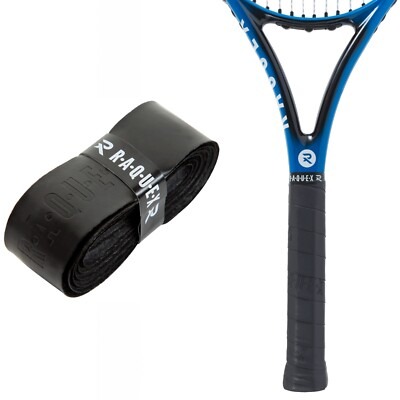
An overgrip adds thickness and changes cushioning, tackiness and how sharply you feel the bevels. The butt-cap marking stays the original nominal size even after the outer layers change.
Some tennis sizing guides put the overgrip's added circumference at roughly 1/16 inch. The actual change depends on the material, stretching, overlap, installation and the thickness of the replacement grip beneath it, so it won't turn every L2 racket into another labeled size.
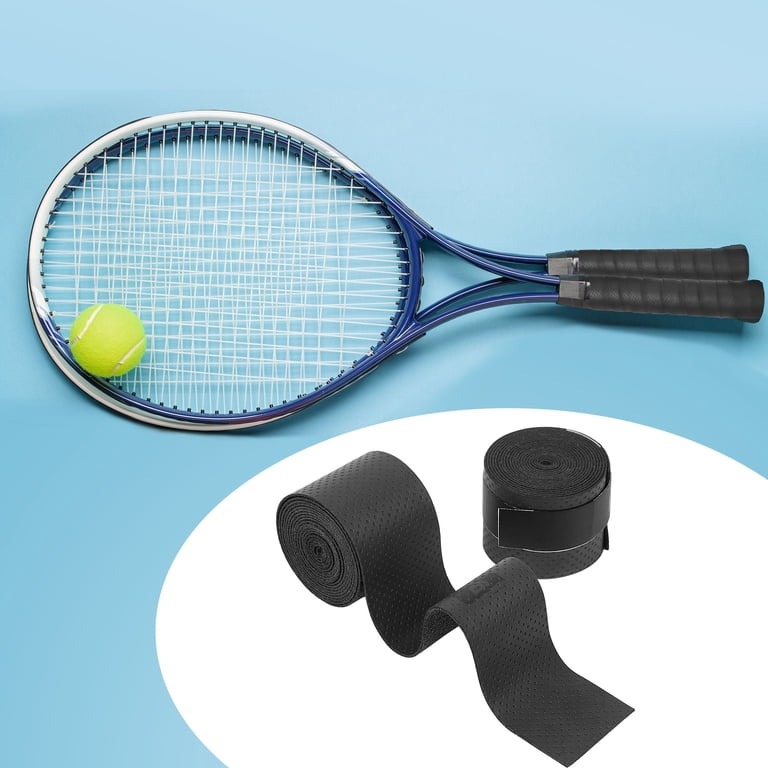
Check what layers are on the handle before you change anything. A thick replacement grip with an overgrip feels different from the same nominal size with a thinner grip.
Adding a removable layer is straightforward. Reducing an oversized handle is much harder, depending on its construction. HEAD's grip-size guidance cautions against casual handle reduction, so don't sand or cut a molded handle at home.
If Your Grip Starts Slipping
If a racket starts slipping after years of comfortable use, check the grip surface before you change the handle size. Surface wear, moisture, friction and holding pressure are all variables to check.
A player who had used L2 for three years described a sudden problem:
Hey folks, i've been dealing with some bad blisters in my hands for the past month. My usual grip size is the one with the purple grip (L2), and for some reason I'm felling my racket slipping more, which probably caused the blisters (which is pretty strange, since Im playing for 3 years with this grip and never had this problem) I'm experimenting with one extra grip (black) which is more than one finger of gap in the grip, to see if it helps and it could be that my grip is too small, but I'm not sure if its making a difference, cause I've been playing with bandages and it's a total different feeling, hard to compare. I'm worried about the extra grip beeing one more change and having no positive impact. Given the grip sizes in the picture, does it make sense to keep trying with a larger grip to try to avoid the racket slipping?
This player noticed both slipping and blisters, then added an extra grip while also wearing bandages. With so many changes at once, the cause is unclear.
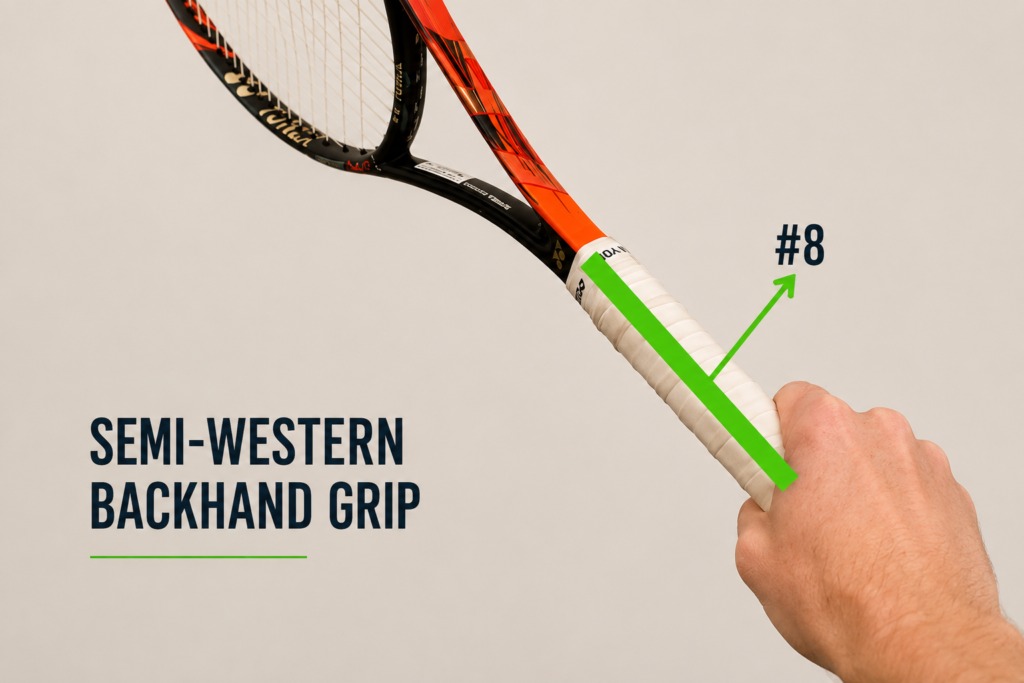
Inspect the grip on an otherwise unchanged racket. Look for slick or worn areas, damaged edges and a loss of the tacky surface you're used to. A fresh grip of the same type separates a surface problem from a handle-size problem.
Slipping and blisters alone don't show that your handle is too small.
Why the Same Grip Size Can Feel Different Across Racket Brands
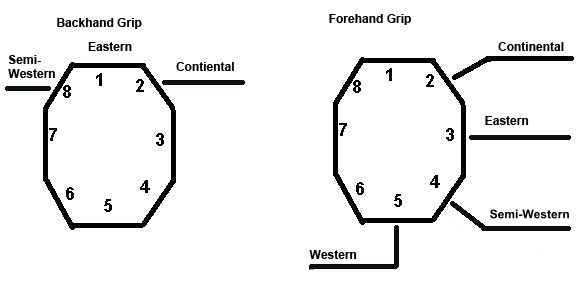
Two rackets labeled L2 can feel different because the handle's cross-section and bevel profile change how the corners sit against your fingers. Grip cushioning and wrapping also change the shape you feel, a point Tennisnerd covers in its equipment articles. When you switch brands or models, compare the finished handles with the same grip on each before assuming the same label gives the same feel.
What Grip-Size Research Can and Cannot Say About Injury
Choosing a comfortable handle makes sense, but the grip-size studies cited here don't show that any particular L number prevents tennis elbow.
A 2006 study of forearm muscle activity tested 16 asymptomatic collegiate tennis players on single-handed backhands. They used a recommended grip size and alternatives a quarter inch larger and smaller. The researchers found no significant difference in measured forearm muscle activity under those conditions.
A 2014 biomechanical study looked at grip diameter during forehands with intermediate or advanced players. The researchers measured grip forces and wrist moments, with and without induced fatigue. They then used a hand biomechanical model to estimate wrist-extensor muscle forces and the possible effect on tendon loading. In both fatigued and nonfatigued sessions, they identified a handle diameter linked to lower grip force.

The studies measured different things: muscle activity during a backhand in one, and mechanical variables used to model extensor muscle forces during a forehand in the other. Neither followed players over time to see whether changing grip size prevents or treats an injury.
If you have persistent elbow or hand pain, see a qualified clinician. Racket fitting covers handle comfort and control only.
Your Grip-Size Decision Checklist
Run through this checklist before you buy a racket.
- Size label: Find the racket's nominal L/G number or inch measurement.
- Hand estimate: Measure your hand more than once, using one set of landmarks.
- Actual fit: Judge the finished handle with the wrap you plan to use.
- Adjacent option: Try the neighboring size under the same conditions, if you can get it.
- Racket specs: Check whether model, swingweight or strings explain why you liked a demo.
- Discomfort: Rule out a worn grip, slipping or pain before you blame the handle size.