
If you don't break strings often and don't need a firm, controlled response, start by comparing synthetic gut and multifilament. Move to polyester, a hybrid, or natural gut when your swing, your taste in feel, string life, or total cost points that way. Test one setup against what you use now.
A fresh string job can change the feel of a familiar racket. Sometimes the ball leaves the strings with a response you love. Sometimes you start hitting long, your strings break too soon, or a comfortable setup becomes too expensive to maintain.
Which Tennis String Type Should You Try First?
Start with the problem you want to fix.
| Your situation | First comparison | What could change the choice |
|---|---|---|
| New recreational player without recurring string trouble | Synthetic gut versus multifilament | A clear preference for feel, or repeated wear |
| Frequent physical string breaker | Durability-oriented synthetic, polyester, or a hybrid | Whether the firmer setup feels acceptable |
| Fast, consistent full swing and a wish for a firmer response | Polyester/co-polyester | Whether the response gives you more usable control |
| Player unhappy with a firm impact feel | Multifilament or a suitable synthetic gut | Breakage rate and recurring cost |
| Player who wants premium feel and tension maintenance | Natural gut or a gut hybrid | Cost, animal origin, and care conditions |
| Player focused on recurring expense | Synthetic gut plus a cost-per-hour comparison | Actual restringing frequency and labor charges |
An adult taking lessons on the strings that came with a new racket and a player who breaks strings every few sessions bring different problems to the stringer.
The Four Main Tennis String Materials and What Hybrid Means
The main families are synthetic gut, multifilament, polyester/co-polyester, and natural gut. A hybrid puts different strings in one stringbed, so it describes a setup, not a material.
| String type | Common construction | Typical feel and power | Control and spin implications | Cost, wear, or care trade-off |
|---|---|---|---|---|
| Synthetic gut | Often a solid nylon core with wraps | Balanced response and accessible feel | Works for most recreational strokes | Often a lower initial cost; breakage depends on use |
| Multifilament | Bundles of small synthetic fibers | Often softer-feeling, with more power | Suits topspin and attacking strokes; the livelier response can cost some players depth control | Can fray or break sooner for some heavy hitters |
| Polyester / co-polyester | Usually a polyester-based monofilament | Generally firmer and lower-powered | Often chosen for control on full swings and spin-oriented setups | Often resists breaking; the response can change during use |
| Natural gut | Animal-derived fibers | Elastic feel and notable tension maintenance | Elastic response suits varied strokes | Premium cost; needs care around moisture and handling |
| Hybrid | Two selected strings in mains and crosses | Depends on the pairing and placement | Main/cross materials and orientation shape control and spin | Wear of both materials has to be considered together |
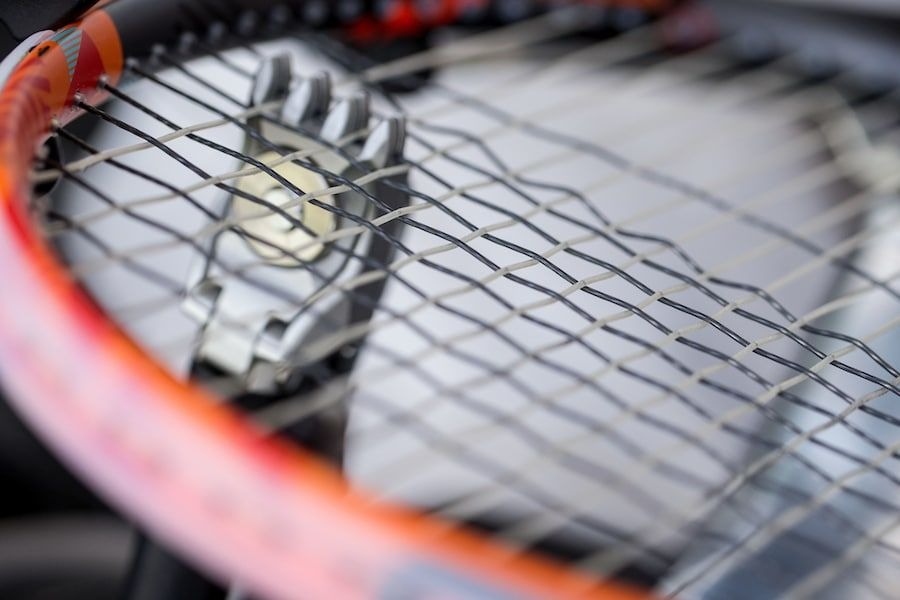
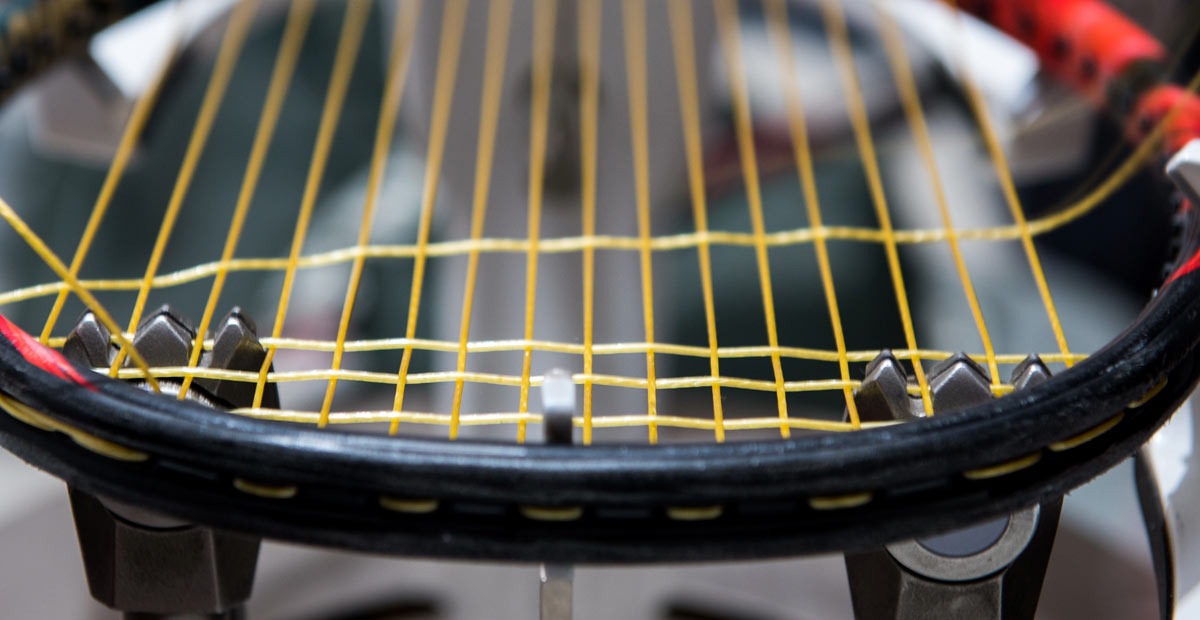
A full bed uses one string throughout the racket. The mains run along its length, and the crosses are woven perpendicular to them. In a hybrid, which string goes in which direction is part of the specification.
Construction matters within categories, too. Two nylon strings can differ because one has a wrapped core and the other has many filaments; monofilament construction also exists in other materials. Specialty aramid or Kevlar-based strings exist but fall outside these four families.
The International Tennis Federation's technical explanation of strings covers how construction interacts with gauge, tension, and stringbed design.
Synthetic Gut vs. Multifilament: Feel, Value, and Breakage
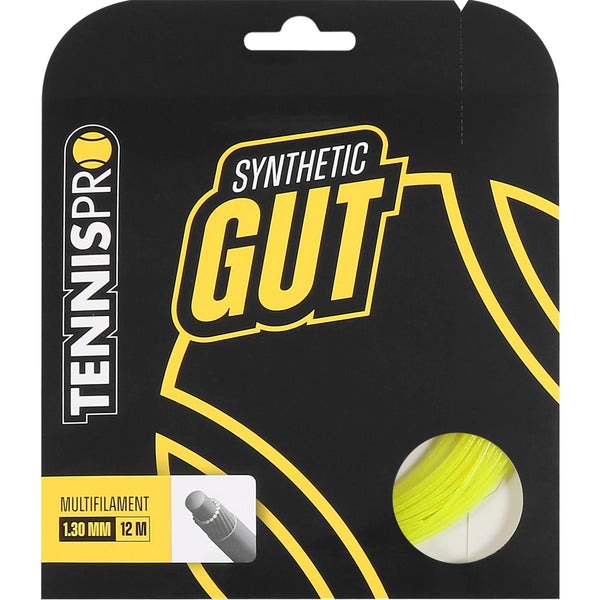
Synthetic gut is a practical all-around baseline. Multifilament feels softer and more elastic, which helps if a firm stringbed bothers you or you want a different balance of power and feel.
Both families contain many products. A low-cost synthetic gut can work fine for weekly doubles, while someone after a plusher impact may prefer a multi. The expense climbs when a hard hitter keeps replacing that softer string.
One longtime polyester user tried softer strings after a non-tennis arm injury. They expected their attacking, topspin-oriented game to make multifilament feel uncontrollable. It surprised them.
Multi in a full bed, or even multi as a main over a poly cross (I was using two, Outlast or RPM Blast Rough), was surprisingly playable. I say "surprisingly" because for whatever biased reason, I was expecting it to be wild. It was not wild. It was soooo plush, wow, felt like hitting with a sponge. It was more powerful than I prefer but not massively so, not like a trampoline. As compared to poly, it was only a little bit less controlled in terms of being able to pick my spots.
The player could still use topspin and pick spots, but broke the multifilament before two hours of match play.
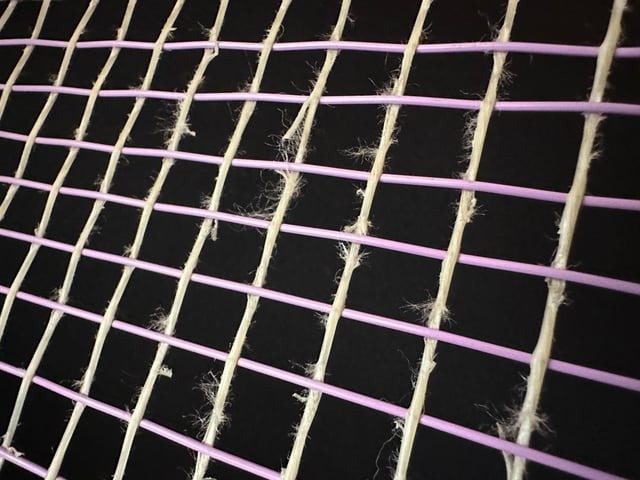
If you like the response of both materials, the deciding factor is usually how many good playing hours you get between stringing jobs. Feeling great for a few games is nice. Feeling good for the amount of tennis you actually play is what makes the cost worth it.
Polyester and Co-Poly: When a Firmer Response Makes Sense
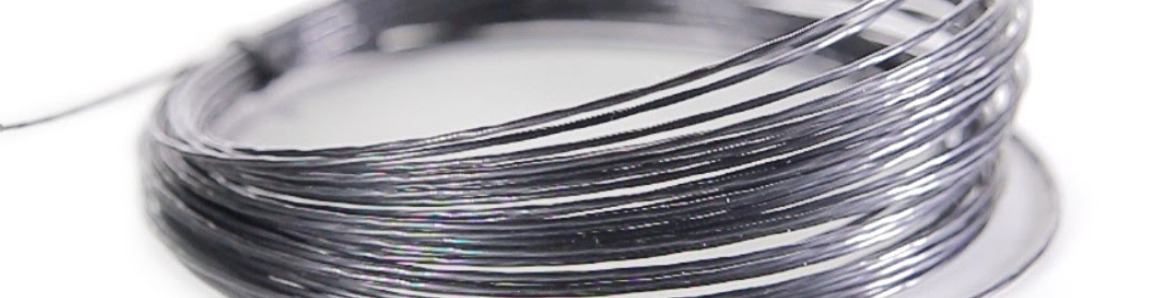
Polyester and co-polyester usually feel firmer and deliver less power. If you swing fast and repeatably, you may like that response and the physical durability of many polyester constructions.
Technique still drives topspin, with string stiffness, movement, friction, frame, and installation all contributing. A shaped polyester responds to the swing you make.
A beginner got a polyester recommendation for a Yonex Ezone 100L at approximately 50 pounds of reference tension, then had arm discomfort while learning to play.
When I bought the EZONE 100l I informed the seller that I was a complete beginner and he told me to use the poly tour pro comfort black gauge 16 polyester rope weighing 50 pounds. I started taking classes at a club Whenever I tried to play with the ezone 100l racket there was unbearable pain in my arm, especially the famous tennis elbow pain.
The poster later felt more comfortable after switching to Wilson NXT multifilament. Other equipment and playing conditions also changed.

A new player still learning to make consistent contact has little basis for choosing polyester. Pick it when you know you like the firmer response, you keep breaking strings, or another specific problem needs fixing.
Natural Gut: Feel, Maintenance, and Cost
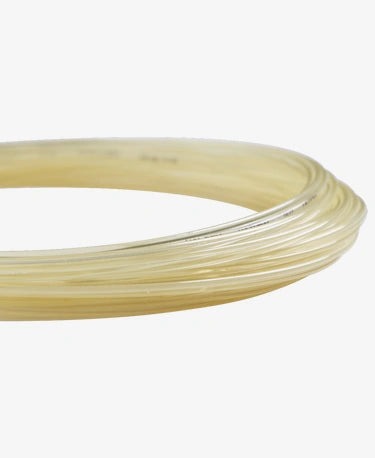
Natural gut comes from animal-derived fibers. Synthetic gut is an unrelated synthetic construction with a similar name.
Players value natural gut for its elastic response, distinctive feel, and tension maintenance. It carries a premium purchase price.
Moisture and handling call for extra care, especially if your racket regularly sees wet conditions.
Hybrid Tennis Strings: Why Mains and Crosses Matter
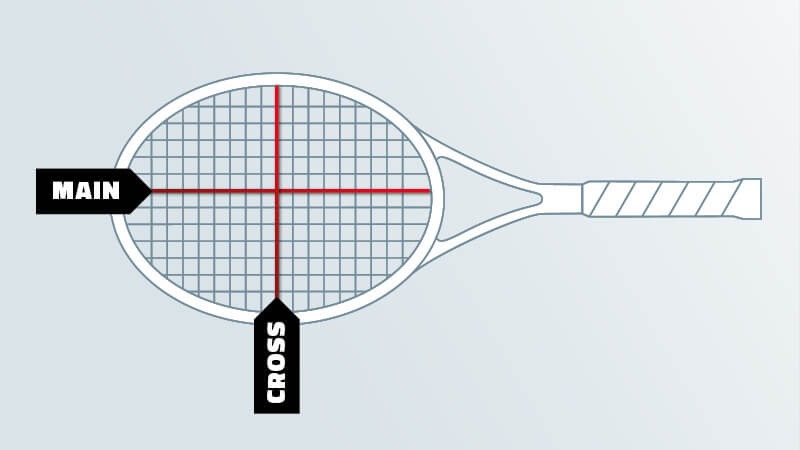
A hybrid puts different strings in the mains and crosses, giving you another way to tune a racket's response. Natural gut mains with polyester crosses, multifilament mains with polyester crosses, and polyester mains with synthetic gut crosses are three distinct setups.
Orientation matters. A request for “poly and gut” leaves open which string goes where, and swapping them changes feel, wear, and string movement. Ask the stringer to specify both products and their positions.
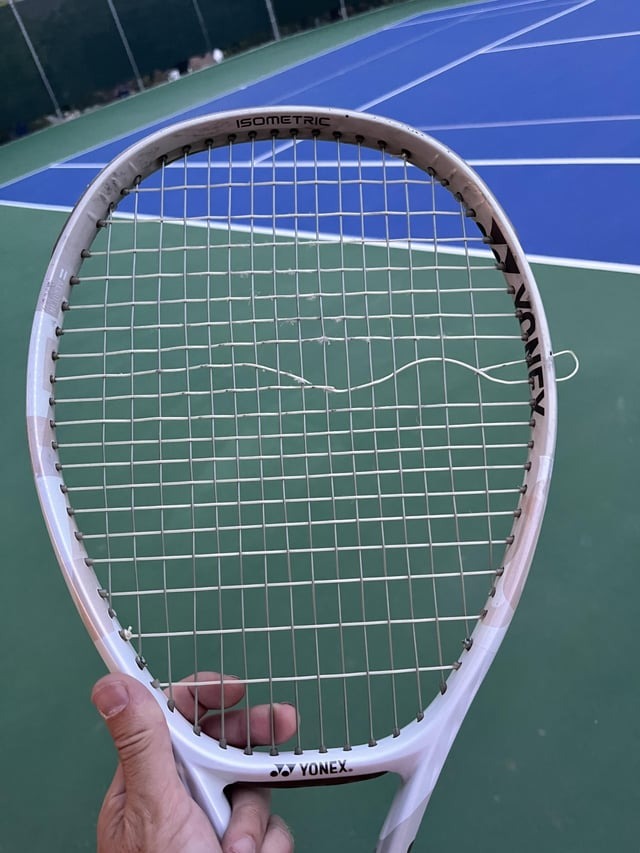
A Pure Strike 98 owner tried Babolat VS mains with RPM Rough crosses. The strings felt great at first, then the ball launched differently.
I stringed up my Pure Strike 98 16*19 with Babolat VS Mains + RPM Rough Crosses (24/22kg) ... best magical string experience ever .. perfect pop/power .. amazing feel .. super grippy and spinny .. amazing Of course there is a BUT .. this magical experience only lasted 2-3 hours . the tension loss was pretty noticable ... after it got very launchy imo
After two to three hours, the player noticed a different launch and blamed tension loss.
Comfort vs. Durability: What If Neither Setup Solves Both?

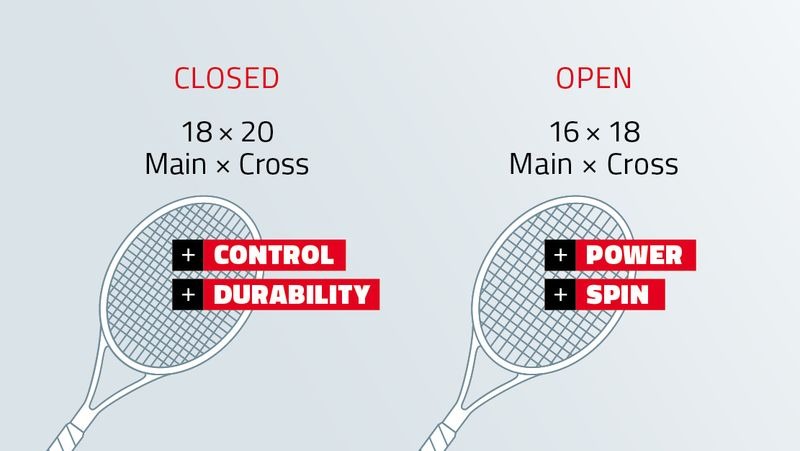
The hardest choice is between a string that feels good but breaks quickly and one that lasts longer but feels unacceptable. Durability, impact feel, and how long the response stays good are separate criteria.
A Head Speed Pro player shows the conflict: rapid breakage, discomfort with polyester, and several arrangements that didn't work.
I have a problem - I keep snapping strings after around 4-5 hours of play (sometimes less) but poly strings hurt my elbow. I string my racquet at 54 I’m not sure what to do and am slightly frustrated. I’ve tried a few things: Full synthetic gut strings Poly mains with synthetic gut crosses Poly mains with multifilament crosses I’ve also tried soft poly’s and my elbow still hurt 😞
They had tried full synthetic gut and two poly-main hybrids without finding a fix.
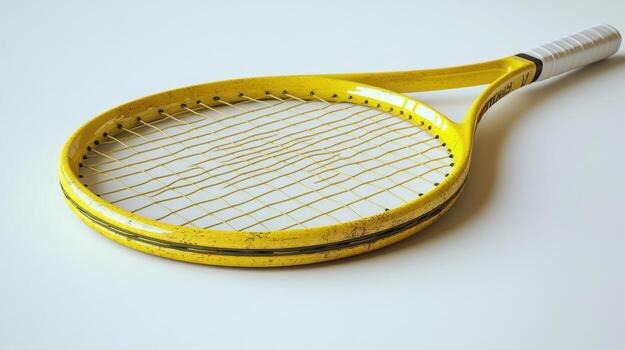
Your next comparison depends on which problem persists:
- Soft strings feel good but break quickly: Consider a thicker gauge of a suitable synthetic gut or multifilament, as described in Tennis Warehouse's durability guidance.
- A polyester setup lasts but feels too firm: Durability doesn't help if the string feels wrong. Compare softer materials or ask the stringer about a different construction.
- A hybrid has already disappointed: Work out which material sits in each direction and which failure persisted before you change the arrangement again. Another hybrid name alone rarely fixes it.
If your arm keeps hurting, see a doctor or physio. String choice is an equipment decision.
Why Strings Can Feel Different Before They Break
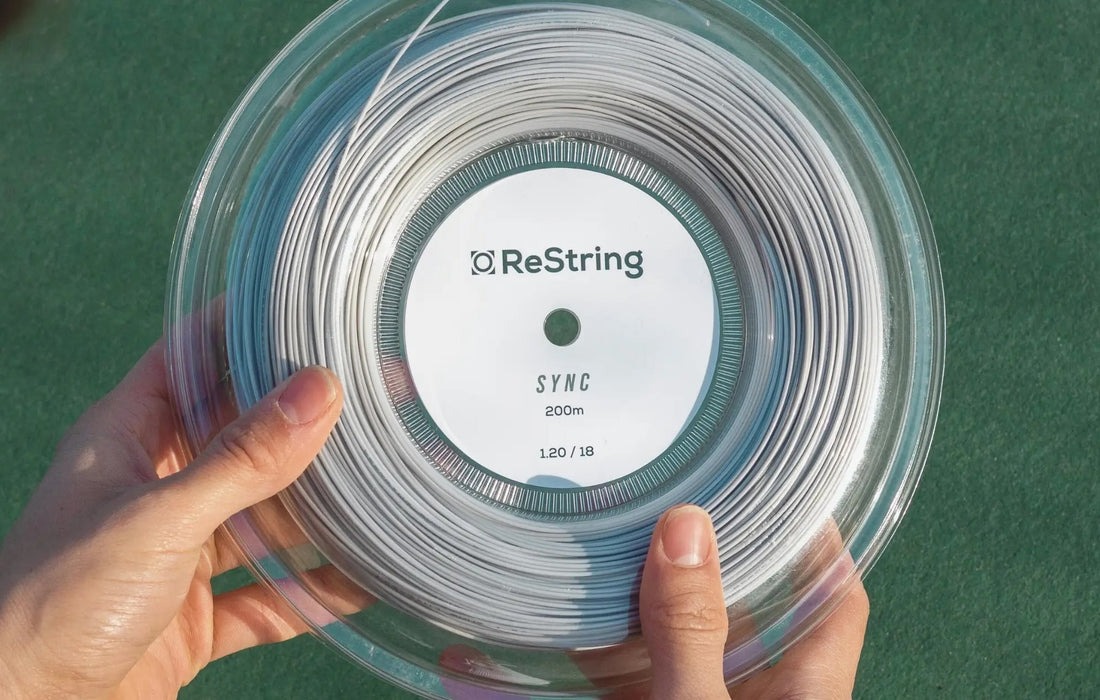
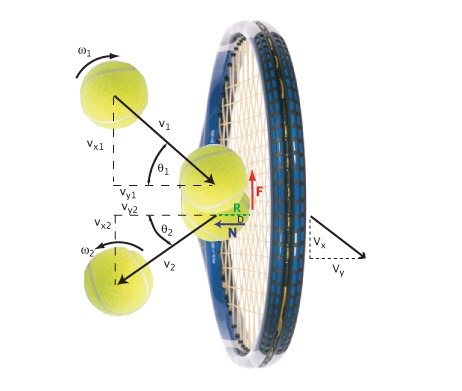
Strings that haven't broken can still lose the response you enjoyed at installation. The ball may start leaving at an unfamiliar launch angle, and the stringbed can feel less predictable while every string is intact.
Tennis Warehouse University's laboratory measurements separate the properties of specific products.
| Property | Reported unit | What it describes | Useful comparison |
|---|---|---|---|
| Dynamic stiffness | lb/in | Resistance to displacement during the specified impact-related test | String response under matched test conditions |
| Tension loss | % | Change under the database's stated testing procedure | Differences in tested tension behavior |
| String-to-string friction | Coefficient of friction (COF) | Resistance as crossing strings move against each other | Potential for movement and return, or snapback |
| String-to-ball friction | Coefficient of friction (COF) | Contact between the ball and strings | Ball/string contact, separate from string-to-string friction |
| Energy return | % | Energy returned in the specified laboratory procedure | How much energy each string gives back in the test |
The Tennis Warehouse University String Performance Database lets you compare named strings using those definitions. The values come from laboratory tests with particular conditions and procedures.
At 51 lb in the displayed fast-swing condition, Toroline O-TORO Snap 16L (1.25) recorded 164.6 lb/in dynamic stiffness and 41.7% tension loss. Under the same condition, Solinco Revolution 16L (1.25) recorded 212.6 lb/in and 28.4%. Both are polyester, yet the Solinco tested stiffer and showed lower reported tension loss.
Rod Cross, Crawford Lindsey, and Daniel Andruczyk reported laboratory testing of 90 tennis strings in a Sports Engineering study first published on December 25, 2001.
For arm symptoms, actual shot depth, or preferred string life, you need different evidence than these lab values.
Visible notching or fraying shows a string is physically wearing out. A change in feel or ball placement is a separate reason to reconsider a setup.
How to Test a String Change Without Fooling Yourself
A string trial should answer one question: did the new string fix a problem you can see, well enough to keep it? Keep the racket and playing conditions as similar as you can, and change one thing at a time.
Play two or three similar sessions with each setup. If the new string also has a different tension, record both changes so you can read the result.
Copyable string trial record

| Record | Current setup A | Trial setup B |
|---|---|---|
| Problem to solve; desired sign of improvement | ________ | ________ |
| Racket and string product; mains/crosses if hybrid | ________ | ________ |
| Material; gauge; reference tension and its unit | ________ | ________ |
| Installation date; string cost plus labor paid | ________ | ________ |
| Session 1: date; playing hours; feel/shot depth; wear | ________ | ________ |
| Session 2: date; playing hours; feel/shot depth; wear | ________ | ________ |
| Session 3, if played: date; hours; observations; wear | ________ | ________ |
| Total usable hours; breakage or reason for ending | ________ | ________ |
| Reason to keep, adjust, or reject | ________ | ________ |
The USTA's string-selection guidance stresses personal response to equipment. The record gives you something concrete to compare it against.
For cost, use what you actually paid for that setup, string plus labor. Then calculate:
Cost per usable playing hour = total installed cost ÷ hours you considered the strings acceptable.
A snapped string ends the installation. A stringbed that has stopped working for you may end it sooner. Compare each setup's cost with how well it fixed your original problem, then decide what to change next.
Before You Restring: Tension, Gauge, and Next Steps
Once you know which family to try, the string tension guide covers reference tension in pounds or kilograms, and the string gauge guide covers thickness and the 16-versus-17 question.
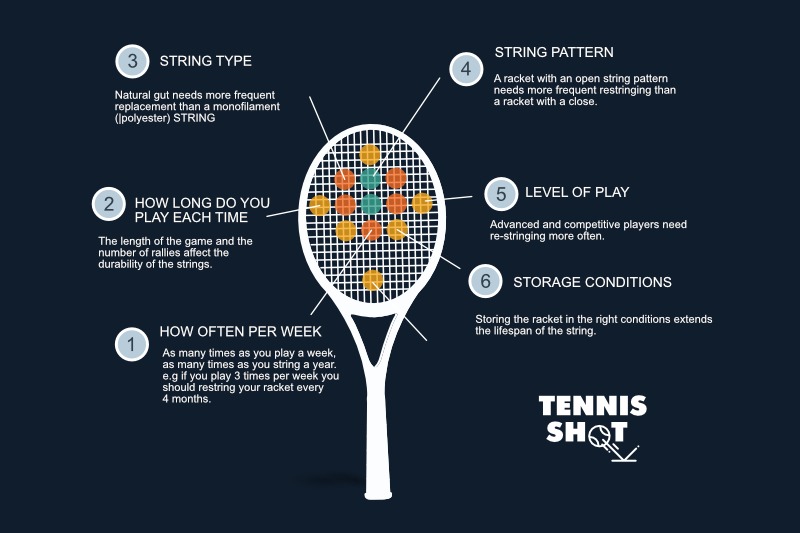
If your strings are intact but the response has gone flat, the restringing guide covers timing. For questions about the frame itself, see the racket selection guide.