
Mostly hard courts: buy a well-fitting hard-court shoe. Regular clay: buy a clay-specific outsole. Both surfaces: pick a shoe the maker names for both, or buy two pairs, depending on how often you play each and what your venue allows. Confirm the exact version and fit before you pay.
Clay vs. hard-court tennis shoes: the differences that matter
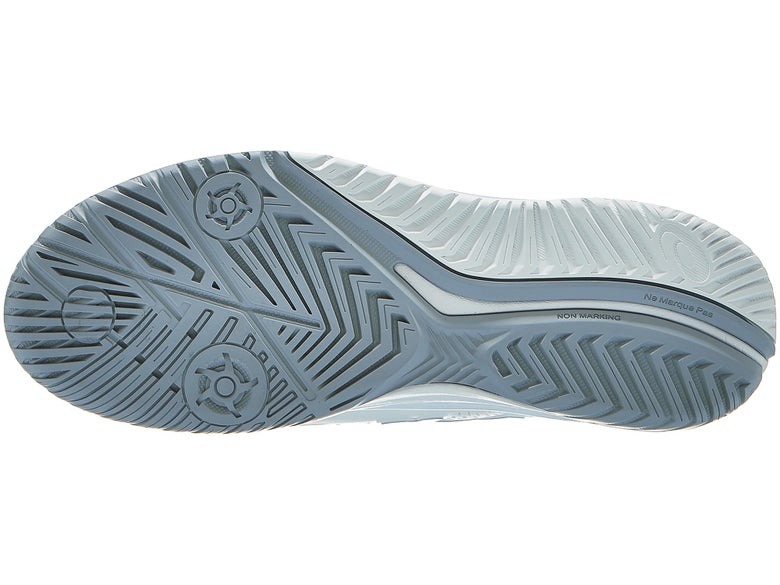
Clay shoes have grooves built to work with loose clay particles. Hard-court shoes put the emphasis on abrasion resistance for solid acrylic courts. If you play both, the question is whether a given model is built for both surfaces.
| Shoe category | Typical outsole | Main design purpose | Watch out for |
|---|---|---|---|
| Clay-specific | Extensive or continuous herringbone grooves | Traction, controlled release and clay shedding | Abrasive hard courts affect wear and movement feel |
| Hard-court | Modified herringbone or mixed tread zones; reinforced wear areas on some models | Grip on firm acrylic and resistance to abrasive wear | Loose clay changes traction and release |
| Manufacturer-confirmed multi-surface | Model-specific tread and rubber | Use on the surfaces the maker names | Depends on the exact version |
Pick the surface first. Herringbone grooves look alike across shoes, but the rubber and reinforcement can differ.
In the US, “tennis shoes” can also mean casual sneakers. Here it means performance footwear for lateral tennis movement. For the difference from running shoes, see tennis shoes versus running shoes. For unfamiliar courts, see how tennis court surfaces differ.
How outsole tread, grip and wear change across surfaces
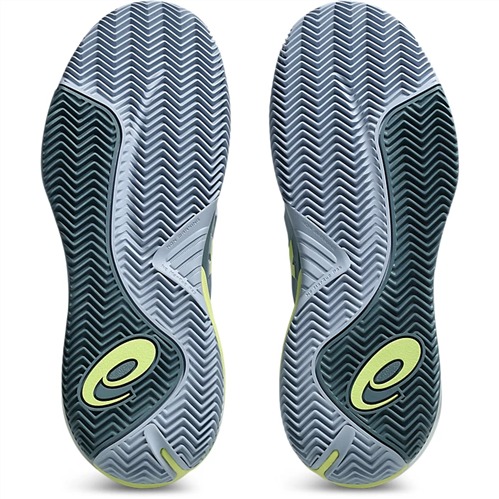
Traction does two jobs in tennis. It helps you start and stop, and it lets your foot turn without unpredictable resistance. The surface changes that balance.
On clay, grooves move loose particles out of the contact area while you accelerate and change direction. On hard acrylic, the abrasive texture wears the rubber through repeated stops and lateral loads. Rubber compound, groove layout and high-wear reinforcement can differ even between shoes with the same zigzag tread.
Toe drag shows the wear problem clearly. If you brush one toe across the court on serves or recoveries, you abrade the same small patch of outsole again and again. Reinforcement protects that patch. Grooves that shed clay do a different job.
The International Tennis Federation’s November 2019 Footwear technical document treats acceleration, deceleration and pivoting as related demands on shoe-surface friction.
Experimental sports-engineering research by Hale and colleagues examined how tread elements affect friction and wear in simulated tennis conditions.
To judge outsole construction, compare the maker’s descriptions of rubber, groove coverage and reinforcement at wear points. A tread photo won’t tell you how the shoe grips on a given court.
Can you wear clay shoes on hard courts, or hard-court shoes on clay?
If you play the other surface once in a while, check the pair you already own first. What matters is what the shoe was built for, how worn it is and what the court is like.
Clay shoes on hard courts
A clay outsole meets more abrasive material on a hard court. Repeated use wears some designs faster, and the change in friction alters how stops and pivots feel. A clay player who hits on hard court once won’t wear down the outsole the way someone training on rough acrylic several days a week will.
Hard-court shoes on clay
Loose particles add a traction problem. A hard-court tread clears clay differently and can feel unpredictable if you normally move on firm acrylic. If you practice on clay often, that is a reason to get a purpose-built clay outsole.
If you play hard courts and have one clay clinic coming up, see what surfaces your current shoes are rated for before you buy a second pair.
What “all-court” means, and how to identify the actual shoe version
“All-court” means different things. ASICS uses ALL-COURT for a player’s movement style, while some footwear listings use the phrase to suggest use on several surfaces.
The ASICS tennis-shoe categories keep playing-style information separate from surface-specific shoe options. Codes such as AC, HC and CC only make sense within the manufacturer’s naming system for the exact product.
One shopper ran into this with the Adidas Courtjam Control 3:
Specifically this one: adidas Courtjam Control 3 Tennis Shoes - White | adidas UK I researched a bit and apparently they sell an all-court version and clay court version but I don't know which version the attached link is. It mentions "optimises your game on hard surfaces" so I assume that it's the all court version which can be used on clay but is best for hard courts?
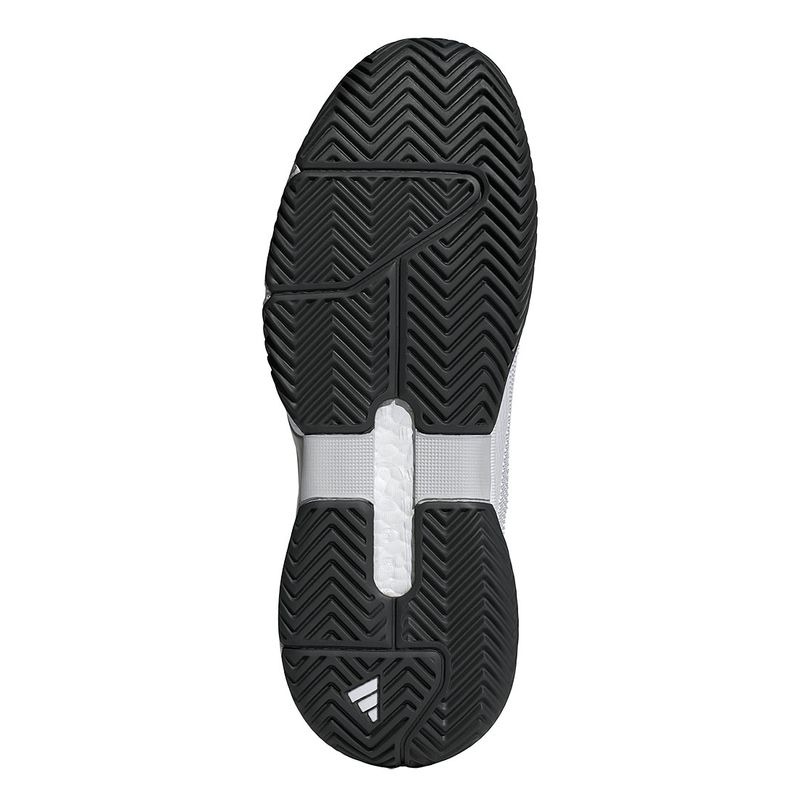
The retailer’s line about hard surfaces didn’t identify the outsole version. For an ambiguous listing, run a four-part check:
- Exact identity: Find the full model name and SKU or product code.
- Stated surfaces: Match that code to the maker’s surface designation and product description.
- Outsole version: Compare the maker’s images and construction details with the pair for sale.
- Still unclear: Skip that model if the code, outsole or intended surface remains unclear.
Even a confirmed multi-surface model grips, sheds clay and wears differently on red clay, green clay and acrylic.
One pair or two? Choose by your real court schedule
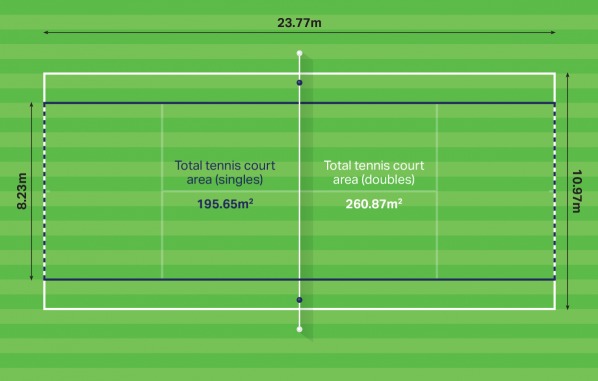
For a mixed schedule, count the sessions you expect on each surface and ask whether one identified shoe can handle both. A second pair adds purchase and storage cost. A poorly matched outsole adds wear and movement trade-offs.
| Your playing schedule | Option to consider | What changes the choice |
|---|---|---|
| Mostly hard acrylic | Hard-court shoes | Regular clay sessions enter the schedule |
| Mostly loose clay | Clay-specific shoes | Hard-court play becomes a substantial routine |
| One-off or occasional second surface | An existing pair expressly suitable for that surface | Wear, fit or venue restrictions rule out that pair |
| Frequent play on both surfaces | One manufacturer-confirmed multi-surface model, or dedicated pairs | Go with two pairs if no single model meets traction, wear, fit and venue needs on both |
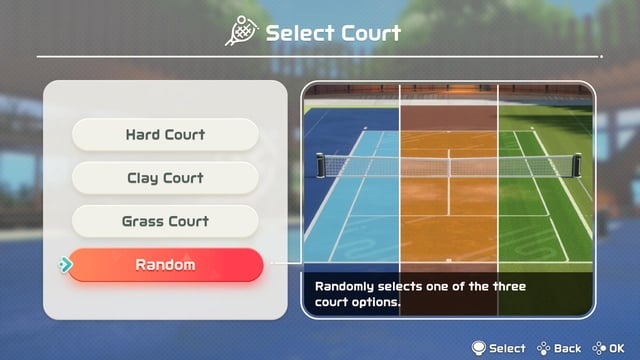
A US player heading to Brazil for two months asked whether she needed clay shoes:
I'll be in Brazil for 2 months and "plan" to play tennis 2x a week there. DO I NEED CLAY COURT SHOES? I'm a 3.0-3.5 female player, based in USA. I kind of don't want to drop the money on clay courts shoes because I don't play on clay courts in the USA. I also may end up playing 2-3 times in Brazil since the facility l will play at (Super9 in Floripa) offers private lessons and not group lessons. I prefer semi private or group lessons, I have a decent tennis foundation (played for high school & was part of a local juniors academy as a teen). Doing only private lessons for 2 months straight doesn't sound fun to me.
She later updated the post. The courts were red clay, so she bought clay shoes. She knew the surface, even if she didn’t know how many lessons she’d get.
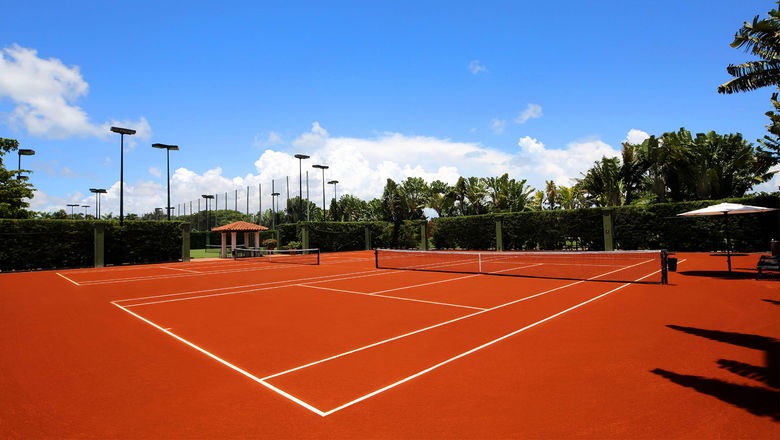
Artificial grass and sand-filled turf need their own surface-specific footwear. They play differently from loose red or green clay.
US green clay (Har-Tru) is not the same material as red clay
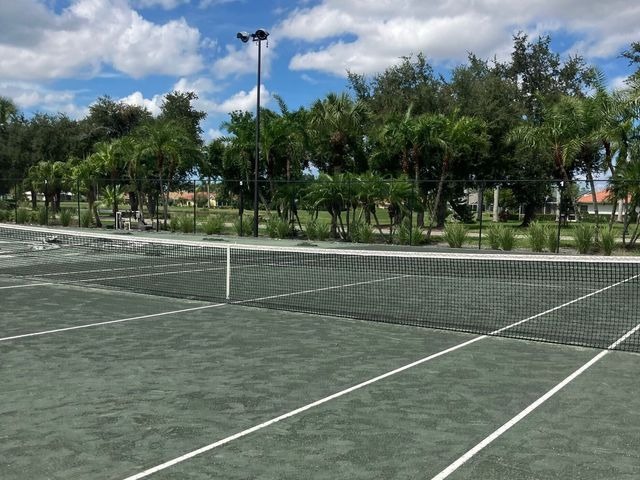
Some US clubs use green Har-Tru, which Har-Tru describes as metabasalt-based. The company says its European red-clay product is made from crushed brick. The materials differ, and moisture and maintenance change the surface too. For a green-clay booking, confirm the court type and the facility’s guidance before you apply advice written for red clay.
Fit and worn tread can rule out the “right” outsole
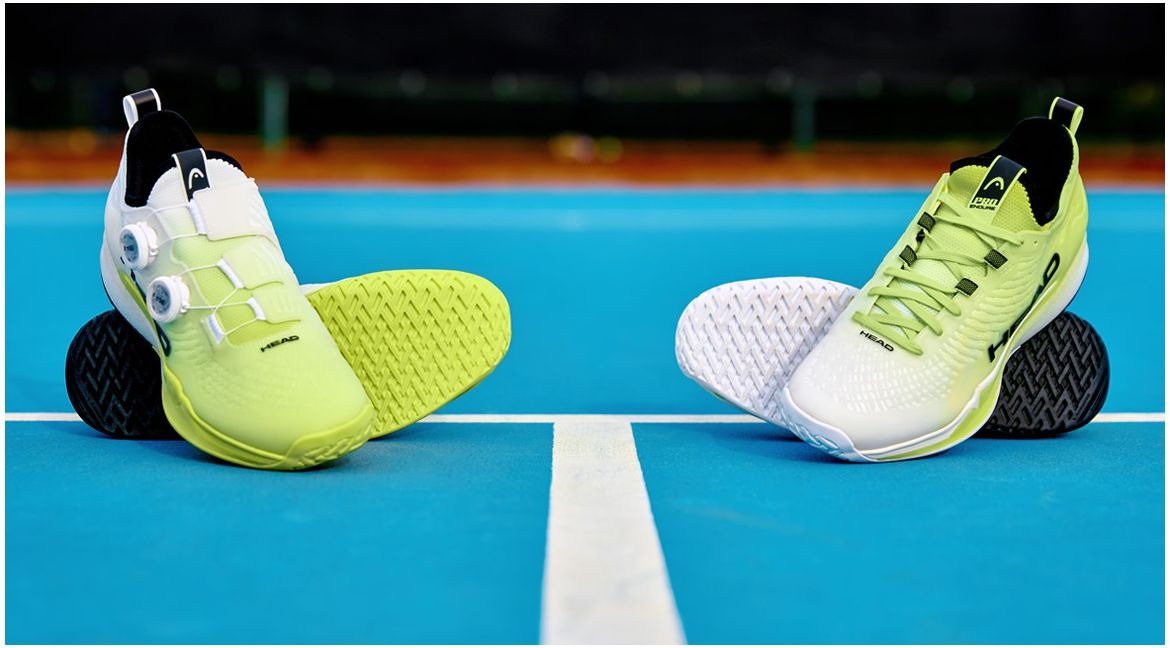
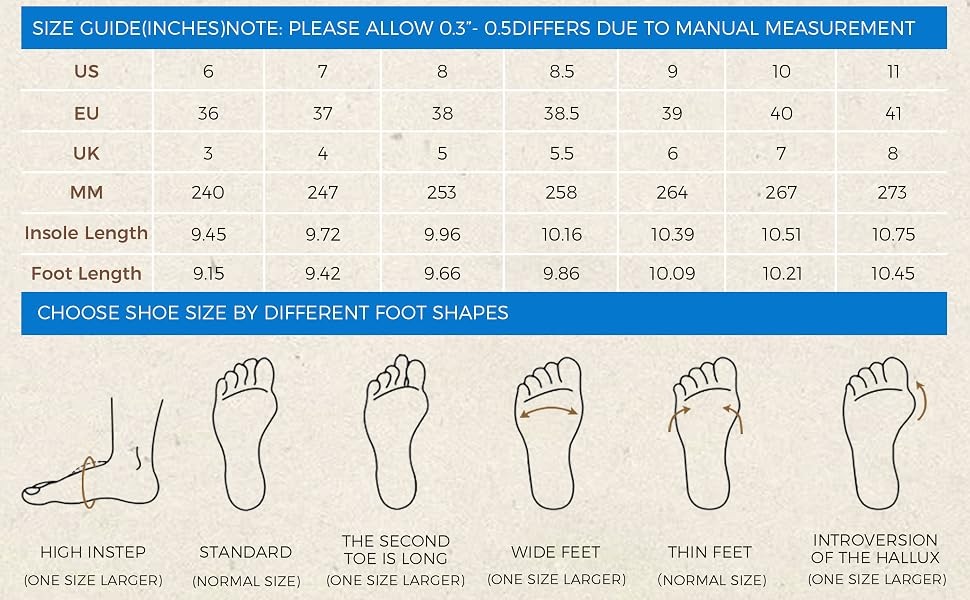
A shoe made for the right surface can still fit your foot badly. Check forefoot width, how the collar sits on your ankle, and heel hold. Tread category doesn’t settle any of them.
One clay-court player compared three shoes and described why comfort changed the choice:
Last 3 shoes I've worn were Adidas SoleCourt Primeblue clay (they were so high and hard under the ankle that I got for scars that lasted for 2 years), Asics Gel Resolution 8 CC(I liked them, enough width for my forefoot, little bit heavier, but durable) and now I wear Mizuno Enforce Court CC (also liked them, lighter, but less durable). Both Asics and Mizuno were comfortable, durability isn't really a priority because any shoes I buy last one season. I want enough space in the front for my foot, soft around the ankle (or not so high like Adidas, don't want them rubbing on my ankle). I am open to all suggestions, and extra points if you can buy them on tennis warehouse EU.
- Forefoot and toes: Wear your normal tennis socks and check toe room and pressure across the forefoot.
- Heel and collar: Make sure the heel holds and the collar doesn’t rub or squeeze.
- Side steps: If the store allows, try short lateral steps and stops and notice any slipping or pressure.
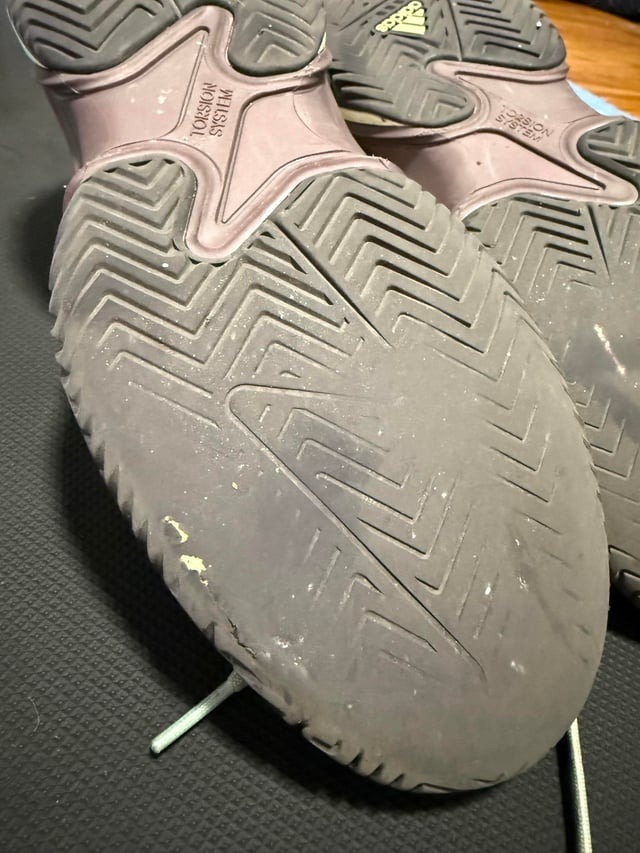
- Existing tread: Inspect worn grooves, toe-drag areas, uneven damage and smooth patches before you rely on an older pair. A smooth or unevenly worn outsole needs a second look even if the shoe was made for the right court.
A final shoe-and-court checklist
Last, check the venue. Clubs and event organizers can set footwear rules that a seller’s description doesn’t cover.
- Venue permission: Check the court operator’s or event’s footwear rules for your surface. A specific venue restriction beats an otherwise plausible shoe.
- If the venue says no: Choose a suitable alternative or postpone play if the venue rejects the outsole or the model or fit check is still open.