
Compare static weight, balance and swingweight for rackets in the same setup, then play with each long enough to judge your timing, control and effort. The right racket is the one you can handle on every stroke through a normal session. If your serves come late, your control fades as you tire, or you feel discomfort, try a better-matched setup under the same conditions.
A racket can feel wonderfully steady for the first few games and surprisingly demanding an hour later. You look at the specs and see 300 grams, a head-light balance, maybe a swingweight number. That easy first impression often depends more on where the mass sits than on how much the frame weighs.
The three numbers measure different things. Knowing the difference explains why a light racket can swing heavy and why a head-light one can still be hard to get moving.
What racket weight, balance and swingweight measure
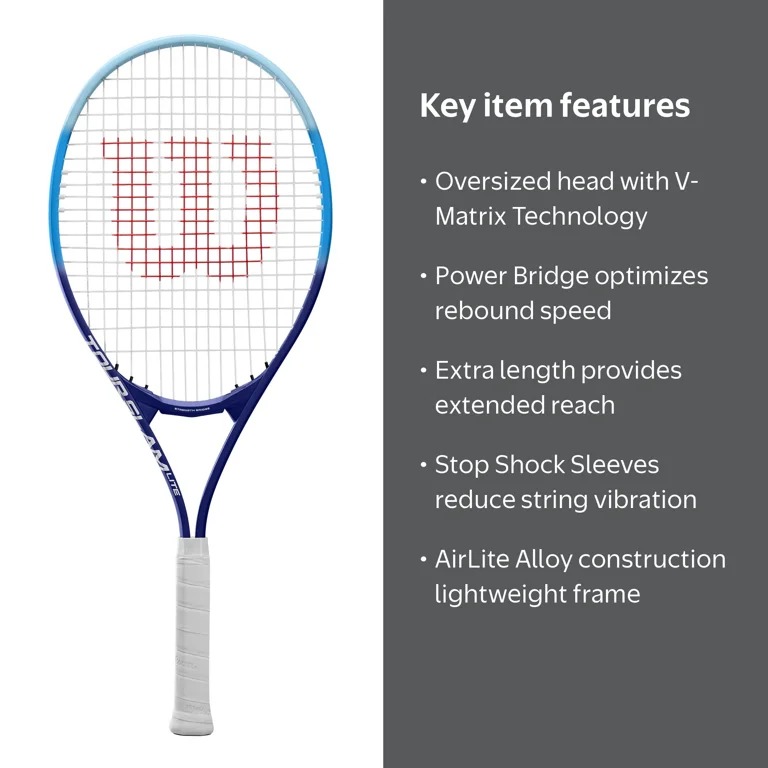
Static weight is the racket's total mass. Balance is where its center of mass sits along the frame. Swingweight is its resistance to rotation around a set axis.
| Specification | What it measures | Typical units | Useful question |
|---|---|---|---|
| Static weight | Total mass in the stated setup | Grams (g); ounces (oz) | How much mass am I handling? |
| Balance | Distance from the butt end to the center of mass | Millimeters (mm); points HL or HH | Where is that mass centered? |
| Swingweight | Resistance to rotation about a reference axis | Usually kg·cm² | How demanding is the frame to accelerate and redirect? |
Commercial swingweight measurements commonly use a pivot about 10 cm, or 4 inches, from the butt end. A real stroke moves through changing axes and joint positions, but a fixed reference makes rackets comparable. Tennis Warehouse University explains the distinctions in more detail.
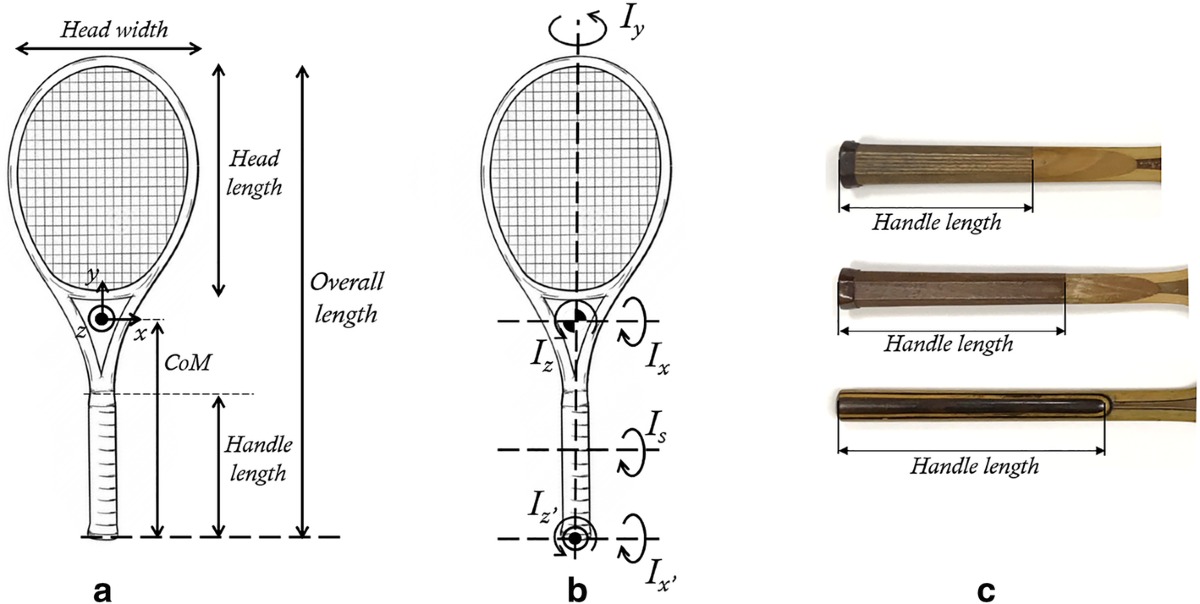
Imagine two 300 g rackets. One carries more of its mass close to the grip; the other places more toward the hoop. Their static weights match, but the second has the higher swingweight, because mass farther from the pivot adds more rotational inertia. Even two rackets with equal weight and balance can differ in swingweight if the mass is distributed differently within each half of the frame.
First check whether the specs describe the same racket setup
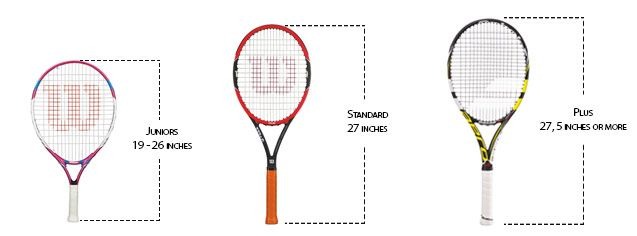
Only compare specs that describe the same setup. A published unstrung weight and a measured strung weight are different measurements.
Strings, an overgrip, a dampener and any added weight all change the complete racket. Length matters too, because the halfway point on a longer frame sits farther from the butt. An unfamiliar stringbed can also change how a demo feels without changing the frame's inertia.
| Record before comparing | Racket A | Racket B |
|---|---|---|
| Model and length | ________ | ________ |
| Mass (g) | ________ | ________ |
| Strung or unstrung measurement | ________ | ________ |
| Strings and known string condition | ________ | ________ |
| Overgrip, dampener or modifications | ________ | ________ |
| Balance from butt (mm) | ________ | ________ |
| Swingweight (kg·cm²) and measurement source | ________ | ________ |
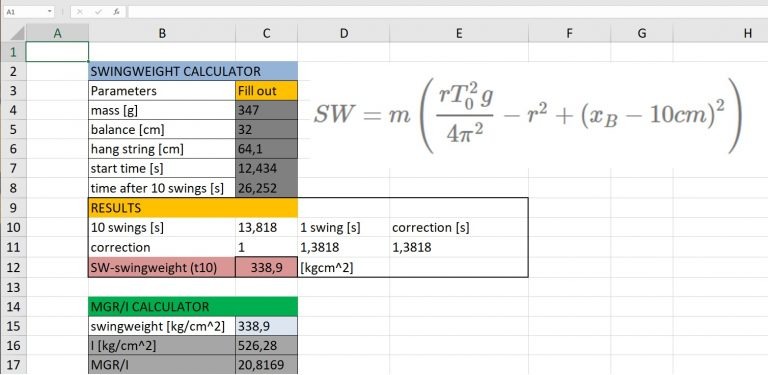
If a swingweight is missing, look for a measured figure for the same setup or ask a racket technician with the right equipment. Tennis Warehouse University also describes a pendulum method that calculates swingweight from racket mass, balance, dimensions and carefully timed swings. Your result is only as accurate as your measurements and timing. If you have no reliable figure, write unknown in the field.
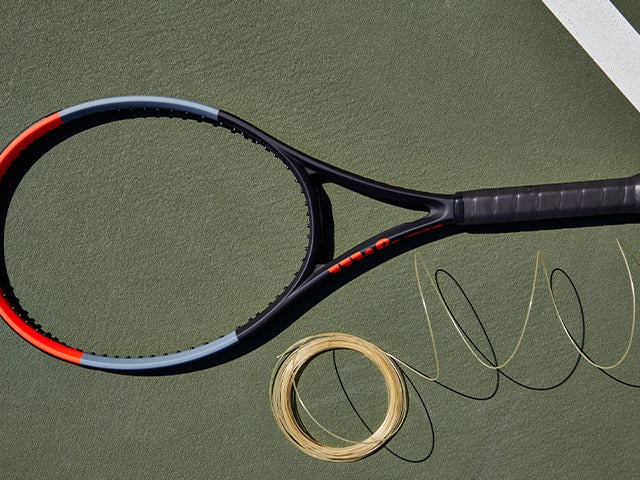
A store's 300 g unstrung listing and a 300 g strung demo measurement look identical but describe different setups.
How head-light and head-heavy balance is measured
Head-light (HL) and head-heavy (HH) describe which side of the racket's geometric midpoint holds its center of mass. An even-balanced racket has its center of mass at the midpoint.
To measure the balance of a racket you have in hand, rest the shaft across a narrow, level support or balance board and slide it until it stays level. Measure from the butt cap to that balance point. The number describes the racket as measured, including strings and accessories.
For a standard 27-inch racket, the midpoint is 13.5 inches from the butt, or 342.9 mm. One balance point is one-eighth of an inch, or 3.175 mm.
Say the center of mass measures 320 mm from the butt. That is 22.9 mm nearer the handle than the midpoint:
(342.9 − 320) ÷ 3.175 = 7.21
That 27-inch racket is about 7.2 points head-light. A balance point beyond 342.9 mm toward the tip would be head-heavy.
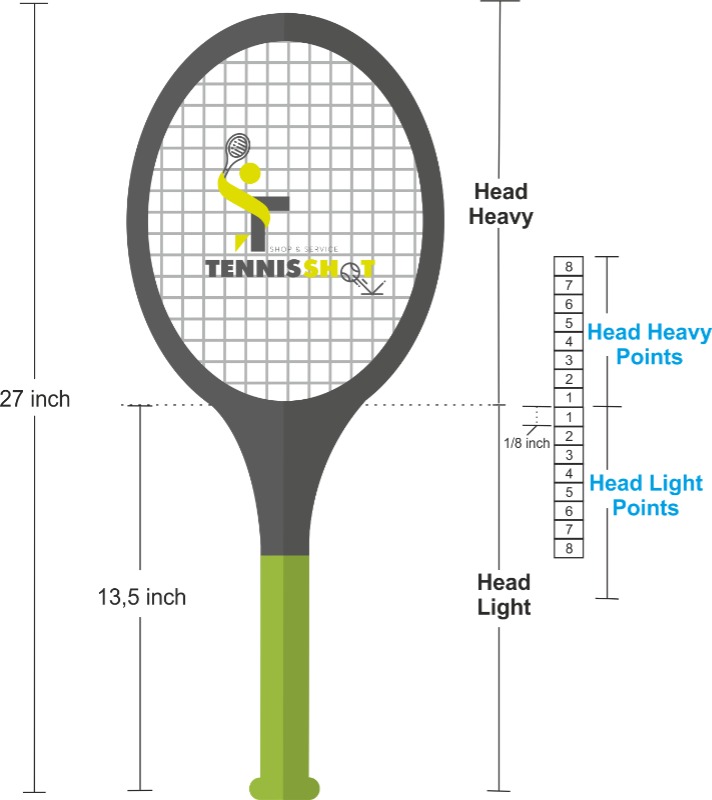
For a longer or shorter racket, use half its actual length as the midpoint before converting the measurement to HL or HH points.
HEAD's racket-selection guidance uses a 330 to 350 mm range for an “even” category. On a 27-inch racket, a measured 340 mm balance is about 0.9 points head-light.
Why swingweight can matter more than the scale reading
Swingweight sets how much effort it takes to accelerate and redirect a racket. Mass farther from the rotation axis adds disproportionately to that resistance, so a lighter, hoop-biased frame can feel less maneuverable than a heavier, handle-biased one.
More rotational inertia helps a racket resist being slowed or deflected at impact. It also makes quick acceleration and changes of direction harder. Players call that solid feel through contact plow-through.
| Observation | Likely factor | Also depends on |
|---|---|---|
| Solid contact against a hard-hit ball | Impact stability and swingweight | Contact point and swing path |
| Easy shadow swing | Manageable rotational effort without ball contact | Real rallies demand more |
| Late racket preparation on returns | Effort to reposition the racket | Reading the serve, footwork and timing |
| Handling feels harder later in a session | Sustained effort and fatigue | Intensity, technique and conditioning |
| Less twisting on off-center contact | Twistweight, a different form of rotational inertia | Impact location and frame construction |
Cross and Bower reported a swing-speed experiment in their 2006 study: four male students swung six rods with maximum effort, and swing speed decreased as swingweight increased.
Some players accept more effort for a racket that holds its line against a fast baseline ball. Others value quick reaction on returns and volleys more. Decide which tradeoff matters for your game before a trial: impact steadiness, rapid repositioning or sustained acceleration.
How heavy is too heavy for your game?
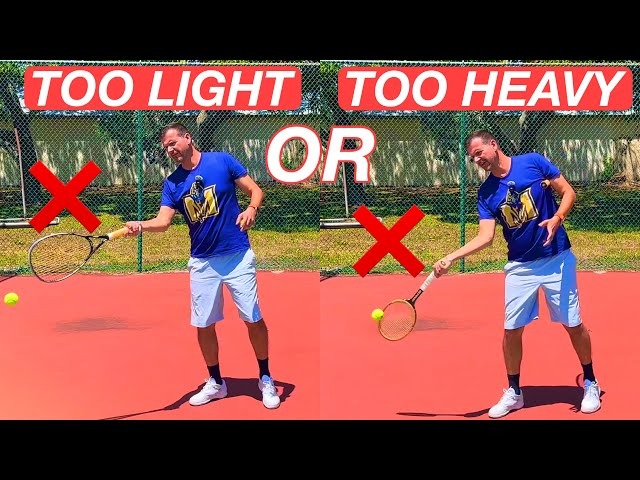
A racket is too demanding when handling it takes enough effort to interfere with preparation, clean contact or enjoying a normal session. No gram cutoff fits every adult recreational player.
The first few hits feel great with a heavier frame. The ball feels under control, and you trust the racket through contact. Then you play another set and find out how much energy it takes to get it ready for the next shot.
One player described borrowing a heavier racket for a full two-hour session:
My friend let me try a Yonex Vcore 97h (330g), and initially it felt great. He lent it to me and yesterday I used it for a 2h hitting session. My normal racquet is a Wislon Blade 98 16x19 v8, which I like quite a bit. I love how the heavier Yonex feels when I hit the ball, and the pace and spin I can generate with it. But the additional weight is a bit unwieldy and requires quite a bit more energy to use. I think I may have played better with it, but had less fun doing so.

Watch for these signs:
- Preparation: You keep struggling to get the racket into position for the next ball.
- Contact: Clean strikes and directional control get worse as the session goes on.
- Effort: The work rises without a payoff on the strokes you care about.
- Enjoyment: You like individual hits but dread another full set with this racket.
Intensity, technique and fatigue affect these signs too, not just the equipment.
A racket that feels better on groundstrokes can fail on serve

Groundstrokes and serves ask different things of a racket. A frame that feels settled in baseline exchanges can throw off timing or direction when you swing it overhead.
One player reported that a 30 g increase helped groundstrokes but caused trouble on serve:
Ive recently upgraded my racquet by 30g in weight. Ive found it incredibly beneficial for ground strokes but I've gone from hitting fast precise serves to much slower serves which I struggle to direct. My hitting partner says I am able to produce lots more spin on my second serve but the speed of my first has decreased dramatically. How can I go about fixing this issue without reducing the weight of my racquet?
How to test two rackets without trusting a five-minute impression
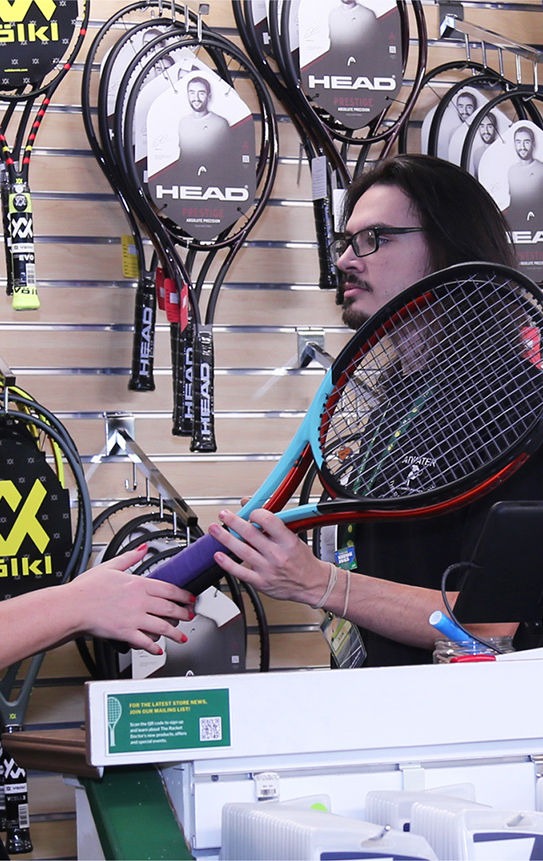
A useful demo compares the shots you actually play and shows what happens after the first excitement fades. Keep the specs for each setup in view and the conditions as similar as you can.
Fill in the worksheet above for each racket, then run the same session with both:
- Baseline rallies: Hit forehands and backhands at a manageable pace. Notice contact quality, directional control and recovery between shots.
- Returns and volleys: Add faster exchanges that need early preparation and a quick change of racket position.
- First and second serves: Record timing, intended placement and the pace you can repeat on each.
- Later-session play: Play a normal length session and compare how the racket feels late with your first minutes. Repeat on another day if you can.
- Session conditions: Note court, balls, opponent or drill intensity, minutes played and any difference in strings or accessories.
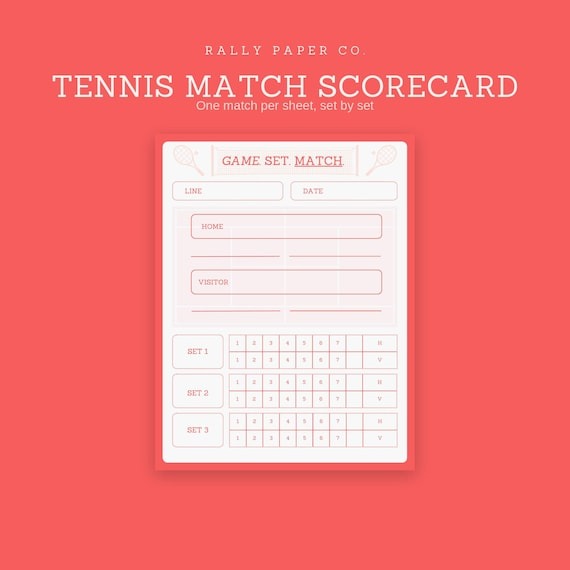
| Activity | Racket A: early / later | Racket B: early / later | Timing, control or effort notes |
|---|---|---|---|
| Forehand and backhand rallies | ________ | ________ | ________ |
| Return of serve | ________ | ________ | ________ |
| Volleys and quick exchanges | ________ | ________ | ________ |
| First serves | ________ | ________ | ________ |
| Second serves | ________ | ________ | ________ |
| Later-session play | ________ | ________ | ________ |
Trust a difference only if it shows up on several strokes and late in the session. For example, a frame may feel more settled in rally contact but need earlier preparation on returns. Write the difference down while it is fresh, along with the equipment and session details.
If significant arm or shoulder discomfort develops during a trial, stop and get persistent symptoms checked. A spec sheet can't tell you the cause.
Adding weight can change balance without undoing swingweight
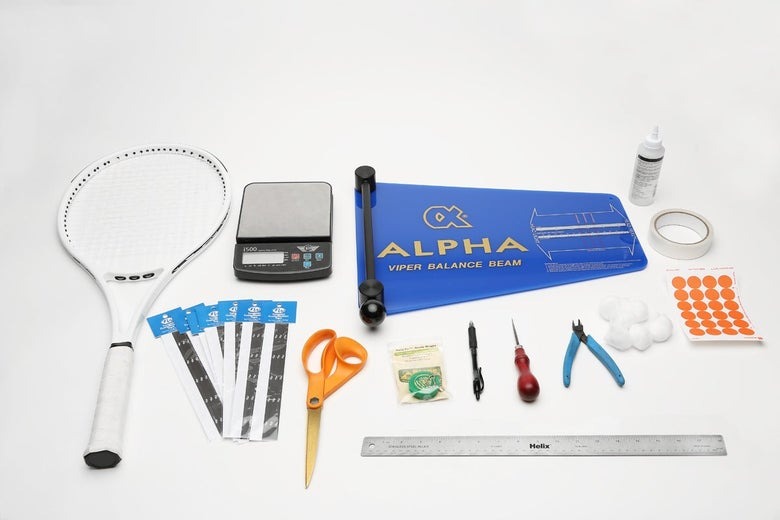
Where you add mass matters. Weight near the tip raises rotational inertia far more than the same amount placed close to the handle.
- At 12 o'clock: Tip mass sits far from the reference axis, so it has a large swingweight effect.
- At 3 and 9 o'clock: Mass on the sides of the hoop also affects resistance to twisting on off-center hits.
- Near the butt: Mass shifts the center of mass toward your hand and raises total static weight, with a smaller swingweight effect than tip mass.
Say you add weight near the tip, then add weight at the butt until the original balance reading comes back. The balance looks unchanged, but total mass and swingweight have both gone up.
Tennis Warehouse's customization guide covers these location effects. The balance change also depends on the racket's original mass and balance point.
When you change a setup, record mass, balance and measured swingweight before and after if you can measure reliably. A reversible practice trial lets you judge timing and effort, and a racket technician can help when you need precise matching.
When to keep a racket and when to try a different one

Keep the racket that holds up on your scorecard and clears the warning signs above. If the setups you tested differed a lot, repeat the comparison with closer ones first.