Start with the rules for a legal serve, an in-bounds ball, and point, game, and set scoring. Before the first serve, agree on the match format, because no-ad, short-set, and match-tiebreak rules change how play is scored. In an unofficiated U.S. match, use the USTA Code to settle uncertain calls or scores, and keep the event's rule sheet or official guide handy.
A serve lands in the wrong box. A shot brushes the sideline. Two friends reach deuce and discover they had different ideas about how the game ends.
Tennis Rules at a Glance: The Five Things You Need to Know
A standard tennis point begins with a serve, continues through legal returns, and ends when a player wins the point under the rules. These five checks cover the basics:
- Serve: The ball starts from behind the baseline and travels toward the diagonally opposite service box.
- Boundaries: The sidelines, baseline, and service-box lines decide whether a ball is in.
- Point: A winner, an opponent's missed return, or another point-ending violation decides the rally.
- Score: Points make games, games make sets, and the number of sets decides the match.
- Format: Advantage or no-ad scoring, short sets, and match tiebreaks change how a game or set ends.
How a Tennis Point Starts and Ends
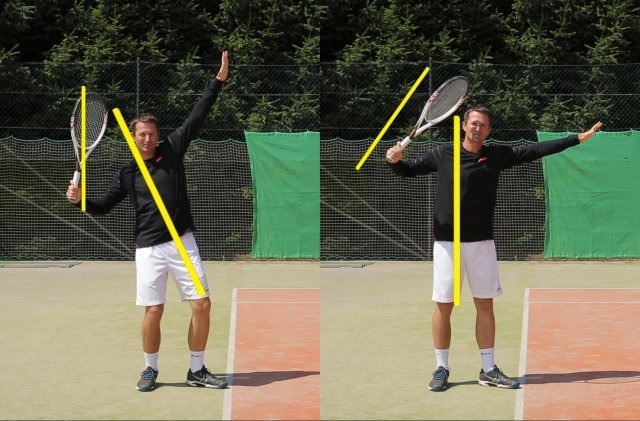
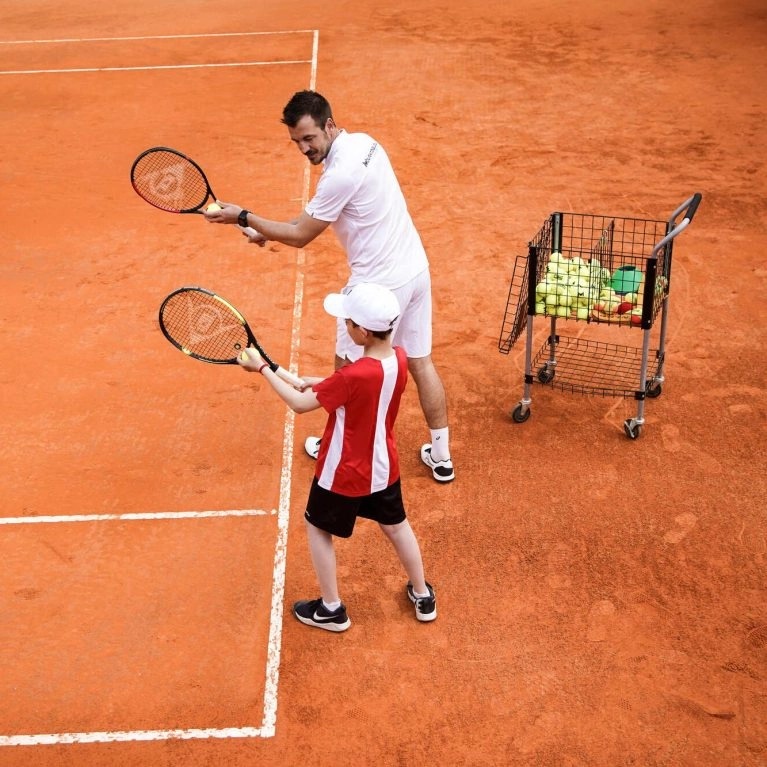
In a standard game, the server starts the first point on the right side of the center mark and serves diagonally into the receiver's correct service box. The next point starts from the left side, and service sides alternate for the rest of the game.
After each standard game in singles, the receiver becomes the server. In doubles, the teams alternate serving games, following the player order established for the set.
The server gets two attempts. A first-serve fault leaves a second attempt; two faults on the same point give the point to the receiver. A serve is a fault if it misses the correct service box or breaks any other service rule.
A serve that touches the net and lands in the correct service box is a let, and it's replayed.
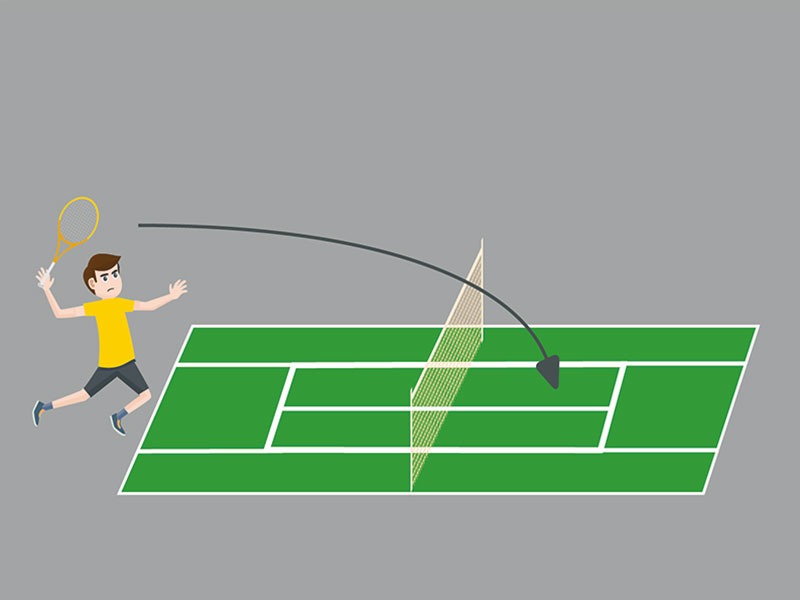
After a legal serve, the receiver returns the ball and the rally continues. You can hit a return after one bounce or volley it before it bounces, with restrictions such as the ban on volleying the return of a serve. A shot into the net or outside the court ends the point. Wheelchair tennis allows two bounces.
In or Out? The Court Lines for Singles and Doubles
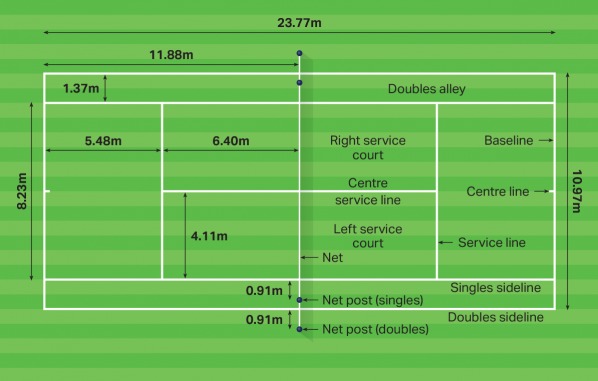
A ball touching a boundary line is in. Under ITF Rule 12, the line forms part of the court it marks. Singles and doubles have different outer sidelines.
| Ball landing | Singles rally | Doubles rally |
|---|---|---|
| Touches the singles sideline | In | In |
| Between the singles and doubles sidelines | Out | In |
| Touches the baseline | In | In |
| Beyond the outer sideline | Out | Out |
The strip outside the singles sideline and inside the doubles sideline is the doubles alley. A ball landing there is out in singles and good in doubles.
Serve boundaries are narrower than the full doubles court. Even in doubles, the serve must land in the correct diagonal service box.
Tennis Scoring: Point, Game, Set, Match
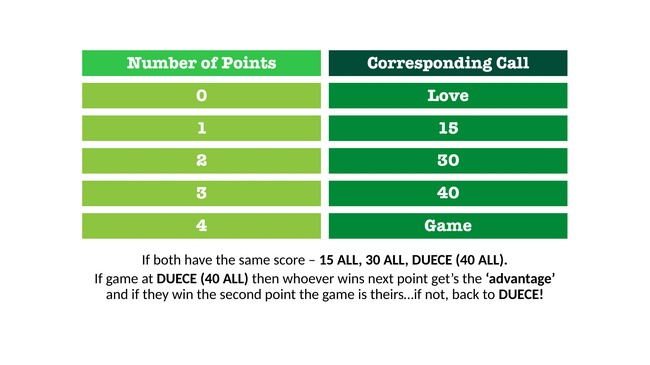
In a standard advantage game, points are called love, 15, 30 and 40. The server's score is announced first, so 30-15 means the server has won two points and the receiver has won one.
| Situation | Score name | Meaning |
|---|---|---|
| No points won | Love | Zero |
| First point won | 15 | One point in the game |
| Second point won | 30 | Two points in the game |
| Third point won | 40 | Three points in the game |
| Both reach 40 | Deuce | A two-point margin is needed |
| One wins the point after deuce | Advantage | One more consecutive point wins the game |
Take a game where the server wins the opening point (15-love), the receiver wins the next (15-all), and the server wins twice more (30-15, then 40-15). Another server point wins the game. From deuce, if the server wins a point and the receiver wins the next, the score returns to deuce.
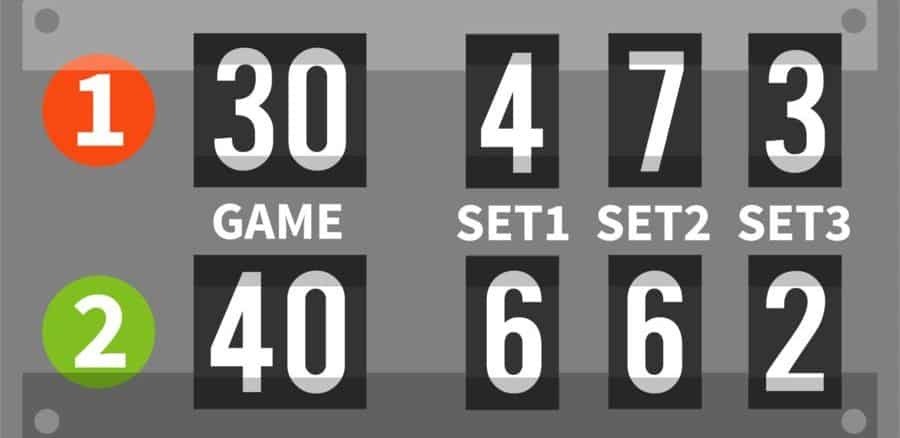
Games build sets. In a standard tiebreak set, the first player to win six games with a two-game lead wins the set; 6-4 is one example. At 6-6, a tiebreak decides the set. In an advantage set, play continues from 6-6 until someone leads by two games.
Sets build matches. The first player or team to win two sets wins a best-of-three match; three sets win a best-of-five match. The format may use a match tiebreak in place of a deciding set.
Check the Match Format Before the First Serve
The scoring method decides how a tied game, set, or match ends. Standard advantage scoring is one option; approved alternatives include no-ad games, short sets, and match tiebreaks. The event's format sheet says which ones apply.
| Format | What changes | Agree on |
|---|---|---|
| Standard advantage game | At deuce, a player needs two consecutive points to win | Whether advantage scoring applies |
| No-ad game | The next point at deuce decides the game | Which side the receiver takes for the deciding point |
| Standard tiebreak set | A tiebreak resolves the set at 6-6 | The set-tiebreak rules |
| Match tiebreak | A tiebreak may replace a deciding set | Whether the final set is replaced |
| Short set | Approved shorter set structure | Which short-set version is used |
| Fast4 or branded short format | Organizer-defined combination of shorter scoring rules | The event's lets, scoring, and tiebreak rules |
Under the ITF no-ad option, the receiving player or team chooses the side for the deciding point; doubles partners keep their receiving positions. In mixed doubles, the player of the same gender as the server receives that point.
For an organized match, use the format sheet. In an informal scored match, you and your opponent can agree on the number of sets, advantage or no-ad scoring, and what happens at a set tie. That agreement doesn't override the regulations of a sanctioned event. The ITF Rules of Tennis 2026 describes standard rules and approved alternatives.
Who Makes Line Calls Without an Umpire?

In an unofficiated U.S. match, each player makes line calls on their side of the net. Under the USTA Code, an out call requires a clear view of space between where the ball landed and the line. Genuine doubt gives the opponent the benefit of the call.
If the receiver sees the ball touch the service line, it is good.
Doubles partners may have different views of the same landing. If they disagree, the Code treats the ball as good for the opponents.
The USTA's 2026 edition of Friend at Court includes The Code, which sets out line-call and conduct responsibilities for unofficiated play.
When an official is assigned, the competition's officiating and appeal procedures apply. The USTA Friend at Court 2026 provides the detailed Code procedures.
What If Nobody Remembers the Score?
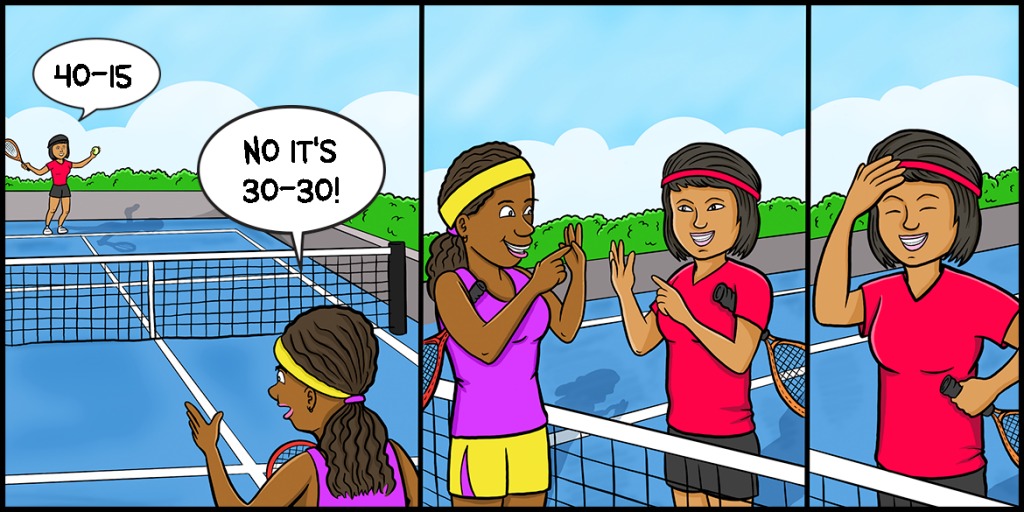
When players disagree about the score in an unofficiated match, the USTA Code tells them how to reconstruct it. Section 32 gives a preferred sequence: count every point or game both sides agree on and replay only the disputed point or game. A coin toss can also settle which court or server applies to a replayed point or game. If they can't reconstruct the score that way, they may resume from a mutually agreed score. A racket spin or coin toss is the final fallback under the Code.
Say one player remembers 30-15 and the other remembers 30-all. Start by listing which points each remembers winning, and separate the agreed results from the disputed ones.

One recreational player described losing track of recent point scores:
What is it about tennis that makes us forget single-digit scores that we knew mere seconds ago? I can't tell you how many times in a set I forget the game's score or, within a game, how many times I forget the points score. How is it possible that we can so easily forget the points that just happened moments ago? And I know this is a phenomenon across all players; it happens to everyone every match I play, both singles and doubles. Is it something about the focus on the present point that makes our brain immediately forget, or is it something else? I can't think of any other activity where memory fades so quickly. I'd be interested to know if anyone has ever seriously studied this.
Announcing the score clearly before each point is the ordinary precaution under the Code's score-announcement duties. When a dispute does happen, the agreed-points procedure resolves it.
Unusual but Legal Rally Situations

A ball can land legally in an opponent's court and then spin or blow back over the net. ITF Rule 25 lets the opponent reach across the net to return it after that bounce, as long as the return meets the rule's conditions, including the restriction on touching the net.
A recreational player described an accidental shot that bounced back across the net and caused an argument about who had won:
About a year ago when I was having a hit with a friend I hit a shot that spun back over the net (It was a miss hit from the baseline so won't pretend it was a crazy dropshot lmao). We had a laugh about it but then he called the score as if he had won the point. After a bit of talking it turned out he though that the point was his because it bounced back into my side, and I legit had to pull out the rules to convince him otherwise. So yeah that was super strange to me as I thought that rule was at least fairly well known. Anyone else had any similar experiences?
The shot must first land inside the opponent's court. If the opponent doesn't make a legal return, the original striker wins the point.
Practice Rallies Aren't the Same as a Scored Match

An informal hitting session can skip scores when the players agree the purpose is practicing strokes. Once you play a scored match, the agreed or required format decides the result.
Find the Rule That Matches Your Situation
| Situation on court | Where to go |
|---|---|
| Unsure which diagonal box receives the serve | Serve and rally basics |
| A ball clips the sideline or lands in the alley | Singles and doubles boundaries |
| Deuce, 6-6, or how sets decide a match | Scoring and sets |
| No-ad, match tiebreak, short set, or Fast4 | Match formats |
| Doubt about an out call or doubles partners disagree | Unofficiated line calls |
| Players remember different scores | Disputed-score procedure |
| A bouncing ball spins back over the net | Rule 25 rally situations |
For a complete tiebreak serving order or a detailed disputed-call ruling, the ITF rules or USTA Code remain the authoritative reference. You can also apply those distinctions to eleven match situations in the tennis rules quiz.