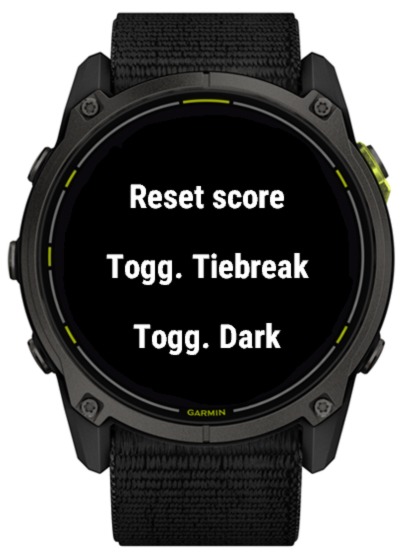
Points win games, games win sets, and sets win the match. When you call the score, say the server's number first. Before you decide a game or match is over, check whether the event uses advantage scoring, no-ad scoring, or a match tiebreak.
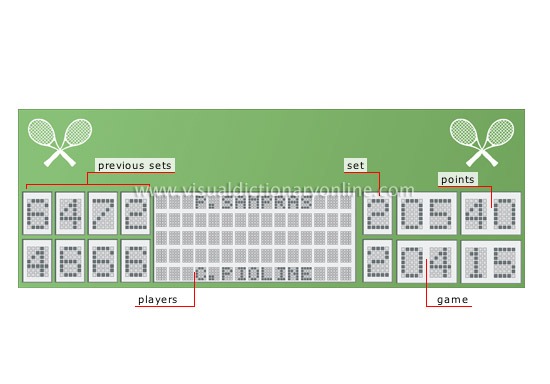
A scoreboard might show 30-40 in the current game, 5-5 in the current set, and 1-0 in completed sets.
What a Tennis Score Counts: Points, Games, Sets, and Matches
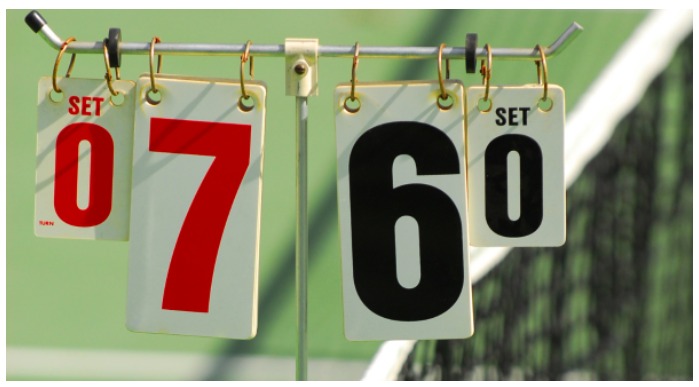
Each point you win changes the score of the current game, which runs on love, 15, 30, and 40. A set counts games. The match score counts sets won. Those three scoreboard numbers break down like this:
- 30-40: the point score in the current game.
- 5-5: the games won by each player in the current set.
- 1-0: the completed sets won by each player.
A player can lead by a set and still trail in the game being played. The ITF Rules of Tennis 2026 define the scoring system.
Love, 15, 30, 40: How Points Work in a Game
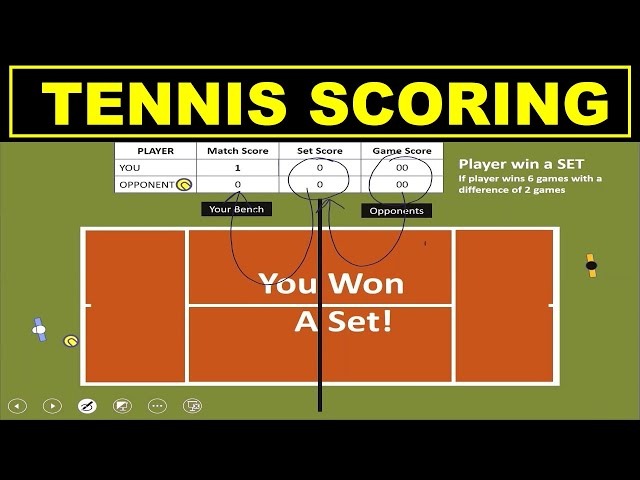
The traditional calls are labels for points won, so 30 means two points in that game.
| Points won | Spoken score |
|---|---|
| 0 | Love |
| 1 | 15 |
| 2 | 30 |
| 3 | 40 |
A new game starts at love-all. Suppose the server wins the first rally: 15-love. The receiver wins the second: 15-all. Two more points for the server take the score to 30-15 and then 40-15.
A standard game takes at least four points and a lead of two. From 40-15, one more point wins the game for the server. From 40-30, a point for the receiver makes it deuce.
Deuce and Advantage: When the Game Ends
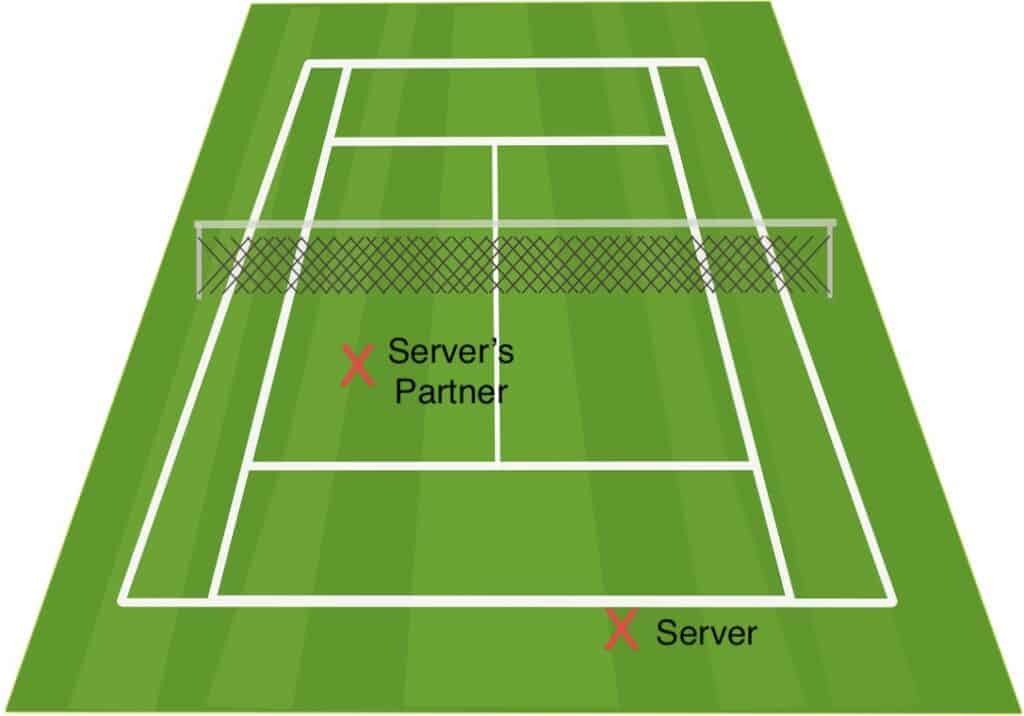
Deuce is the tied score once each player has won at least three points. From there, one point gives a player the advantage. A second in a row wins the game.
Ad-in means the server has advantage. Ad-out means the receiver has advantage.
- Deuce: the score is tied.
- Server wins: advantage server, or ad-in.
- Receiver wins: back to deuce.
- Receiver wins again: advantage receiver, or ad-out.
- Receiver wins again: game to the receiver.
A game can return to deuce again and again, so a standard advantage game has no maximum number of points.
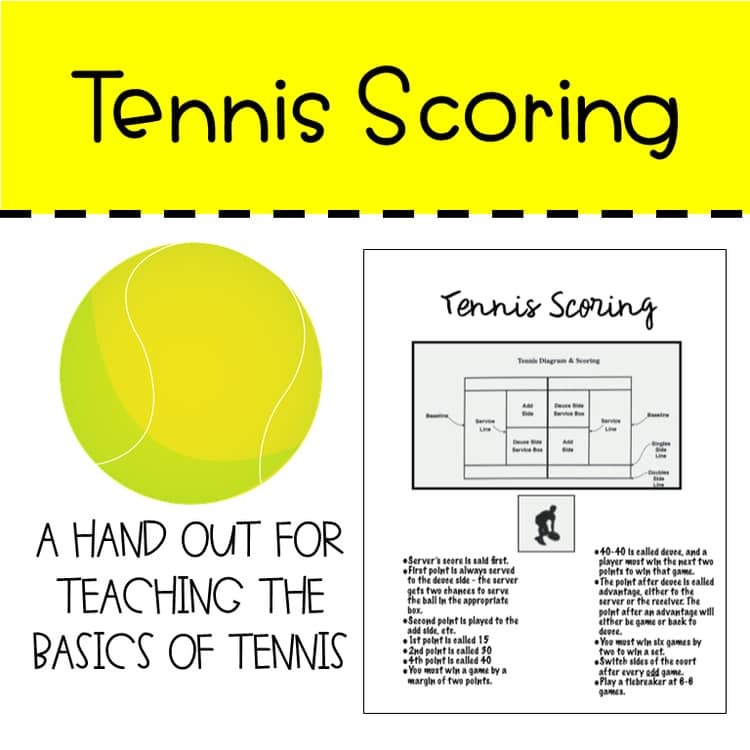
At 30-all, each player has won two points and deuce has not been reached. At 40-30, the server holds game point. Ad-in applies only after deuce.
How to Call the Tennis Score (Server First)

Say the server's number first. If the server has won two points and the receiver one, the call is 30-15.
In an unofficiated U.S. match, the server announces the game score before the first point of a new game and the point score before each point after it.
USTA's Friend at Court 2026 records this practice in The Code, §31.
One player's complaint about silent servers:
I can’t stand it when the person I’m playing in a match never calls out the score when serving. I’ve ended up in a few scoring disagreements over the years and it always happened when they weren’t keeping track out loud. Even worse when it’s a tiebreak. Still not as bad as people calling 40-30 “ad in”
40-30 is game point, and ad-in only follows deuce. In an event with an official, follow the official's scoring directions.
How Many Games Do You Need to Win a Set?
In a conventional set, a player wins at least six games and finishes two games ahead. A tiebreak-set format resolves a 6-6 tie with a tiebreak.
| Games score | Set status | Reason |
|---|---|---|
| 6-4 | Finished | Six games and a two-game lead |
| 6-5 | Still playing | Only a one-game lead |
| 7-5 | Finished | Two-game lead after the twelfth game |
| 6-6 | Tiebreak next | In a tiebreak set, the games are tied |
| 7-6 | Finished | Winner took the set tiebreak |
At 6-5, the next game decides the route. A win for the leader makes it 7-5. A win for the trailing player makes it 6-6. In an advantage-set format, play continues beyond 6-6 until someone leads by two games.
How a Tennis Tiebreak Works and Why a Set Can Finish 7-6
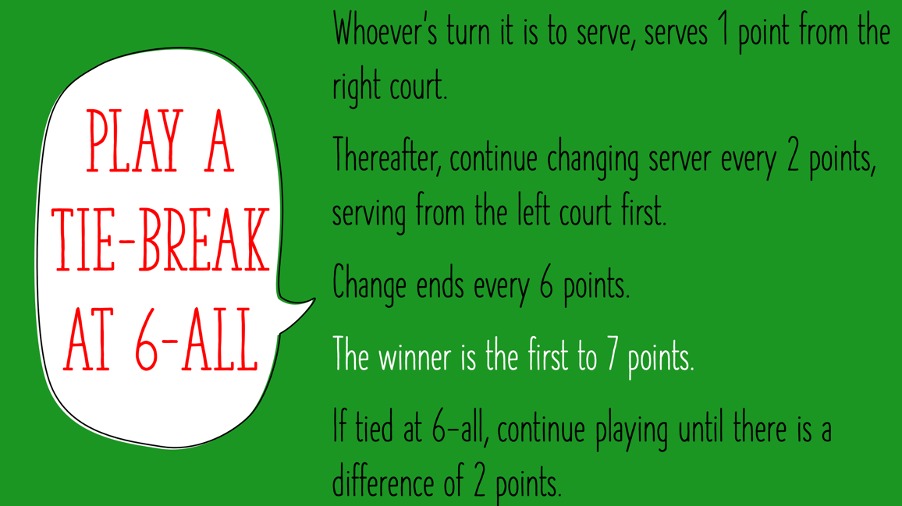
When a tiebreak set reaches 6-6 in games, the tiebreak counts points as plain numbers: 0, 1, 2, 3, and so on. The first player to reach at least seven points with a two-point lead wins the tiebreak and the set.
Suppose Player A wins a tiebreak 7-5. The tiebreak score was 7-5, but the set score reads 7-6. A tiebreak tied 6-6 in points keeps going, and 8-6 completes it.
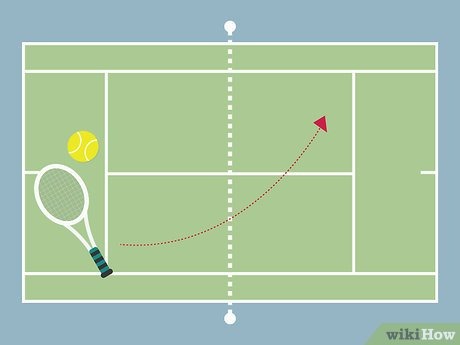
Serving changes too. The opening server serves one point, then service alternates in two-point turns.
In USTA match reporting, 7-6(5) records a set won 7-6 after a tiebreak in which the losing player won five points. The parentheses refer to tiebreak points, even though the main set score counts games.
How Many Sets Win the Match?
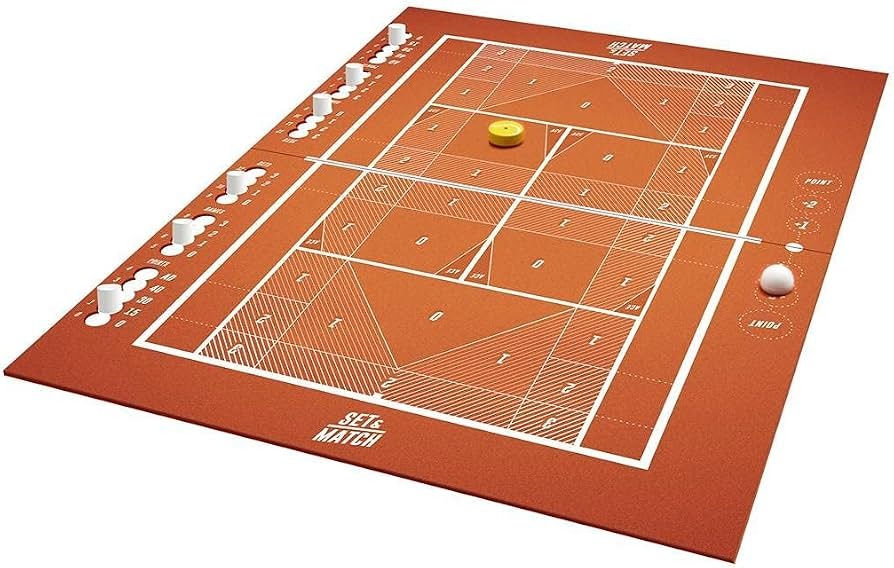
In a best-of-three match, the first player to win two sets wins the match. In best-of-five, the target is three sets. Scores of 6-4 and 7-5 therefore finish a best-of-three match for the same winner, while a two-set lead leaves a best-of-five match open. Some formats replace a deciding set with a match tiebreak.
When No-Ad Scoring or a 10-Point Match Tiebreak Changes the Answer
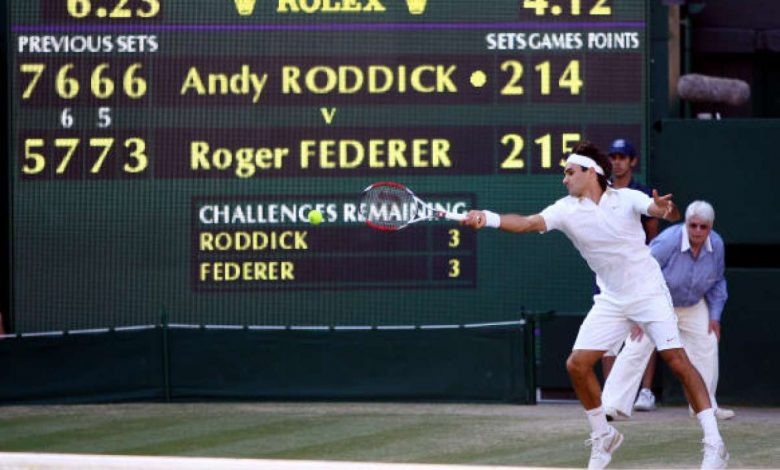
Alternative formats change what ends a game, set, or match.
| Format | How points are counted | What ends it |
|---|---|---|
| Standard advantage game | Love, 15, 30, 40, deuce and advantage | At least four points, leading by two |
| No-ad game | Same calls through deuce | The next deciding point wins the game |
| Standard set tiebreak | Numerical points | At least 7 points, leading by two |
| Ten-point match tiebreak | Numerical points | At least 10 points, leading by two; replaces a deciding set |
| Ten-point final-set tiebreak | Numerical points | At least 10 points, leading by two; played at 6-6 in the deciding set |
At deuce in no-ad scoring, a single deciding point ends the game. Under the ITF procedure the receivers choose the side on which to receive that point. In doubles, the receiving partners cannot switch positions for it. In mixed doubles, the receiver must be the player of the same gender as the server.
One match tiebreak got cut off by closing time:
Was playing a very close match, 2 sets then 10-point tie break. First two sets were very close and lengthy, so at 3-3 in the tie break, the venue actually started closing, and we're told we have 5 minutes left. A few rushed points later, it's now 7-4 and we have to leave. So, two options have been suggested; resume the breaker as-is, or restart the tie-break. Is there a "proper" way to move forward. For obvious reasons, each player has a different preference 😂
At 7-4, the tiebreak is unfinished. 10-8 would end it, 9-9 would not. The event's rules decide whether you resume or restart.

Read a Full Tennis Score: One Worked Example
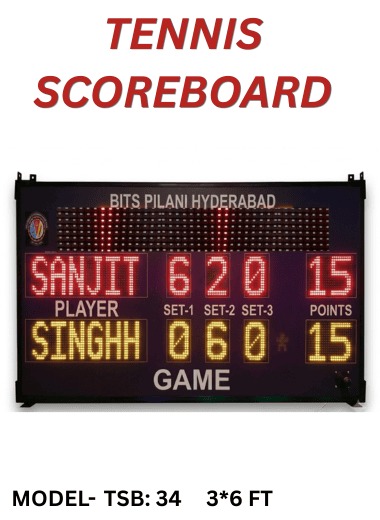
Imagine a best-of-three match between Player A and Player B. Player A is serving; the scoreboard shows:
| Score level | Player A | Player B |
|---|---|---|
| Sets already won | 1 | 0 |
| Games in the current set | 5 | 5 |
| Points in the current game | 30 | 40 |
Player B has game point at 30-40 on A's serve and needs one more point to win the game. If B wins it, B takes the game and leads 6-5 in the set. If A wins it, the game reaches deuce and the set stays 5-5.
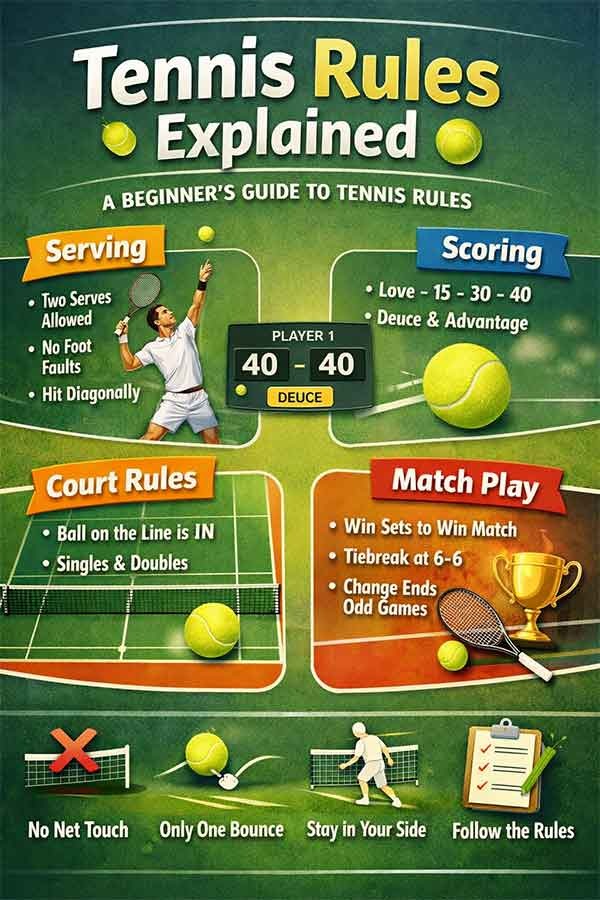
What to Do When You Forget or Disagree About the Score

A dispute is easier to settle when both players know the last score they accepted. One recreational player on how fast scores slip away:
What is it about tennis that makes us forget single-digit scores that we knew mere seconds ago? I can't tell you how many times in a set I forget the game's score or, within a game, how many times I forget the points score. How is it possible that we can so easily forget the points that just happened moments ago? And I know this is a phenomenon across all players; it happens to everyone every match I play, both singles and doubles. Is it something about the focus on the present point that makes our brain immediately forget, or is it something else? I can't think of any other activity where memory fades so quickly. I'd be interested to know if anyone has ever seriously studied this.
In an unofficiated U.S. match governed by USTA Friend at Court 2026, The Code §32 lists the steps for settling score disputes, in order of preference.
- Stop before the next point. Identify the last accepted score and the points or games both players can account for.
- Count agreed results and replay the disputed ones. This is the first method in §32. If you both agree the game reached 30-all before two later disputed points, keep 30-all and replay only those points.
- Follow the event's own procedure. An official or organizer resolves anything the competition's rules cover.