
For a regular recreational match, use the singles sidelines for singles rallies and the doubles sidelines for doubles rallies. The diagonal service boxes are identical. Doubles gives the four players a fixed serving sequence and a designated receiving side for each set.
Singles vs. Doubles Tennis Rules at a Glance
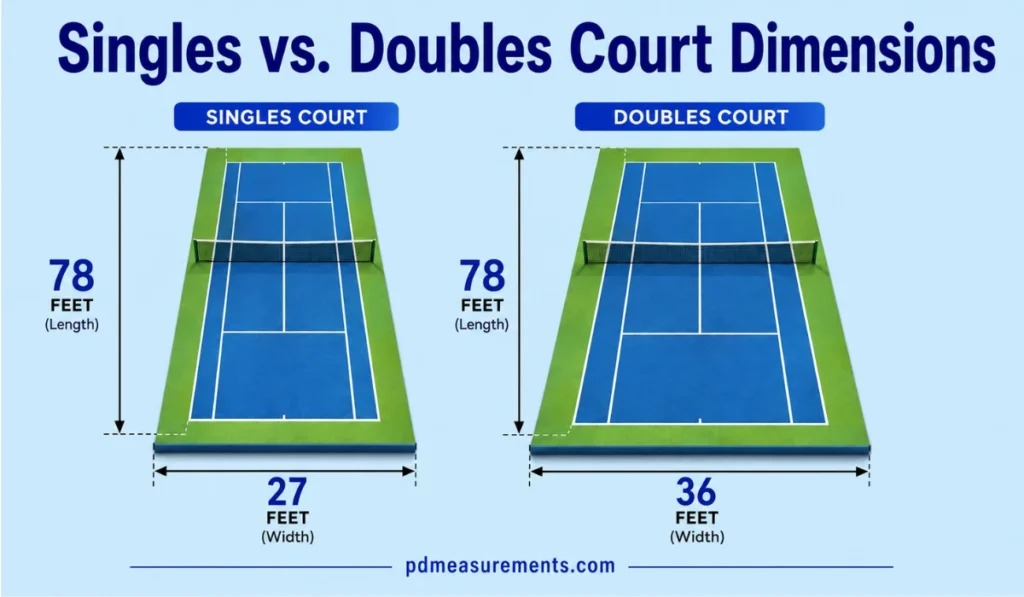
One player covers each side in singles. In doubles, two teammates defend the wider court. The painted service boxes and the basic point scoring are the same in both.
To judge a disputed ball, establish whether it was a serve or a rally shot, then identify the active sideline for that format.
| Rule | Singles | Doubles |
|---|---|---|
| Players | 1 per side | 2 per side |
| Court length | 78 ft | 78 ft |
| Rally court width | 27 ft | 36 ft |
| Legal serve landing | Diagonal service box | Same diagonal service box |
| Serving order | Opponents alternate service games | Four players follow a set serving order |
| Receiving | One receiving player | One assigned receiver per side |
| Basic scoring | Love, 15, 30, 40 | Same point values |
The extra nine feet of width form two alleys that are playable in doubles rallies.
Which Lines Are In for Singles and Doubles?
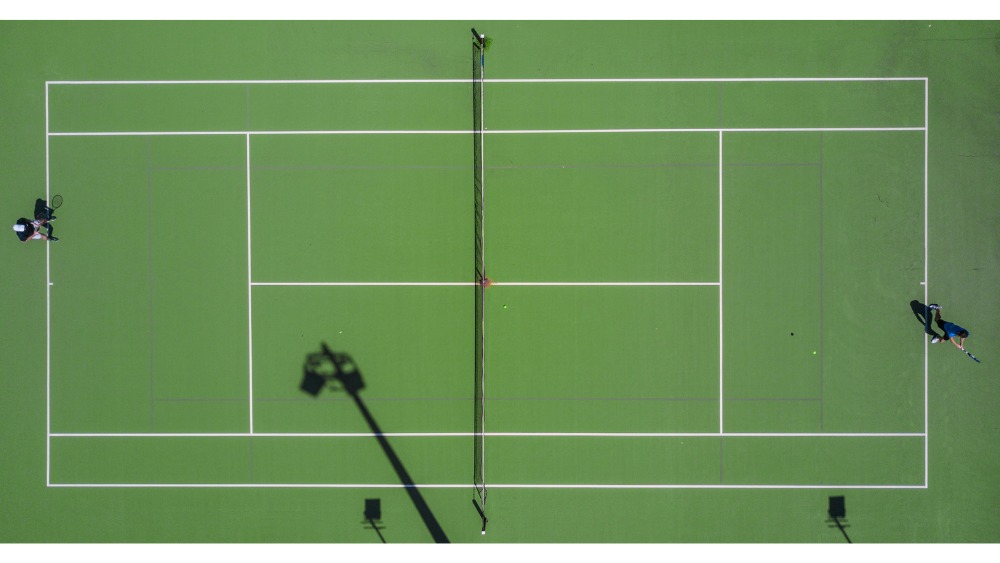
The doubles alley is in play during a doubles rally and out during a singles rally. In either format it lies outside the service box.
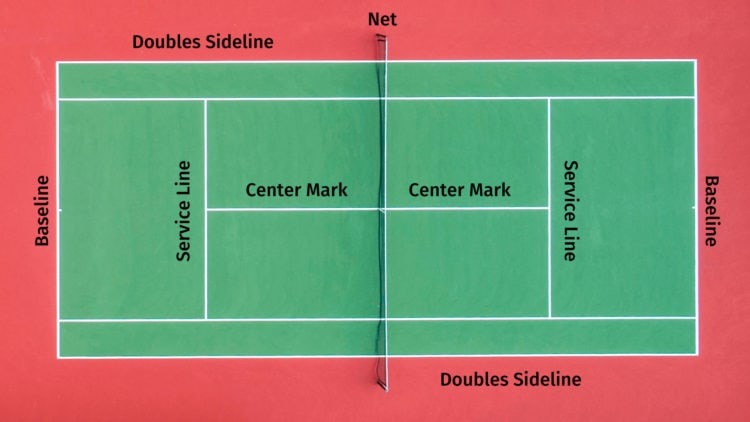
Each side of the court has an inner singles sideline and an outer doubles sideline. The 4.5-foot strip between them is the doubles alley, sometimes called the tramline.
| Where the ball lands | Singles | Doubles |
|---|---|---|
| Rally shot inside the singles sidelines | In | In |
| Rally shot inside the doubles alley | Out | In |
| Rally shot touching the outer doubles sideline | Out | In |
| Serve landing inside the diagonal service box | Good serve | Good serve |
| Serve landing in the doubles alley | Fault | Fault |
| Serve touching the correct service line | Good serve | Good serve |
A line belongs to the area it marks. Under ITF Rule 12, a ball that touches a boundary line counts as in.
A wide crosscourt shot touches the outer doubles sideline. In doubles it's good. In singles it's out. Land that same spot on a first serve and it's a fault in both formats, because the ball missed the diagonal service box.
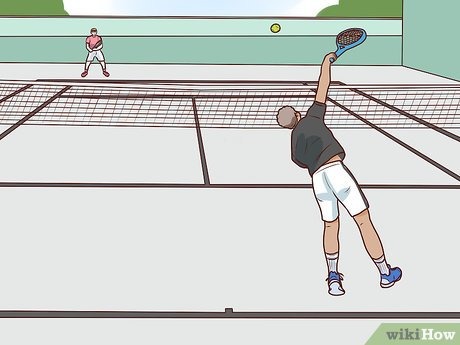
The service boxes are the same whether two or four people play. The center service line divides them, and each service line is 21 feet from the net, as specified in the ITF Rules of Tennis 2026.
Serving Rules: Where to Stand and Who Serves Next
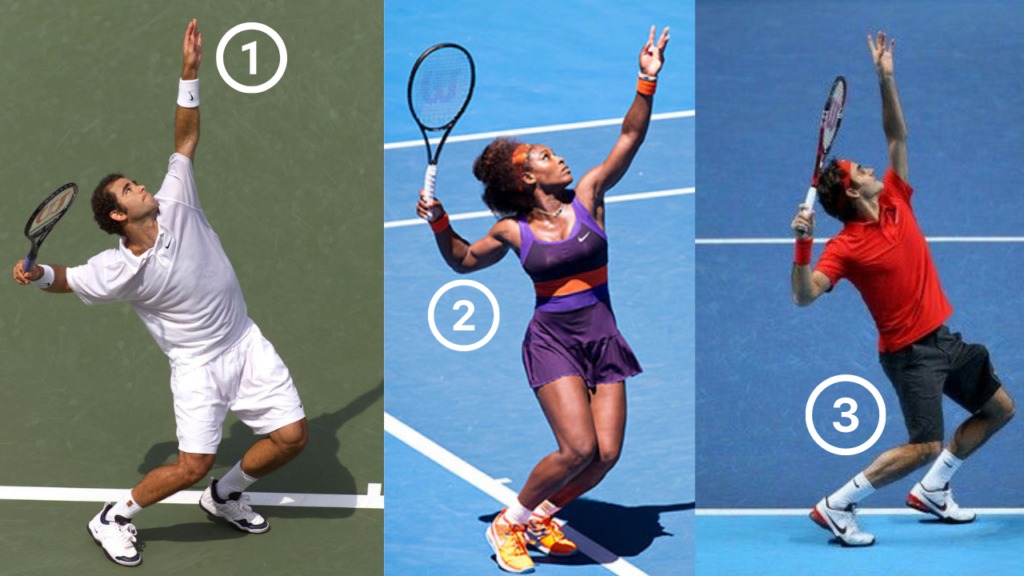
In both formats, the server starts behind the baseline and hits into the diagonally opposite service box. Doubles allows a slightly wider serving position, and the four players share the service games in a fixed sequence.
Can a doubles player serve from behind the alley?
Yes. ITF Rule 18, Case 1 allows a doubles server to stand behind the baseline between the singles sideline and the doubles sideline.
A singles server must stay within the narrower legal serving position. In either format, the baseline, center-mark and sideline foot-fault rules apply.
Who serves each game in doubles?
A player serves an entire game, and teammates take alternate service games for their team. Once the starting servers are chosen, the four-player order repeats through the set.
Team A is Alex and Bailey. Team B is Casey and Drew. They pick Alex and Casey to serve first.
| Game | Serving player | Team |
|---|---|---|
| 1 | Alex (A1) | A |
| 2 | Casey (B1) | B |
| 3 | Bailey (A2) | A |
| 4 | Drew (B2) | B |
Alex serves again in game five.
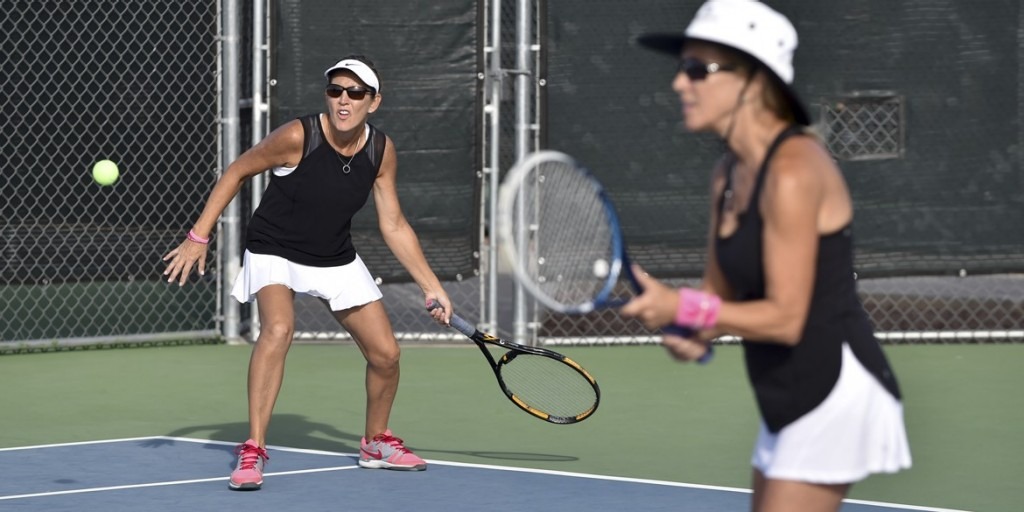
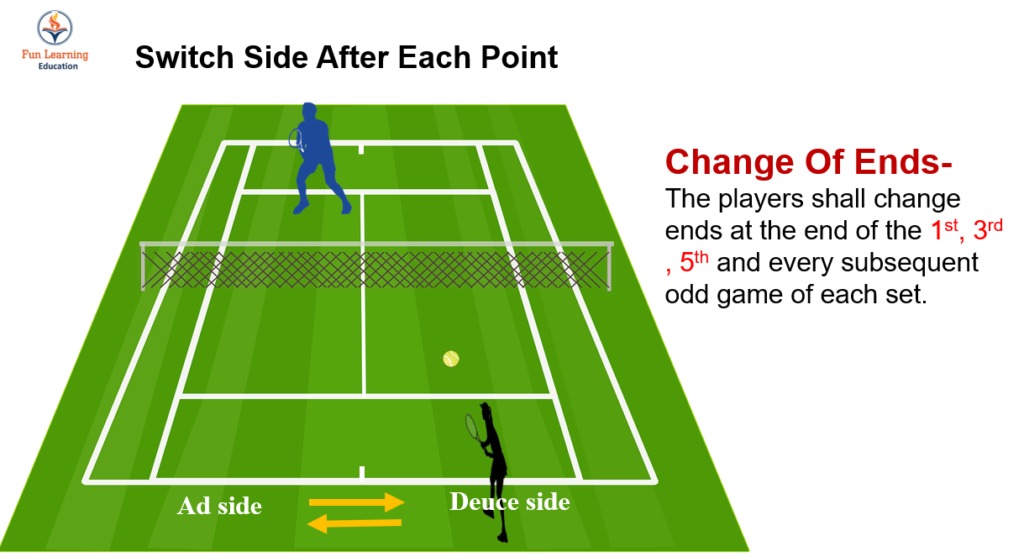
Within a service game, the server alternates between the deuce side and ad side. Switching sides between points does not pass the serve to the partner.
Who Can Return the Serve in Doubles?

The receiver for the relevant service side returns the serve. After that, either teammate may play the next ball.
The receiving pair puts one partner in the deuce court on the right and the other in the ad court on the left. Those assignments stay in place for the set.
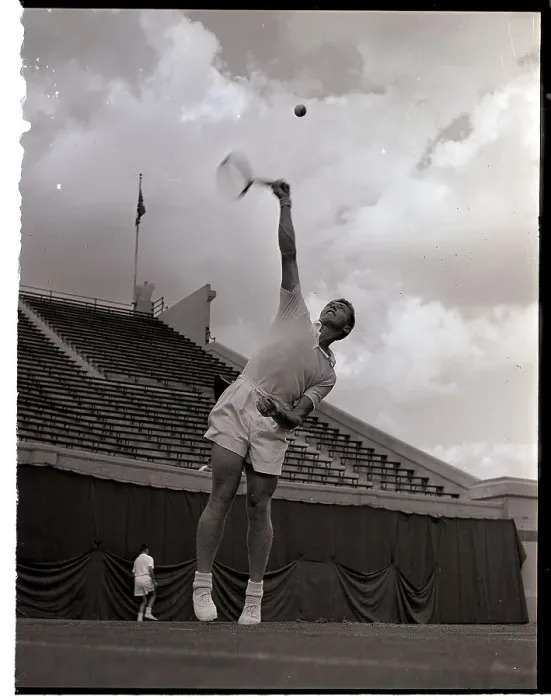
A short underhand serve can tempt the partner at the net to intercept it. The assigned receiver must let the serve bounce first: volleying a serve loses the point under ITF Rule 24(e).
An r/10s thread describes exactly this situation:
I was playing doubles and my partner was receiving the opposing player's serve behind the baseline. The opposing player decided to hit a light underhand shot and so I (closer to the net) moved over to the ball in an attempt to hit it. I backed off at the last second and my partner hit it. The opposing player said that what I did was against the rules.
The net player backed away, and the assigned receiver hit the ball.
ITF Rule 15 assigns the receiver. Rule 26, Case 5 permits either partner to stand on their own side of the net, inside or outside the court. Moving toward the ball isn't a violation by itself. Hindrance depends on what the player did and whether it bothered the opponent.
One rare format changes this. Under ITF Appendix VI, if an event combines Short Sets, No-Ad scoring and the No-Let rule, either partner may return a serve that touches the net, strap or band and still lands in the proper service box.
Can Doubles Partners Change Serving or Receiving Order Between Sets?
Yes. Doubles partners can choose a different starting server and swap receiving sides at the start of a new set. The chosen order then governs that set.
Players often miss this rule, so a stronger server opening the second set can look suspicious to opponents.
One player ran into it in a doubles match:
Played a 3.5 doubles match yesterday and one opponent was clearly the better of the two. They won the first set and had serve to start the second. Instead of staying in order, they let the better player serve to start the set. Before he served I called out that it was the other player’s serve and they said that you can change serve order at set. We won the set and went to tie breaker, and they changed serve order again, back to the better of the two players. (Where we won 10-4, taking the match!)
Under ITF Rule 14, each team may choose which partner serves its first service game in the new set. Rule 15 also lets the receiving pair reassign its deuce-side and ad-side receivers at the set boundary.
| When the change is proposed | Serving order | Receiving sides |
|---|---|---|
| During an ordinary set | Existing order continues | Existing assignments continue |
| Beginning of a new set | Team may select a different first server | Partners may swap sides |
| Match tiebreak replacing the final set | Existing team service order continues; partners may change their internal serving order | Partners may change their receiving sides |
The match-tiebreak row applies only when the tiebreak replaces the deciding set. An ordinary in-set tiebreak follows the existing set's receiving arrangements.
Is Tennis Scoring Different in Singles and Doubles?
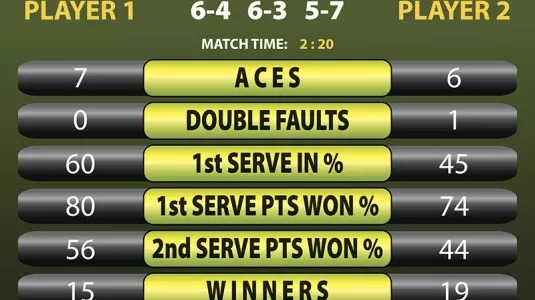
Standard tennis uses love, 15, 30 and 40 in both singles and doubles, followed by deuce and advantage when required. An event may specify no-ad scoring or a match tiebreak in place of a deciding set for either format, and the announced format decides which applies.
Line Calls in Doubles: Can the Non-Receiving Partner Call Out?
In an unofficiated US doubles match, either teammate may call a ball out after clearly seeing it land out. Being the service receiver is a separate role.
Another r/10s player called a serve long from the net position and was challenged by the opposing team:
I was recently playing a doubles match and called a serve long while playing as the net player on the receiving team. My call was timely, but my opponents claimed that only the actual returner of serve can make that call. I argued that I understand that the baseline returner has a better perspective of whether a shot is wide on either side, but I (as the net player) have a better vantage point to call a ball long.
ITF Rule 15 decides who returns the serve, but line calls in an unofficiated match fall under USTA The Code. Under The Code #9 in USTA Friend at Court 2026, either doubles partner may make a call. The player needs a clear view, and doubt goes to the opponents.
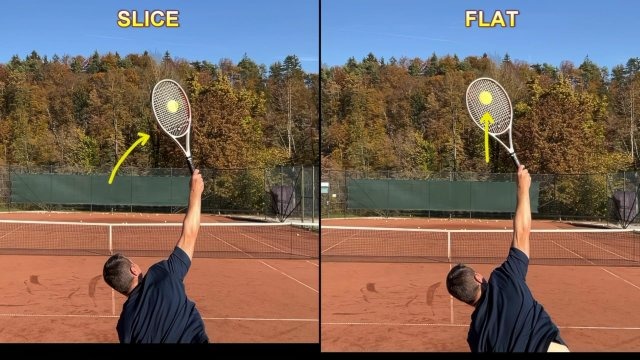
In the USTA's 2026 Friend at Court, The Code #25 explains who watches what: the receiving net partner watches the service line, and the receiver watches the sideline and center service line.
If one teammate calls a ball out and the other positively sees it good, The Code #14 gives the opponents the favorable call. A partner who simply didn't see the landing hasn't contradicted the caller.
Under The Code #12, reversing an out call awards the point to the opponents without a replay. Reversing a fault call on a serve that touched the net is a separate exception.
What If the Wrong Doubles Player Receives the Serve?
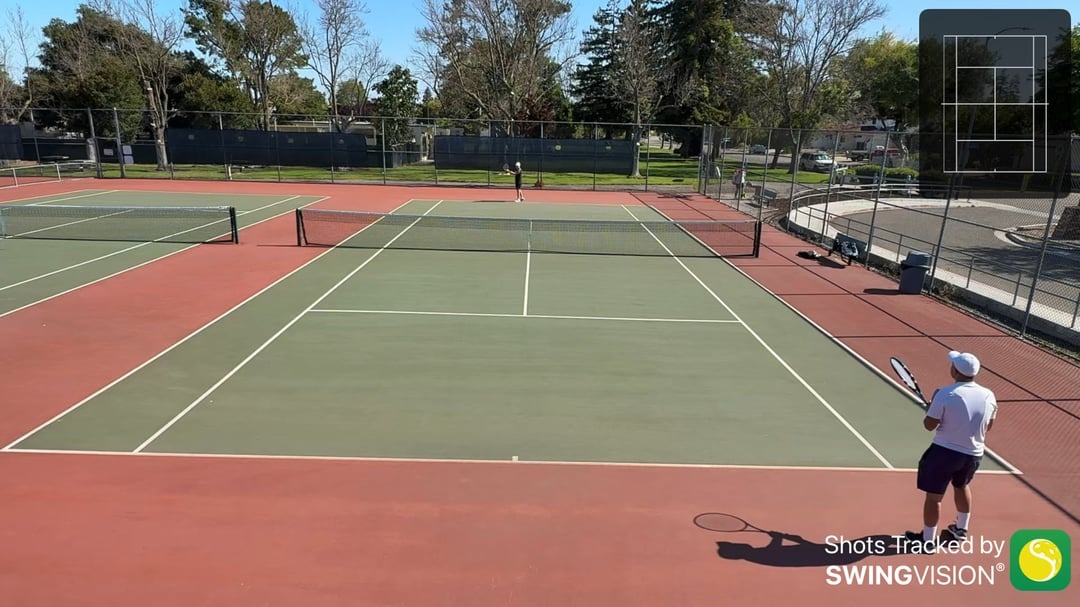
If a doubles team finds its receiving order reversed during a game, ITF Rule 27(e) says to keep the points already played and continue with the altered order until that game ends.
Say Alex was assigned to receive from the deuce court and Bailey from the ad court. During a service game, they start receiving from the opposite sides, then notice.
To fix it:
- Keep the completed points: Do not replay earlier points because of the mix-up.
- Finish the current game: Continue with the altered receiving arrangement until that game ends.
- Restore the original assignment: When the team next receives, return to the receiving order established for the set.
This rule also covers a receiving-order mistake found during a tiebreak game.
The correction applies even when the unintended receiver already played a point, and it doesn't award the server that point automatically. Serving out of turn and serving from the wrong half of the court have separate corrections under Rule 27.
Before Your First Doubles Game: A One-Minute Rules Check
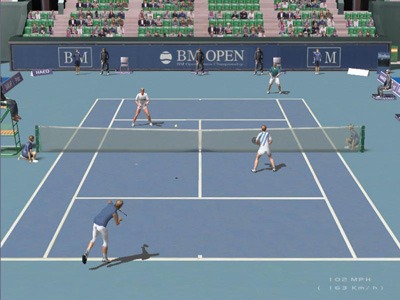
At a public court, four players who have never teamed up before can settle the format and starting positions in a minute.
- Choose the format before the first serve: Say whether the session is singles or doubles, and whether the match has advantage games, no-ad games or a replacement deciding-set tiebreak.
- Use the pre-match toss: In a rule-governed match, the toss winner can choose to serve or receive first, choose an end, or let the opponents choose. Once the first-serving team is set, it names the partner who serves that game.
- Assign the receivers: Each doubles pair names its deuce-side and ad-side receiver.