
In an unofficiated U.S. match, you call balls on your side of the net. A ball touching the line, or one you cannot clearly call out, is good. Do not replay a point because someone disputes a call. If you reverse an out call, your opponent wins the point under The Code. If bad calls become a pattern, ask an available official for help. When an authorized official or an event-approved electronic line-calling system governs the decision, follow that event's procedure.
Tennis line-call disputes: the quick ruling table
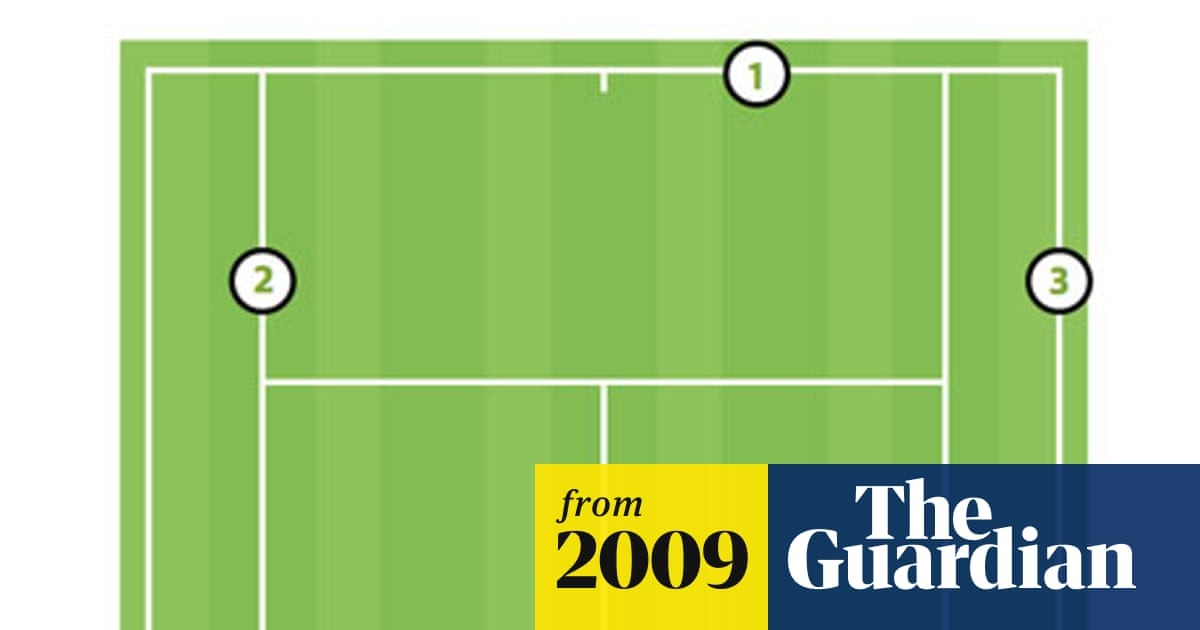
A ball lands close to the baseline. Someone shouts “out.” The other player insists it caught the paint. What happens next depends on what went wrong: an uncertain bounce, a clear out call, a changed call, or a disagreement between partners. The USTA's Friend at Court 2026, which contains The Code for unofficiated matches, gives each case a different result.
The table below applies to matches governed by The Code.
| Situation | Who makes the call? | Outcome under The Code | What follows? | Rule |
|---|---|---|---|---|
| Ball touches the line | Player or team on whose side the ball lands | Ball is good | Rally continues | §7 |
| Ball clearly lands beyond the line | Player or team on whose side the ball lands | Ball is out when called promptly | Point ends | §§5, 15 to 17 |
| Caller cannot clearly see that the ball was out | Player or team on whose side the ball lands | Ball is good | Play continues; doubt earns no replay | §§6 to 8 |
| Player reverses an out call | Original caller | Opponent wins the point (service exception below) | Point goes to the opponent | §12 |
| Doubles partners disagree | Receiving team | Decision favors the opponents | If an out call is reversed, §12 applies | §§9, 12, 14 |
| A pattern of questionable calls develops | Players can seek an available official | Official acts under the event's procedure | Ask for the official | §41 |
A forehand that clips the sideline is still in play. If you call it out, stop play, then withdraw the call, you lose the point.
Who makes the line call in an unofficiated match?
In unofficiated play, you call balls landing on your side of the net, and your opponent calls balls landing on theirs. That stays true even when your opponent thinks they saw the bounce more clearly.
Acknowledge your own shots when you clearly see them land out, except on first serves (Code §13).
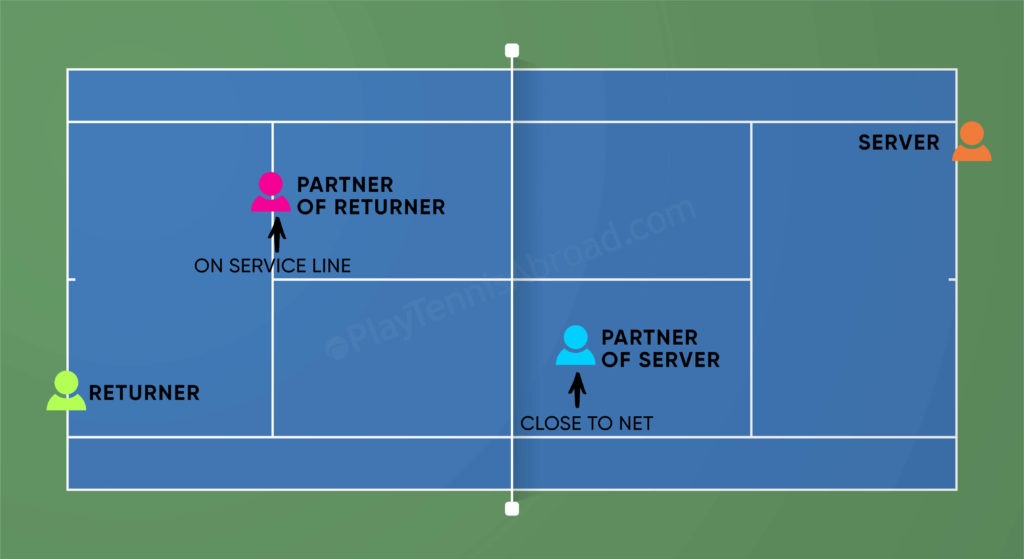
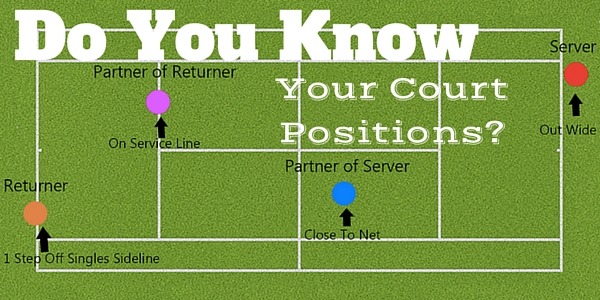
For serves in doubles, the receiver's partner calls the service line, and the receiver calls the center and side service lines. Either can call a fault they clearly see (Code §25).
Under §26, the serving team does not call its first serve a fault. If the receiver plays an out first serve and fails to return it into play, the server or partner may then call that fault. The serving team must call a clearly out second serve.
In doubles, either receiving partner can make a line call. The partner looking along the line has the clearer view.
Spectators cannot act as line judges. A parent in the stands, a friend outside the fence or another player waiting for the court has no authority to settle a disputed bounce.
In a USTA League doubles match, the returner's partner can have a direct view down the service line while the server watches from the far end of the court.
What if I could not judge a point-ending ball on my side?Under §11, you may ask your opponent for an opinion on that point-ending call. If your opponent gives a definite opinion, accept it. If neither of you can judge the ball, it is good.
Is a ball on the line in, and what if you cannot tell?
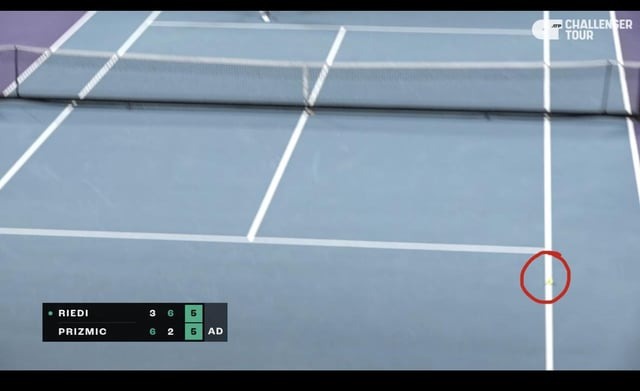
A ball touching any part of the line is in. Even a sliver of contact counts: most of the ball can land beyond the painted boundary and still be good.
To call a shot out, you must clearly see space between the ball and the line. If someone's legs blocked the bounce, or it was too close to judge, the ball is good (§§6 to 8).
One ball's footprint overlaps the sideline: good. Another leaves a visible strip of court between its entire landing area and the line: out.
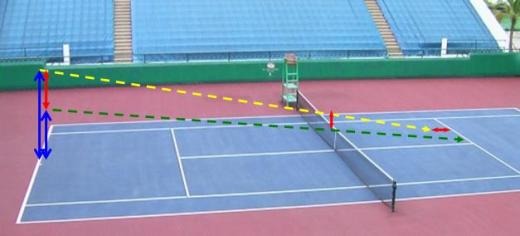
An unseen bounce earns no let under §8. Your opponent gets the benefit of the doubt.
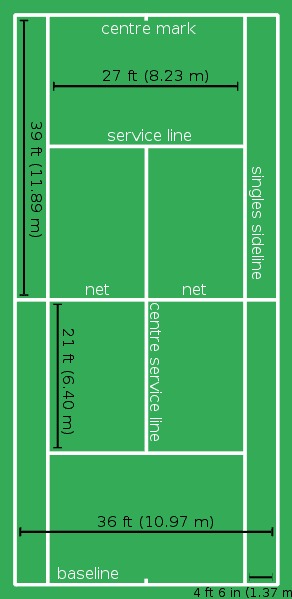
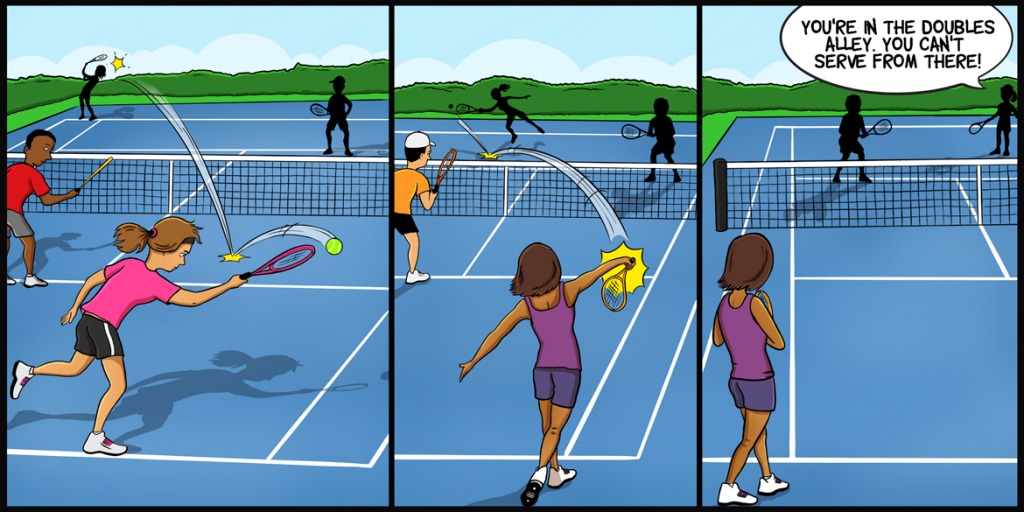
The boundary that counts changes with the shot. A doubles alley is part of the doubles court during a rally; a serve must land in the correct service box. For the court distinctions, see how singles and doubles court boundaries differ.
How quickly must you call “out”?
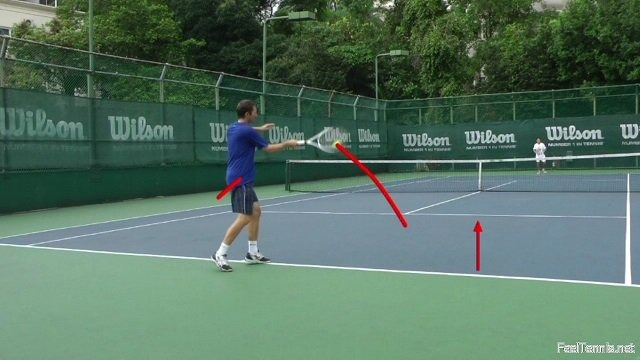
An out or fault call must be prompt and audible or visible, even when the ball is obviously out. The Code §§15 to 17 sets no fixed number of seconds: the call must come before the player's return goes out of play or the opponent has an opportunity to play that return. A receiver who waits for a borderline return to hit the net and then calls the incoming ball out has waited too long. Call it when you judge the bounce, with a clear voice or signal.
What if doubles partners disagree?
When one partner says “out” and the other clearly saw the ball touch the line, the opponents get the favorable decision (Code §14). The same goes when partners cannot agree on what they saw.
The rule is awkward with a new partner. One player describes a first USTA doubles match with a teammate they had never met:
I had my first USTA match with a new team this past week, and played doubles with a partner I’ve never played with before. This was actually my first time meeting anyone on my team, including my captain. Unfortunately, although my first impression of my partner was that she was really nice, the match was awful, mainly because of my partners consistent bad calls.
If you clearly saw that your partner's out call was wrong, correct it quietly and promptly. Once an out call has stopped play and you change it to good, §12 gives the point to the opponents.
When is a replay allowed after a disputed call?
If you change an out call to good, you lose the point (Code §12). Whether a let procedure applies depends on why play stopped.
| Why play stopped | Correct result | Mistake to avoid |
|---|---|---|
| Caller could not tell if the ball was out | Ball is good under §§6 to 8 | Offering a replay for doubt alone |
| Caller said out, then changed it to good | Opponent wins the point under §12 | Replaying the stopped rally |
| Receiver reversed a fault call on a serve that touched the net | Server gets two serves under §12 | Applying this exception to all corrected serves |
| Timely outside-ball interruption produced a valid let | Apply that let's procedure under §18 | Treating a disagreement as an interruption |
| Authorized ITF official observed a blatantly incorrect call | Official applies the event's prescribed remedy | Applying the player-reversal rule in §12 to an official |
A friendly redo can start a second argument over the serve count, as this recreational match shows:
I had a rec league match where the guy started yelling at me over a serve I called out. I was confident it was out, called it immediately, he thought it hit the line. Proceeded to yell at me, I told him I saw it out, he kept complaining so I said fine take a redo (mistake). He faults again, then lines up to take a 4th serve. I was already aggravated so I said that was your third straight fault, double fault, he then complained that we should reset the point and he get two serves, to which I said no.
For service faults, net lets and the sequence of remaining serves, see when a tennis serve is a fault or let.
How to question an out call and keep playing
If a close call looks wrong from your end, ask “Are you sure?” once and give the caller room to reconsider.
Say your serve is called out but you think it caught the service line. The receiver can reconsider and correct the call. If the receiver stays certain, your different view does not overturn it.
One doubles player, serving at 4-5, lost focus after two disputed calls:
I had a USTA doubles match last night. We were on serve at 4-5, and I was serving. In that game, our opponents had 2 egregious line calls and the 2nd call won them the set. One was a serve that was inside the line by about 3 inches, and one slow slice that was close but definitely in. We pushed back on both, but they would not budge. It was a fun match before that, but those 2 calls broke me and I mentally couldn't recover in the 2nd set.
Repeated bad line calls: when to seek an official

When questionable calls become a pattern at an event with an available official, The Code §41 lets you request that official's help. It also lets you refuse to continue until the official responds.
One player describes the pull to call bad calls back:
Advice I’ve heard is “you gotta do it back to them.” It’s not like we are painting the lines at 100 mph with 1800 rpm at this level. I’ve played a fair amount of matches but it’s pretty bad out there. Of course every match starts with “let’s have fun.” Other than looking for an official every few minutes what’s the advice here? Stay home and play ping pong with my 8 year old if I want a pastime?
Explain the pattern to the official. Calling bad calls back only creates another disputed point with no legitimate ruling behind it.
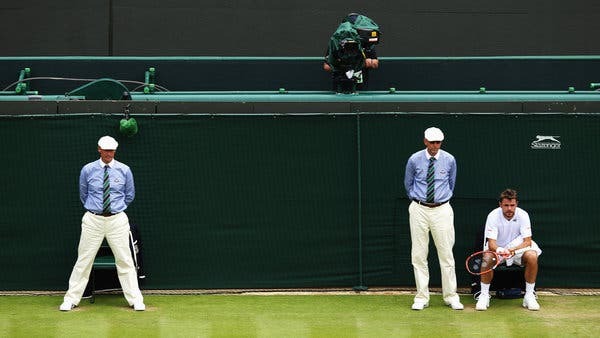
Under the ITF procedures for non-clay matches without a chair umpire, an official who arrives after a disputed bounce can question the original caller's certainty and viewing position. If the official did not witness the ball and the caller reaffirms the call, it stands. The official can observe subsequent play.
On an informal public court, you may have no official to call. If the dispute turns hostile, end the session.
What changes on clay or with electronic line calling?
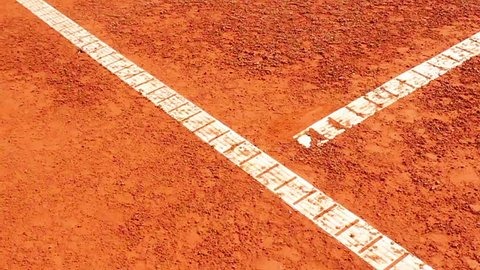
On clay, a readable ball mark can settle where the shot landed. The Code §21 treats a mark touching the line as good. Inspect close point-ending marks carefully.
You do not have to show the mark to your opponent, and your opponent may not cross the net to inspect it under the Code's procedure.
An authorized ITF official examining a clay mark follows a defined procedure in Duties and Procedures for Officials 2026, Appendix E. The official can determine a call from the appropriate readable mark; if that mark cannot be correctly identified or read under the procedure, the original call stands.
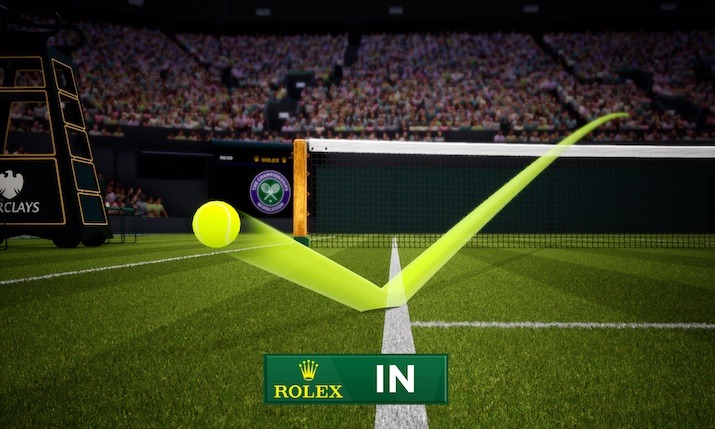
Appendix E also covers an official's intervention after personally observing a blatantly incorrect call. Depending on whether that call affected play or ended the point, the result is a replay or the point to the opponent. Only the authorized official holds this power, within that event's procedure.
USTA regulations distinguish an approved Review system, which allows review of eligible calls, from Live electronic line calling. Authorized use depends on the event, system classification and surface requirements. See the USTA electronic line-calling guidance.
A phone recording or a spectator's slow-motion clip is not an authorized review system. Establish the event's adopted procedure, and who or what is empowered to decide, before relying on a review.