
Start with the player rows and the labeled set, game and point fields. Then find the server and check whether the current points belong to a standard game or a tiebreak. If the scoring format differs or the graphic hides a field, open the expanded scoreline.
Read the three layers: sets, games and points

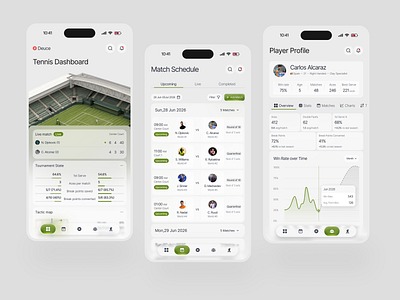
A tennis scoreboard can put several kinds of numbers next to the same player name. Start with the names and column headings. A live television scorebug, a court scoreboard and a completed match result show different amounts of information.
| Field | What it counts | Example |
|---|---|---|
| Completed set | Games each player won in a finished set | Player A: 6; Player B: 4 |
| Current set | Games won so far in the set being played | Player A: 4; Player B: 5 |
| Current game | Points in the game being played | Player A: 30; Player B: 40 |
A 6 in a completed-set column and a 40 in the points column count different things, even on the same row.
In a standard game, points run love (zero), 15, 30 and 40. A 40-40 score is deuce, and the next point creates an advantage, often shown as AD. For the rules that connect points, games and sets, see how tennis scoring works or the USTA scoring guide.
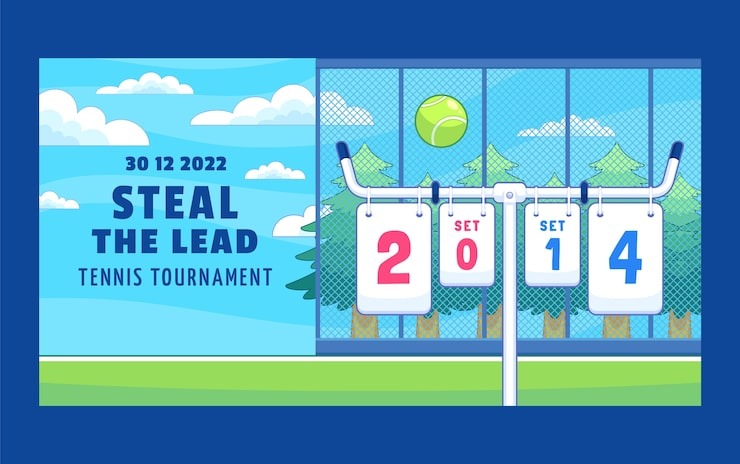
Announced aloud, the server's game points come first. A fixed-row TV graphic can keep Player A on top after the serve changes, so the top row is not automatically the server.
Decode one complete live match display
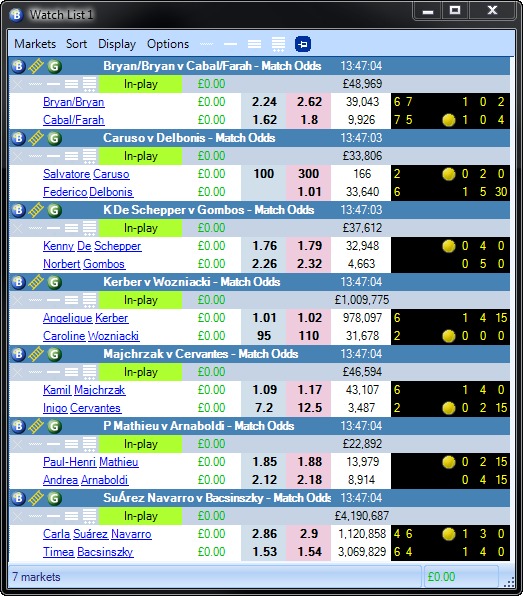
Suppose you join a match in progress. The scoreboard shows the match format and marks the server:
| Player | Set 1 | Set 2 games | Current points |
|---|---|---|---|
| ● Player A (serving) | 6 | 4 | 30 |
| Player B | 4 | 5 | 40 |
| Match context | Second set; best of three sets; standard advantage scoring | ||
Set 1 ended 6-4 to A. B leads the unfinished second set 5-4 in games and has 40 points in A's current service game.
If B wins the next point, B wins A's service game and takes the second set 6-4. Each player has then won one set, so the match goes to a deciding set.

If A wins that point, the game reaches 40-40, or deuce. The second-set games stay at 4-5 because the current game has not ended. That one point changes the game score and leaves both set columns untouched.
When a tiebreak score looks like an ordinary game score
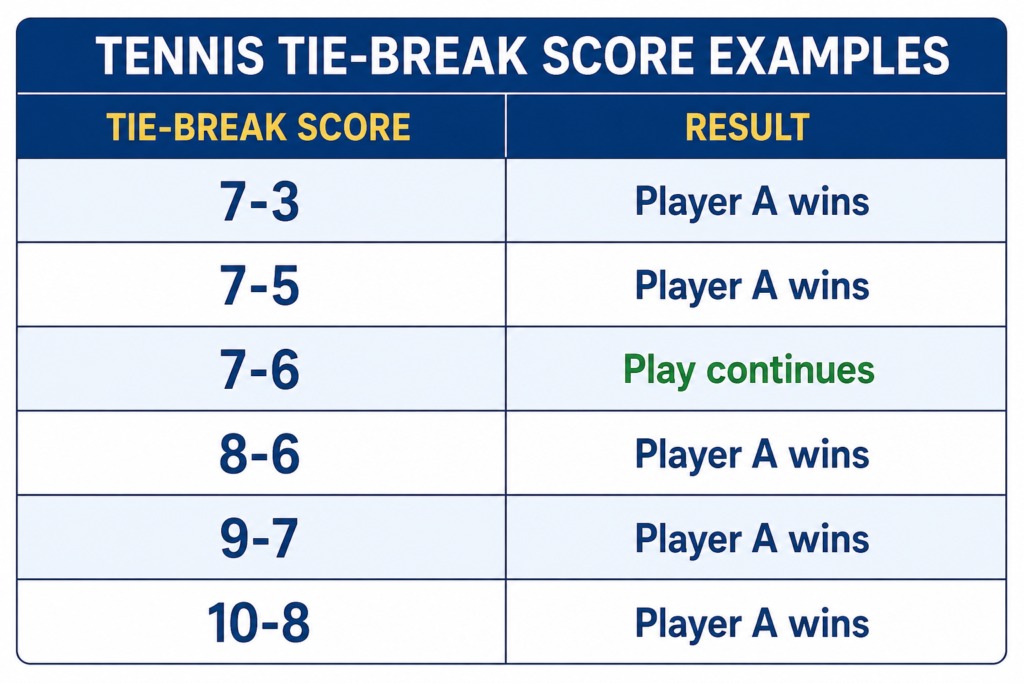
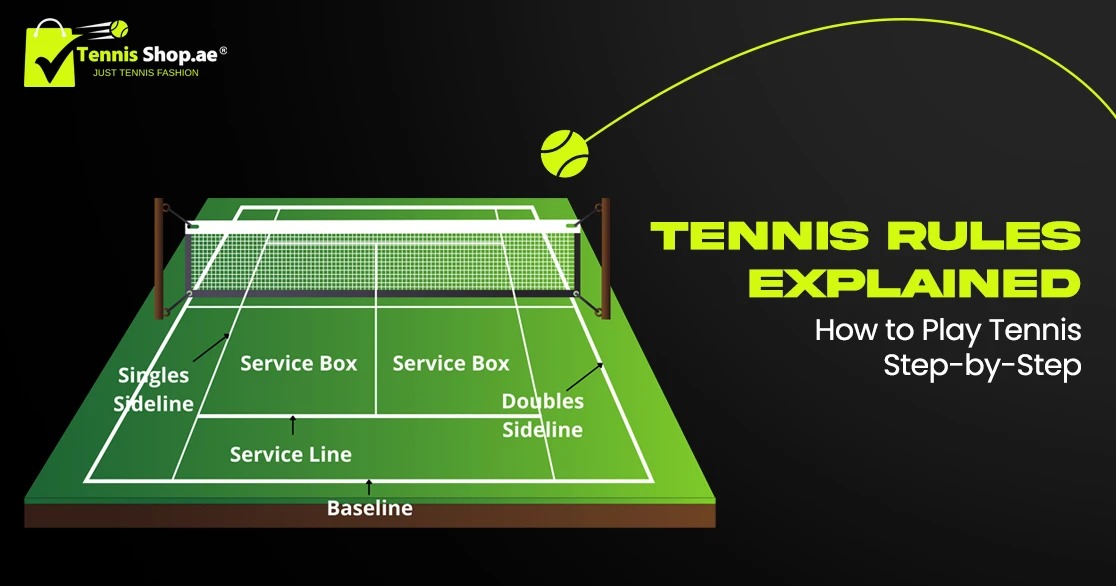
A current score of 8-8 or 16-15 is a tiebreak. Tiebreak points are counted as ordinary numbers, while standard games use love, 15, 30, 40 and advantage. A standard tiebreak begins at six games all.
| Feature | Standard advantage game | Standard tiebreak |
|---|---|---|
| Point labels | Love, 15, 30, 40, AD | 0, 1, 2, 3 and upward |
| Tied state | 40-40 is deuce | 8-8 is a live score |
| Winning condition | After deuce, win two consecutive points | Reach at least 7 points and lead by 2 |
| Example in progress | 30-40 | 16-15 |
At 16-15, the tiebreak is still in progress and the lead is one point. The leader wins 17-15 by taking the next point. If the opponent wins it, the score becomes 16-16.
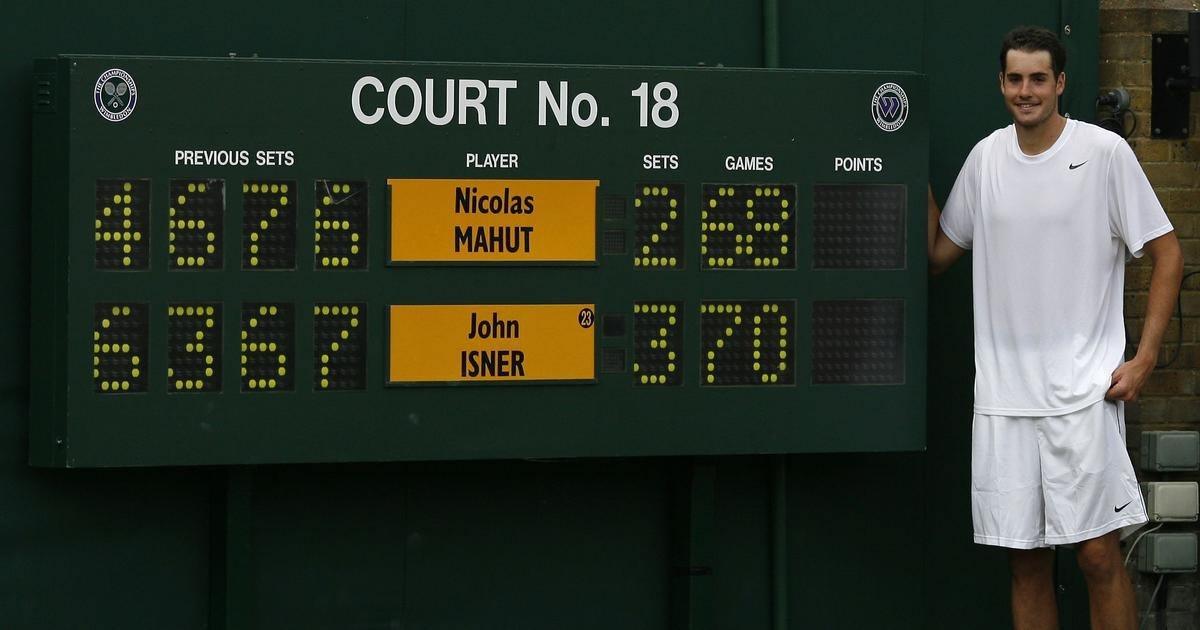
In an approved alternative format, a tiebreak requires at least ten points with the same two-point winning margin. A match tiebreak played in place of a deciding set differs from a ten-point tiebreak played at 6-6 in the deciding set. The ITF Rules of Tennis specifies these formats; how tennis tiebreaks work explains the playing procedure.
What the small number in 7-6(5) means
In common completed-set notation, 7-6(5) means the set winner took seven games to six and the losing player won five points in the standard tiebreak. That tiebreak finished 7-5. A live reading of 6-6 with a tiebreak at 16-15 describes a different state: the set is unfinished. Providers show tiebreak details in parentheses, superscripts or a separate field. For an unfamiliar convention, read the match result's detailed tiebreak entry.
What BP, SP, MP and AD mean on the screen

These labels tell you what a player could accomplish on the next point.
- BP, break point: The receiver can win the server's game with the next point.
- SP, set point: The player can win the set on the next point.
- MP, match point: The player can win the match on the next point.
- AD, advantage: The player who won the point after deuce leads. One more point wins the game; a lost point returns it to deuce.
In the worked match, B receives at 30-40 and leads the second set 5-4. B has break point and set point together. B does not have match point because A won the first set and the match is best of three.
Under no-ad scoring, the point at 40-40 decides the game without an intervening AD state.
Some score services also show break points saved or converted as match statistics. A live BP marker flags the point being played; the statistic records earlier opportunities and outcomes.
Who is serving, and what do the dots and icons mean?

A ball, dot, arrow or highlighted player name marks the server. Each broadcaster and app designs its own marker, so check its legend if a symbol is unfamiliar. The example scoreboard labels its circle explicitly: ● Player A (serving).
Other marks beside a name:
- Flag: The player's nationality.
- Seed number: The player's tournament seed.
- Cluster of repeated symbols: Defined by the event's own graphic key.
At Wimbledon in 2021, a group of tennis-ball symbols was explained in relation to challenges remaining under the event rules in use then.
When a compact scoreboard leaves out earlier sets

A compact scorebug can show sets won and hide the game scores of earlier sets. A 2-1 sets-won graphic tells you who leads in sets, but the games behind those sets need a fuller record.
Take a best-of-five match with three sets completed. The same state can appear in two layouts:
| Field | Full per-set display | Compact sets-won display |
|---|---|---|
| First set | A 6, B 4 | Not shown |
| Second set | A 3, B 6 | Not shown |
| Third set | A 7, B 5 | Not shown |
| Sets won | A 2, B 1 | A 2, B 1 |

In a live best-of-five match, a player who leads two sets to one still needs one more set to win. In a best-of-three match, winning two sets ends it.
To see the earlier games, open the expanded match score and read the finished-set columns. A compact 2-1 cannot tell you whether the first set ended 6-4, 7-5 or another legal score.
RET, W/O, DEF and other nonstandard match results
A result-status code explains why a scoreline stops before someone wins the usual number of sets.
- RET, retirement: The match began and a player retired before normal completion. A score such as 6-4, 2-1 RET contains a partially played second set.
- W/O, walkover: The scheduled match was not played. Do not infer games or points from a walkover label.
- DEF, default: A separate official result category, used by competitions that have it.
Some services use separate labels for withdrawal, suspension or an incomplete match. Read the event's result-status definition before treating any of them as an ordinary finished contest.