
At 40-40 in no-ad scoring, the next point wins the game.
The receiving side picks the service court, and doubles partners keep their established receiving positions. Mixed doubles adds a same-gender returner rule. If the deciding point is replayed, the court choice stays the same under USTA rules. With advantage scoring, you play on until one side wins two consecutive points.
What changes at 40-40 in no-ad scoring?
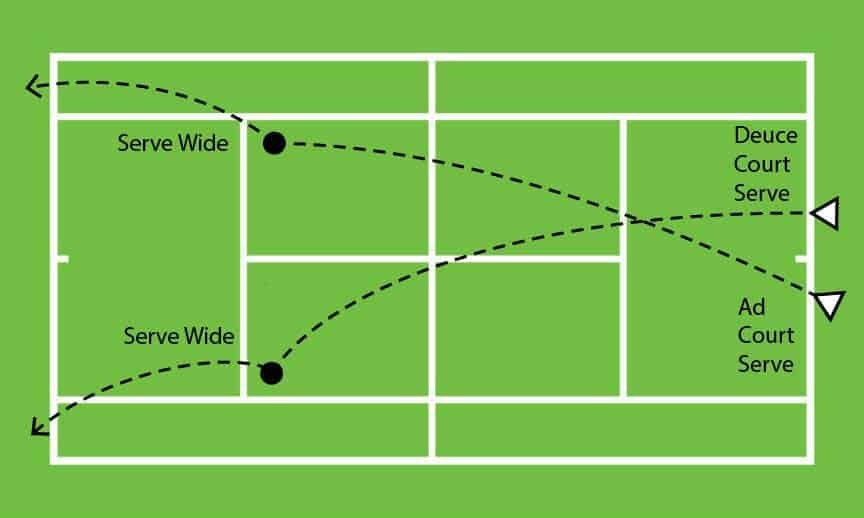 At three points each, the score is 40-40, called deuce. In no-ad scoring, the next point decides the game.
The ITF Rules of Tennis 2026 recognize no-ad as an alternative scoring method.
The server can win the deciding point with a serve or in a rally. The server still gets a second serve, but a double fault loses the point and the game.
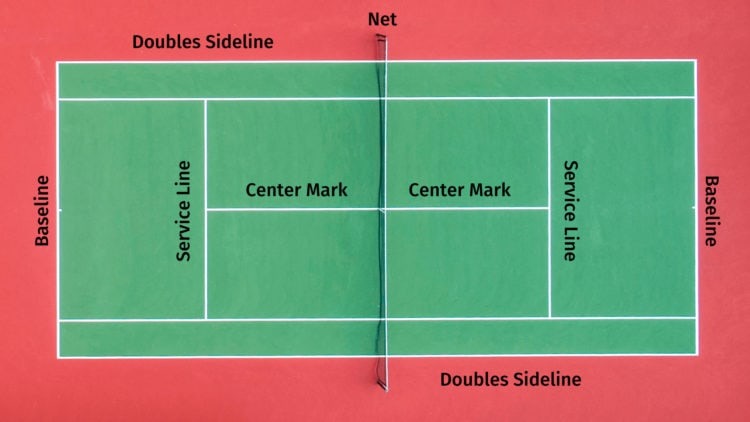 One club player who tried singles match play described double-faulting at deuce under no-ad scoring:
I played high school tennis and now I play 4x a week at a club but it’s 60% drills and 40% doubles points play. I wanted to get out of my comfort zone and try singles match play but all of my technique went out the window. I think I was trying to rush points- going for and missing winners instead of making my opponent play. My serving was above average but I seemed to double fault at every 40-30 and deuce and we played no ad scoring. So basically it didn’t work when I needed it to most.
How do you score a complete no-ad game?
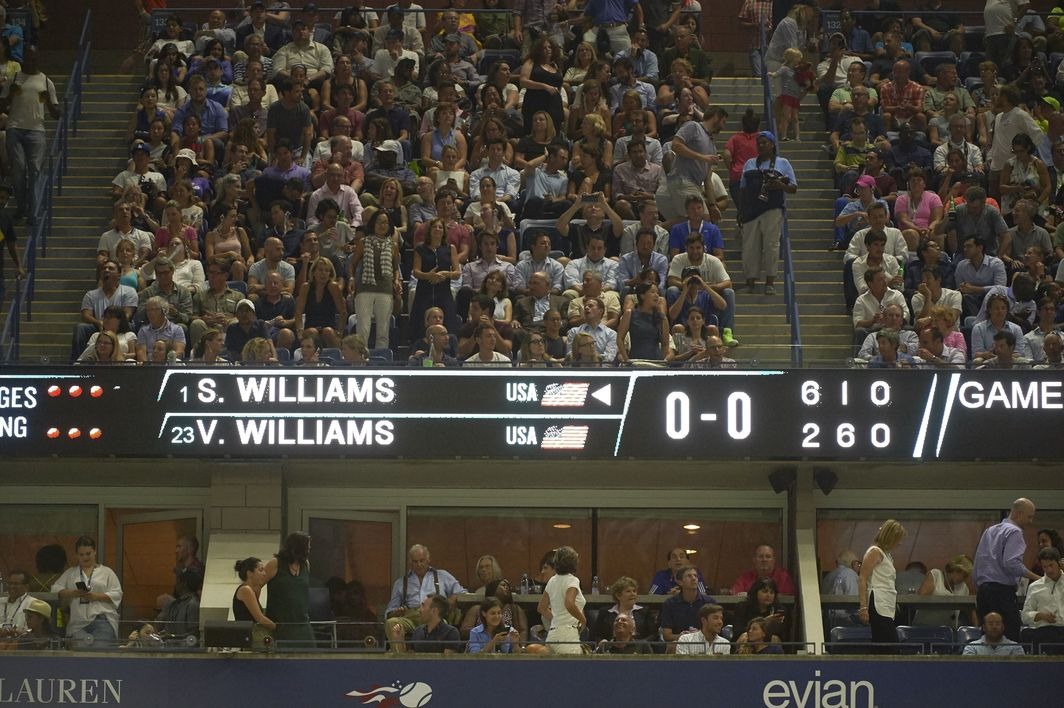 Scores are called from the server's perspective: love, 15, 30 and 40. If the receiver wins the first point, the score is love-15.
Take a game where the server and receiver alternate points. After six points, each has three, and the seventh decides the game:
| Point | Winner | Score afterward |
|---|---|---|
| 1 | Server | 15-love |
| 2 | Receiver | 15-all |
| 3 | Server | 30-15 |
| 4 | Receiver | 30-all |
| 5 | Server | 40-30 |
| 6 | Receiver | Deuce (40-40) |
| 7 | Server | Game to server |
 Every no-ad game takes four to seven points. Seven is the maximum because a game tied at three points each ends on the next point.
Who chooses the deciding-point side in singles and doubles?
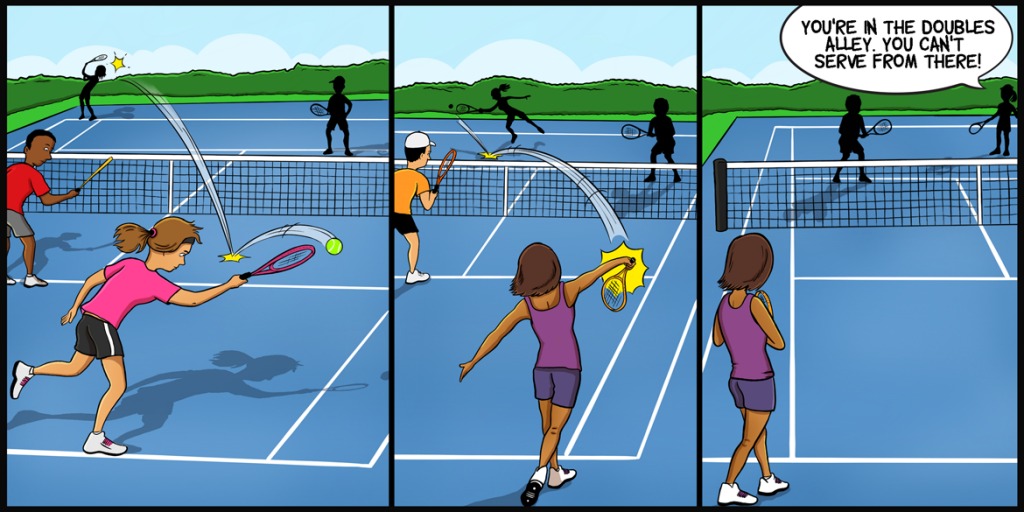 At no-ad deuce, the receiving side chooses whether the serve comes from the right or left service court. The right side is commonly called the deuce court and the left the ad court.
| Format | Deciding-point court | Who receives? |
|---|---|---|
| Singles | Receiver chooses right or left | The singles receiver |
| Standard doubles | Receiving team chooses right or left | The partner assigned to that court |
| Mixed doubles under the ITF no-ad method | The court where the same-gender returner stands | The player of the same gender as the server |
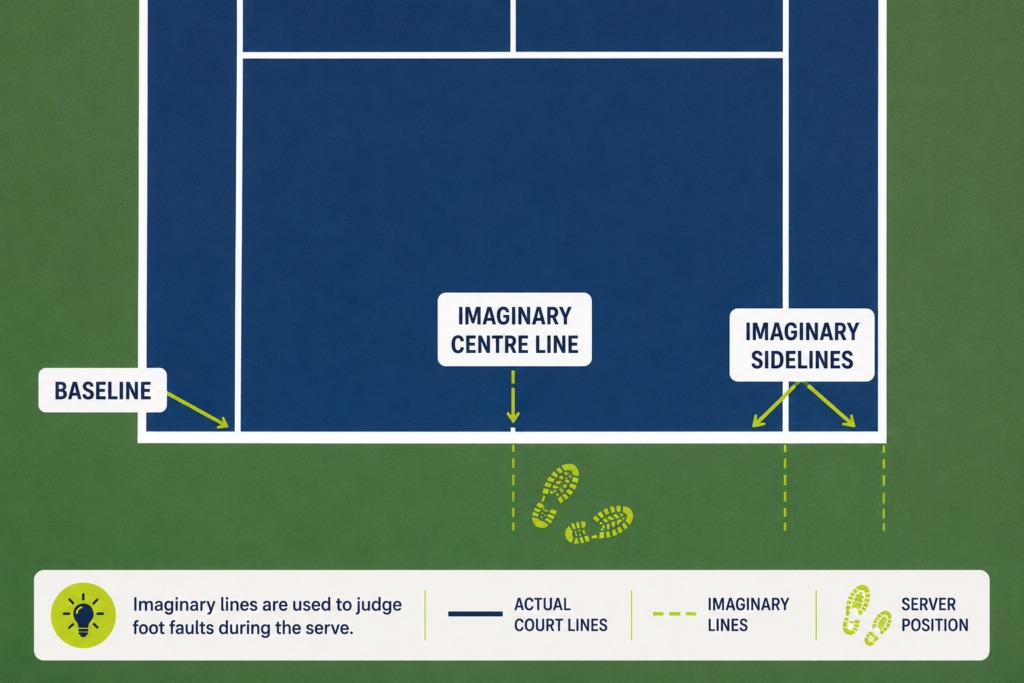
What changes in no-ad mixed doubles?
 Under the ITF no-ad mixed-doubles method, the deciding-point receiver must be the player of the same gender as the server. That fixes the receiving court.
- Woman serving: The woman on the receiving team returns the deciding point.
- Man serving: The man on the receiving team returns the deciding point.
Can the receiving side change its choice if the deciding point is replayed?
 Under USTA Comment VI.1 in Friend at Court 2026, the receiving side cannot change its court choice when the same no-ad deciding point must be replayed. If the team originally chose the left court, the replayed serve goes to the left court again. In the deciding point of a later game, the receiving side chooses again.
No-ad versus advantage scoring: what are the trade-offs?
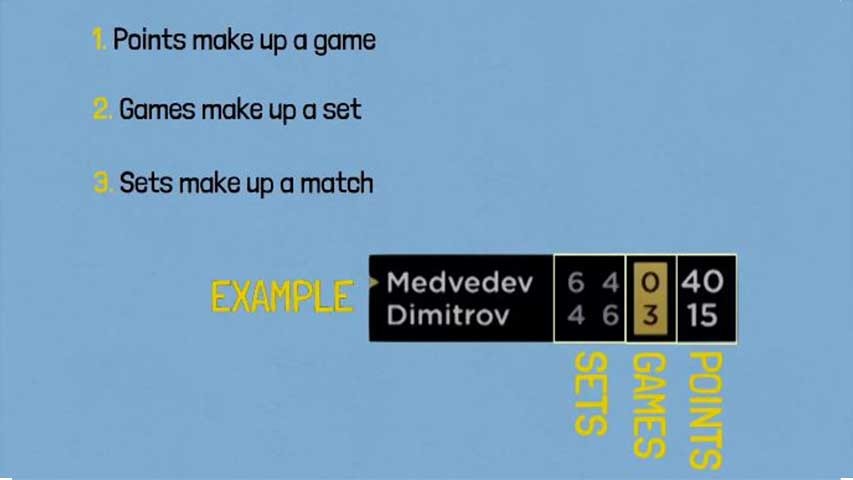 The two methods differ at deuce. In an advantage game, winning the next point gives a player or team the advantage. That side then needs the following point to win. If the opponent wins it, the score returns to deuce.
| After 40-40 | No-ad scoring | Advantage scoring |
|---|---|---|
| First point | Wins the game | Creates an advantage |
| Each side wins one of the next two points | The game is already over | Score returns to deuce |
| Receiving-court choice at deuce | Receiving side chooses; mixed doubles has the same-gender rule | Right (deuce) court at 40-40 under normal service alternation |
 An advantage game might run: deuce, advantage server, deuce, advantage receiver, game receiver.
A coach on the NC High School Tennis Coaches Forum argued that no-ad makes school matches easier to schedule. No game runs past seven points.
Where is no-ad used, and who sets the format?
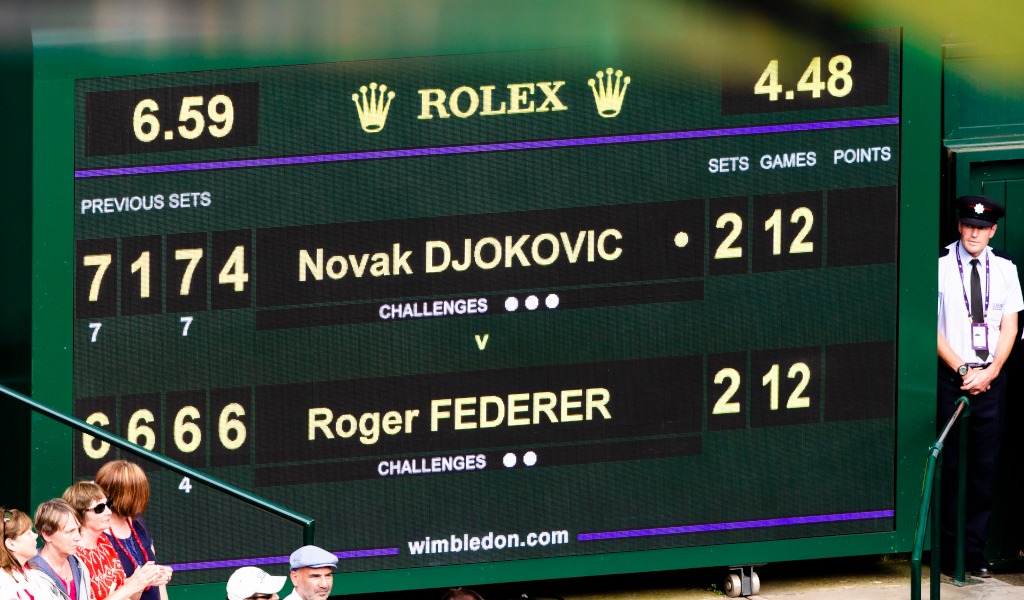 No-ad is optional. A recreational group can agree to it, and an organizer can require it for a competition under its own rules.
At USTA tournaments, the 2026 Friend at Court Regulations I.E.2 say a decision to use no-ad scoring must be announced before tournament play begins.
A player entered in singles and mixed doubles at a South Carolina tournament learned by text that the heat was forcing a switch to no-ad:
I’m entered in a local tournament this weekend that I play every year. I’m playing singles and mixed doubles. Just a few hours ago, we got a text that said that due to the heat this weekend, the tournament is switching to no ad scoring for the entire tournament. I’m honestly a little peeved because I hate no ad scoring, especially because one of my big advantages in tennis (especially singles) is my stamina and ability to withstand the heat. It’s summertime in South Carolina and it’s been super hot all summer. Even a week ago before signups closed, the projection was for this weekend to be very hot. Honestly, if I had known from the start that the tournament was no ad scoring, I might not have signed up.
The New Hampshire Interscholastic Athletic Association used a one-year no-ad trial during the spring 2026 high-school tennis season.
Is no-ad the same as a tiebreak, short set, no-let or timed match?
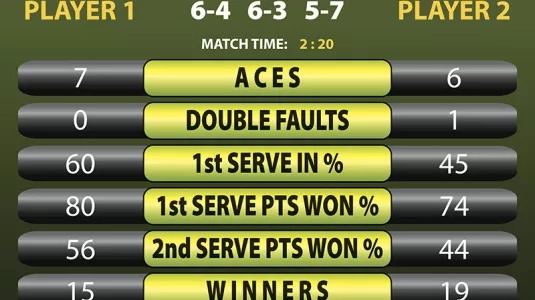 No-ad decides how a game ends at deuce. Other formats decide how sets end, how serves are treated or what happens at a time limit.
- Tiebreak or match tiebreak: A separate point sequence decides a set or replaces a deciding set. A 10-point match tiebreak is different from a single no-ad deciding point.
- Short set: Fewer games are needed to win the set, and it has its own possible tiebreak conditions.
- No-let serving: Specified service lets are treated differently. It doesn't decide who wins a game at 40-40.
- Timed match: The competition's time-limit and unfinished-match rules apply.
 Some timed leagues play a deciding point when time runs out. The league's time-limit procedure governs that point. The no-ad deciding point happens only when a game reaches 40-40.
What should you settle before starting a no-ad match?
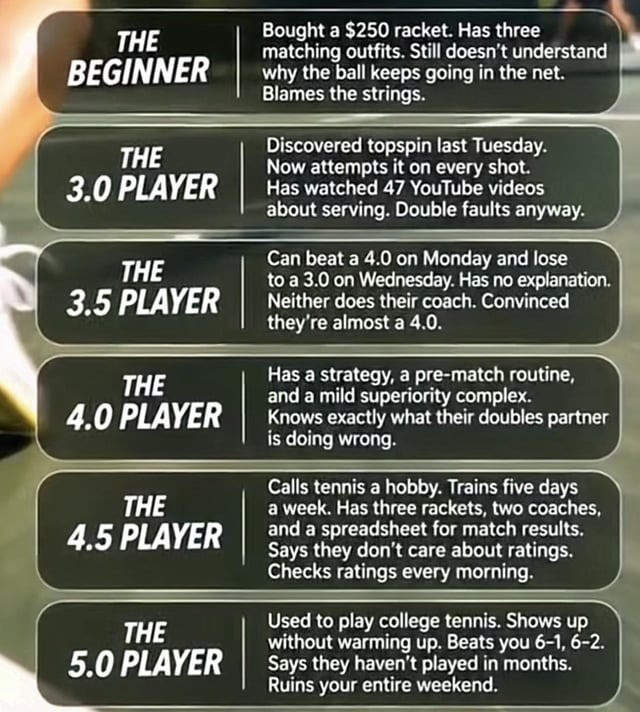 In casual play, a quick agreement before the first serve prevents a familiar dispute: one player expects advantage scoring, and the other assumes the game ends at no-ad deuce.
Settle these once:
- Game scoring: Single deciding point at 40-40, or ordinary advantage scoring?
- Match format: Regular sets, short sets or another agreed arrangement?
- Doubles receiving order: Does everyone know each partner's receiving court, including the mixed-doubles exception?
- Score calls: Will the server call the score clearly so everyone recognizes deuce?