
A first-serve fault gives you a second serve. A second fault loses the point. Under standard rules, a service let repeats the same serve, and a valid point let restarts the whole point with a first serve. In an approved no-let format, a serve that touches the net stays in play. A let claimed too late or over ordinary noise gets no replay.
Fault, double fault, or let: what happens next?
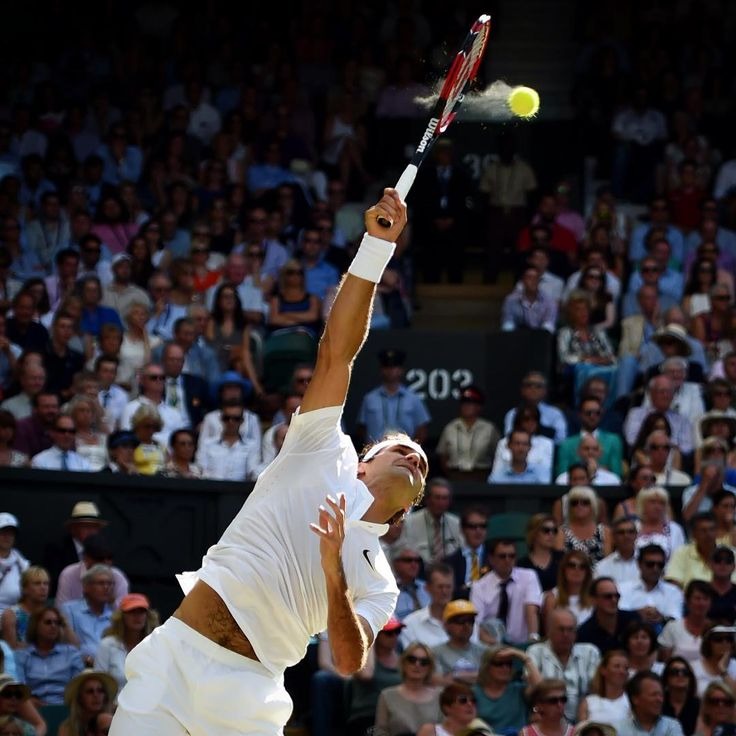
First check whether the server was on a first or second serve, then find the row below. The table follows the ITF Rules of Tennis, Rules 19 to 24.
| What happened | Starting situation | Ruling | Next serve or point result |
|---|---|---|---|
| Serve lands outside the proper service box | First serve | Fault | Second serve |
| Serve lands out or is a foot fault | Second serve after an earlier fault | Double fault | Receiver wins the point |
| Serve clips the net and lands in the correct box | First serve | Service let | Repeat first serve |
| Serve clips the net and lands in the correct box | Second serve after an earlier fault | Service let | Repeat second serve |
| Serve touches the net, strap or band, then touches the receiver, receiver's partner, or anything either is wearing or carrying before bouncing | Either attempt, standard let rules | Service let | Repeat that same serve |
| Serve clips the net and lands out | Either attempt | Fault | Next attempt, or point lost on second |
| Server catches the toss without trying to hit it | Either attempt | No fault | Same attempt remains available |
| Server swings at the toss and misses entirely | Either attempt | Fault | Next attempt, or point lost on second |
| A valid outside interruption stops a live rally | Ball already in play | Point let | Replay point from first serve |
| Receiver is genuinely unready when the serve is hit | Receiver made no attempt to return | Service let under Rule 21 | Repeat that serve |
| Serve touches the net and lands in the correct box in an approved no-let format | Either attempt | Ball stays live | Continue play |
What counts as a service fault?
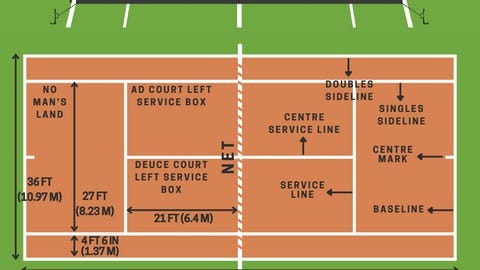
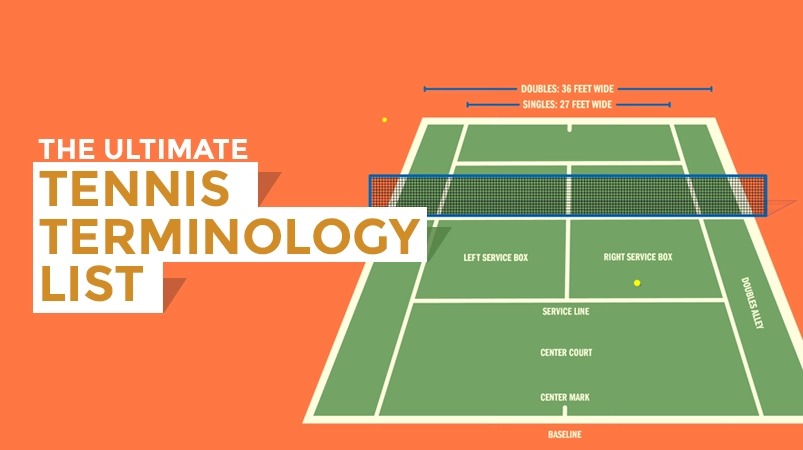
The serve has to land in the diagonally opposite service court. The lines around that court count as in, so a ball on the correct service line is good.
- Out of the service box: A serve that lands beyond the proper service court is a fault, even if it touched the net first.
- Contact with equipment: Rule 19 also applies when a serve hits a permanent fixture, a net post or a singles stick before landing.
- Missed service motion: Catching the toss or letting it drop without swinging leaves the same serve available. Swinging and missing the ball completely is a fault.
Two servers toss badly. One catches the ball and keeps the same serve; the other swings through the air and misses, and the serve is a fault (ITF Rule 19, Case 1).
What is a foot fault, and who can call one in the U.S.?
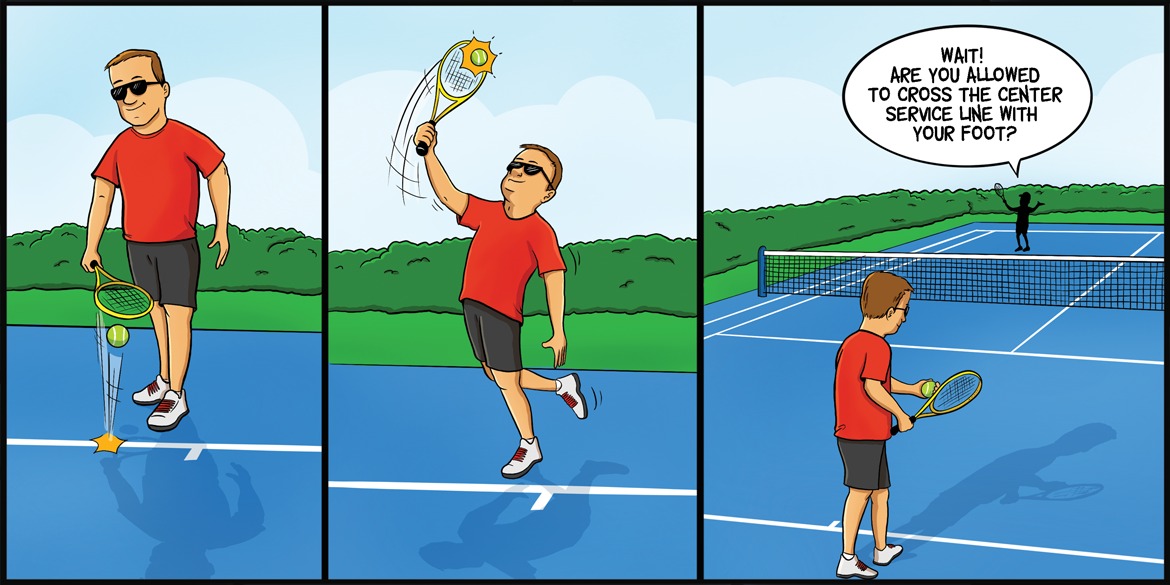
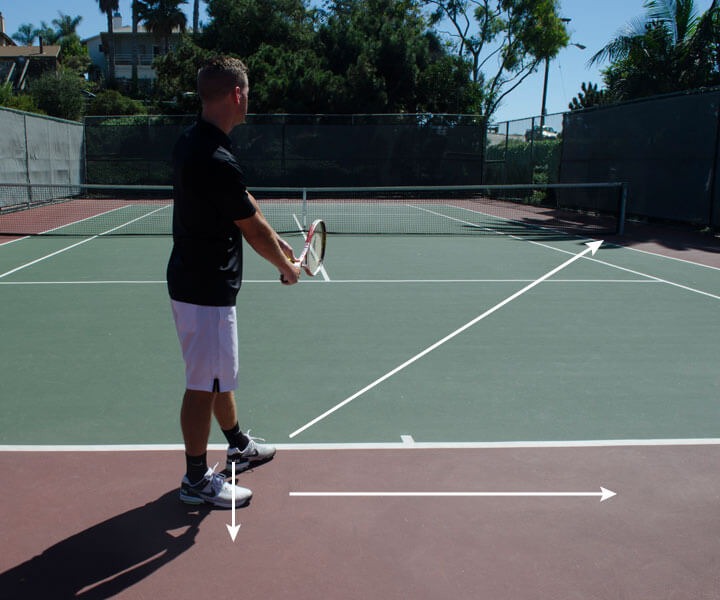
A foot fault is a service fault caused by where the server's feet are, or how they move, during the serve. ITF Rule 18 sets limits on contact with the baseline or court, the imaginary extension of the center mark, and the lateral serving boundary, plus walking or running during the serve.
In singles, the server may not stand in the strip between the singles and doubles sidelines. In doubles that spot is allowed. A jump with both feet off the ground is not a foot fault by itself under Rule 18.
In a match without an official, a foot fault can happen without the receiver having the right to call it.
| Question | Governing rule | Effect |
|---|---|---|
| Did the foot fault occur? | ITF Rule 18 | Check the server's feet, movement, court and service motion |
| May the opponent call it without an official? | USTA The Code §24 | Warning, reasonable efforts to get an official, then a narrowly limited exceptional call |
| Who rules when an official is present? | Officiating procedure for the match | Follow the arrangements for that match |
The exceptional call is limited to a flagrant foot fault that is clearly visible from the receiver's end. Seeing a possible baseline touch does not let you call every suspected violation.
The full U.S. procedure is in USTA's Friend at Court (2026 edition), under The Code §24. The foot-position rule itself is ITF Rule 18.
A recreational player on r/10s ran into this:
I recently played an opponent who was consistently taking a full step onto the court before making contact with the ball during his serve. He was doing it on almost every serve, so after he won the first game I told him that he was footfaulting and it was kind of blatant. I asked him if he could take a step back or something so it didn’t keep happening. He said he’d watch out for it but I should call it when it happens and proceeded to smash me 6-2 in the first set.
A serve clips the net: is it a fault or a service let?
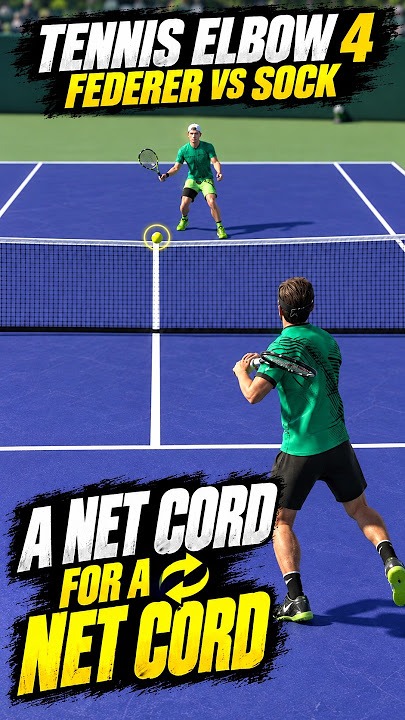
A serve that touches the net and lands in the correct service court is a service let. The server repeats that serve, and any earlier fault still counts. One more point on readiness: a receiver who attempts the return is deemed ready under ITF Rule 21, so a later claim of unreadiness changes nothing.
Service let or point let: why the next serve changes
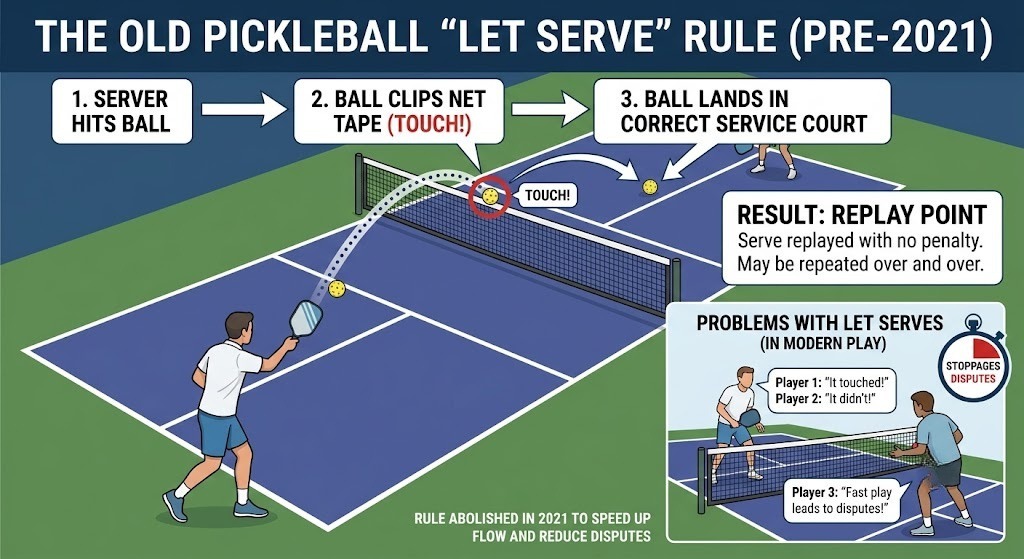
A service let replays one serve. A valid point let replays the whole point, starting with a first serve.
Say the server faults the first serve and gets the second in play. Mid-rally, an outside ball enters the court and causes a valid point let. Under ITF Rule 23, Case 1, the point is replayed from the first serve, because the interruption came after play began.
A league player argued about a ball from the next court:
I’ve played in different leagues for years but today I had a first. I was playing a set against a new guy in a overall very friendly league. He first got mad when I called a let because a ball from a different court rolled onto my side of the court and stopped near my baseline. He said he would have kept on playing through it.. I said I didn’t want to get hurt which is why I stopped the point.
In a U.S. match without officials, USTA The Code §18 lets any affected player on court call a let promptly when a ball enters the playing area.
Can my doubles partner call a service let?Yes. Under USTA The Code §27, any player on court can call a service let. Make the call before the return goes out of play or before the server or server's partner strikes it. On a near ace, decide immediately.
A stray ball interrupts the second serve: one serve or two?
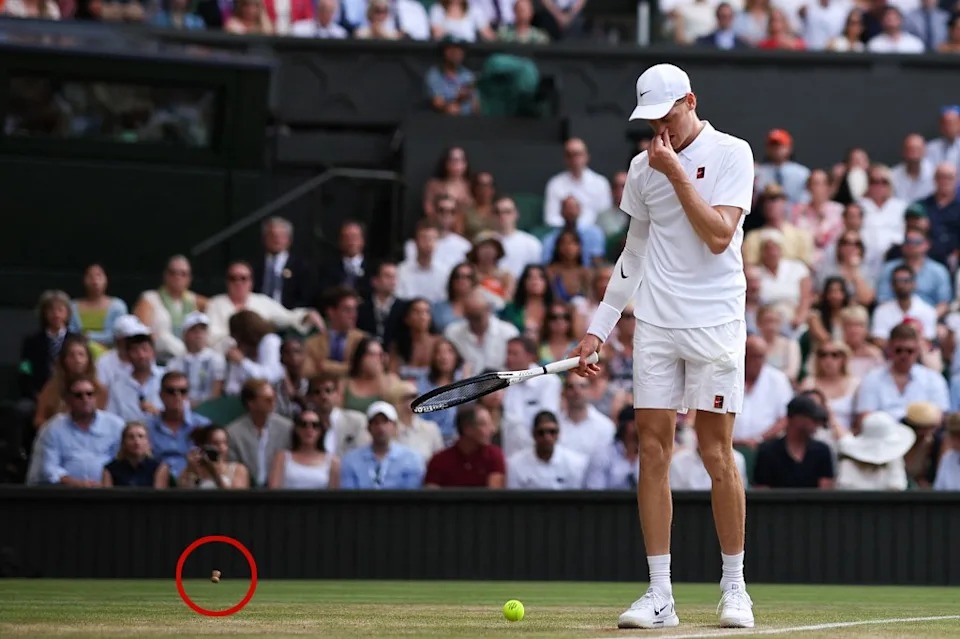
The ruling depends on when the ball arrives. USTA The Code §30 sets out the distinction.
| When the interruption occurs | Example | Next serve |
|---|---|---|
| Between first fault and second-service motion | Server briefly clears a stray ball | Second serve remains |
| During the second-service motion | A new ball disrupts an attempted delivery | First serve again |
| During a live rally | An outside ball causes a valid point let | Replay whole point from first serve |
Clearing a stray ball between serves costs the server nothing. The second serve stands. If the pause runs long, the receiver decides whether the server gets two serves: a delay caused by the server leaves one serve, while a delay caused by the receiver or outside interference restores two. The Code gives no set time in seconds.
ITF Rule 16 ends the service motion the moment the racket hits or misses the ball. USTA illustrates the distinction in Let Me Have a First Serve.
When a claimed let does not stop the point
Ordinary noise from an adjoining court, spectators or passing traffic does not entitle you to a let.
A doubles player described a let claimed over noise from the next court:
Was in the finals of a doubles tournament recently, and in the 3rd set 10-point tiebreak, when my partner and I were up 4-2, our opponents called a let after I hit a shot that (to me) was likely going to be a winner. The opponent didn't get to ball and called a let (that my partner and I didn't even hear) because the people warming up on the court next to us hit a metal grate with their ball causing a noise that our opponents said distracted them.
For an unintentional hindrance let under USTA The Code §§33 and 36, the affected player must have had a chance to make the shot without the disturbance and must claim the hindrance promptly. A complaint after a missed or unplayable shot does not earn a replay.
ITF Rule 26 covers deliberate hindrance and can award the point to the hindered player, depending on who caused the interference.
Before you resume play
When you disagree, settle what happened before deciding which serve is next:
- Incident: Fault, valid service let, valid point let, disallowed claim, or another hindrance penalty?
- Serve number: Had the server already faulted the first serve?
- Timing: Between serves, during the service motion, or in the rally?
- Authority: Is there an official, and may the person making the call make it?
- Format: Standard service lets or an approved no-let format?
In an organized match, if the rules do not settle it, ask the designated official for a ruling.