
Check three things before you rule: the match format, what happened, and when it happened. Then apply the 2026 ITF Rules of Tennis and, in US self-officiated matches, USTA's The Code.
A serve goes wrong before the racket touches the ball. One doubles team remembers a point the other team disputes. A ball from the next court interrupts a rally. Each case turns on one small detail that decides between a fault, a let, a lost point and play on.
Pick A, B or C for each of the 11 situations, then open the ruling.
Before You Start: Which Tennis Rules Apply?
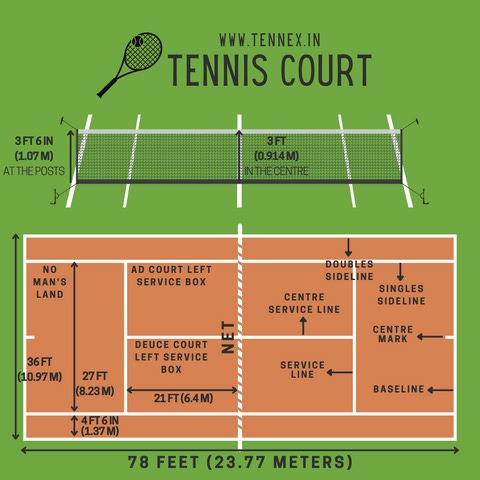
The International Tennis Federation sets the underlying playing rules. In US matches where players officiate themselves, USTA's The Code covers line calls, disputed scores and interruptions. The announced event format decides which variations apply, such as no-ad scoring.
| Authority | What it answers | Example |
|---|---|---|
| ITF Rules of Tennis 2026 | How a point, service or game is played | Does a ball touching the line count as good? |
| USTA The Code (2026) | How players handle calls and disagreements in self-officiated play | What happens after an incorrect out call is reversed? |
| Announced match format | Which permitted scoring variation applies | Does the event use no-ad scoring or a match tiebreak? |
The primary references are the ITF Rules of Tennis 2026 and USTA Friend at Court 2026. The rule numbers in the answers refer to those editions.
What Is the Score Now?
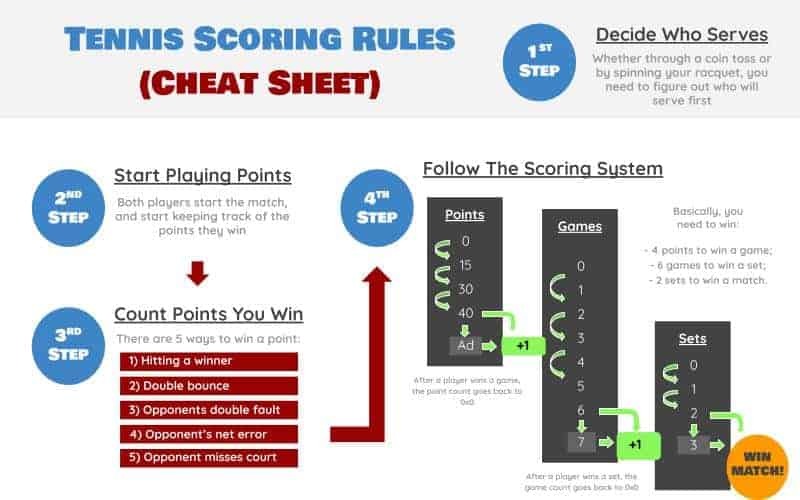
Advantage games and tiebreaks count differently, so identify the format first.
| Situation | Correct interpretation | Governing provision |
|---|---|---|
| 30-all in a standard game | Each side has won two points; play continues | ITF Rule 5(a) |
| 40-all in a standard advantage game | Deuce; a two-point sequence is needed to win from deuce | ITF Rule 5(a) |
| 40-all under announced no-ad scoring | The deciding-point procedure applies | ITF Appendix VI |
| 7 to 6 in a standard tiebreak | The tiebreak continues because the margin is one point | ITF Rule 5(b) |
In a self-officiated score dispute, you rebuild the score from the points both players agree on.
1. Deuce already?
In a standard advantage game, the server and receiver have each won two points. The server announces "deuce."
Reveal the ruling
Answer: B. The score is 30-all.
Each player has won two points. Deuce comes at 40-all, so a tie earlier in the game keeps its ordinary numerical name.
Rule: ITF Rule 5(a).
2. One point nobody can agree on
During a standard advantage game in a self-officiated doubles match, each team won two of the first four points. Both teams agree on those results, but disagree about who won the fifth point.
Reveal the ruling
Answer: B. Start with what both sides agree happened.
The Code sets a preferred order for settling score disputes: count the agreed points and games, then replay only the disputed ones. It gives further alternatives when that order can't be used. The last score announced settles nothing when the point itself is disputed.
Rule: USTA The Code §32.
3. Has the tiebreak ended at 7 to 6?
Two players are contesting a standard seven-point tiebreak. One leads by seven points to six.
Reveal the ruling
Answer: B. The tiebreak continues.
A standard tiebreak needs at least seven points and a two-point lead. Seven to six is a one-point lead. The next point makes it eight to six or seven-all.
Rule: ITF Rule 5(b).
An announced match tiebreak sets its own minimum score, and the two-point lead still applies.
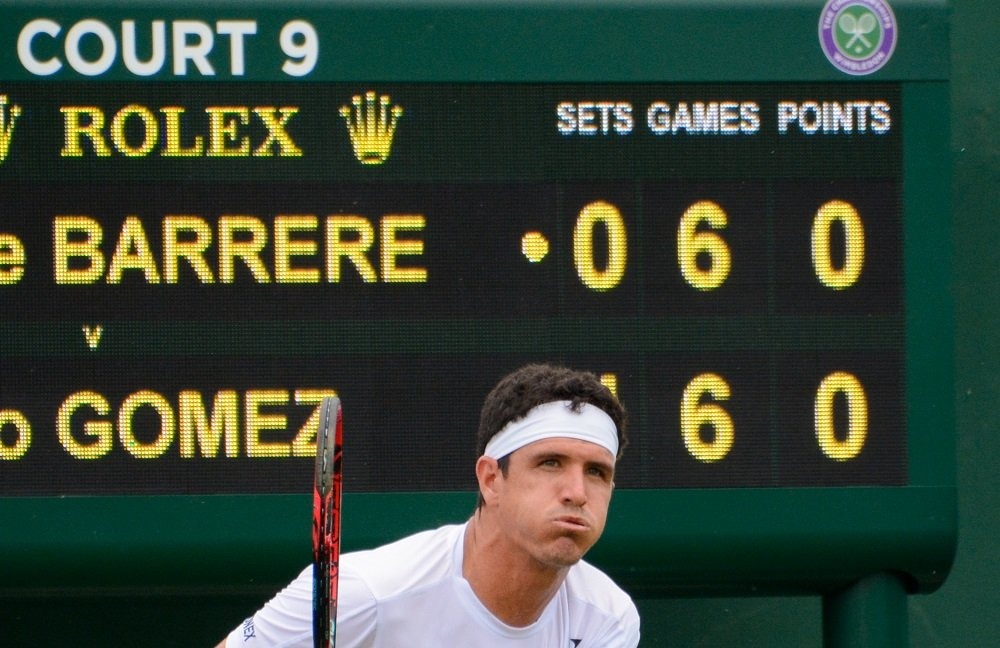
For the full progression through points, games and sets, see the tennis scoring guide.
Serves, Faults and Lets

From across the court, a missed serve and an abandoned toss look alike. What separates them is whether the server tried to hit the ball. A service let adds a second question: which serve gets replayed.
4. The toss was too far back
On a first serve, a player tosses the ball, decides the toss is unsuitable and catches it. The racket never moves toward the ball.
Reveal the ruling
Answer: A. The server can make the first-serve attempt again.
Catching the toss, or letting it drop, is no fault as long as the server never swings at it.
Rule: ITF Rule 19, Case 1.
A real swing at the ball changes the ruling.
5. The server swings and misses
The server tosses the ball and swings the racket in an attempt to deliver the serve. The racket misses the ball entirely.
Reveal the ruling
Answer: B. The attempted serve is a fault.
A swing at the ball counts as an attempt. Missing it is still a fault, even with no contact between racket and ball.
Rule: ITF Rule 19(b).
Without that swing, the toss is only abandoned.
6. A let after the first fault
A server hits a first-service fault. On the second serve, the ball touches the net and then lands in the correct service box, satisfying the conditions for a service let.
Reveal the ruling
Answer: B. The server repeats the second serve.
A service let replays only the serve it affected. The first-service fault stands, so the next delivery is still a second serve.
Rules: ITF Rules 22 and 23.

The service faults and lets guide covers the definitions in more detail. A let claimed during a rally falls under hindrance, covered below.
Can an Out Call Be Changed?
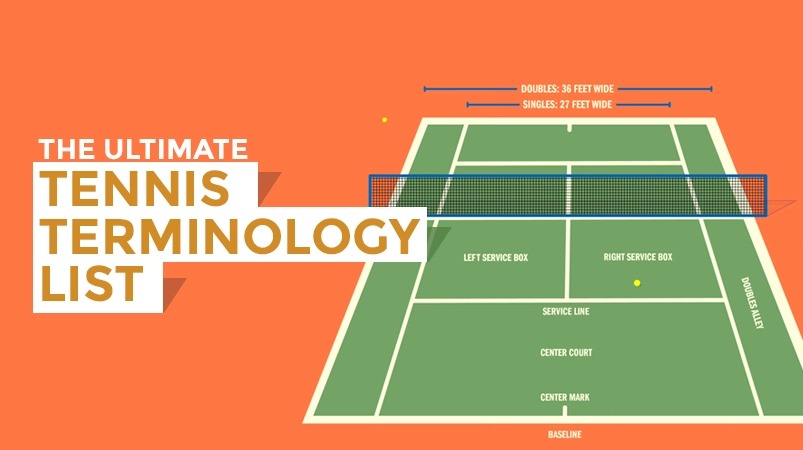
A ball that touches a line bounding the correct court is good. In self-officiated play, a player who spots a wrong out call also follows the Code's procedure for changing it.
7. The sideline mark
During a singles rally on a clay court, a clearly visible ball mark touches the singles sideline. Most of the mark lies outside the court.
Reveal the ruling
Answer: A. The ball is good.
The singles sideline bounds the court for this rally. A ball that touches it is in, however much of the mark lies outside.
Rule: ITF Rule 12; USTA The Code §21.
8. You reverse your own out call
In an ordinary self-officiated singles rally, you call your opponent's shot out. You immediately realize the ball was good and reverse your call.
Reveal the ruling
Answer: B. The point goes to your opponent.
A player who reverses an out call after realizing the ball was good, or after becoming uncertain, concedes the point in an ordinary rally. Nobody replays it.
Rule: USTA The Code §12.
The Code treats a reversed fault call on a serve that touched the net as a separate case.
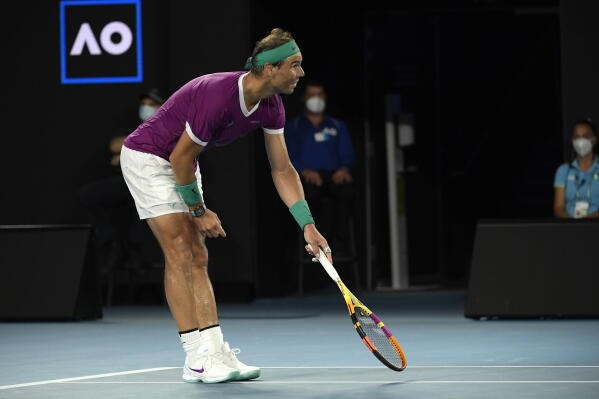
In doubles, a disagreement between partners affects whether the team can keep an out call. USTA The Code §14 sets the procedure, and the line-calls guide explains it further.
Wrong Service Side or Court End
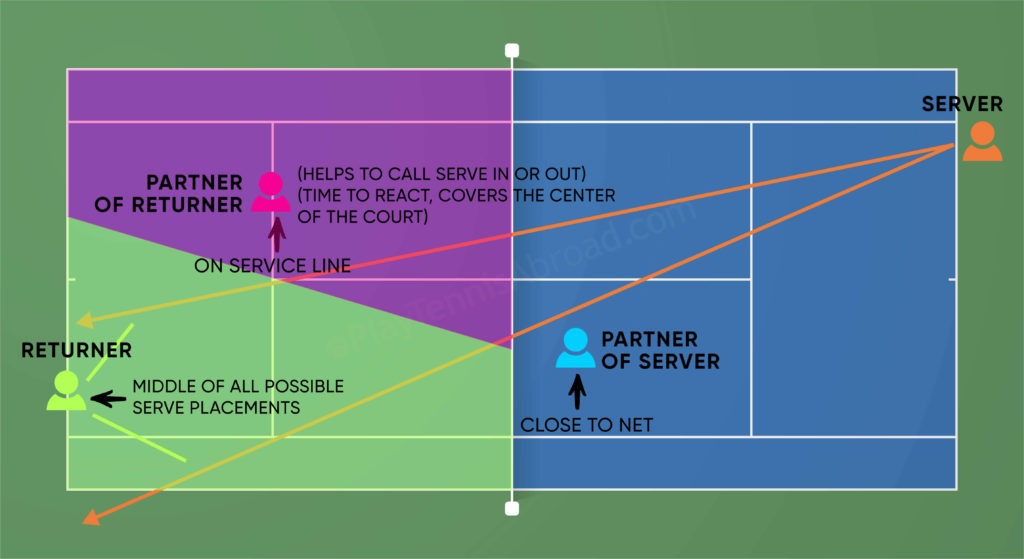
ITF Rule 27 separates a wrong service half from players standing at the wrong ends of the court. Completed points stay as played when the error comes to light afterward, but the two provisions treat an earlier service fault differently.
9. The serve came from the wrong half
During an ordinary advantage game, the server delivers a serve from the wrong deuce or ad half. The rally finishes. Only then do the players notice where the server stood.
Reveal the ruling
Answer: B. The completed point stands.
Players correct the server's wrong service half as soon as they discover the error. A fault served before that discovery still stands.
Rule: ITF Rule 27(a).
Rule 27(b) covers players standing at the wrong ends, and there a fault served before discovery does not stand. Both rules also address tiebreak games.
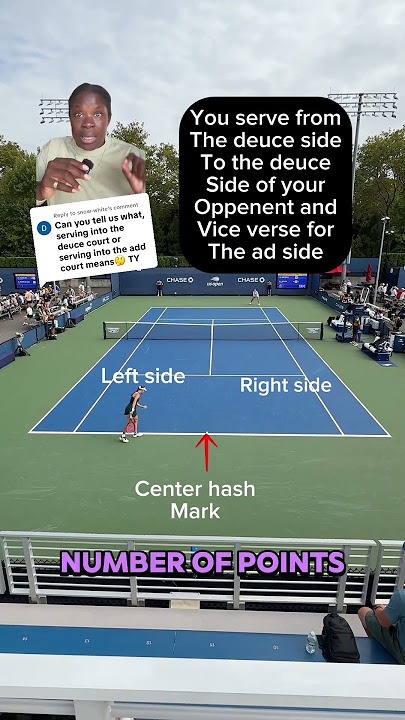
In a wrong-position dispute, work out the first fault, the completed rally if any, and when anyone noticed the error. That tells you whether you are correcting a position or trying to erase a point.
Stray Balls and Hindrance
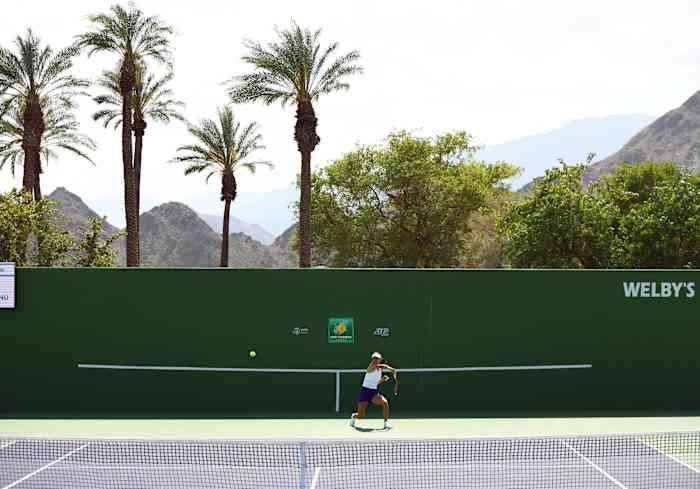
A ball from another court can stop a rally when it hinders a player. In self-officiated play, the affected player must call the let without unreasonable delay once aware of the ball.
10. A ball rolls into your playing area
During an active self-officiated rally, a ball from a neighboring court enters the playing area and interferes with your movement. You become aware of it while the rally is still underway.
Reveal the ruling
Answer: A. Call it as soon as you notice the ball.
The Code requires a prompt call when a ball enters the playing area, and unreasonable delay forfeits your right to claim the let. The ITF hindrance rule sits underneath it.
Rules: USTA The Code §18; ITF Rule 26.
Talking during a doubles rally is a separate question. Under the Code, the speaker, the timing and the effect on opponents all matter.
Net Touches and Reverse Spin
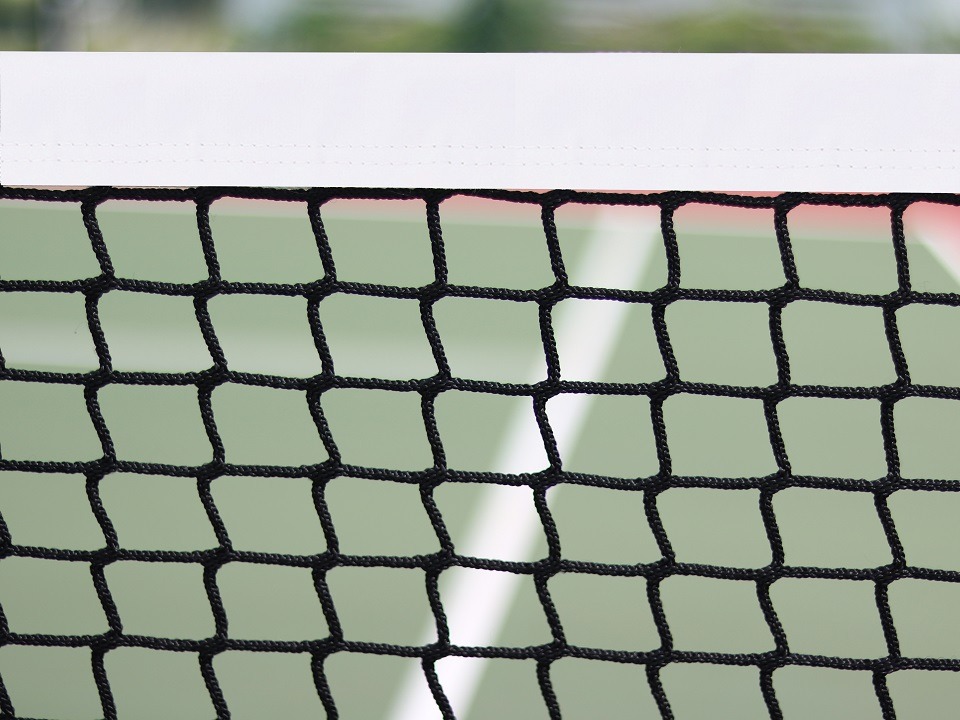
The net decides two unusual rulings. Touch it while the ball is live and you lose the point. But a ball that bounces in the correct court and spins back over the net can still be returned from the other side.
11. Your racket touches the net
While the ball remains in play during a rally, a player reaches for a shot and their racket touches the net.
Reveal the ruling
Answer: A. The player loses the point.
A player loses the point by touching the net, or letting the racket touch it, while the ball is in play. Accidental contact doesn't change that.
Rule: ITF Rule 24(g).
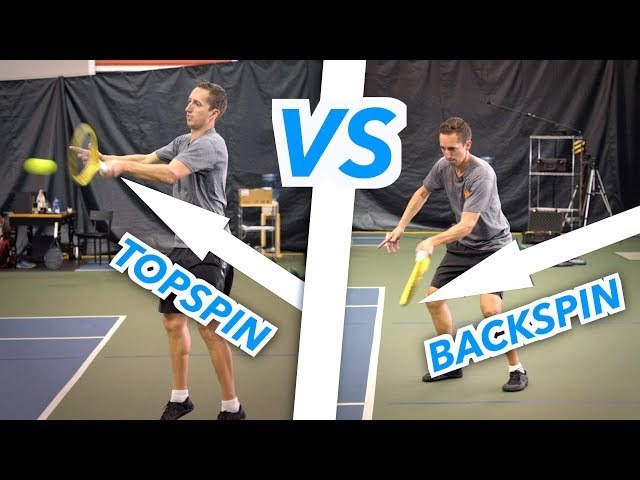
ITF Rule 25(b) lets a player reach across the net plane and return a ball that landed in the correct court and then spun or blew back, provided the player commits no Rule 24 infringement.
Your Results
Score one point for each question you answered correctly before opening the ruling, for a maximum of 11. The table shows which rules to review.
| Category | Questions | What a missed answer suggests reviewing |
|---|---|---|
| Scoring and disputes | 1, 2, 3 | Deuce, agreed point history, tiebreak winning margin |
| Serves and lets | 4, 5, 6 | Abandoned toss, attempted serve, earlier first-service fault |
| Line calls | 7, 8 | Line contact and reversed-call consequences |
| Correcting errors | 9 | Wrong service half, wrong court end and discovery timing |
| Hindrance | 10 | Awareness and prompt calling of a let |
| Unusual rallies | 11 | Live net contact and its point consequence |
For each miss, reopen the ruling and try to name the deciding condition and the rule number before you read the explanation again.
This is a practice quiz with no official passing score.
Using the Rules in Your Next Match
When a disagreement starts mid-match, stop and agree on the facts before you argue about the rule: what happened, at which point, and under which format. If the facts stay disputed, USTA The Code gives procedures for score disputes (§32) and for line-call disagreements between partners (§14).