
In a standard tiebreak set, a 6-6 game score leads to a tiebreak played to at least seven points, with a two-point lead required to win. The player due to serve next opens from the right (deuce) court, serves one point, and then the players alternate two-point service turns. If your event has announced a different format, use its scoring and changeover rules before starting.
When Does a Tennis Tiebreak Start, and How Do You Win It?
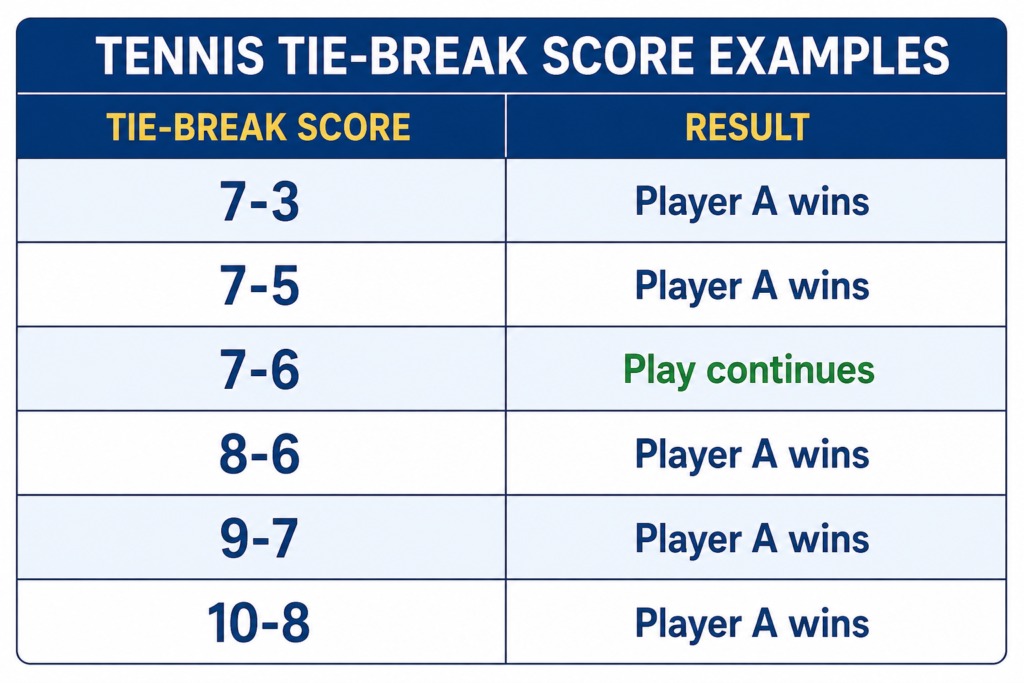
A standard tennis tiebreak begins when the set reaches six games all. Players count points as 1, 2, 3 and so on. The usual 15, 30 and 40 calls disappear for this game.
Under the tiebreak-set format, the first player or team to reach at least seven points with a two-point lead wins the tiebreak and the set, 7-6. An advantage set ends differently, so the event's announced format decides whether a tiebreak starts at 6-6 games.
- 7-5: The leader has seven points and a two-point margin. The tiebreak is over.
- 7-6: The lead is one point. Play continues.
- 8-6: The leader has eight points and a two-point margin. The tiebreak is over.
A tiebreak can run well past seven points. From 6-6, the next point makes it 7-6, and the leader wins only by taking the following point (8-6). Otherwise the score goes to 7-7.
Rules 5 and 6 of the ITF Rules of Tennis 2026 cover scoring and set formats.
Who Serves First in a Tiebreak, and from Which Side?
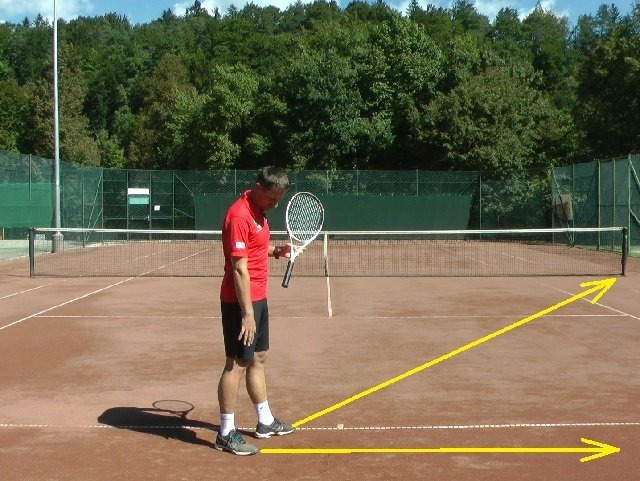
The player whose turn follows the final regular game serves the first tiebreak point. That serve comes from the right-hand side, called the deuce side.
Suppose Maya serves the twelfth game, which finishes with the set tied 6-6. Jordan was due to serve next, so Jordan serves point 1 of the tiebreak from the deuce court. Normal rotation decides who serves, and the point number decides the side.
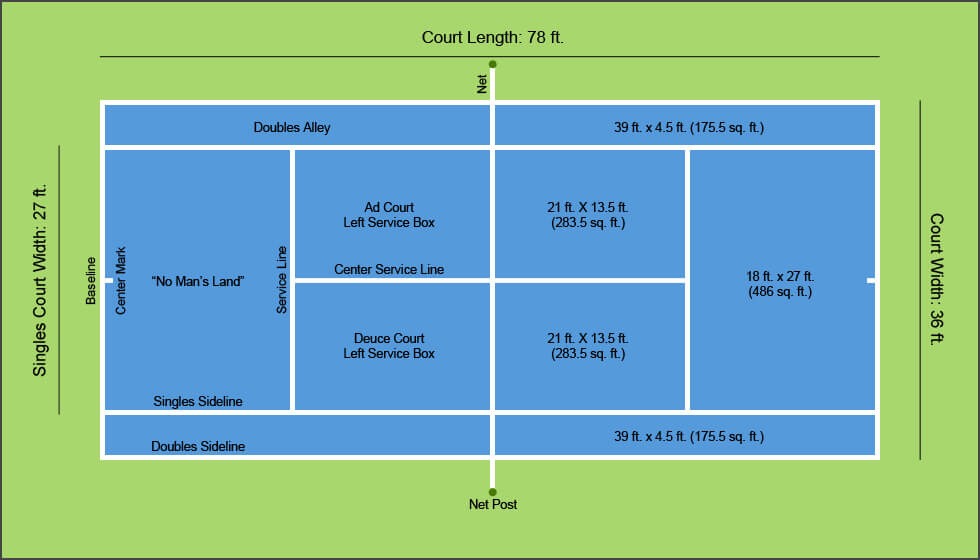
For a server facing the net, the right-hand half is the deuce court and the left-hand half is the ad court. One Reddit player described what happened when an opponent insisted on a different starting side.
I start serving on the deuce side and my opponents stops the play saying in a tiebreak I'm supposed to start playing on the ad side? I was puzzled, but since I always tend to avoid controversy and didn't really care which side I should start I said "ok let's start from the ad side", then during all the tiebreak I was messing up the side, and I'm 90% sure my opponent also messed up the sides following his own rule.
That match was an informal ten-point tiebreak.
How Does the Tiebreak Serving Order Work, Point by Point?
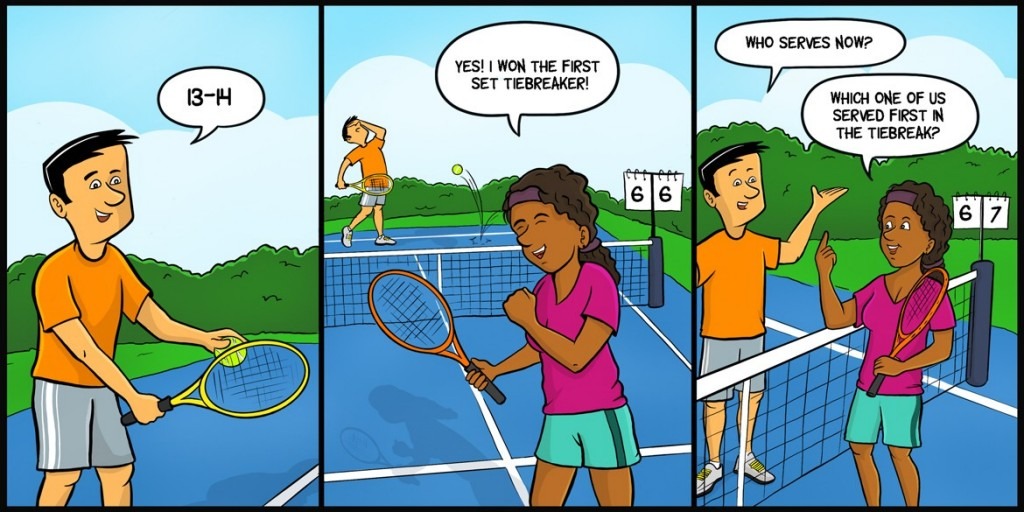
One player serves the first point. The opponent serves the next two, and the players then alternate two-point turns. The side changes on every point, even when the same player serves twice in a row.
Call the opening server A and the opponent B. The table shows who serves each of the first 12 points. Odd-numbered points start on the right (deuce) and even-numbered points on the left (ad).
The first 12 tiebreak points
| Point | Server | Side | Change ends afterward? |
|---|---|---|---|
| 1 | A | Right (deuce) | No |
| 2 | B | Left (ad) | No |
| 3 | B | Right (deuce) | No |
| 4 | A | Left (ad) | No |
| 5 | A | Right (deuce) | No |
| 6 | B | Left (ad) | Yes |
| 7 | B | Right (deuce) | No |
| 8 | A | Left (ad) | No |
| 9 | A | Right (deuce) | No |
| 10 | B | Left (ad) | No |
| 11 | B | Right (deuce) | No |
| 12 | A | Left (ad) | Yes |
The table covers a standard singles tiebreak with A serving first. Changeovers follow the standard schedule and happen only if play continues.
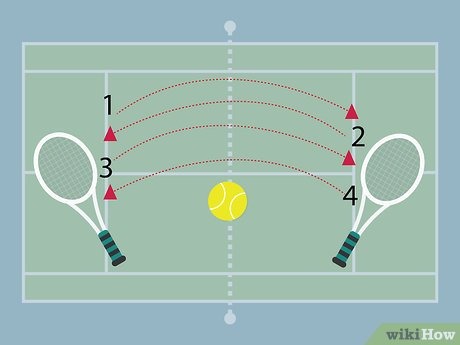
If play goes past point 12, A serves point 13 to complete that turn before B serves points 14 and 15.
When Do Players Change Ends? Standard vs. Coman Tiebreaks

With standard ITF procedure, players change ends after every six points. An approved alternative, called the Coman procedure in the United States, changes ends after point 1 and then after every four further points. It applies when the event has adopted it.
Changing ends means moving to the opposite end of the court. The switch between deuce and ad sides happens from the server's current end and follows the point number.
| Procedure | Players change ends after points |
|---|---|
| Standard schedule | 6, 12, 18, 24 and so on, every six points |
| Coman alternative | 1, 5, 9, 13 and so on, every four points after the first |
Add both players' scores to get the points played. At 4-2, six points have been played, so players change ends. At 5-2 or 4-3, seven have been played, so there is no new standard changeover. Coman changes only the timing of the exchanges, not who serves.
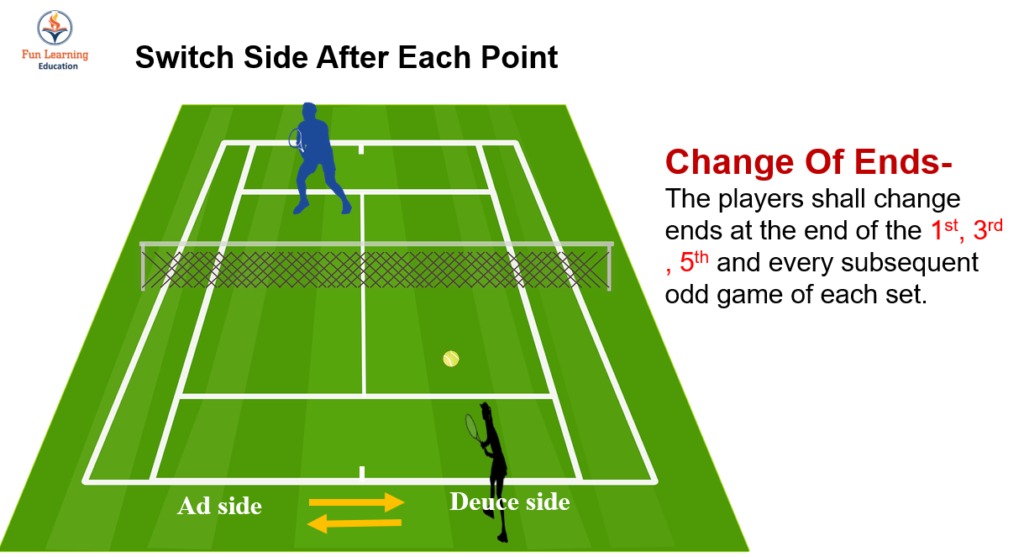
There is no rest break during a tiebreak change of ends under ITF Rule 29. When a set tiebreak ends and another set follows, players change ends for that next set.
How Does the Serving and Receiving Order Work in Doubles Tiebreaks?
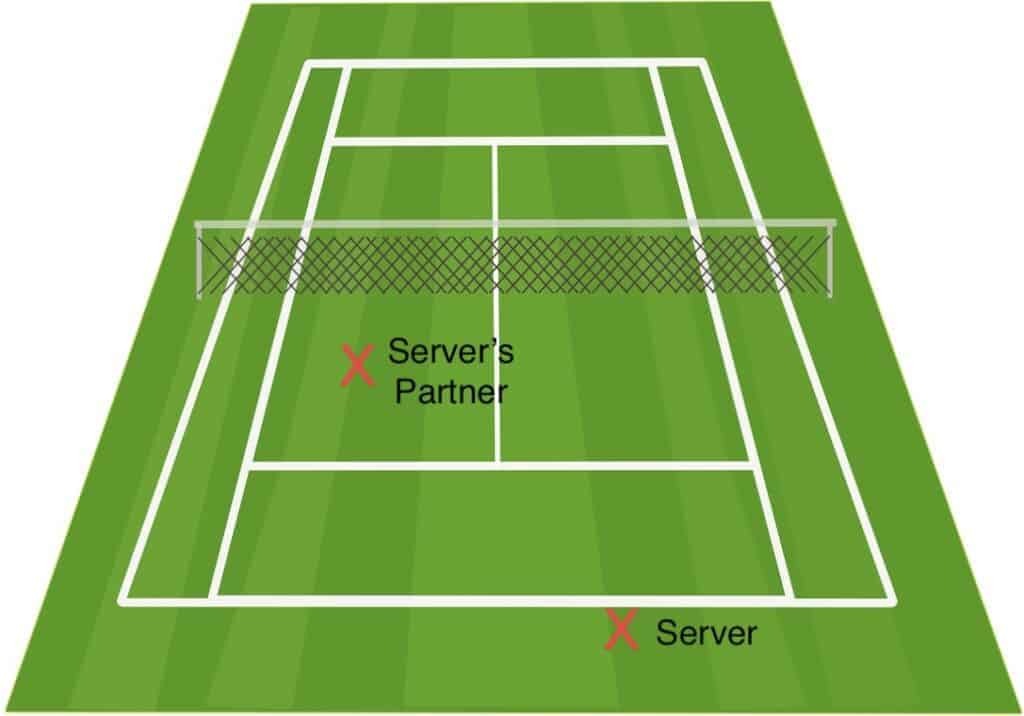
In a doubles tiebreak at 6-6 in the same set, each player serves in the order fixed for that set. Knowing which team is due to serve is not enough. You need the next individual server.
Say Team A has A1 and A2, Team B has B1 and B2, and the service order is A1, B1, A2, B2. If A1 is due to serve when the tiebreak begins, the opening sequence is:
- A1: Serves point 1.
- B1: Serves points 2 and 3.
- A2: Serves points 4 and 5.
- B2: Serves points 6 and 7.
- A1: Serves points 8 and 9 if play continues.
Each team's receiving order also continues through the set. Under ITF Rule 15, partners keep their receiving sides, so a player who receives in the deuce court stays there when the tiebreak begins.
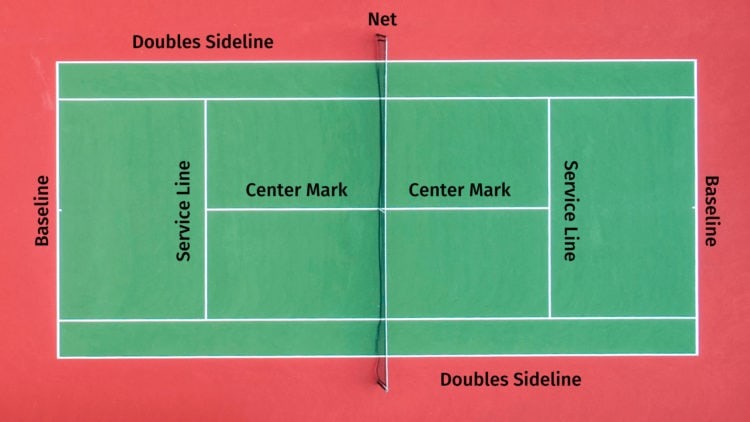
ITF Appendix VI covers a match tiebreak replacing a deciding set. The team due to serve first is still set by the previous rotation. Teammates can rearrange their individual serving and receiving order as they could at the start of a new set. Before point 1, settle those changes. The option does not apply to a tiebreak that continues the set at 6-6.
Who Serves the First Game After a Tiebreak?
If another set follows, the player who received the first tiebreak point serves the opening game of that set. If A served tiebreak point 1 and won the tiebreak 7-5, B still serves first in the new set, and the same holds if B won.
Seven-Point vs. Ten-Point Tiebreaks: Set, Match, and Final Set
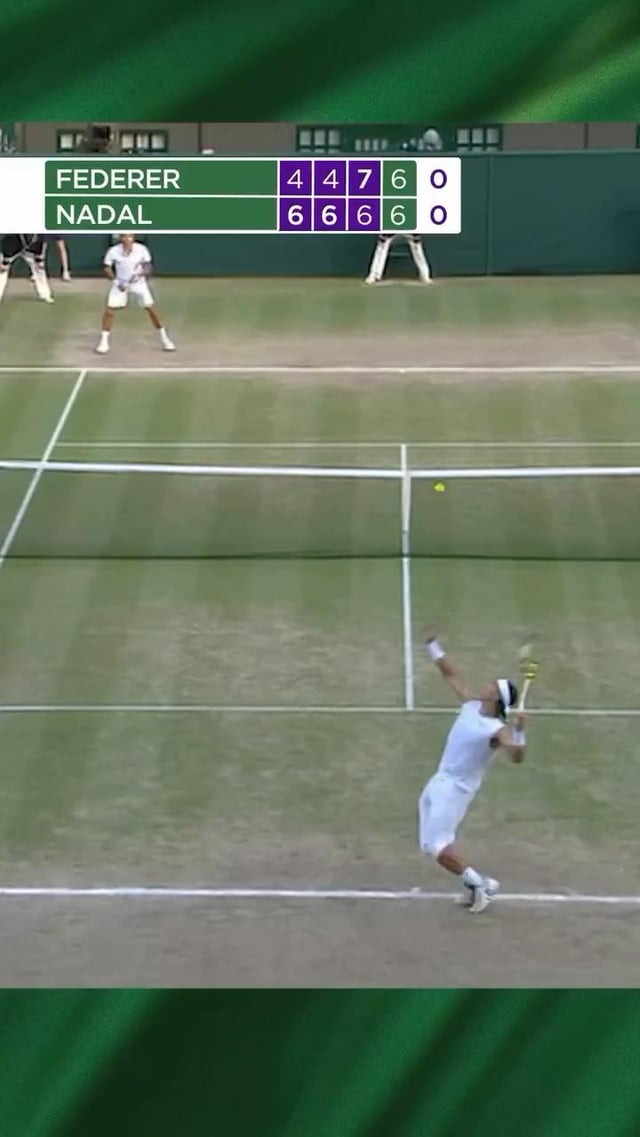
Seven and ten are the usual targets. A tiebreak at 6-6 finishes a set already in progress. A replacement match tiebreak decides a tied match without playing its final set.
| Format | When it begins | Winning condition | What it decides |
|---|---|---|---|
| Standard set tiebreak | At 6-6 games in a tiebreak set | At least 7 points, ahead by 2 | That set |
| Ten-point replacement match tiebreak | At 1-1 in sets under an approved best-of-three format | At least 10 points, ahead by 2 | The match, in place of the deciding set |
| Ten-point final-set tiebreak | At 6-6 games in the deciding set where the format requires it | At least 10 points, ahead by 2 | The final set and the match |
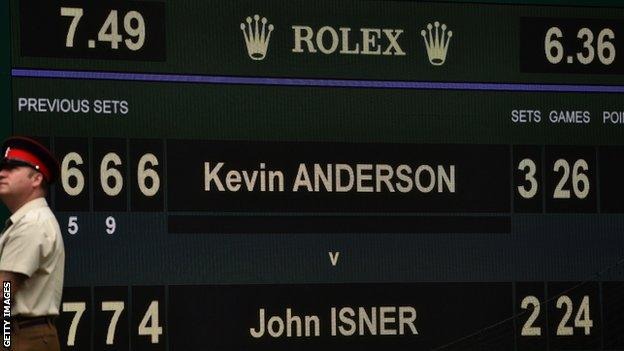
At the 2026 US Open, deciding-set tiebreaks at 6-6 games used a ten-point target and a two-point winning margin, reflecting the Grand Slam Board's final-set policy.
ITF Appendix VI also permits a seven-point match tiebreak to replace a deciding set under an approved format. The same appendix covers short sets, with a separate five-point tiebreak option.
What If Someone Serves Out of Order or from the Wrong Side?
ITF Rule 27 sets different corrections for the wrong service side, the wrong court end, an incorrect server, and an incorrect doubles receiving order. Points already played stand.
| Mistake discovered | Correction |
|---|---|
| Serve from wrong deuce/ad side | Use the correct side once the error is discovered; a previously served fault stands. |
| Players at wrong court ends | Correct their ends as soon as discovered; a previous fault does not stand. |
| Wrong server in the tiebreak | After an even number of points played, correct the service order immediately. After an odd number, keep the altered order. |
| Wrong doubles receiving order | Keep the altered receiving order through the game. If another receiving game occurs in the same set, restore the original order then. |
Say the wrong player has been serving and you discover it after six points. Six is even, so the correct order resumes. If you discover it after five points, the altered order stays in place.

For wrong-server errors, Rule 27 also treats earlier faults differently depending on who delivered them. A fault by the opposing player before discovery does not stand; a fault by a doubles partner stands.
What Should You Check Before a Local League or Tournament Tiebreak?

In the United States, the event category determines which regulations apply. USTA-sanctioned tournaments have published scoring requirements, while recreational or league rules may differ.
At USTA-sanctioned tournaments, the 2026 Friend at Court regulations require a seven-point set tiebreak at 6-6, except for pro sets.
In the usual eight-game pro set, a seven-point tiebreak begins at 8-8 and is won by two, producing a 9-8 set score. A tournament committee can announce a ten-point pro-set decider in the entry form and on its website.
The regulations also cover the ten-point replacement match tiebreak and require advance announcement when Coman changeovers are chosen. Local leagues and casual matches can set their own rules.
One player described a timed doubles match in which a captain stopped a ten-point deciding tiebreak when the on-court score stood at 7-6:
It was very close. We were tied 6-6. The other team won the point so it was 7-6. At that point the other team’s captain, who was standing on the side, called out: that’s it, that’s time! And she then walked onto our court to end the match. She pointed to the clock on the wall and said the clock says it’s 8 so match is over.

Whether a captain can end a match this way depends on the league's time-limit rule.
Before the first point of a league or tournament match, settle these items:
- Format: Confirm whether the match uses standard tiebreak sets, a pro set, or a replacement deciding-set tiebreak, plus the announced seven- or ten-point target and the winning margin.
- End changes: Determine whether standard or Coman changeovers apply.
- Time rules: Find the procedure for a time limit, interruption, or unfinished tiebreak.
- Decision authority: Identify the official or director who settles disputes.