
For an adult starting tennis, choose a racket that fits your hand, forgives off-center hits, and feels easy to swing. Make sure the strings are in playable condition and the total cost fits your budget. Compare rackets under similar playing conditions before you commit to an expensive one, and borrow or demo a racket if fit, handling, strings, or total cost are still unclear.
What Makes a Tennis Racket Beginner-Friendly?
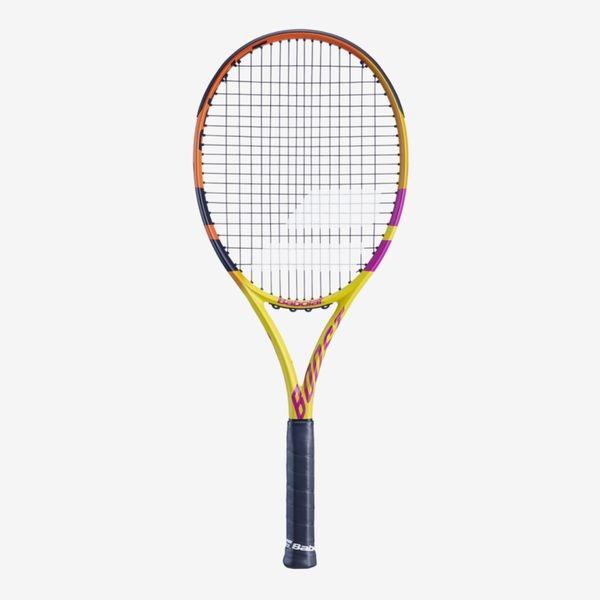
A beginner-friendly racket lets you learn without making ordinary shots harder than they need to be. You can get ready for the ball, swing without fighting the frame, and make useful contact while your timing is still developing.
Beginner labels group rackets for shopping. Four things tell you whether a particular frame suits you:
- Fit. The racket is an adult size, and the handle feels secure and comfortable in your hand.
- Room for off-center hits. The head and stringbed tolerate some variation in where the ball lands.
- Easy handling. You can prepare, swing, and recover without the frame feeling awkward.
- Strings and cost. You know the condition of the strings and the frame, and the full price fits your budget.
These four affect each other. An uncomfortable handle wastes a large hitting area. Balance and swingweight shape how a lightweight racket moves. A discounted frame may need stringing before your first lesson.
Match the Racket to Your First Few Months of Tennis
Before a first group lesson, ask whether the instructor supplies rackets, and decide how much you can spend on everything you need to play. If you take regular lessons, use one familiar racket with the same strings so practice stays consistent. Upgrade early only for a specific reason, such as a grip that doesn't fit or a racket you struggle to prepare with. Don't spend heavily until you know what feels comfortable.
Check Adult Length and Grip Fit Before Comparing Features
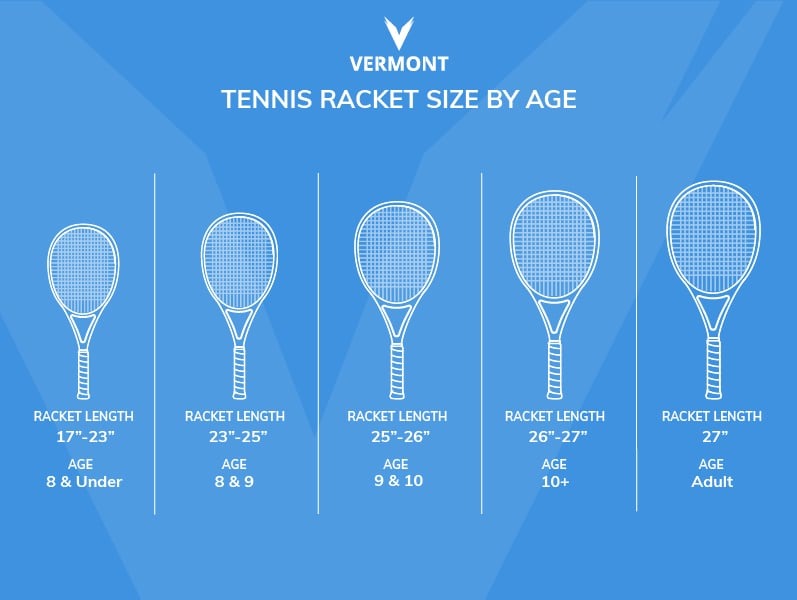
Length and grip can rule out a racket before you compare power or head size. A conventional adult racket is 27 inches long, while junior ranges include 25- and 26-inch frames. The model's specification tells you which category you're looking at.
This matters most when you buy secondhand. A short frame looks perfectly normal in a listing photo, especially when the seller gives only the brand and model family. Check the stated length, or measure from the butt of the handle to the top of the head.
Grip sizes in the United States are given in inches, often alongside an L-number. For example, the Tennis Warehouse grip-size guide lists L2 as 4¼ inches and L3 as 4⅜ inches.
To measure your hand, extend your fingers and measure from the lower lateral crease of your palm to the tip of your ring finger. For the finger-space method, hold the racket with an Eastern forehand grip and check whether the index finger of your other hand fits between your ring finger and palm.
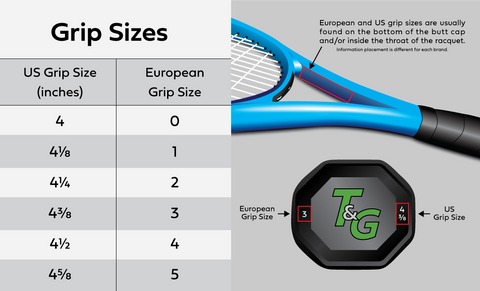
A typical overgrip adds about 1/16 inch to the handle circumference. It can fine-tune a slightly small grip. If the handle is already too big, start with a different size. The existing grip material also changes the final circumference.
A good grip feels secure in a normal swing without a hard squeeze. If the length or handle size is clearly wrong, drop that racket and skip the rest of the comparison.
Head Size: Forgiveness and Useful Starting Ranges
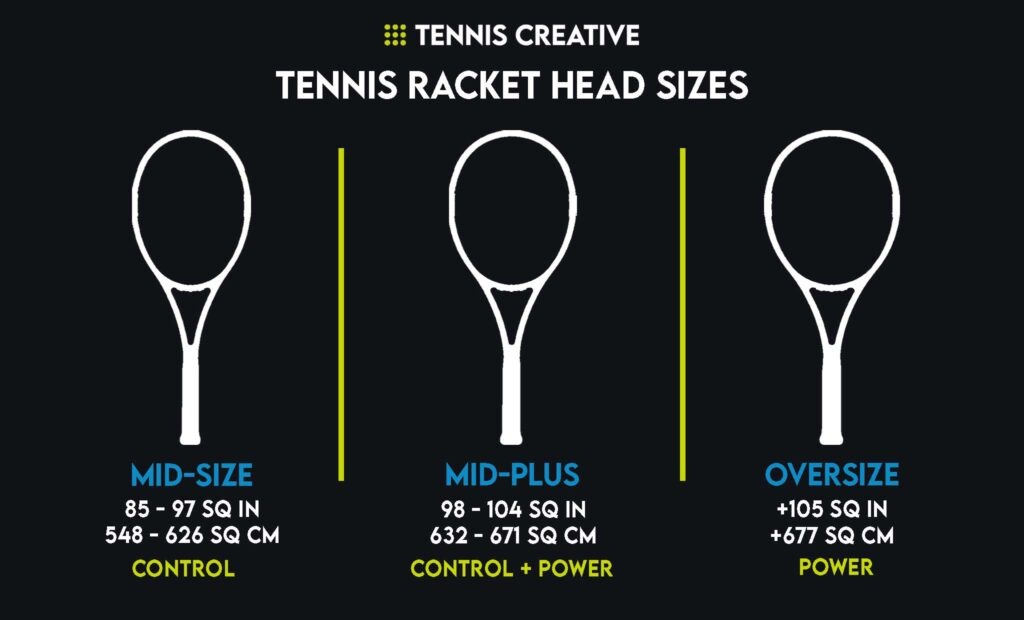
Beginners rarely hit every ball on the same spot of the strings, which is why head size matters. A larger stringbed gives you more hitting area and forgives more off-center contact. Frame and stringbed construction change how much.
Published recommendations differ:
| Source or context | Head size | How to use it |
|---|---|---|
| Lawn Tennis Association beginner guide | 105 to 115 sq in (677 to 742 cm²) | Published beginner recommendation |
| Wilson beginner racket guide | 105 to 110 sq in | Manufacturer's suggested range |
| Tennis Warehouse beginner selections | Some models around 100 to 102 sq in | Smaller heads in beginner-oriented choices |
The LTA equipment guide gives one clear range. The smaller heads in beginner selections show that a good shortlist can reach outside it.
Head area and sweet zone are different things. What happens on an off-center hit depends on where you make contact, the frame construction, and the stringbed. Two rackets with the same head area can feel different.
If you're learning to keep a rally going and often catch the ball away from the center of the strings, compare a racket around 100 square inches with one around 105 to 110 square inches. They give you two different hitting areas to test.
Weight, Balance, and Swingweight: How Handling Changes
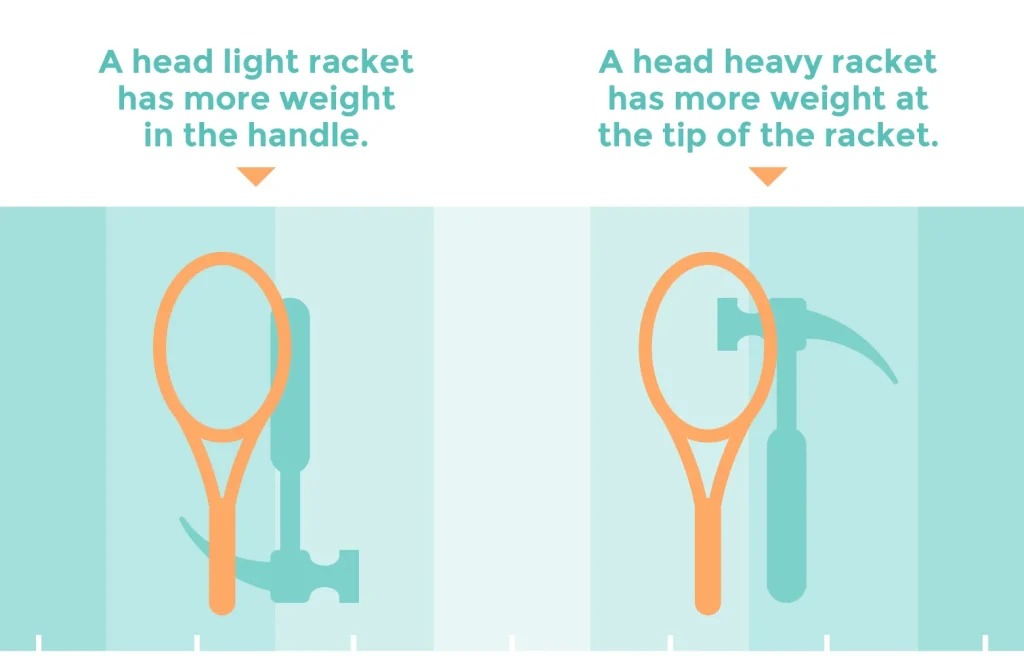
Static weight, balance, and swingweight are three separate measurements. Each changes how much effort the swing takes and how stable the racket feels at impact.
| Property | What it measures | What you may notice |
|---|---|---|
| Static weight | Total racket mass, usually stated in grams or ounces | How much mass you hold and move |
| Balance point | Position of the racket's center of mass | Whether the head or handle feels more prominent during preparation |
| Swingweight | Resistance to rotational acceleration | Ease of starting the swing and resistance to movement changes at contact |
| Strung or unstrung status | Whether the published weight includes strings | Whether two advertised specifications are directly comparable |
A racket with a lower swingweight takes less effort to accelerate rotationally. Greater rotational inertia resists the changes in racket motion that ball impact produces. Mass distribution therefore affects both preparation and stability.
Tennis Warehouse University explains the mechanics. A head-light balance designation describes the center of mass; swingweight is a separate measurement.
Tennis Warehouse includes the Prince Ripcord 100 280g among its beginner selections and describes it as unstrung. The 280 g is the weight before strings go on, so keep that in mind when you compare it with a ready-strung alternative.
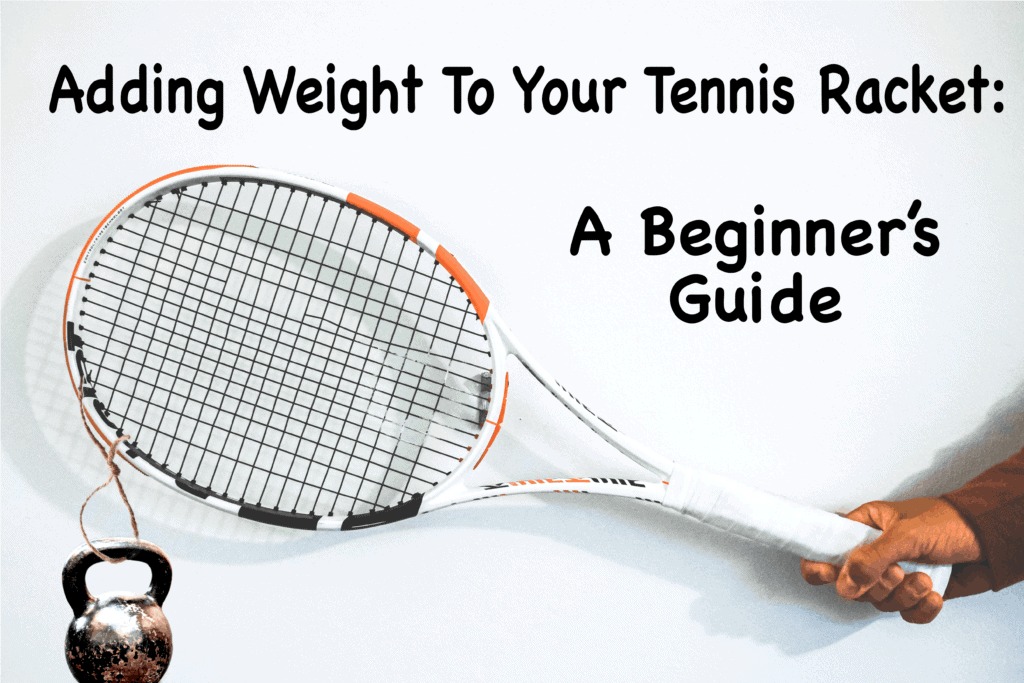
The LTA suggests 250 to 300 g as a beginner weight range. Its beginner table doesn't say whether that means strung or unstrung, so compare it carefully with product specifications that state their stringing status.
For each racket on your shortlist, write down the advertised weight and whether it includes strings. Add the balance point and swingweight if the manufacturer publishes them. If a value isn't reported, leave it blank. You can't calculate it reliably from the other labels.
A heavier frame with good mass distribution can feel steady. A lighter one can suit you if you struggle to prepare in time.
If playing causes arm pain that persists or gets worse, stop and see a doctor. Racket specifications are not a treatment plan.
Check the Strings and Whether the Racket Is Ready to Play
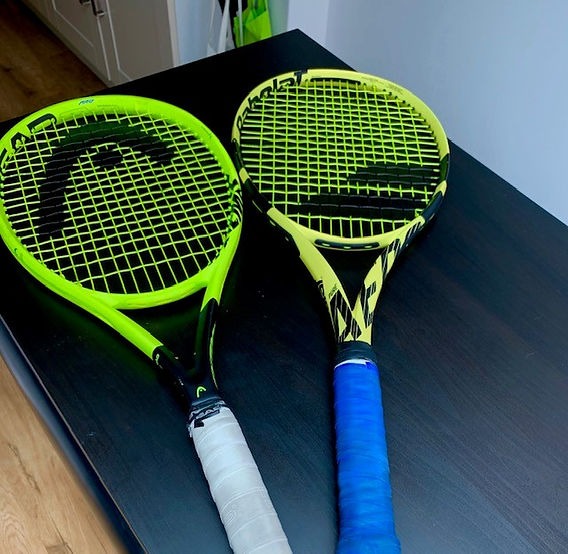
A racket arrives either with strings already installed or as an unstrung frame. That decides when you can play, what you pay in total, and how the racket feels.
Pre-strung means the stringbed is installed when the racket is sold. Unstrung means you have to choose strings and have them installed before you can hit. Tennis Warehouse's beginner selections include both.
An inexpensive pre-strung racket works fine for occasional beginner play. An unstrung performance frame lets you choose the first strings, which adds decisions and expense.
With a used racket, check the strings. They can look intact while their age, material, tension history, and amount of play stay unknown. If a string is broken, find out why before you buy. The price of the racket doesn't tell you the cause.
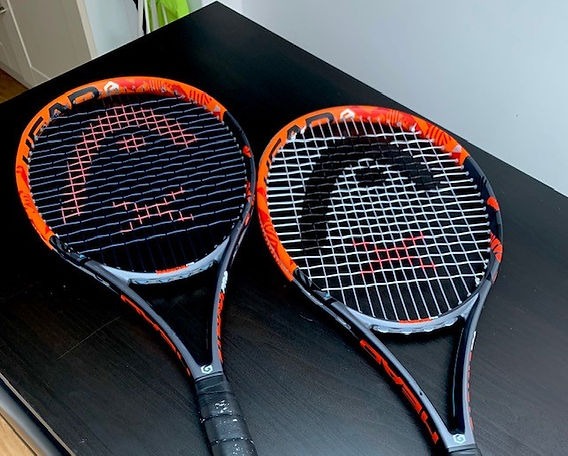
You may also see a string pattern listed. The LTA includes 16×19 among its beginner suggestions. That is the number of main and cross strings, and it doesn't prescribe one ideal stringbed for every novice. String material and tension are separate decisions.
Before you treat a racket as ready to play, confirm that the exact item has strings, find out what is installed if the listing says, and check that the strings are in playable condition. If it needs stringing, find a stringer who can work on the frame. Replacement grips and overgrips are handle accessories, with costs separate from strings and stringing labor.
Compare the Complete Cost of New, Used, and Inexpensive Rackets
The price on a listing may cover only part of what it takes to get on court. Compare totals: add whatever strings, labor, grip materials, and repairs the racket needs before you can use it.
Enter the real amounts from the two offers you're considering:
| Cost item | Candidate A | Candidate B |
|---|---|---|
| Racket or frame price | $_____ | $_____ |
| Strings, if required | $_____ | $_____ |
| Stringing labor, if required | $_____ | $_____ |
| Required grip or overgrip | $_____ | $_____ |
| Shipping, fees, or necessary repairs | $_____ | $_____ |
| Complete ready-to-play cost | $_____ | $_____ |
Add up the costs for each racket. If something is genuinely included in the frame price, don't charge it twice. If a service cost is unknown, get an actual figure before you decide.
Used rackets need a condition check too. Look for visible frame cracks, damaged grommets or bumper material, obvious handle defects, and worn or broken strings. A racket stringer can examine a structural concern that's hard to judge by eye.
Check the purchase terms, especially if fit is uncertain. Ask whether a demo fee or deposit applies, whether a used purchase is final, and what the seller allows after you've played with or restrung the racket.
On a limited budget, a sound used racket with usable strings can beat a discounted new frame that needs work right away.
How to Compare Two Rackets Without Fooling Yourself
A good trial compares two plausible rackets under conditions as similar as you can make them. Your warmup, the ball feed, coaching, and familiarity with the frame all change early impressions.
Start with two adult rackets whose length, grip, and strings you know. Use the same court, balls, and hitting partner or feeder when possible. Give each racket a similar warmup and hit long enough to experience ordinary play.
Hit comfortable forehands and backhands. Add a few beginner serves and volleys, then see what happens when you're late preparing for a ball. Record clean contact, preparation, racket twisting, handle comfort, and fatigue as you keep playing.
Write your observations in everyday language, such as "backhand preparation felt earlier" or "the handle slipped during a serve." A numerical score makes a short test look more certain than it is.
Two-racket comparison worksheet
| Check | Racket A | Racket B |
|---|---|---|
| Model and known setup | _____ | _____ |
| Adult length and grip fit | _____ | _____ |
| Head size | _____ | _____ |
| Weight and strung status | _____ | _____ |
| Balance or swingweight, if known | _____ | _____ |
| Strings and condition | _____ | _____ |
| Forehand and backhand contact | _____ | _____ |
| Serve and volley handling | _____ | _____ |
| Late preparation and racket twisting | _____ | _____ |
| Comfort and fatigue during play | _____ | _____ |
| Differences in test conditions | _____ | _____ |
| Provisional preference | _____ | _____ |
Say racket A feels quicker during preparation and racket B feels steadier in a rally. B has fresh strings, though, and A has an older stringbed in unknown condition. Both observations are useful, but the different strings stop you from drawing a conclusion about the frames themselves.
Hold off on choosing a frame until the strings match. If you have to buy right away, pick the racket with established fit, playable strings, and a known affordable cost.
A coach can help you interpret what you noticed about preparation and contact. Repeat the test when you can, to see whether your preference lasts beyond one unusually good hitting spell.
If a demo isn't available, narrow the choice with a borrowed racket, an in-store fit assessment, or a purchase with return conditions that make the remaining uncertainty acceptable.
Buy Now, Demo Again, or Keep the Racket You Have?
After the fit, string, cost, and playing checks, you end up at one of four outcomes:
- Buy. The racket fits, the strings are playable, it handles comfortably through ordinary strokes, and the total cost is within budget.
- Keep the racket you have. Your current frame is serviceable and comfortable, and the replacement showed no meaningful advantage.
- Borrow or demo again. The promising racket was tested too briefly, or under conditions different enough to affect the result.
- Reject or defer. The handle is unsuitable, the structural condition is uncertain, the necessary work costs too much, or restrictive sale terms make an unresolved purchase risky.