
Pick a hard court for a steady, familiar bounce. Clay rewards spin, recovery, and patience. Natural grass asks you to prepare earlier for low, quick bounces. Court condition and your footing can overrule that choice. Before your next match, confirm the court type and shoe rules, then use an easy warm-up to try one small adjustment.
Hard Court vs Clay vs Grass: The Differences at a Glance
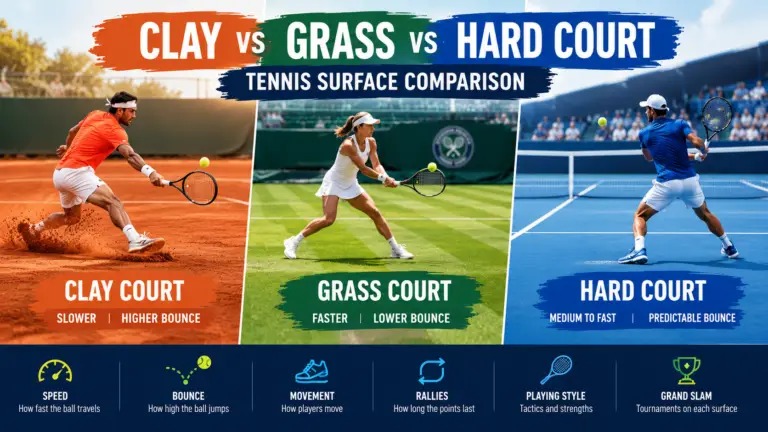
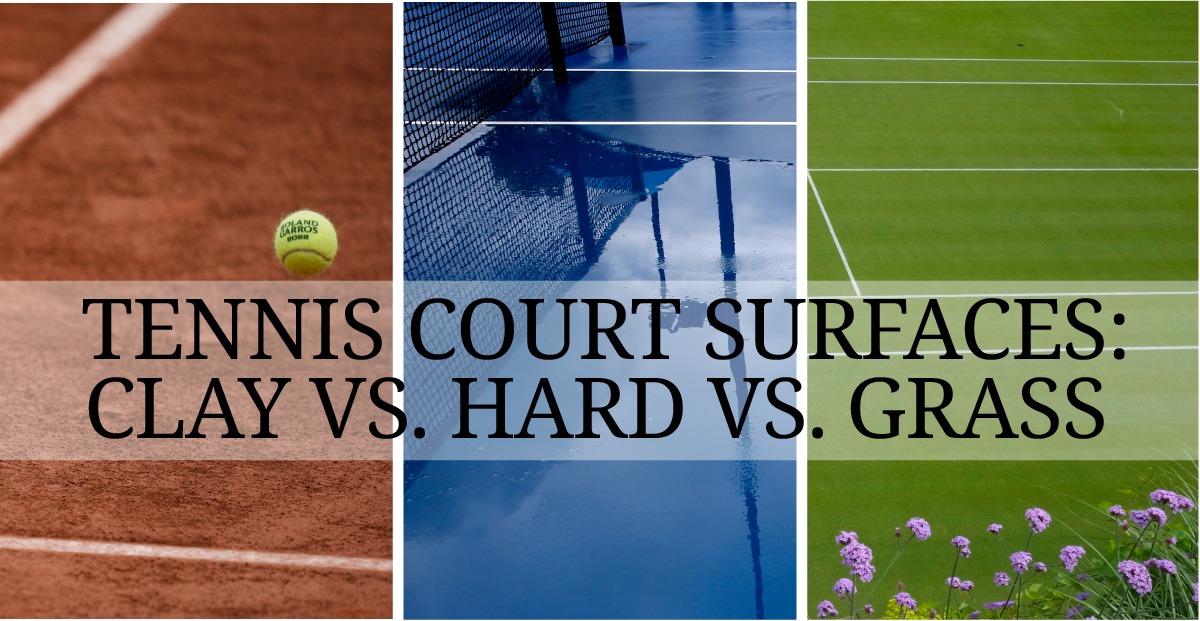
The ball behaves differently on hard, clay, and natural-grass courts. Bounce, speed after impact, and grip underfoot decide how early you prepare and how you recover for the next shot.
| What changes | Hard court | Clay court | Natural grass |
|---|---|---|---|
| Construction | Asphalt or concrete base, often with acrylic coating | Loose mineral material, including red and green varieties | Living turf over prepared soil |
| Typical pace | Medium to fast, depending on finish | Slower | Quicker |
| Bounce | Even and predictable | Higher with topspin | Lower, sometimes skidding |
| Movement | Firm traction and quick direction changes | Controlled deceleration and recovery; trained players slide | Secure footing and smaller adjustment steps |
| Playing approach | Baseline or all-court flexibility | Spin, patience, and repeated recovery | Earlier preparation and compact responses |
| Conditions that matter | Texture, finish, cleanliness, drainage | Moisture, grooming, material, wear | Turf health, weather, worn patches |
| Shoe concern | Traction and outsole wear | Tread suitable for loose material | Specialist grip and facility restrictions |
For markings, dimensions, and other court features, use the broader tennis courts guide.
Why Court Material Doesn't Tell You the Exact Speed
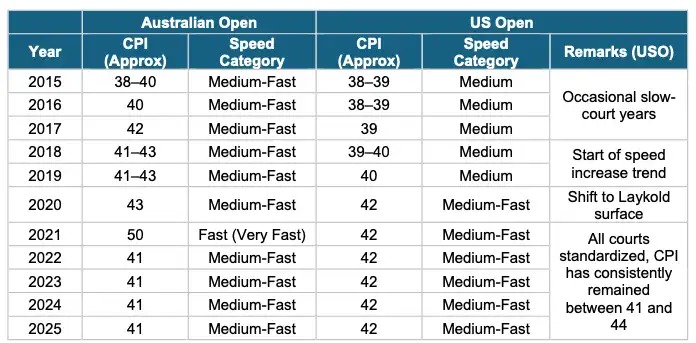
The International Tennis Federation classifies how a surface plays with Court Pace Rating (CPR). Friction affects the ball's forward motion and spin at contact. Restitution covers its rebound. Both feed into the pace measurement.
The ITF Classified Surfaces program sorts tested surface products by pace. Its 2026 Technical Booklet gives these categories:
| ITF pace category | Court Pace Rating |
|---|---|
| Slow | 29 or below |
| Medium-slow | 30 to 34 |
| Medium | 35 to 39 |
| Medium-fast | 40 to 44 |
| Fast | 45 or above |
CPR is a unitless scale that describes how a surface plays. Hard, clay, and grass describe what it's made of. An ITF classification identifies a tested surface product, so the pace of an installed court takes measurements of that court. Without a documented measurement for your local facility, the material tells you what to expect in general. It can't give you a CPR number for that venue.
What Hard Courts Feel Like
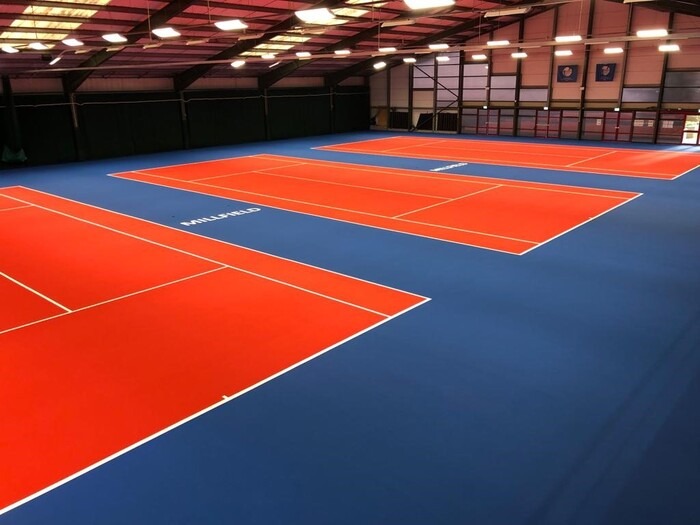
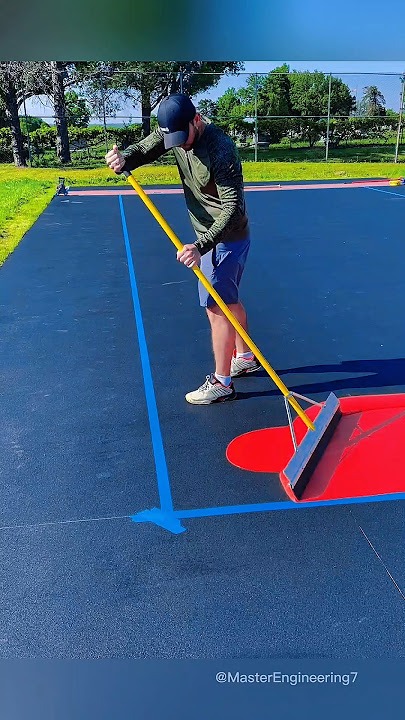
A hard court has an asphalt or concrete base, usually finished with acrylic. The firm surface gives recreational players a steady bounce and enough predictability for a baseline or all-court game. Texture in the acrylic finish affects the pace, and firm traction supports quick direction changes and recovery.
Clay Courts: Slower Play, Higher Spin, and US Green Clay
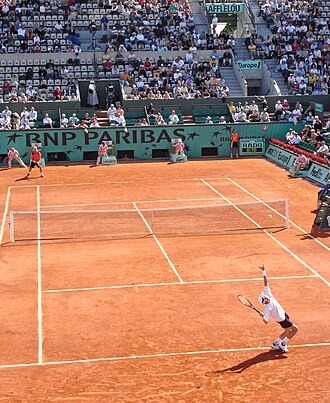
Clay takes pace off the ball after impact, and topspin gives a higher bounce. If you go for an instant winner, your opponent has time to reach the next ball. Patient rallies, angles, and good recovery pay off.
A longer exchange asks for repeated movement, stops, and changes of direction, which makes clay a demanding match.
In the United States, green clay, including Har-Tru-style surfaces, is a relevant club-court category alongside traditional red clay. The names cover different systems, and some installations also use synthetic or dressed construction.
| Clay label | What it refers to | Why the distinction matters |
|---|---|---|
| Traditional red clay | A mineral-based clay system | Gives the familiar clay tendencies, depending on preparation |
| Green clay / Har-Tru-style | A different mineral clay system common in North America | Moisture and upkeep change how it plays |
| Artificial or hybrid clay | Artificial clay uses a dressed synthetic surface; hybrid clay uses clay dressing supported by a carpet matrix | The label doesn't tell you how it grips or bounces |
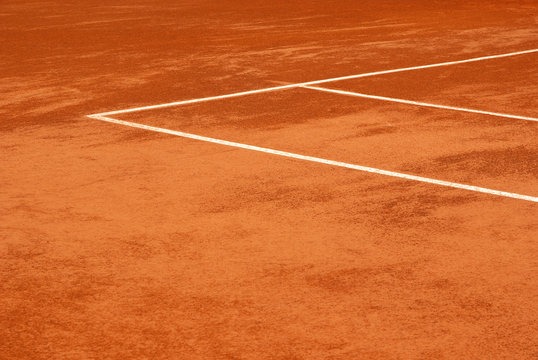
An uneven or poorly prepared area interrupts the high bounce you expect on clay. If you come from firm hard courts, the contact point you expect shifts between shots.
When arranging a first clay session, ask the venue whether its court is red clay, green clay, or a hybrid system. That sets your starting expectations.
Grass Courts: Low, Quick Bounces and Earlier Preparation
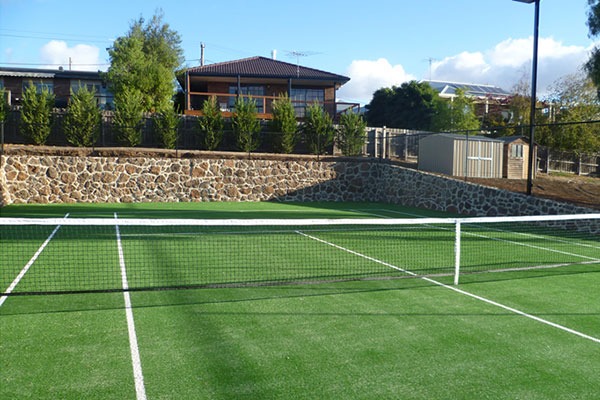
Grass keeps the ball low and quick, and some balls skid after landing. If you're used to a high contact point on clay, you'll prepare sooner and swing from a lower position.
Compact groundstroke preparation suits these conditions better than a long setup that needs extra time. Slice and direct shots become useful too. Turf wear and moisture change the experience from one grass court to another.
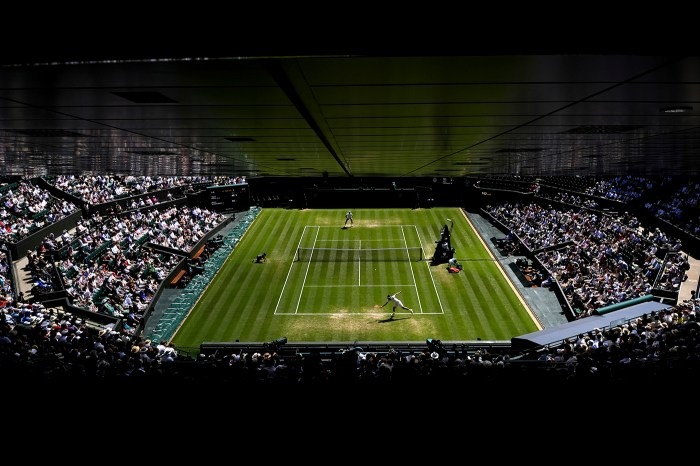
Natural grass is living turf grown over prepared soil. Artificial grass or synthetic turf has a different construction and its own playing characteristics. Some facilities use "grass court" loosely, so confirm the booking is for living turf when that matters to your plans.
Why Court Condition and Maintenance Change the Playing Experience
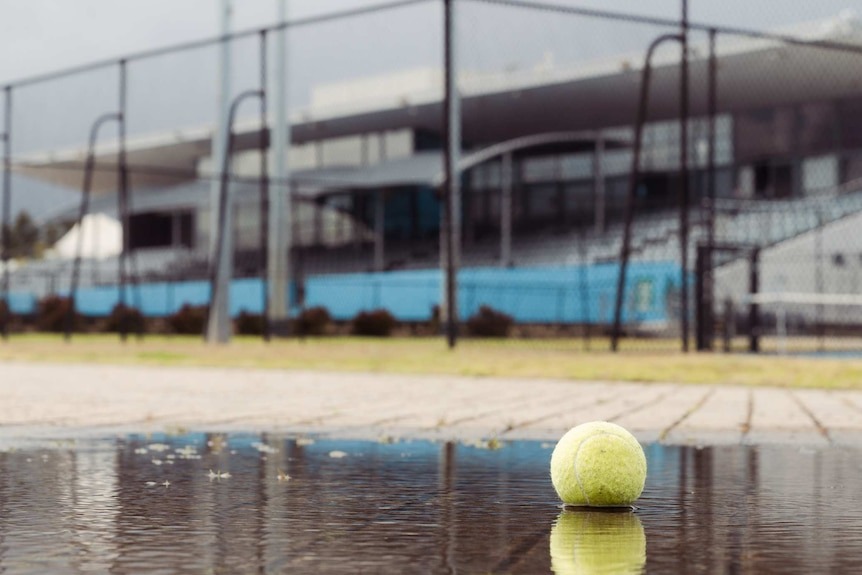
A court's condition changes how the ball behaves and how secure your footing feels. On clay, moisture and grooming affect the loose top layer. On hard courts, finish, cleanliness, drainage, and wear shape play. Natural grass depends on the state of its living turf and the soil beneath.
Har-Tru describes watering, brushing, and rolling among the maintenance considerations for its clay-court products. The appropriate care depends on the installed system.
A green-clay court prepared differently from another gives a different bounce, even when both venues use the same broad label. Surface wear, loose patches, or unusual moisture also make familiar footing less reliable.
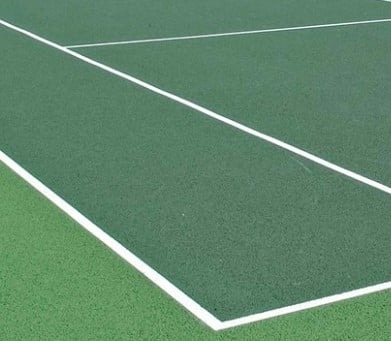
Look over the playing area for debris, uneven patches, standing moisture, or obvious wear. If the court looks unsafe or you can't tell whether it's playable, stop and ask the facility staff. Leave grooming and repairs to the venue.
Shoes, Traction, and When Not to Copy a Professional Slide
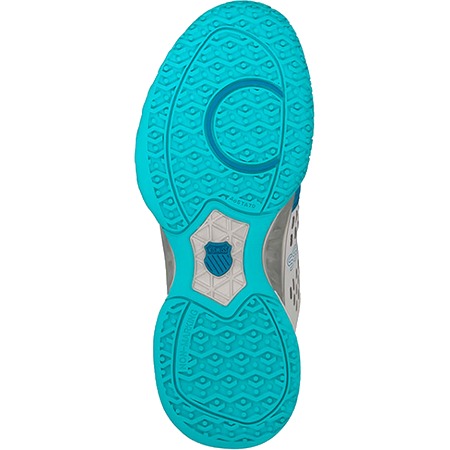
Outsole design matters because the shoe has to grip and release against a particular surface. A design built for abrasive hard courts faces different demands from one made for loose clay or living grass.
For a closer look at the tradeoffs by surface, see the Tennis Warehouse outsole guide.
| Court | Typical outsole priority | What to consider |
|---|---|---|
| Hard | Durability and traction on firm, abrasive material | Repeated stops and outsole wear |
| Loose clay | Tread that handles shifting material, often herringbone-style | Grip and release during recovery |
| Natural grass | Specialist traction appropriate for living turf | Facility-specific footwear requirements |
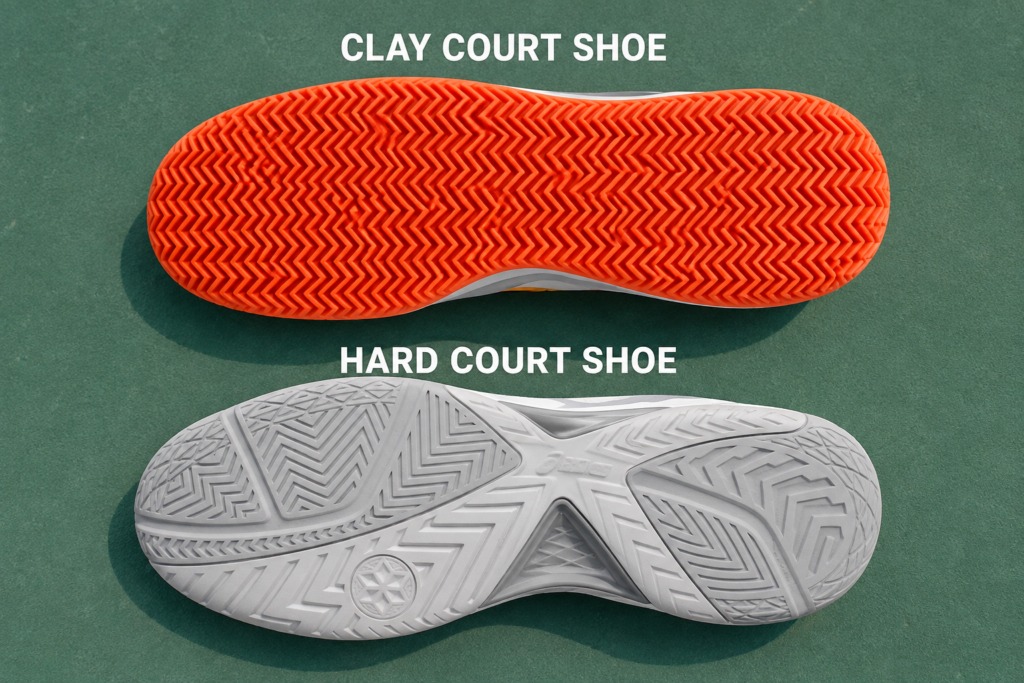
Some clay-oriented soles wear or handle differently on hard court, depending on the model. Compare the actual outsole with the court's requirements and follow the facility's shoe restrictions, especially for natural grass.
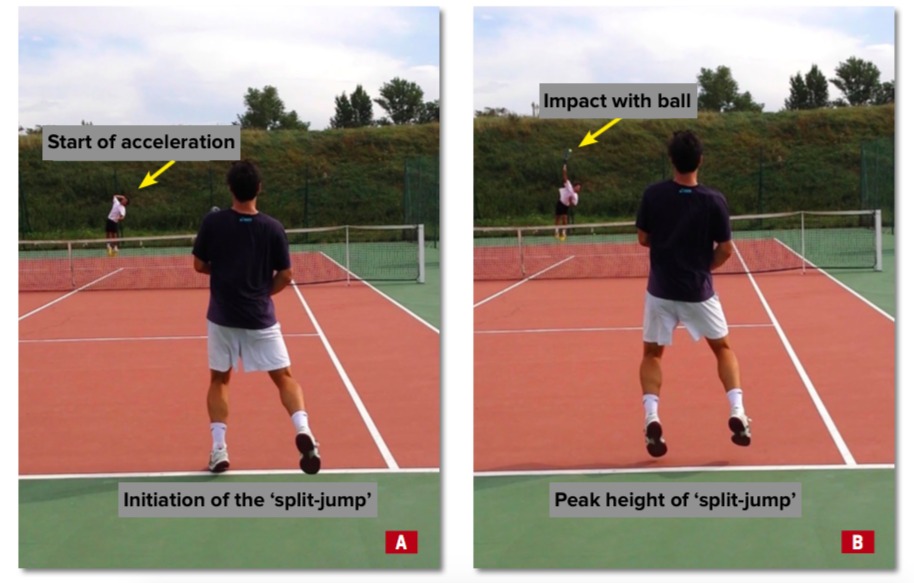
Clubs and experienced players use sliding footwork on clay, and professionals also slide on hard courts. The movement takes technique and judgment. As a beginner, keep your recovery steps controlled and skip the professional slide until you've had instruction. If your shoes slip or grip unpredictably, switch to suitable footwear.
For the full equipment decision, see the tennis shoes by court surface guide.
A Simple First-Session Adjustment When You Change Surfaces
During an easy warm-up, watch the ball's bounce, your preparation time, and whether your footing stays balanced. Use what you see to change one part of your game before match pace exposes a timing problem.
- Rally comfortably first. Start with controlled exchanges to find a familiar rhythm and notice your usual contact height.
- Name the biggest change. Decide whether the ball arrives lower or quicker, rises higher than expected, or leaves you late in recovery.
- Try one adjustment. On low, quick grass bounces, take a lower ready position and shorten your groundstroke preparation. On higher clay bounces, prepare for the contact point and recover patiently for the next shot.
- Notice the response. Keep hitting at a comfortable speed and see whether clean contact or balanced recovery gets easier before you change anything else.
If a stroke or movement pattern keeps giving you trouble, see a qualified tennis coach. For more on movement, read tennis footwork fundamentals.
Which Tennis Surface Should You Choose?
Does one tennis surface protect your joints better?
A study published in 2018 examined injury prevalence among recreational tennis players in the Netherlands. Of 20,000 invited members of the Royal Netherlands Lawn Tennis Association, 3,656 completed at least one monthly questionnaire during a six-month repeated cross-sectional study.
Overall injury prevalence did not differ significantly among the studied hard-court, clay-court, sand-filled artificial-grass, and red-sand-filled artificial-grass groups. Natural grass was excluded. Some injury patterns differed by body region or type. The findings are observational, so they can't show that one surface prevents injuries or that every surface carries equal risk for every player.
Pick the surface that suits what you want to practise, and let the court's condition and your footing overrule that pick.