
Good footwork for recreational players who get jammed, reach, or arrive late comes down to four jobs: get ready as your opponent hits, move to the ball, take smaller steps before contact, and recover for the next shot. If your spacing and balance look fine and the shot still fails, check your stroke mechanics and how you read the ball. Film a short rally, find the first thing that goes wrong, and fix only that.
A ball can be well within your reach and still leave you with an awkward shot. You arrive with your racket ready, but your feet have carried you a little too close. On the next ball, you stop a step short and stretch your arm across the gap. Both misses happen in otherwise comfortable rallies.
The first mistake comes well before the mishit. Sometimes you started late. Sometimes you covered the distance but skipped the small corrections that make contact comfortable. And sometimes the shot was fine, but you stayed where you hit it and were late to the next ball. To trace a specific problem, go straight to the first-error diagnostic.
What Footwork Does Between Tennis Shots
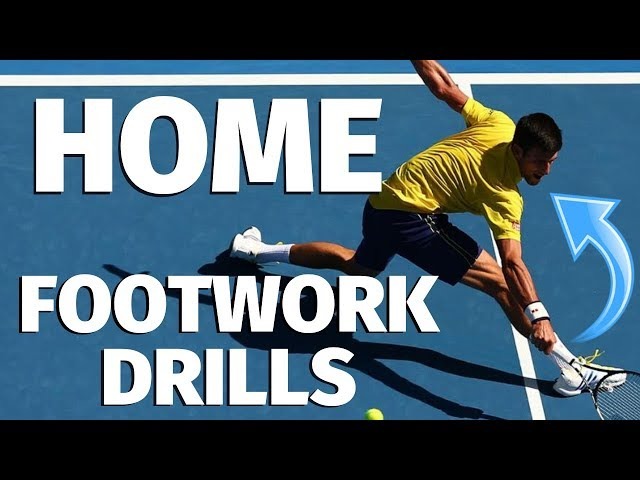
Good tennis footwork links five movements: prepare, move, adjust, hit, and recover. The sequence repeats every time your opponent prepares another shot.
Take a comfortable baseline exchange. You face your opponent in a balanced ready position, able to go either way. As the opponent swings, you make a compact split step. Once you read the incoming ball, you push toward it, cover the ground, make smaller adjustments near the bounce, and hit from a position you control.
The stroke ends, but the movement continues. You head for a good position for the next shot and get ready again as your opponent approaches contact. On a fast surprise ball, the phases overlap and movement gets hurried.
The Lawn Tennis Association's footwork guidance describes larger steps for covering distance and smaller steps for adjusting as you approach the ball.
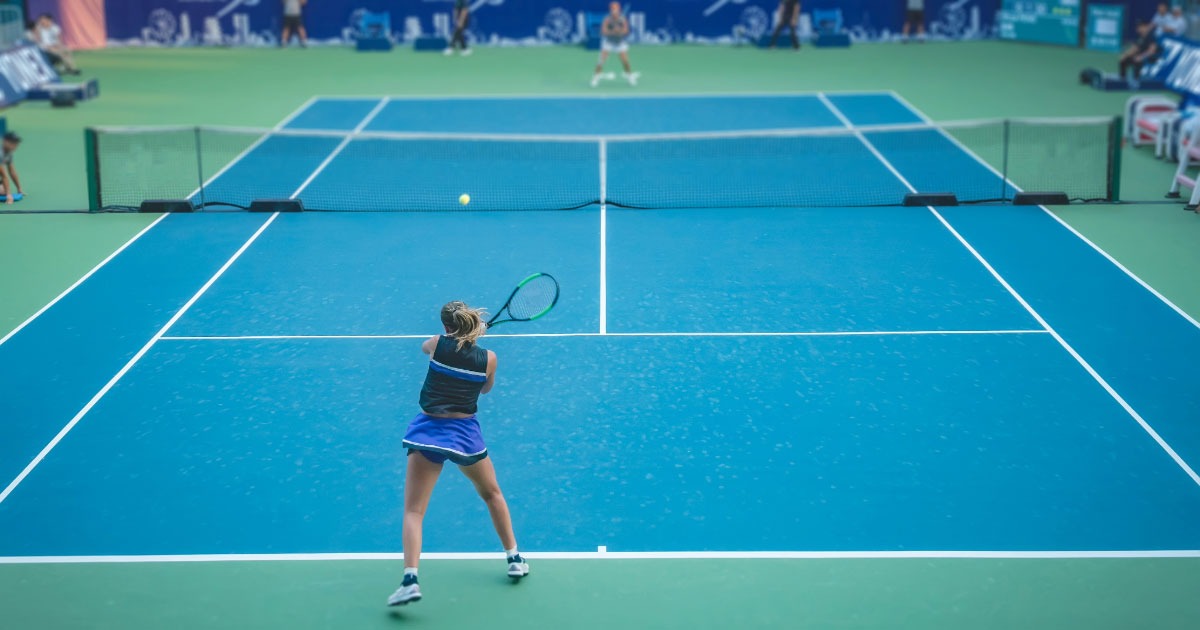
In the ready position you stay responsive, with your balance ready for the next push. Your posture changes as you travel, slow down, and prepare to swing. Chasing a difficult ball looks different from waiting for an ordinary rally shot.
When and How to Time the Split Step
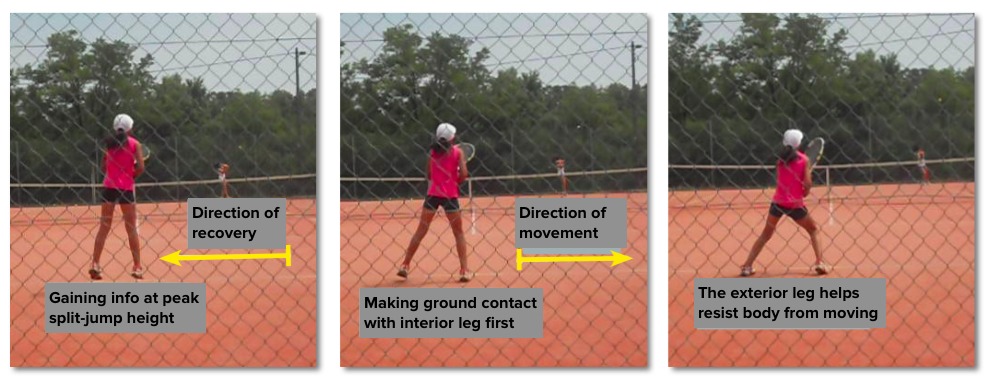
A split step is a small move that gets you ready to push toward the incoming ball. In a normal rally, time it with your opponent's forward swing and contact so your landing leads straight into your first step.
Unweight your feet lightly, then land ready to move. You are preparing to go toward a ball whose direction is becoming clearer. A big vertical jump adds extra movement and makes the landing awkward.
When you land matters. If you land well before you know where the ball is going, you stand still again. If you are still finishing the split step when the ball is already on its way, your first step is late.
A 2009 study by Uzu, Shinya, and Oda recorded average step-and-reach times of 764 ± 106 milliseconds with a split step and 868 ± 63 milliseconds without one, among ten male collegiate players in a simulated choice-reaction task. Landing timing influenced the result. The study does not show a guaranteed performance gain for adult recreational players in matches.
A ball machine changes the timing cues
A ball machine takes away the visible racket swing, so you respond to the release and the incoming trajectory without the human movement that normally signals contact. One player describes the effect:
Recorded myself hitting against the ball machine today to see if I notice anything glaringly wrong with my technique, but all I found myself doing was starting at how lazy my footwork was. I would need to record my self playing with a person but I feel like playing against a ball machine makes any footwork I have go straight into the drain. I feel like since I cannot time my split step well all my footwork just goes away.
With predictable machine feeds, use the same visible release as your signal to get ready, then adjust to the ball as it approaches.
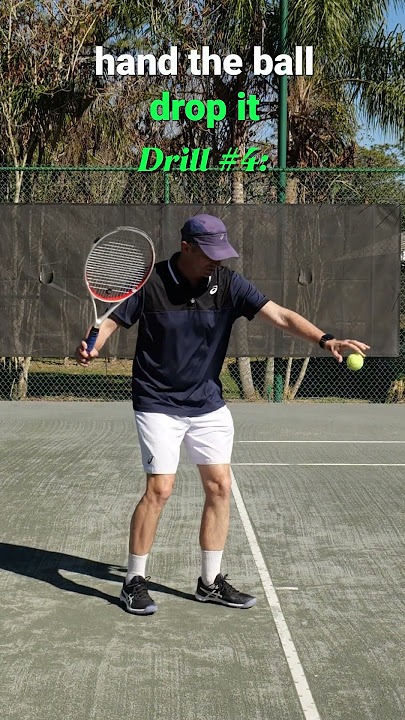
In a partner-fed rally, watch three moments: your opponent's racket contact, your landing, and your first push. A good split step leads into movement. If your feet land and nothing happens, the link between preparation and departure needs work.
First Movement: Shuffle, Crossover, or Run?
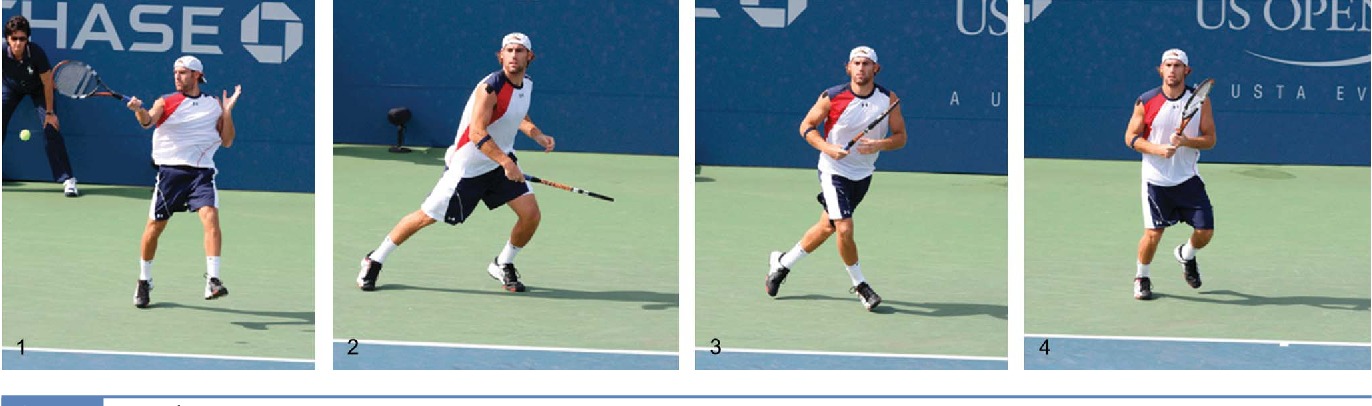
Match your first step to the distance and the time you have. A short lateral adjustment needs only a shuffle. A ball sent well outside your comfortable reach demands a stronger push and running or crossover steps.
Your first move matters because you need to cover the distance early enough to leave time for final positioning. Small sidesteps across a big stretch of court leave you moving frantically as the ball approaches.
| Ball situation | Goal | Footwork | Depends on |
|---|---|---|---|
| A ball a short distance to the side | Shift while maintaining control | Lateral shuffle or sidestep | Available time and how close the ball is to your hitting zone |
| A ball pulled far wide | Cover significant ground | Strong push toward the ball, running or crossover steps | Ball pace, width, and time left |
| A short ball in front | Move forward into a usable contact position | Forward push and running steps as needed | Ball depth and whether you can prepare to strike |
A pivot or drop step helps you start a turn toward a far ball. A wide retrieval starts with a run and ends with shorter adjustment steps as the ball arrives.
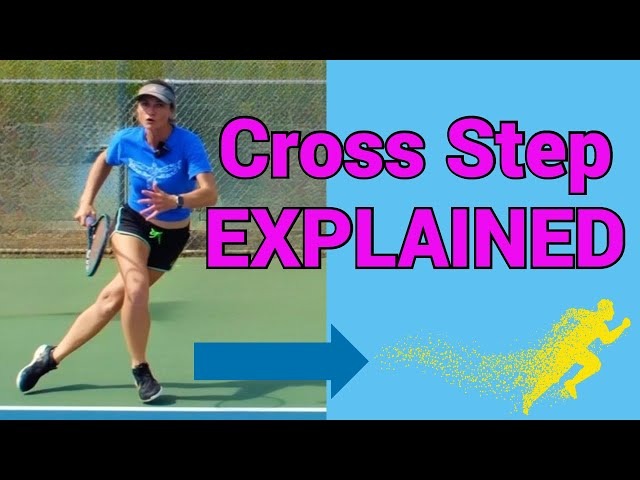
No fixed number of feet tells you when to switch from shuffling to running. Direction, incoming speed, surface, and your own movement ability all decide it.
Compare two easy feeds, one close to your normal position and one farther away. Check whether your first steps give you enough movement to arrive with time for the swing. The distance phase has done its job when you finish positioning without a desperate last stretch.
Adjustment Steps: Stop Getting Jammed or Reaching
The last few steps before contact control the space between your body and the ball. After covering the main distance, shorten your strides and refine your position so your racket has room to travel through the shot.
Being jammed means the ball is too close to your body for a comfortable swing. You got to the area early, then kept closing in with steps that were too big.
Reaching means the ball stays outside a controlled contact distance. Either your first movement started too late, or your final approach underestimated where the ball would arrive.
A beginner describes both problems:
I’m a brand new tennis player (35m) and I’m really struggling with footwork and positioning. I constantly feel like I’m in the wrong spot. Either I’m too close and get jammed with no room to swing, or I’m too far away and reaching. I end up mishitting a lot and it feels like I never arrive at the right distance from the ball. I also feel like I get stuck and don’t adjust properly as the ball is coming. I don’t really understand how I’m supposed to move between shots or make those small adjustments to get into position. My coach mostly just says “everyone struggles with footwork” but doesn’t really explain what I should actually be doing differently.
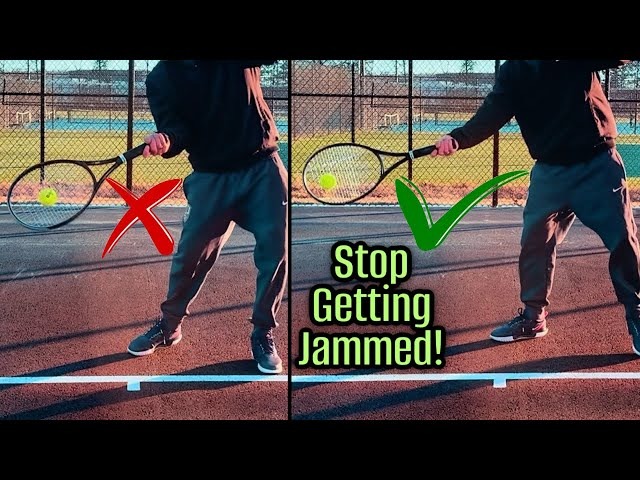
Comfortable hitting distance depends on the stroke, bounce height, incoming pace, and your body.
Try this comparison:
- Use ten similar, comfortable feeds. Keep the direction and pace consistent.
- Classify each contact. Mark it as jammed, reaching, or comfortably spaced.
- Change one adjustment cue. On the next set of ten, focus on refining your last steps as the ball approaches.
- Compare the results. Look for a link between your final steps and the room you had for the swing.
Slow Down Into a Balanced Contact Position
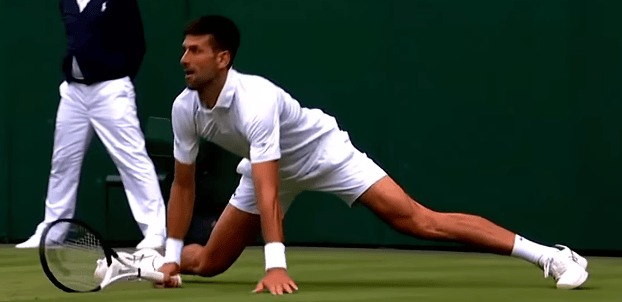
Getting to the ball and slowing down for contact are two separate skills. You can cover a wide distance in long strides and still carry sideways momentum through the strike. USTA player-development guidance addresses both acceleration and deceleration.
Open, semi-open, neutral, and closed stances each suit different strokes and incoming balls. A defensive running shot may require a less settled position.
At contact, ask whether you have control or are still drifting through the swing.
Recover for the Next Ball
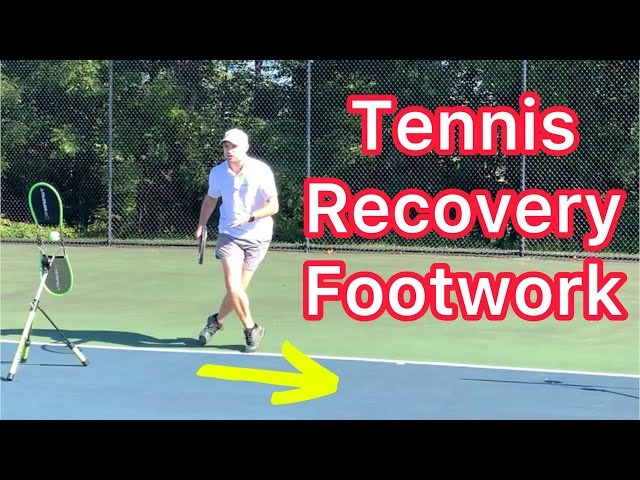
Recovery starts after contact and takes you toward a position from which you can answer your opponent's next shot. Its direction depends on where you hit the ball, where you stand, and which shots your opponent has available. Tennis Ireland's recovery guidance treats recovery as part of the shot cycle.
It's tempting to run to the middle after every stroke. Good court coverage changes with the direction and depth of your outgoing shot.
A wide forehand driven down the line changes the angles you need to cover, because your shot and your position set them. A short approach ball that carries you forward is different, and moving straight back toward the baseline gives up an advantageous position.
If you stand and watch a successful shot, you lose movement time before the next one. Your first recovery steps restore readiness so you can start preparing again.
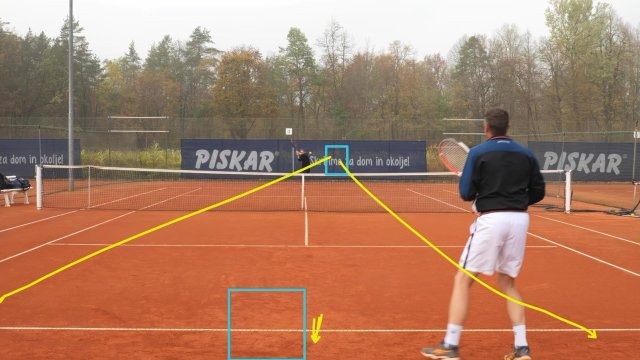
Over three consecutive rally shots, note which way you move first after each contact and how that relates to the ball you sent across the net. For fuller tactical positioning, read singles court coverage and recovery.
Find the First Footwork Error
When a stroke goes wrong, start with the earliest visible movement problem. A late first step, missing final adjustments, unstable contact, and delayed recovery produce similar-looking misses, but each needs its own check.
| What you notice | Likely causes | Check first | Fix to try first |
|---|---|---|---|
| You get jammed | You overshot with large strides; you misread the bounce | Last steps and racket room at contact | Refine your approach steps and check the incoming ball |
| You reach for the ball | Your first move began late; you underestimated the distance | First movement and contact distance | Get ready sooner or improve your first step |
| You split step, then freeze | You landed too early; the movement was too large or disconnected | Landing followed by the first push | Use a compact split step linked to your first push |
| You arrive but fall off balance | You brake too late; your stance does not suit the shot | Momentum and base at contact | Slow down as you approach the hitting zone |
| You watch the shot and miss the next ball | Recovery started late; you moved toward the wrong coverage position | First movement after contact | Recover toward your opponent's likely next shot |
| You move well on feeds but poorly in rallies | The feeds are predictable; deliberate cues overload your attention | Controlled timing versus live timing | Carry one cue gradually into cooperative rallies |
To diagnose your own game, film a short rally and label the earliest visible breakdown. Pick one fix, then compare what happens in another similar exchange. Don't change your split step, running pattern, stance, and swing all at once, or you won't know which change worked.
If your preparation, spacing, and balance look sound and contact still fails, check forehand stroke preparation and contact mechanics or the corresponding stroke technique. A miss can start with the racket or the ball read even when your feet are in a good position.
Practice the Movement Until It Works in a Rally
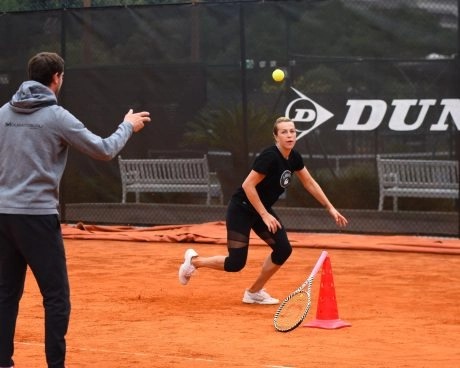
Footwork works in matches only when it holds up against a live ball. Start with one clear cue, then add the incoming ball and your opponent's timing.
Shadow movement without a ball
Start in a responsive ready position. Imagine an incoming direction, make a small split step, push toward that side, take smaller steps near an imagined contact point, and recover.
This lets you learn the sequence without judging a real bounce or preparing a full stroke. Keep the movement controlled enough that you can see each phase.
A gentle, predictable feed
Add a comfortable partner feed and keep one cue, such as completing your adjustment steps before contact. Set a pace that lets you hold the movement and still hit a manageable stroke.
Adding a deliberate movement cue makes familiar ball-machine practice harder at first, as this player found:
Okay! Today was a good session. I watched a couple of footwork tutorials and tried a 10x16-ball series with the ball machine. I tried to keep my weight off my heels and learn a split step, even a tiny one. It was nice, and hitting with the machine felt harder as I needed to move more before each stroke. It was a great and sweaty session.
A cooperative rally

Move into a cooperative exchange where the ball's direction and timing vary naturally. Keep the same cue and watch your opponent and the incoming ball.
If the cue disappears and your stroke falls apart, simplify the exchange again. Progress depends on keeping your spacing and recovery as play becomes less predictable. A conscious movement takes repeated practice before it feels automatic.
For longer exercise sequences, see structured tennis footwork drills.