
Choose a tennis footwork drill for the movement that fails first: reacting to the ball, adjusting your position before contact, or recovering for the next shot. Judge the result during a real feed or rally. If the movement disappears when the direction becomes unpredictable, return to a simpler cue before increasing speed.
Which drill fixes your actual movement problem?
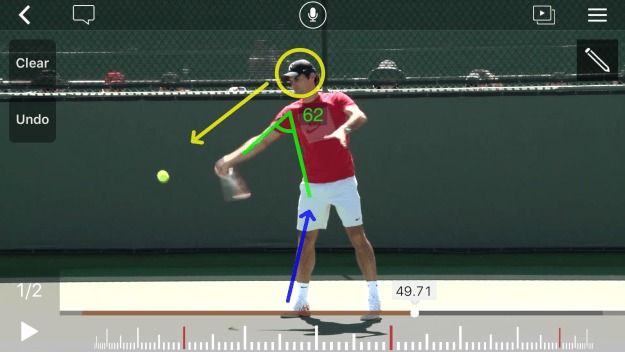
Start with the first movement that breaks down during a point. A late first step needs a different exercise from a cramped forehand or a wide ball that leaves you stranded.
In a rally your feet have five jobs: prepare for the incoming shot, react in the right direction, travel to the ball, make small adjustments near contact, and recover for the next shot. The USTA describes the broader sequence in its Ready, Rally and Recover approach.
| What happens during play | Start with | Watch for |
|---|---|---|
| You stay flat-footed as the ball leaves the opponent's racket | Split-and-go reaction drill | A smooth first push in the right direction |
| You reach the ball but crowd your forehand or backhand | Arrive-and-adjust drill | Small final steps and balanced contact |
| You reach a wide ball but cannot respond to the next shot | Wide-ball recovery drill | Stopping under control and being ready for the second ball |
| Your cone patterns look smooth but rallies leave you scrambling | Variable-cue and live-feed drills | The practiced movement holding up when the direction is unexpected |
Without a partner or court, start with the solo shadow-movement exercise described below.
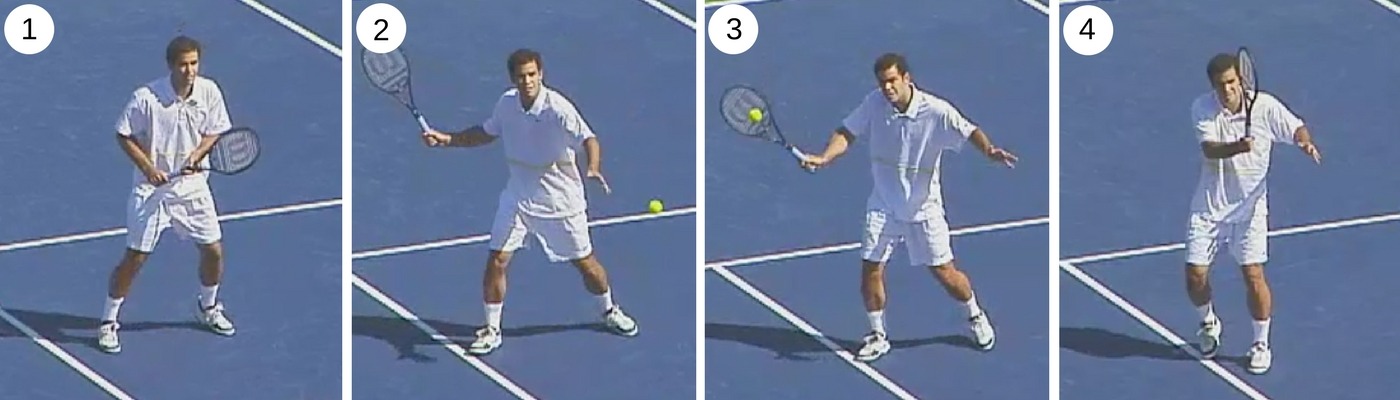
An adult recreational player found a breakthrough by filming sessions and rethinking what was going wrong with their strokes.
I’m just an average 3.5 player, but I finally had a breakthrough that wasn't about equipment. I started focusing 100% on my footwork and actually filming my sessions. Man, watching yourself on video is the most humbling thing ever. I thought I looked like Fed, but I actually looked like a confused flamingo with zero balance.
Split-step and first-step reaction drills
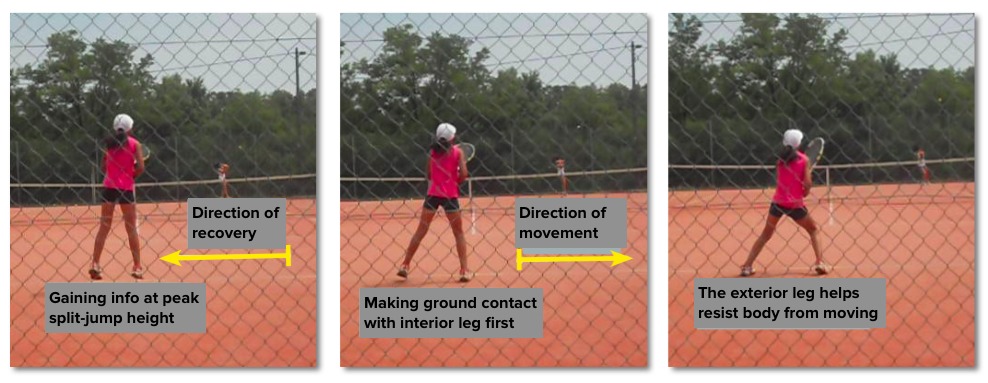
The split step prepares you to move as the opponent strikes the ball, when its direction becomes clear. You hop lightly, land in balance and push toward the ball.
Keep the hop small. A heavy landing leaves you stuck when you need to change direction.
Drill: Split and go
Setup: Use a safe, clear section of court. Your partner stands where you can see a simulated forward racket swing and gives a left or right signal. Start in an athletic ready position.
- Prepare: Watch your partner's forward swing and start a small hop as the imagined contact gets close.
- Land and read: Land balanced as your partner shows left or right.
- Push: Drive your first step toward that side and keep going only as far as you can control.
- Reset: Return to your starting position before the next rep.
At first, agree on the direction. Once that feels easy, let your partner pick either side without warning. Watch whether your first push follows the signal or whether you land, hesitate, then move.
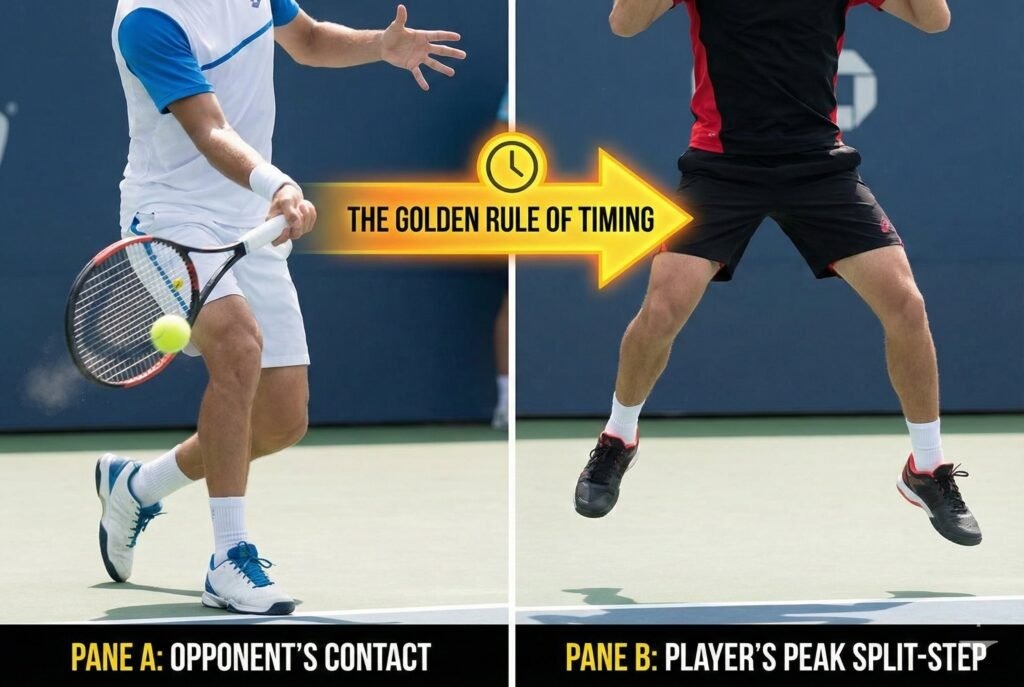
If your first step comes late, slow your partner's sequence and shrink the hop. A light landing keeps both directions open.
Progression: Add a ball
Have your partner feed easy forehands and backhands, first to an agreed side, then to either. Start the hop as the feeder's swing nears contact and move once you can read the ball's direction.
Adjustment-step drills: stop getting jammed at contact
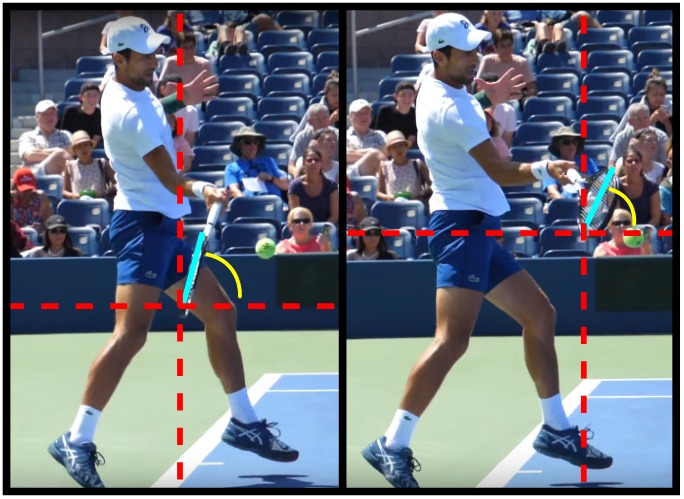
You can cover the right distance and still arrive too close, too far away, or with a last stride too long for a balanced swing.
Travel steps take you toward the ball. Small adjustment steps fix your position as contact approaches.
Imagine a medium-pace forehand feed. You read its direction early and cross the court, then take one oversized final stride. The ball ends up close to your body and the racket has no room to swing.
Drill: Arrive and adjust
Setup: Pick a visible court line or place a safe marker as your start. Choose a shadow-swing spot a short distance away.
- Travel: Move toward the contact spot with normal steps.
- Adjust: Shorten your steps near the spot and set a balanced stance.
- Swing: Make a relaxed shadow forehand with room for the racket.
- Finish: Check whether your feet leave you in control at the end of the swing.
Start with a fixed spot. Then have your partner feed easy forehands that vary a little in depth and width.
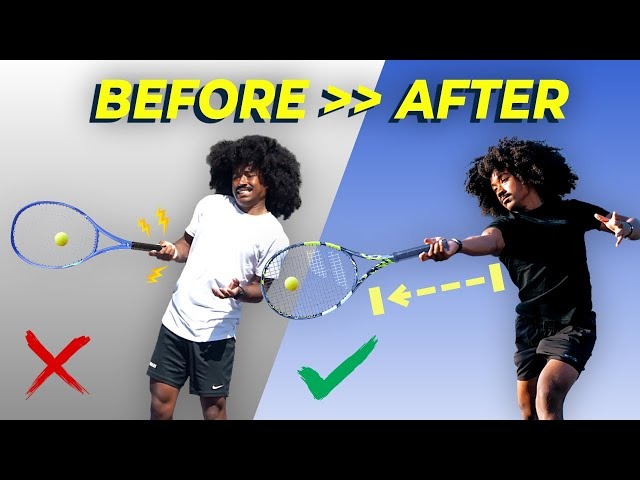
Planting too early leaves you reaching or leaning when the ball changes position. An oversized last stride crowds the swing. A late small correction gives the racket room again.
Over a series of forehands, watch your last positioning steps and whether you finish with the racket clear of your body.
Wide-ball recovery and second-ball drills
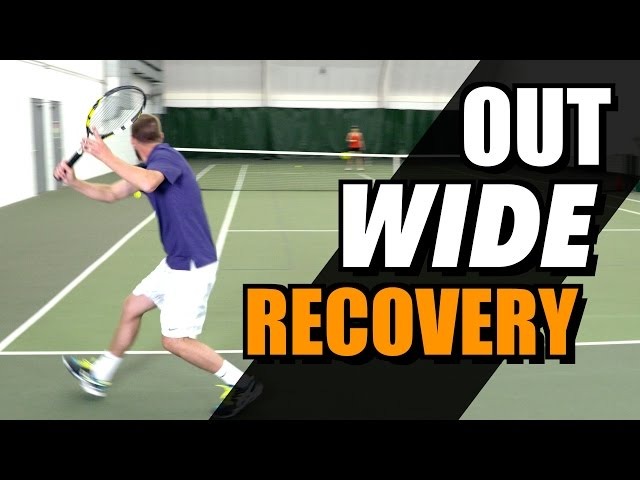
Reaching a wide ball is one job. Stopping and getting ready for the next shot is another. This drill trains both.
Drill: Wide and recover
Setup: Set one marker near your normal rally position and another farther toward a sideline. Pick a distance you can cover comfortably.
- Move outward: Travel to the wide marker at an easy pace.
- Control the stop: Slow down before the contact area so you can set a stable hitting position.
- Shadow the shot: Make a relaxed forehand or backhand motion.
- Recover: Move to a ready position that suits the likely next shot.
Start without a ball and focus on the switch from outward travel to recovery. Then replace the shadow swing with an easy wide feed.
Where you recover depends on your shot and the likely reply. A wide shot that stretches the opponent calls for a different position than a short central ball, so the center mark is not always the answer.
Progression: Add the second ball
Once the first feed works, have your partner send a second medium-pace ball after the wide shot. Check that you are balanced and ready to move again when it starts.
A hurried return leaves your body still moving the wrong way. Cut the width or pace of the first feed until you can recover under control.
How to choose between cones, cues and live-ball drills
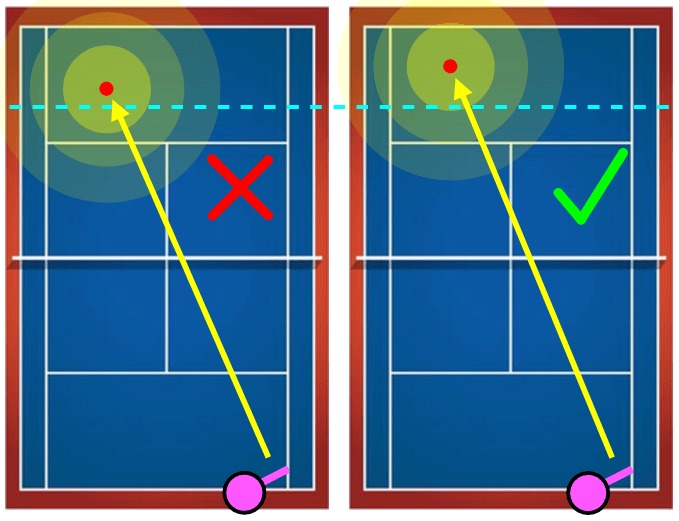
Known patterns let you rehearse the sequence. Unannounced cues add direction and timing decisions. Ball feeds add the job of tracking where and when the ball arrives.
| Drill format | What it trains | What it misses |
|---|---|---|
| Known cone or court-line pattern | Sequence, stopping and coordination | You know the destination before you move |
| Unannounced hand or verbal cue | Responding once the direction is revealed | Incoming ball flight and contact |
| Easy ball feed | Linking movement to an arriving tennis ball | Some of the uncertainty of a full rally |
| Cooperative rally | Tracking repeated shots while moving and hitting | The control and repeatability of a fixed drill |
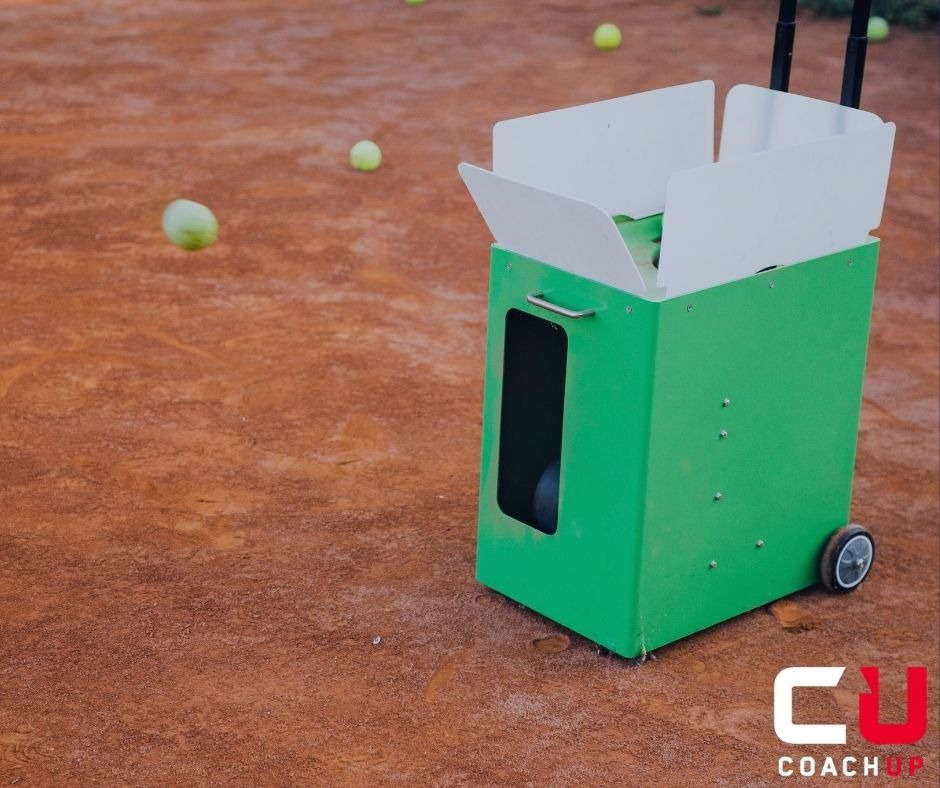
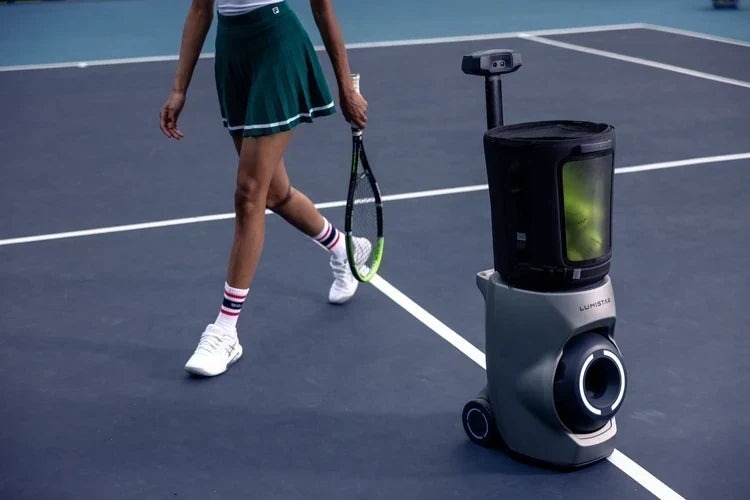
A ball machine gives you repeated feeds and varied placements. A human partner also gives you body and racket cues, and the timing information differs, especially when the partner hits an unpredictable ball.
When ladder speed stops helping: A fast ladder run builds coordination. If you still start late or reach the ball off balance, switch to a directional cue or an easy feed to work on that problem.
Solo footwork drills without a court or partner
In a small clear space you can rehearse preparation, lateral movement, adjustment steps and the return to ready. Later you connect that movement to a ball feed.
Drill: Shadow movement along a reference line
Find a non-slippery, clear area with room to move. A court line, tape placed safely where permitted, or any visible reference point can replace cones.
- Begin ready: Stand with your weight balanced and your knees flexed.
- Move: Make a light hop and step to one side of the reference.
- Adjust: Add small positioning steps, then make a shadow swing.
- Recover: Return to a balanced ready position and repeat on the other side.
Keep the distance short enough to stop under control.
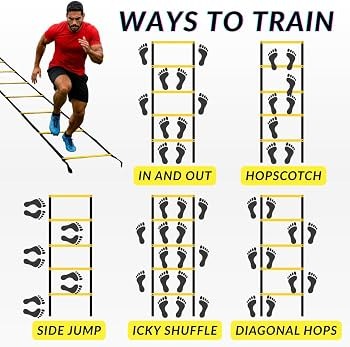
For optional coordination work, step through an agility ladder or a safely marked floor grid and stay in control at the end of the pattern.
In a 2020 USTA Tennis at Home lesson, Michael Harper, USTA Manager for Cardio Tennis, demonstrated agility-ladder drills and alternatives. The lesson included intermediate and advanced movement patterns.
Shadow work cannot measure the timing of a struck ball or your contact. Test that in a later ball-fed session.
Skip cuts and jumps on slippery or cluttered ground.
How to make footwork drills carry over into rallies
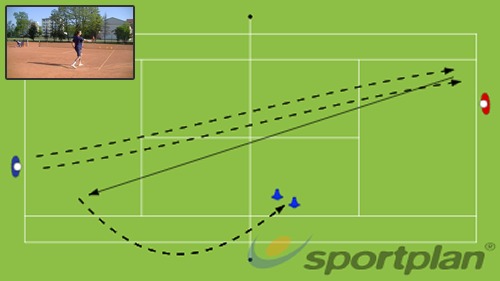
A rehearsed movement gets harder once you track a ball, prepare a stroke and react to another player. Carry one footwork goal through steadily less predictable practice.
A recreational player described struggling to make the split step automatic after months of footwork practice:
2nd year in, UTR 3, started working on footwork late May 2025 - this clip is from Oct 2025. Looking smoother but for the life of me, split step is not automatic yet for some reason. Been working on a strengthening and conditioning my legs, focus on squats and targeting all 3 calf muscles. Working on more explosive first step and not being lazy.
From a known destination to a rally
- Shadow movement: Rehearse the chosen action slowly toward a known spot and finish balanced.
- Unexpected direction cue: Have your partner signal left or right without warning. Keep the same focus.
- Predictable ball feed: Add an easy ball to an agreed area.
- Variable ball feed: Vary the direction or depth a little.
- Cooperative rally: Keep a steady exchange and see whether the target movement shows up when the ball is less predictable.
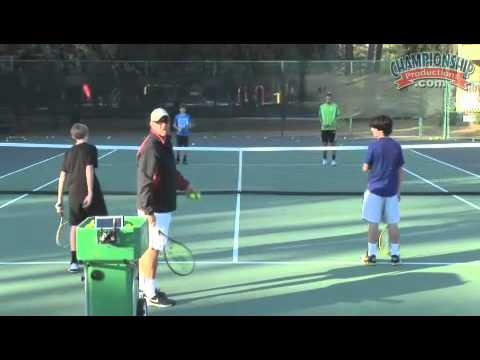
Suppose you can split and push toward a known right-side signal but hesitate when your partner picks the direction. Go back to a slower two-direction cue, rebuild the movement, then add the variable feed again.
The same method works for contact adjustments and recovery. In a short rally, watch only for the action you set out to improve.
A short footwork practice session you can adjust
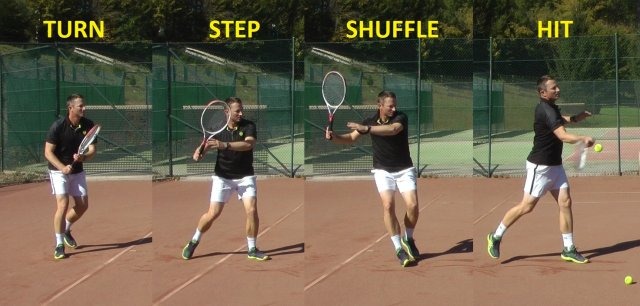
A session of 10 to 15 minutes works like this: warm up with gentle movement, run the one drill that matches your main problem, add one variation, and finish with a short ball-fed check if you have a partner. Training alone? Use the shadow version. Stop or simplify the drill when your balance and movement quality drop.
How to tell whether your footwork is improving
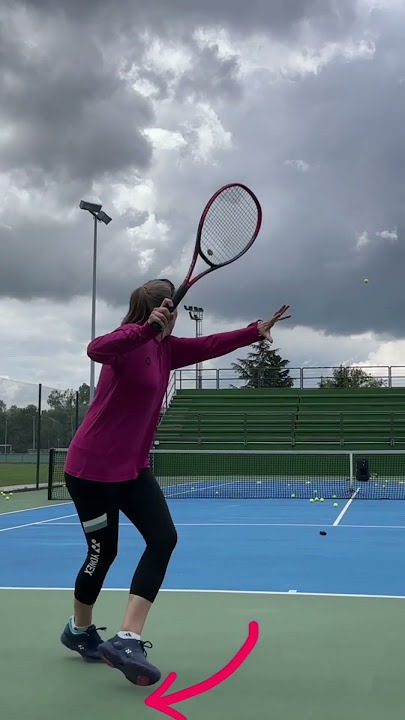
Track the movement your drill targets. A short phone recording shows whether you prepared, moved and recovered the way you intended.
Place the camera where your feet and the contact area are visible, and keep it fixed.
| Movement being checked | What you should see |
|---|---|
| Split step and first push | Ready around the feeder's contact cue, followed by a controlled push in the correct direction |
| Final adjustment steps | Enough space for the racket and balanced contact after small final steps |
| Braking and recovery | Balanced and ready as the second feed begins |
Pick one event from the table. Over ten broadly comparable feeds, mark each feed yes if it happens and no if it doesn't, then count your yeses as a baseline. Repeat the check in a later session with similar feed difficulty and camera angle.
Video shows what your feet did but not every reason for a missed stroke. When stroke preparation, ball reading and positioning are tangled together, a coach can help separate them.