
If you're a recreational player with a ball machine, pick one feed setting you can repeat and one spot on the court where you want the ball to land. Add movement or variety only once your contact stays clean, then test the shot in a live rally. If you start mishitting, feel rushed or get an unsafe delivery, simplify the drill or ask a coach for feedback. Start with one goal and a baseline set you can reproduce.
Start with a problem you can name: a forehand that lands short, a backhand you hit late, or feet that stop moving between shots. A machine lets you repeat that one task until you can see what's going wrong.
| What needs work? | Start with | Machine requirement | What to watch |
|---|---|---|---|
| Unreliable contact | Fixed-feed forehand or backhand | A comfortable, repeatable ball | Controlled returns |
| Groundstrokes land short | Deep-target groundstrokes | A repeatable incoming feed | Returns landing in your deep zone |
| Slow recovery after a shot | Return-to-marker movement | Enough time between feeds | Balance before the next ball |
| Trouble covering both sides | Two-line movement, or separate fixed-feed sets | An alternating feed, or manual resets | Control while changing position |
Two spots matter: where the machine's ball lands and where you want your return to land. You can change the second without touching the machine's feed.
When a ball machine helps and when a partner or coach is better

Use a machine when a stroke problem needs a repeatable ball. A consistent feed lets you focus on contact, direction or depth while the incoming ball stays the same.
Say your forehand keeps landing near the service line. The machine feeds you a manageable ball while you aim deeper. If a grip, spacing or contact problem sticks around, a coach can assess the movement itself. To practice reading an opponent or making decisions in a rally, play with a person.
One r/10s poster described choosing between an extra clinic and a weekly machine session:
More specifically how effective is one hour of ball machine practice per week in addition to two clinics and one 90 minute session playing doubles tennis with people my level. That’s my plan for the next three months or so. The alternative is another clinic. I know someone will suggest private lessons I’m not doing that here too expensive and the pro is a dink.
Before the first feed: make the setup safe and repeatable
You need a machine that runs predictably and enough room to hit and recover. The Spinfire manual linked below says to put the machine on the baseline, preferably near the center, because oscillation can behave differently elsewhere. Check your venue's rules and your model's operating instructions, and look at the space around the launch path. Follow the startup and shutdown steps, and stop the machine if it jams or acts strangely. Clear loose balls from your hitting area between sets.
The 2025 Spinfire Tennis and Padel Ball Machine Manual warns against putting your hands into powered feed components, filling the hopper while the machine is firing, and using that machine in wet conditions. For your own model, its manual decides on launch hazards and power-down.
Worn or mixed balls change delivery and bounce, which makes two sets hard to compare. The Spinfire manual also advises against wet balls, and Spinshot recommends pressureless balls for its machines.
Run a few trial feeds and watch where they land before you start scoring. Choose a feed that gives you time to set up for contact and get balanced again.
- Feed interval: the time between balls. It sets how long you have to recover.
- Speed: how fast the ball arrives, separate from how often it comes.
- Elevation: the launch angle, which helps set trajectory and landing depth.
- Spin: ball rotation that changes flight and bounce.
- Oscillation: a supported change in delivery direction or location.
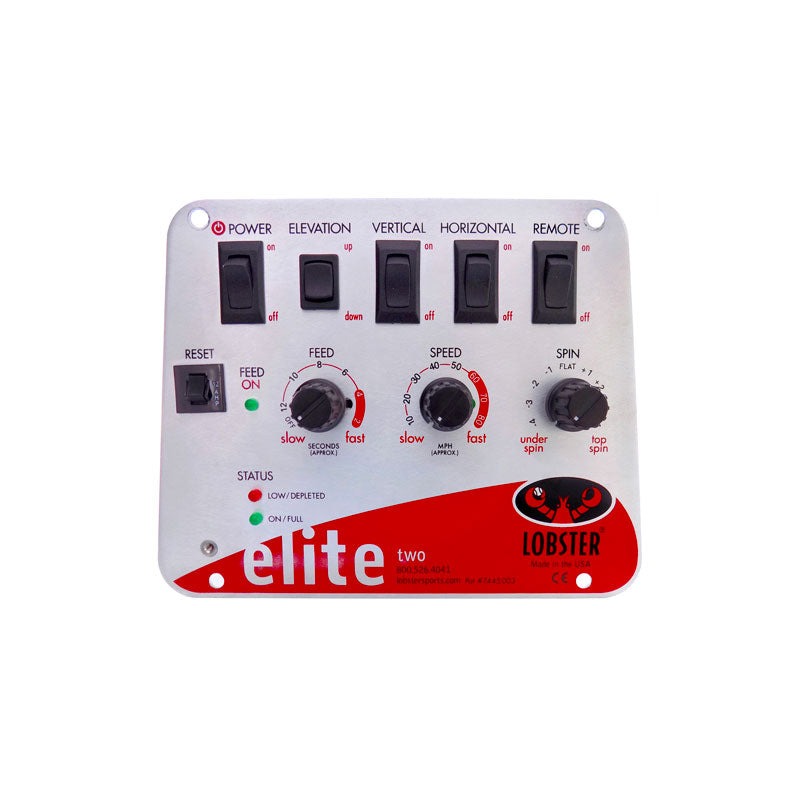
Write down the machine's position, feed controls, ball condition, landing area and your starting spot. Later sets get measured against that setup.
Match a drill to your machine's controls
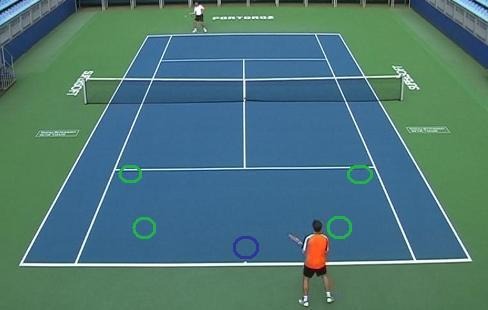
First find out which feed pattern your machine produces reliably. Contact, direction and depth need only a fixed ball you can control. Moving between different incoming locations needs extra positioning or oscillation.
| Available function | Incoming challenge | Good drill match |
|---|---|---|
| Single fixed feed | Similar ball to the same hitting area | Contact, crosscourt placement, line placement, depth |
| Horizontal or vertical oscillation | Changing delivery direction or trajectory | Recovery or controlled adjustment to a changing ball |
| Two-line feed | Alternating locations | Forehand/backhand movement with a recovery interval you can manage |
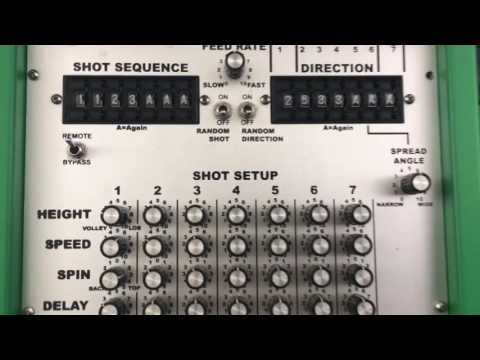
| Programmable series | Programmed sequences of different feeds | Short/deep or side-to-side combinations |
Check the control names and patterns your machine actually offers. Spinshot's manufacturer FAQ separates the Pro, Plus, Player and Plus2 by function, including differences in oscillation and programming. Those documented functions decide which incoming patterns you can set.
A fixed ball to one forehand, for example, works for both crosscourt and down-the-line targets.
One ball-machine owner asked:
Looking to upgrade my ball machine after seeing great results. I’m debating between a used spin fire pro 2 w/o the app capability or a brand new one with app capability (will cost more). For those who have ball machines with apps and programmable drills, do you use it often? Is it a worthwhile upgrade? I’m also interested in thoughts on the internal oscillation - does it make a big difference for training footwork?
Ball-machine drills for contact, direction, and depth
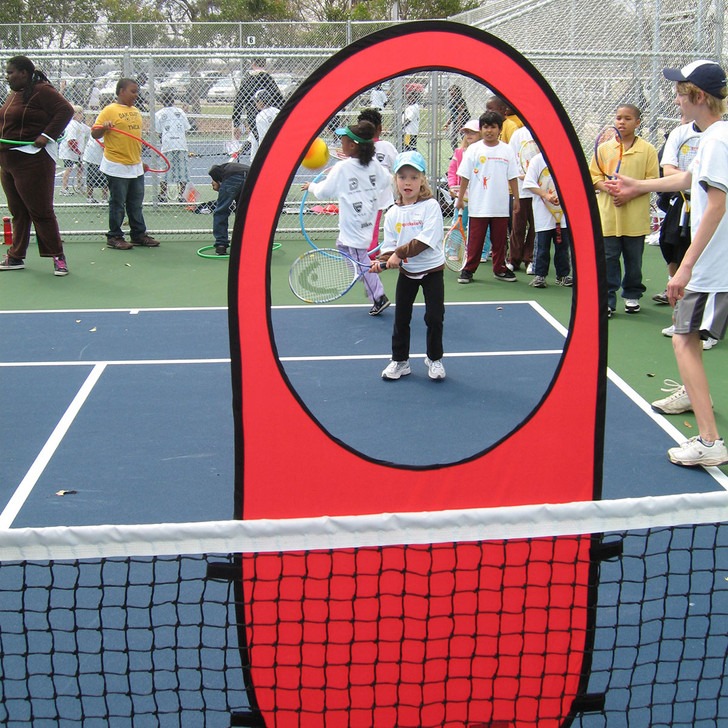
Keep the feed the same and change only one target at a time.
1. Controlled forehand or backhand contact
Set a fixed feed to one comfortable side. Stand near your usual baseline spot, shifted toward the side you're practicing, and adjust until you can reach the ball without stretching. Hit toward a broad zone in the court, then go back to the same balanced starting spot before the next ball.
Count the playable feeds and how many of them you return with control. When your returns look controlled, shrink the target and keep the feed steady.
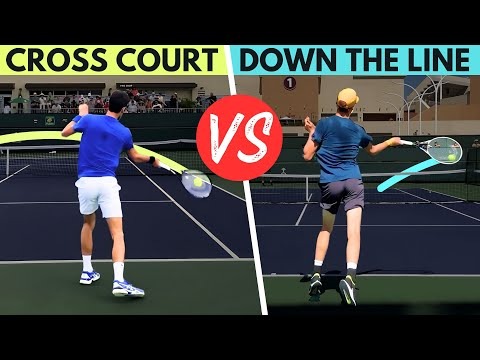
2. Crosscourt and down-the-line control
Start from a repeatable spot behind the baseline and take a fixed feed to your forehand or backhand side. Aim the first set at a broad crosscourt zone and recover to the same place between shots. In the second set, aim down the line. Leave the machine's speed, spin and landing area unchanged.
Keep separate target-hit counts for each direction. Once both directions hold up, add a modest recovery movement while the incoming ball stays predictable.
3. Depth beyond the service line
If your groundstrokes land short, put a visible target zone beyond the far service line. Use the same manageable feed to a comfortable baseline hitting area, and start each shot from the same spot. A return can land in the court and still miss the depth target.
Score deep-zone hits out of playable feeds. If depth costs you control of contact, widen the zone or ease the incoming ball. Once the original target is repeatable, make the deep zone smaller or add a direction choice.
4. Short-ball approach with a full reset
If your machine can deliver a safe, reliably shorter feed, start around the baseline and move forward to meet the ball. Pick your target before the feed arrives. Hit the approach while balanced, stop safely, and reset before the next ball.
Count the approaches that reach the target with controlled movement. A gentler feed and more recovery time make it easier. A follow-up volley adds difficulty if your machine and space allow it.
| Measure | Definition | Use |
|---|---|---|
| Ball fed | A ball launched by the machine | Shows the volume of practice |
| Playable feed | Incoming ball inside the agreed usable feed area | Sets the count that target accuracy is measured against; log stray deliveries outside the area separately |
| Controlled return | Return struck with deliberate, balanced execution | Tracks stroke control |
| In-court return | Shot landing within the court boundaries | Tracks basic placement |
| Target hit | Shot landing inside the chosen outgoing practice zone | Tracks your chosen drill goal |
Recovery drills and transfer to real rallies
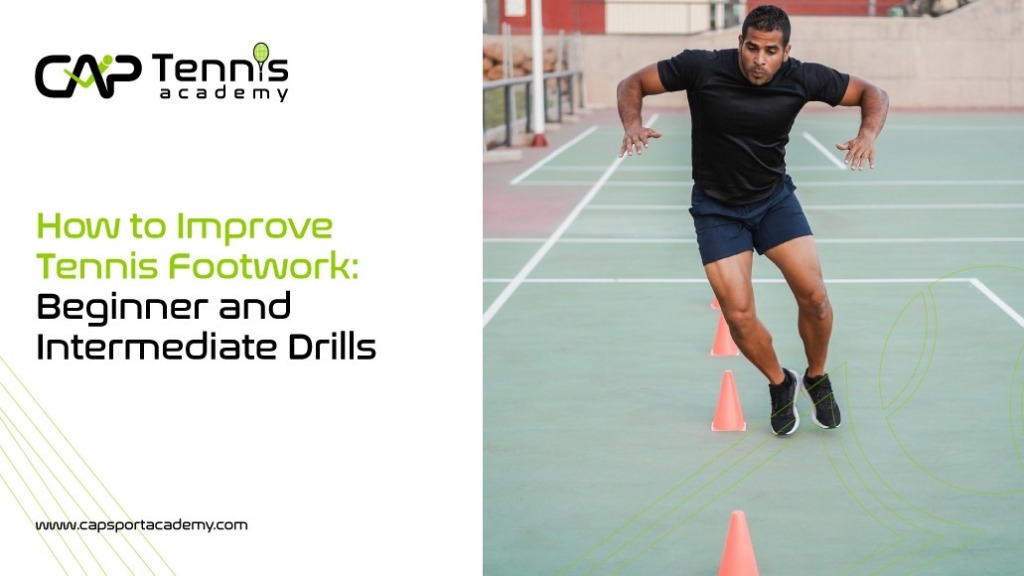
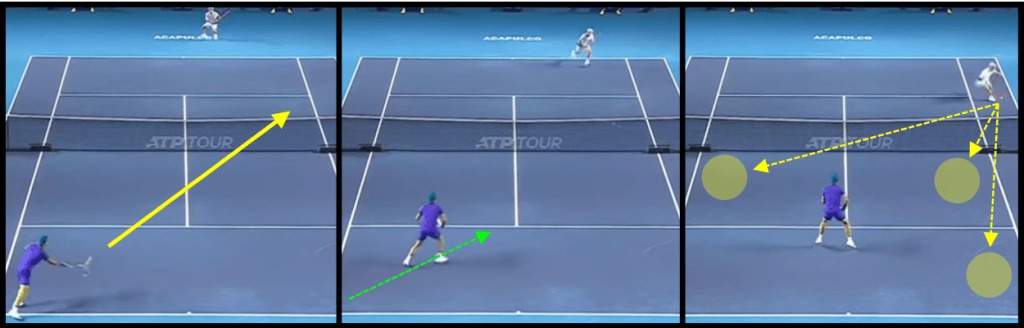
A fixed feed lets you stand in one contact spot. A recovery drill adds movement by giving you a place to get balanced before each new ball.
Pick a recovery marker a short, comfortable distance from your contact point. Hit the fixed forehand or backhand, move to the marker, settle your feet and get ready for the next ball. Set the feed interval long enough for the whole sequence without hurried contact.
Once that's controlled, a machine with a two-line setting can send the next ball to the other side. Widen the movement only as far as you can recover safely.
Why a live opponent feels different
A player across the net gives you information before contact through body and racket movement. A machine delivers the ball without those cues.
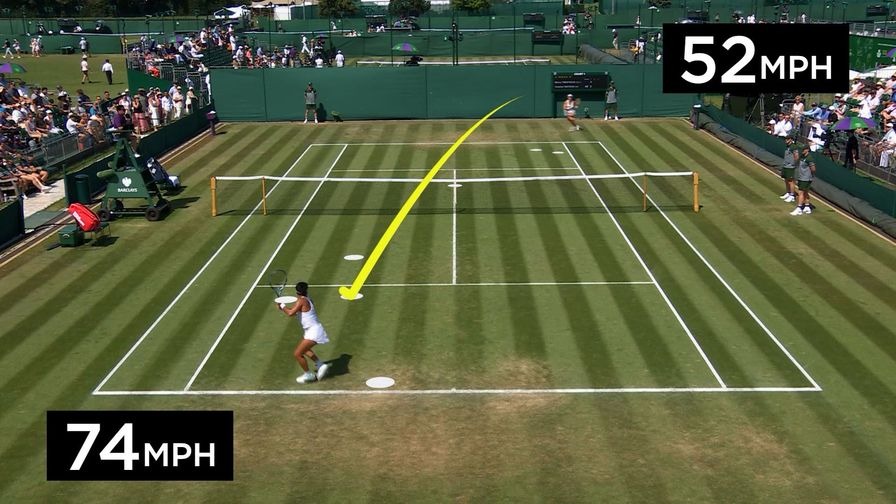
In a 2014 study of forehand serve returns, Carboch, Süss and Kocib compared returns against a real server with returns against a ball machine. The machine group started moving earlier and used a longer backswing.
The researchers used separate groups and recordings at 50 frames per second. The published study covers forehand serve-return timing.
A 2024 review by Czyż, Wójcik and Solarská covered 42 studies, 34 of them in the meta-analysis of contextual interference. Across the tasks analyzed, overall transfer favored random practice (SMD 0.55).
According to the review, the estimate for applied settings (SMD 0.34) was not statistically significant.
In a tennis practice experiment by Menayo and colleagues, eight participants practiced four strokes under blocked and random conditions, and the outcomes depended on the task and the test timing.
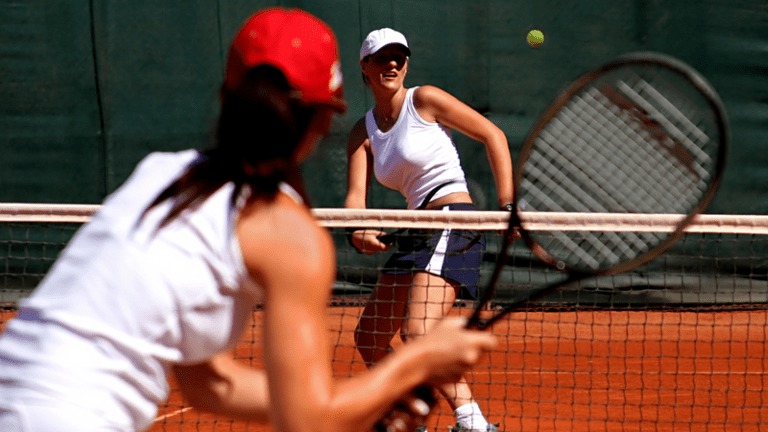
After machine practice, try the same target in a short live rally or point exercise. Check whether you can pick the shot, handle a less predictable ball and recover your balance while another person runs the rally.
Basic machines versus programmable machines: feasible drills
A fixed-feed machine still lets you practice both sides in two separate sets. Aim the first feed at a comfortable forehand area and finish a short scored set. Stop the machine, reset it for a comfortable backhand feed, and keep the same target definition. A machine with two-line oscillation can alternate those locations without stopping, as long as the feed interval leaves time to recover. A programmable model can also mix shorter and deeper deliveries. Log the manually reset sets separately, because their timing differs from an uninterrupted alternating pattern.
Measure your reps: targets, video, and progress checks
Good notes record what you attempted, which balls counted and whether your shot hit its target.
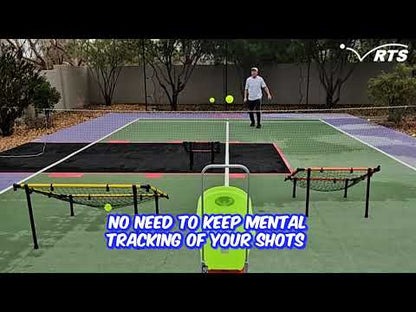
A player on r/10s described using visible objects in the court corners while filming a planned sequence of shots:
Here I am fresh, clear and focused on trying to make quality shots. Cross court, cross court, down the line is the rhythm although sometimes I deviate. I also set baskets and a ball mower in the corners to aid in target practice. I practice like this for about three hours several times a week. Plus serve practice and fitness. Tennis is 5-6 days a week for me because it's the best.
A compact session log
Write down your target next to the feed setup that produced the ball. The numbers below are hypothetical.
| Log field | Example entry | Purpose |
|---|---|---|
| Skill and target | Forehand beyond far service line | Defines the result you want |
| Feed configuration | Fixed forehand feed, noted controls | Defines the incoming ball |
| Ball condition | Consistent playable set | Keeps feeds comparable |
| Playable feeds | 10 | Out of how many balls you score target hits |
| Controlled returns | 8 | Counts stroke control separately |
| Target hits | 5 | Balls inside the chosen deep zone |
| Recovery observation | Balanced before most feeds | Movement note |
Five target hits out of ten playable feeds gives a 50% target-hit rate for this illustrative set. The eight controlled returns track execution quality separately.
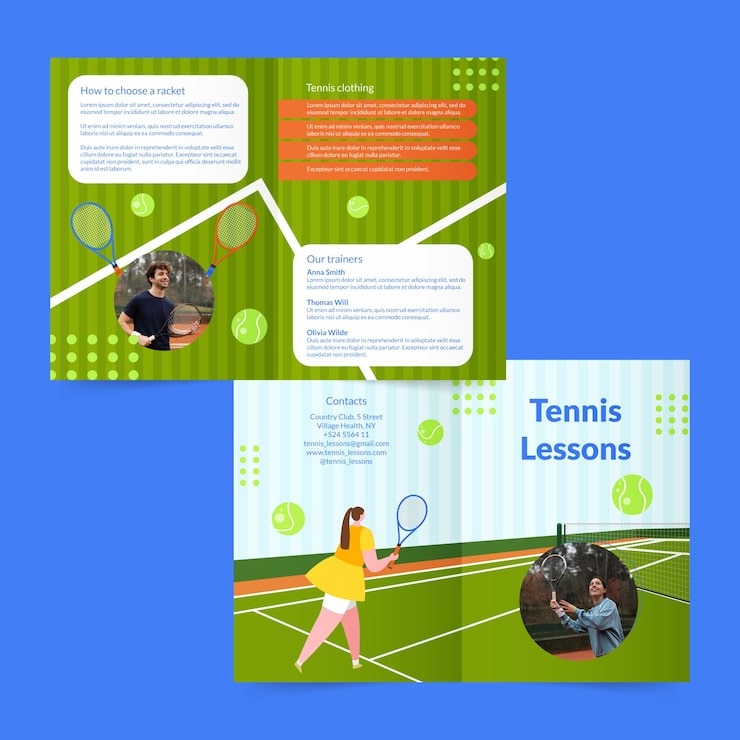
If filming is allowed, put the camera at a safe, consistent angle that shows contact and recovery. A clip shows changes in your preparation and balance.
Compare a later set only when machine placement, feed settings, ball condition, starting position and target match the earlier one. If one of those changes materially, label the set as a different challenge in the log.
Progress, simplify, or stop: make the session count
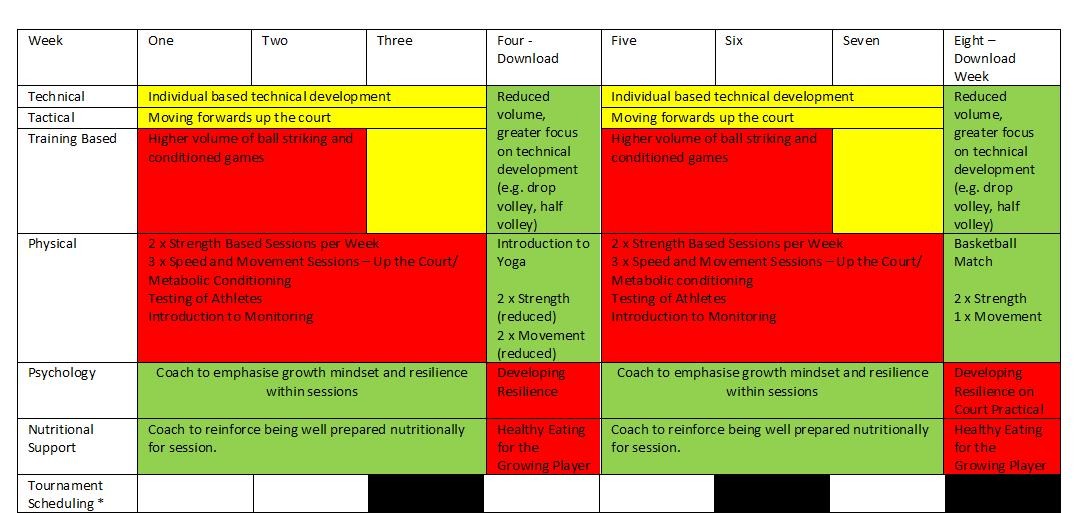
- Repeat: Contact is getting controlled, but the target is still inconsistent with a stable feed. Do another comparable set to see whether the results hold.
- Progress: Contact, target choice and recovery all feel manageable. Change one thing: the target size, the recovery route or the oscillation span.
- Simplify: You're rushing, mishitting or arriving off balance. Reduce the pace, the variation or the feed frequency until you can set up and recover.
- Stop or get feedback: Stop for pain, an unsafe delivery, a jam or loss of movement control. A technical problem that sticks around deserves a coach's assessment.
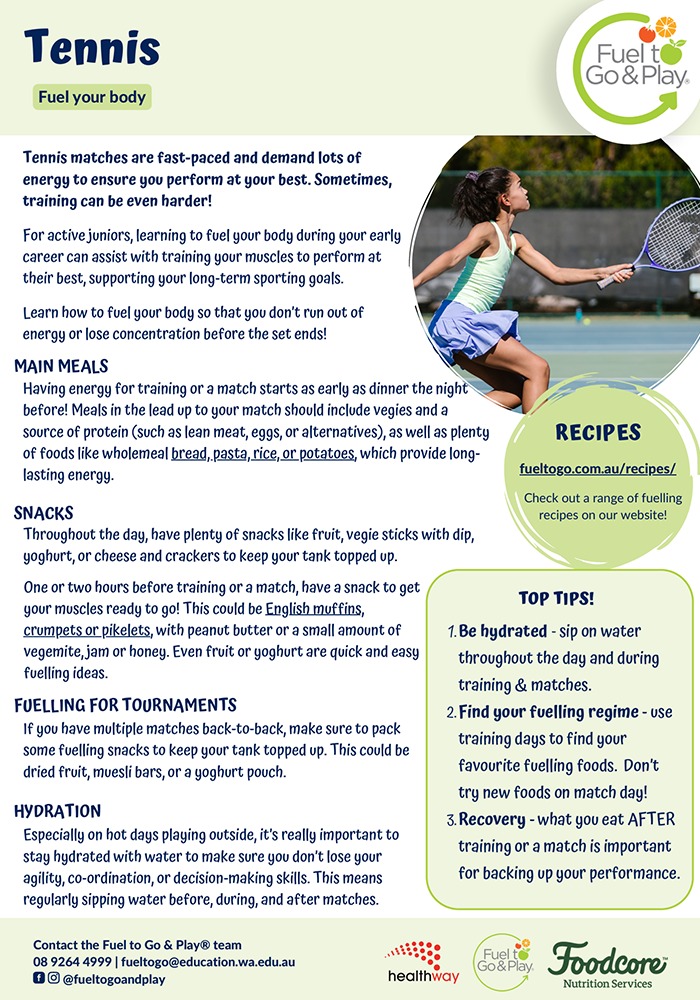
A player who consistently makes contact on fixed forehands can try a narrower target. A player arriving late to alternating feeds needs a simpler pattern, even if the machine can deliver a much harder sequence.