
To make your tennis serve more consistent, first identify whether you're missing the service box, missing your target, double-faulting, or struggling when points count. Choose a drill for that problem, record the relevant result, and retest under scored conditions. If your toss or motion stays unreliable, get technical feedback before adding more repetitions.
A basket of balls can keep you busy for half an hour without telling you much about your serve. One ball lands deep, another catches the net, and the next finds the service box beautifully. Unless you pay attention to what changed, every serve becomes another isolated attempt.
Start with the problem you can observe on court.
| What happens when you serve? | Start with | Main result to watch |
|---|---|---|
| Serves frequently miss the correct service box | Whole-box serving drill | Serves in |
| The toss or contact rhythm keeps changing | Toss-and-rhythm reset | Repeatable preparation |
| Serves land in, but placement is unpredictable | Called-target ladder | Serves in and target hits |
| Two faults frequently end the point | Second-serve rehearsal and two-attempt simulation | Second serves in and double faults |
| The serve works in practice but breaks down with a score | Pressure serving drill | Results during scored simulations |
Which Serve Problem Are You Trying to Fix?
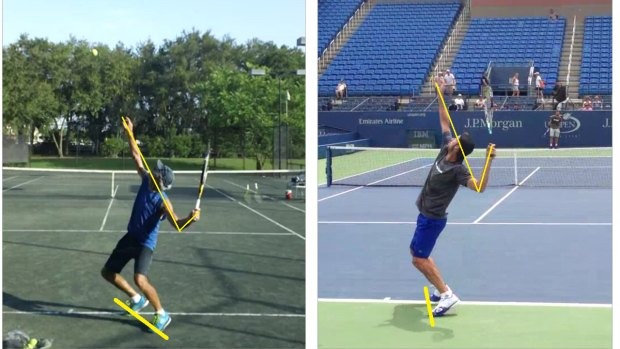
Take a few normal serves from both service sides, keeping your serve type and effort steady, and watch where the misses go. A ball that lands past the service line is a different problem from a serve that lands in but misses your chosen target.
Then check what happens after the first fault. If your first serve misses often but your second usually lands in, work on first-serve box control or placement. If your second serve misses too, prioritize a controllable second serve and track double faults. A serve inside the box but outside your target is a placement miss.
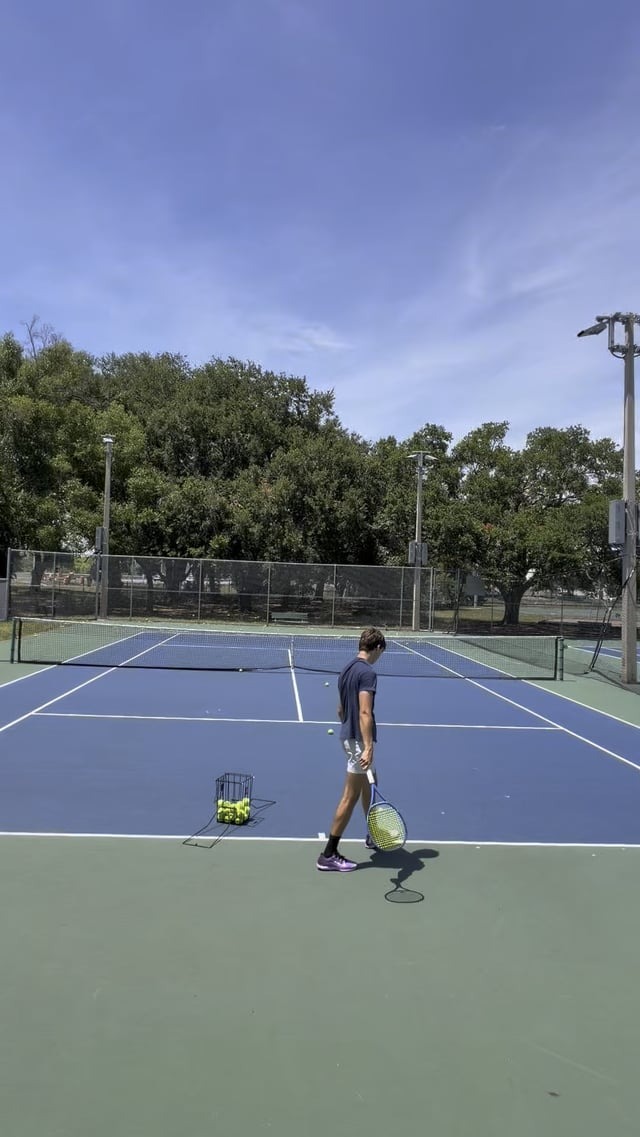
A short baseline shows you which task to practice next.
Reset Your Toss and Rhythm Before Full Serves
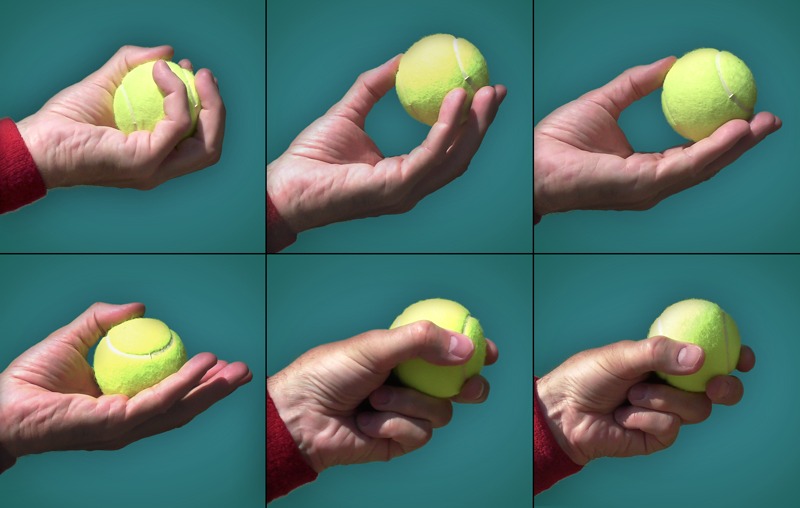
If your toss wanders and your contact point keeps moving, rehearse without striking the ball. Take your usual stance, release the ball with the same cue, watch where it rises, and catch it or let it drop. A simple pre-serve routine makes that preparation repeatable. Persistent toss or motion problems call for focused technical instruction before another full serving block.
Start With the Whole Service Box
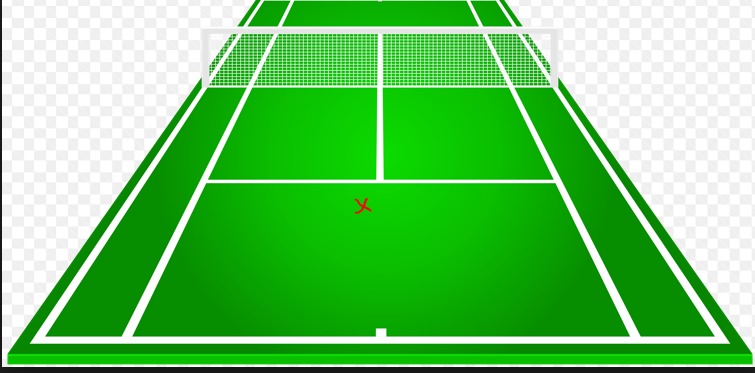
If your serve keeps missing the court, make the entire correct service box your target.
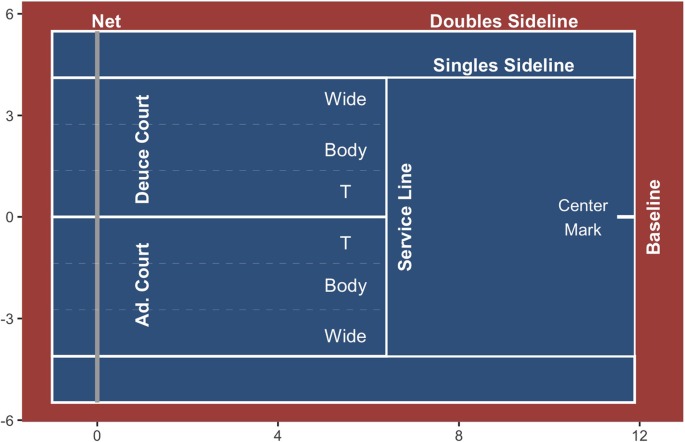
In a standard tennis serve, the ball must travel diagonally over the net into the correct service box. The deuce and ad courts require different diagonal targets. Service faults, foot faults, and lets have their own rules, as explained in the USTA serving rules.
For this drill, the painted service-box lines are enough. You don't need cones near the corners.
Whole-box drill
- Set the target: Pick the correct diagonal service box for your serving side.
- Serve normally: Use a comfortable, repeatable serve from behind the baseline.
- Call every serve: In, net, long, or wide. A foot fault also makes the serve a fault, even when the ball lands in the box.
- Change sides: Serve from both deuce and ad.
- Keep the task simple: If most serves miss the box, change one visible part of your motion before you shrink the target.
Start with ten serves and adjust the number to your comfort and control.
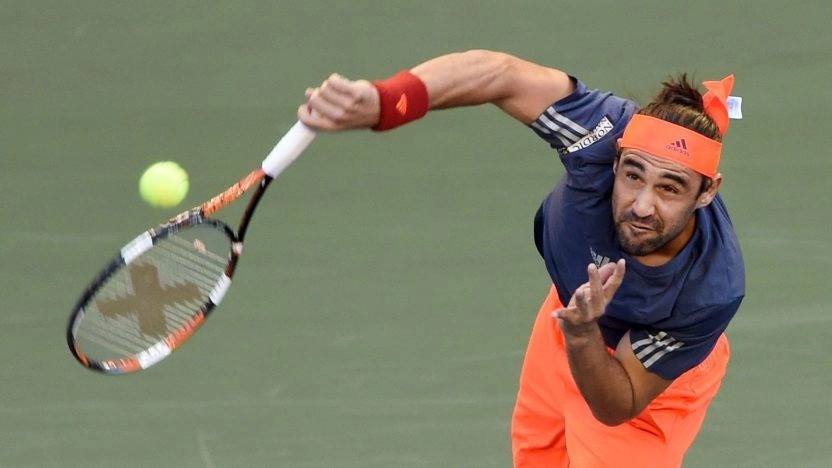
Take a player whose serves clear the net but land past the service line. The first goal is to get more serves into the box.
Once you land serves reliably at a comfortable effort, smaller targets make the task harder. Judge pace and how attackable the ball is separately from whether it lands in.
Call Your Target: A Placement Ladder

Once the whole box feels manageable, divide it into zones. Choose a destination before you serve and see how reliably you hit it.
Start with broad, clearly visible zones. Use a court diagram or markers placed safely away from where players move. Keep every zone inside the correct service box.
| Practice target | What you ask the ball to do | Suitable situation |
|---|---|---|
| Whole service box | Land legally anywhere in the box | Basic serve-in consistency |
| Called half | Land in the chosen left or right half | Early directional control |
| Called third or interior lane | Reach a more specific area | Developing placement |
| Smaller interior target | Approach a demanding location | Advanced precision work |
The LTA solo serving guide describes announcing a half of the box before serving.
In one LTA exercise, you serve ten balls and aim to land at least five in the half you called. Use a larger or smaller zone if your current control calls for it.
Make the target meaningful
Before each serve, name the side you're serving from and the part of the diagonal box you intend to hit. Keep the target the same through a short series so the result means something.
Say you hit ten serves. Eight land in the correct box and three reach your called half. You get two numbers from one series, and the three target hits are among the eight serves in.
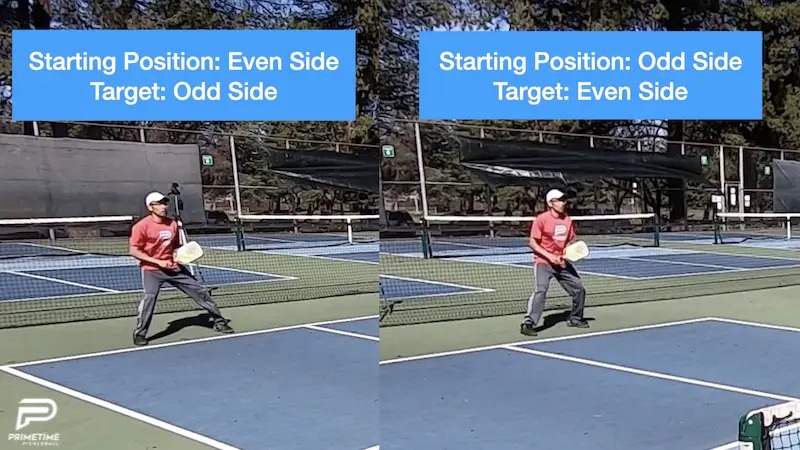
A large interior zone leaves more room for error. A smaller target suits a player who already controls the ball and wants finer placement.
If narrowing the zone makes your faults jump, enlarge it again. Advanced players may aim nearer the lines for tactical reasons, but that carries more risk.
Practice the Second Serve and Count Double Faults
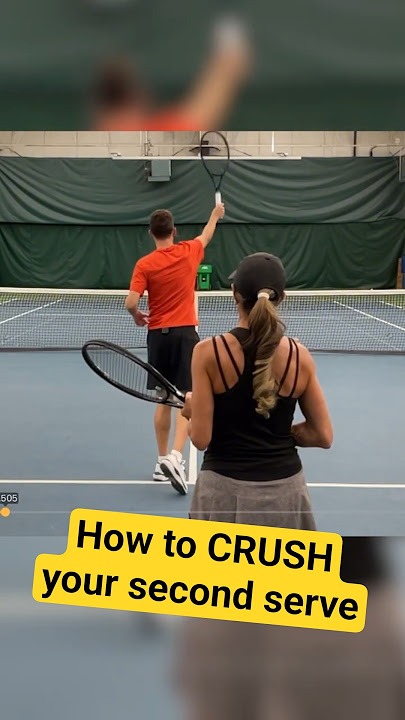
A reliable second serve matters because a miss ends the point immediately with a double fault.
Second-serve practice can isolate the serve or recreate the full two-attempt point.
| Drill | How it works | What it measures |
|---|---|---|
| Repeated second serves | Hit the serve you intend to use after a first fault, repeatedly | Comfort and repeatability of that serve |
| One-serve pressure | Treat each attempt as the only chance to start a point | Performance with an immediate fault consequence |
| Full two-attempt points | Serve normally and take a second serve only after a first fault | First serves in, second serves taken, and double faults |
The LTA's second-serve guidance describes repeated second serves and one-serve pressure points. The full two-attempt simulation follows standard tennis serving rules.
Build the second serve first
For the rehearsal block, use a motion you can repeat comfortably and aim for the correct box. Every attempt counts as a second-serve rehearsal, even though no first fault came before it.
Note whether the ball clears the net and reaches the service box while your motion stays comfortable.
A very soft second serve can cut your faults but hand your opponent a ball to attack. Once the serve is dependable, check that its pace and placement still do some work.
Then simulate complete service points
Start each simulated point with a first serve from the correct side. After a fault, take the second serve from the same side. Switch between deuce and ad only after the point is complete.
- First serve lands in: The sequence ends for that point.
- First serve is a fault: Hit the second serve.
- Both serves are faults: Record one double fault for the point.

Count how many first serves land in, how many second serves you take, and how many points end in double faults.
Add Pressure With Scored Serves
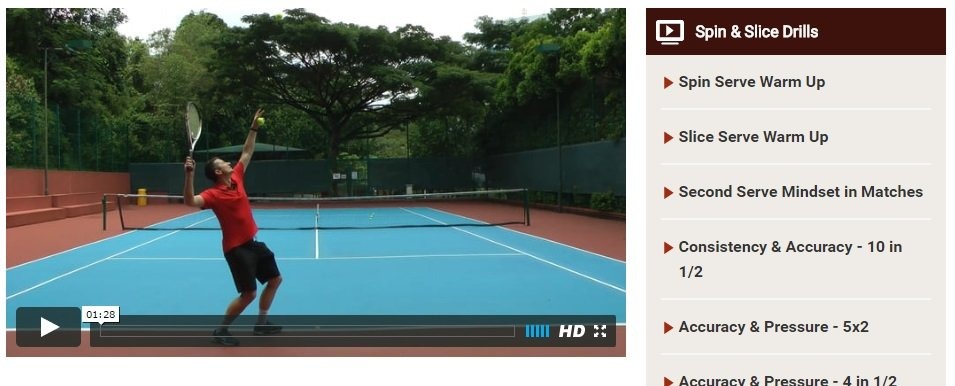
Once your basic serve is repeatable, add scoring. A serve that works with a basket at your feet faces a different demand when a double fault would lose you the game.
Try this progression, with each step adding a clear consequence.
- Call the result: Before serving, name the intended target and count the outcome.
- Complete a short sequence: Work through a defined series of attempts while keeping a visible score.
- Simulate an important point: With a returner, start at 30-40 and play the full point, return and rally included. Alone, play ten serve-only sequences. One serve in within two attempts is a success. Two faults are a failure and count as one double fault. Stop after the first serve that lands in, even if it misses your target, and record target hits separately.
- Vary the match situation: Start each point from the correct deuce or ad side, switch sides after every point, and keep your normal pre-serve routine.
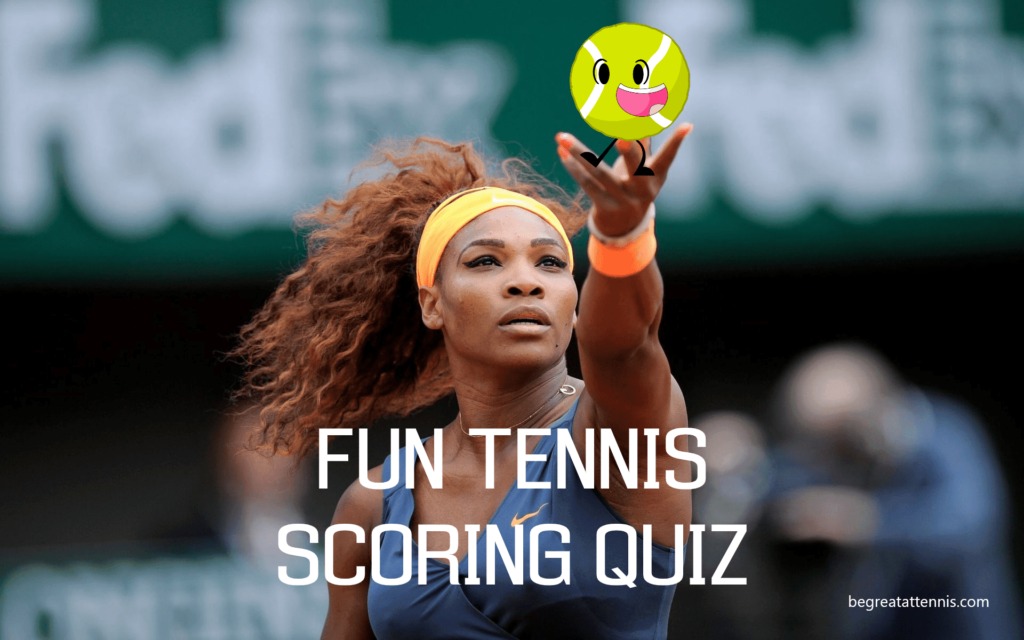
USTA also describes pressure-serving practice built around consecutive targets, an option for players practicing without a returner.
What research suggests about match transfer
Buszard and colleagues studied 16 skilled youth players aged 11 to 13, assigned in groups of eight to different training arrangements over ten sessions.
The group that alternated serving with other skills improved more in match-play placement relative to the T than the blocked-practice group. The significant result was the difference in change between the groups. Blocked practice did better on an isolated skill test.
The 2017 original study tested practice organization. The scored drill here is a way to see how you respond when points count. The study did not establish changes in the overall percentage of serves in, and it guarantees no outcomes for recreational adults.
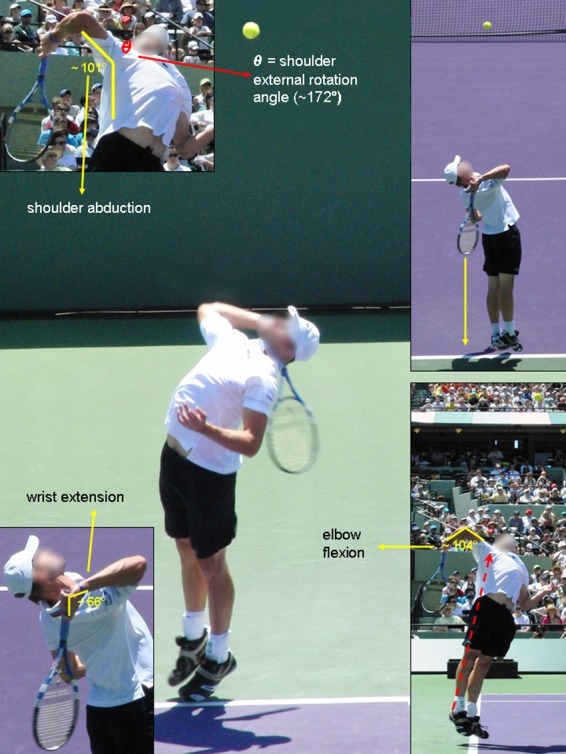
To compare, hit one relaxed series and one scored series with similar targets, effort, and service sides.
If the scored result drops, you have found a situation to practice. The numbers alone can't tell you whether nerves, fatigue, or technique caused the drop.
Serve Plus One: Practice the Next Ball
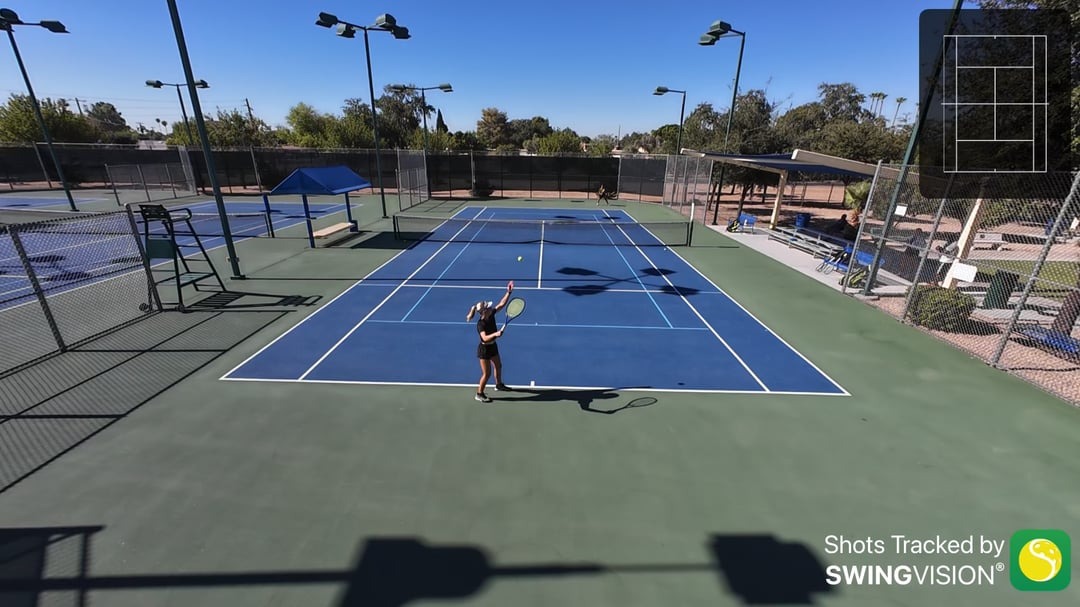
Serve plus one is worth adding once you get enough serves in to practice what comes after the return.
With a willing hitting partner, serve as you normally would, let your partner return, and play your first shot after the serve. Agree on a controlled return pattern at first, then allow more variety once the exchange becomes manageable.
This brings in a question an empty service box can't answer: where should you move, and what should you do with the first ball that comes back?
A returner changes the drill. How consistent, deep, and well placed their return is decides what you can do next.
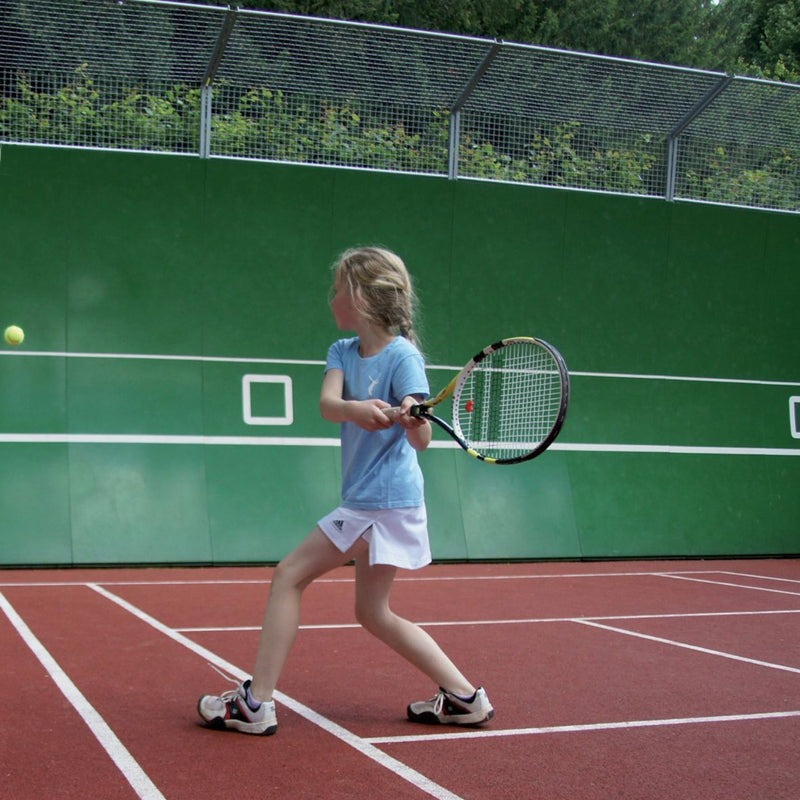
Note the follow-up shot on its own. A serve can land in while the next ball goes wrong, or a tough return can end the exchange before you hit again.
If you're practicing alone, skip this partner drill and stick with the service-box or target series.
Keep a Serve Scorecard That Measures the Right Outcomes
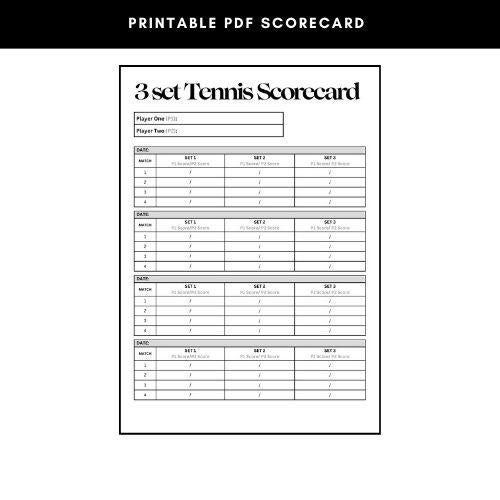
Your scorecard needs separate denominators for ordinary serves, target attempts, and completed two-attempt points. A double fault belongs to a point; a target hit belongs to a serve. Keep each count in its own record.
- Serve-in rate: Serves in divided by completed serves in that unscored series.
- Target-hit rate: Serves that reach your announced zone divided by completed serves in that target series.
- First-serve-in rate: First serves in divided by completed simulated points, one first serve per point.
- Conditional second-serve-in rate: Second serves in divided by second serves taken after first faults.
- Double-fault rate: Points ending in two faults divided by all completed simulated service points.
Worked scorecard
These numbers are examples that show how the calculation works.
| Practice block | Measure | Raw count | Result |
|---|---|---|---|
| Whole-box baseline | Serves in | 4 of 10 serves | 40% serves in |
| Target-zone series | Serves in | 13 of 20 serves | 65% serves in |
| Target-zone series | Target-zone hits | 6 of 20 serves | 30% target-hit |
| Ten-point simulation | First serves in | 6 of 10 first serves | 60% first-serve-in |
| Ten-point simulation | Second serves taken | 4 after first faults | 4 attempts |
| Ten-point simulation | Second serves in | 2 of 4 second serves | 50% conditional second-serve-in |
| Ten-point simulation | Double faults | 2 of 10 completed points | 20% double-fault rate |
In the target series, seven serves land in but outside the zone. That points to placement work if direction is your main problem. In the simulated points, double faults still give away points, so second-serve control comes first when those losses hurt most.
On paper or in a phone note, record the session date, serving side, intended serve, target, completed serves, serves in, target hits, and any simulated first or second serves and double faults. A brief comfort or fatigue note helps you read the next session.
Account for service lets
A service let that touches the net and otherwise lands in the correct box is replayed, so leave it out of the completed-serve count. If the ball touches the net and lands outside the box, record a fault. Keep raw counts beside the percentages, since rounding hides what changed in a small series.
Plan Repetitions, Rest, and Recovery Around Quality
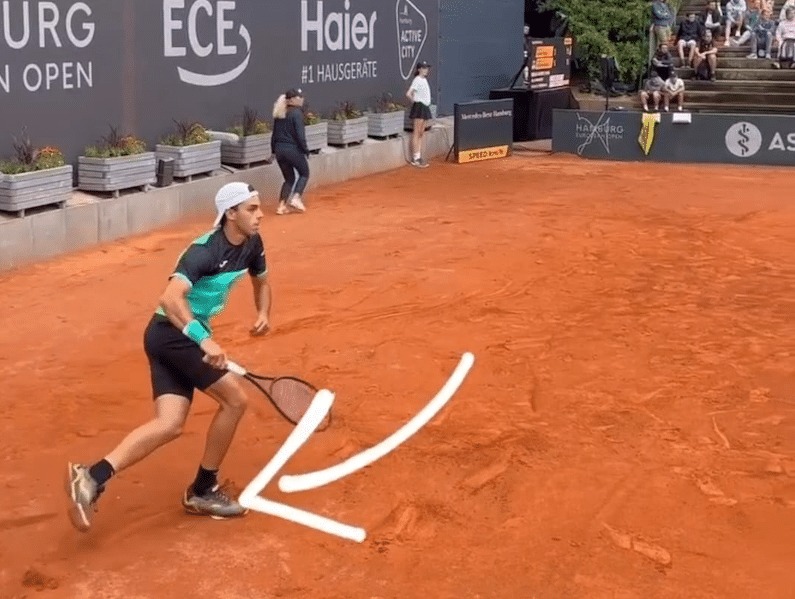
A good serving session has short blocks and enough rest to keep your motion controlled. A typical session starts with light physical preparation and easy serving, moves to a serves-in or placement task, and ends with a short second-serve or scored block. Write down the results. Adjust each block to your skill, fitness, comfort, and court time.
What the training studies can tell us
A 2021 crossover study of 25 elite youth tennis players examined where serve training occurred within a tennis session. Serving after other tennis work produced worse measured speed and accuracy than serving before that work.
That makes the fresh part of a session a sensible place for precision practice, though the study covered elite youth players, not adult recreational ones.
A separate 2026 randomized study of 24 recreational youth tennis players compared shorter and longer rest distributions. It found no statistically significant group difference in the measured success, accuracy, or retention outcomes.
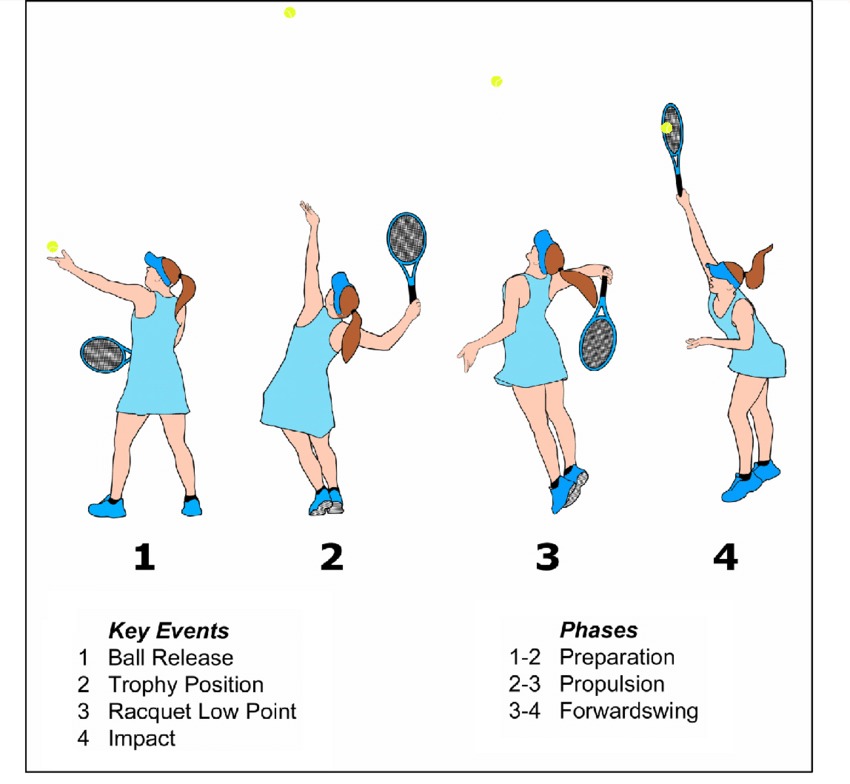
During practice, watch whether your serving motion stays controlled and comfortable. Take a break or reduce the difficulty when quality drops. Stop overhead serving if pain or excessive strain develops. Persistent pain calls for clinical or coaching assessment, not another repetition target.
Retest and Choose Your Next Drill
A practice result should shape the next session. Repeat the original task under comparable conditions and look at the outcome you chose to improve.
Use the same target size, similar effort, and a comparable split between deuce and ad. Note whether the session was relaxed or scored.
Then choose one response:
- Repeat the drill: Results are inconsistent, or the gain shows up only in a small sample.
- Progress one variable: The outcome has become more repeatable across comparable sessions. Narrow the target, add a scoring condition, or make the return more demanding, depending on the task you chose.
- Simplify or seek help: Serves in collapses as difficulty rises, the basic motion stays unstable, or the drill exposes a problem outside its scope.
Suppose your target-hit result improves while your faults rise sharply. The placement session met one goal and made your serving less reliable overall. The next step depends on whether your original problem was direction or giving away points on faults.
Similarly, a good score in relaxed practice and a poor score in a scored simulation call for more practice under point conditions. Keep the easier task available while you build the harder one.
One good session is a promising start. Similar results across comparable tests are better grounds for changing the drill.