
You can practice tennis alone with a court, a wall or a clear patch of floor. Pick one skill, run one drill and write down the result. You don't need a ball machine or a partner for every session. Once you need feedback you can't give yourself, find a partner or a coach.
Choose a Solo Tennis Practice Method That Fits What You Have
Match the space you can use to the skill you want to work on. An empty court, a practice wall and a clear space at home each suit different practice.
| What you have | What to do | When to skip it |
|---|---|---|
| Empty tennis court and a few balls | Serve to a service target or drop-feed single groundstrokes | Court use is prohibited or stray balls would enter occupied space |
| Permitted tennis wall or backboard | Hit gentle, controlled rebounds toward a chosen area | Rebounds become unmanageable or the surroundings are unsafe |
| Reserved court and ball machine | Repeatable incoming balls for one selected stroke | Setup, collection or court access eats too much of the session |
| Clear space without a court | Shadow swings and simple footwork sequences without a ball | Not enough room to move or swing a racket safely |
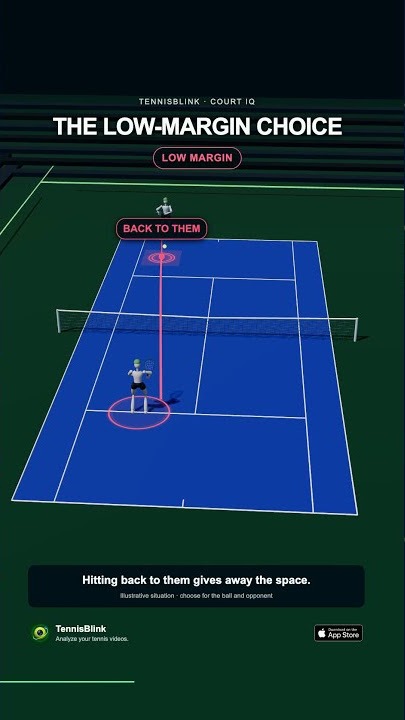
With five balls and an empty court, you can work on serves and self-feeds. With no court, you can rehearse movement in a cleared space. That option can't show where a struck ball would land, so you can only judge the movement.
Check permission first. A school wall, parking area or shared courtyard isn't automatically fine for tennis balls. Make sure rebounds and stray shots can't reach bystanders, windows or occupied playing areas. If the spot is unsafe, pick another activity.
The Lawn Tennis Association's independent-practice guidance covers serving and wall activities.
Browse tennis drills organized by practice goal for more specialized exercises.
Build a Focused Solo Session Instead of Hitting at Random
Choose one skill before opening a can of balls. Serve placement, clean forehand contact and footwork each need a different task.
Build the session from a warm-up, one manageable drill, a short retest and one note on what to change next. Here is an illustrative 25-minute session for a permitted practice wall with room to retrieve the ball safely:
- 4 minutes, prepare: Walk and move comfortably, then rehearse the forehand motion at an easy pace.
- 12 minutes, work: Hit gentle forehands toward one wall area. Work in short sets, with retrieval and rest between them. In the first 10-attempt set, count a success when the shot reaches the target and the rebound lets you prepare for the next contact.
- 6 minutes, retest: Repeat 10 attempts at the same target, pace and starting position. Count successes the same way.
- 3 minutes, finish: Collect the ball, note what made the rebound easier or harder and pick one adjustment for next time.
For a 12-minute session with no court, spend 3 minutes moving comfortably in a clear space. Spend 6 minutes repeating a split-step, shadow forehand and recovery to your starting position. Use the last 3 minutes to run that sequence slowly and check that you finish balanced and ready to move again. Leave enough room for the racket, especially indoors.
If control disappears during the main drill, shorten the set or simplify the task.
Practice Groundstrokes With Self-Feeds and Shadow Swings
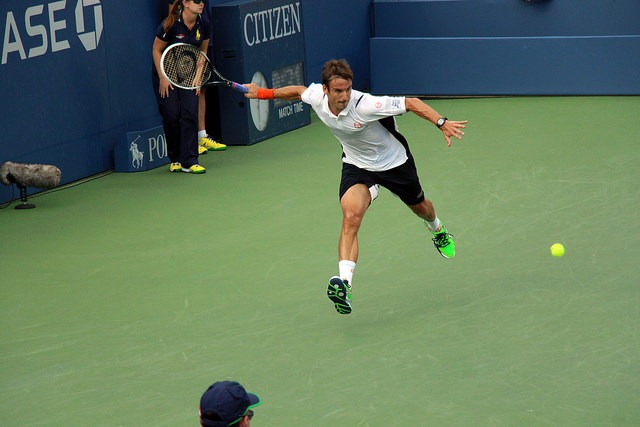
On an empty court, a self-feed or drop-feed starts when you release one ball into a comfortable hitting area and hit a forehand or backhand toward a safe target. Then collect the ball and reset. This lets you watch one simple cue, such as racket-face position or contact location. If your preparation feels rushed, simplify the stroke before the next series.
In a cleared space with no ball, shadow swings and basic split-step or recovery movements let you rehearse a movement pattern. They tell you nothing about ball contact, flight or landing.
Use a Tennis Wall Without Rushing Your Strokes
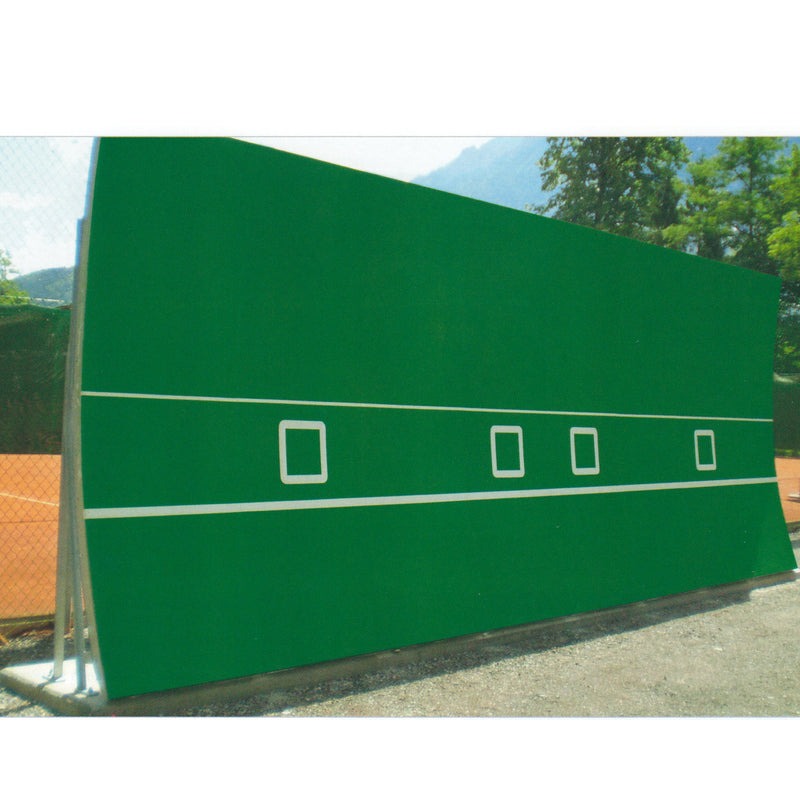
A wall works when the rebound gives you time to prepare and make a controlled stroke. If every return forces a shortened swing or a desperate reach, adjust the task.
A player of about six months described the problem in an r/10s discussion:
I’m a relative beginner, playing for about 6 months but feel like I’ve developed decent form in that time. I have directional control on clean shots, can keep solid rallies going with a partner, and hit great shots against a ball machine. I’m looking for more ways to practice though, especially if I have a bit of free time alone. But hitting against wall completely baffles me. Any time I try to hit against a wall, I feel like I’m just wildly slapping at the ball. It just feels like I can never get the ball to bounce off the wall to a place where I can get a good approach on it or have time to get a full swing in - it always feels like it’s too fast, too low, too far, etc. I’ve basically given up on it at this point because I feel like any time I try, I’m just using terrible technique and don’t want to ingrain bad habits.
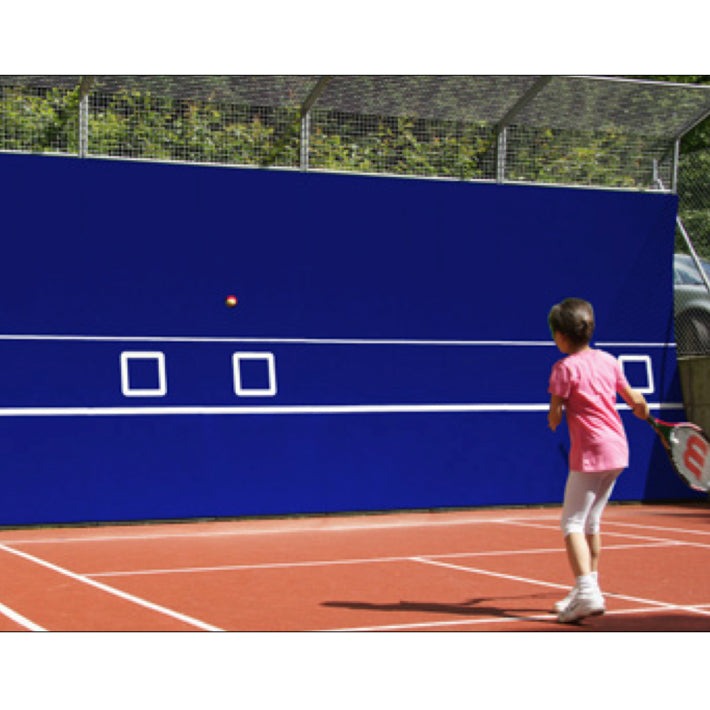
A wall returns the ball without another player's preparation and swing, and your distance from it sets how fast the ball comes back. That can make a familiar forehand feel awkward.
Begin with a gentle shot toward a simple target. Notice whether the rebound gives you time to prepare and contact the ball deliberately.
If the return arrives too quickly, change the pace of your outgoing shot or give yourself more recovery space. On an appropriate surface, let the ball take an extra bounce. Try a lower-compression practice ball too.
Stop forcing continuous rebounds when the ball keeps pulling you out of the movement you came to practice. One controlled shot followed by a reset is still a valid exercise. A separate self-feed session works better when the wall can't give you a manageable rebound.
Try wall drills that build controlled groundstrokes to build longer rebound sequences.
Practice Serves Alone on an Empty Tennis Court
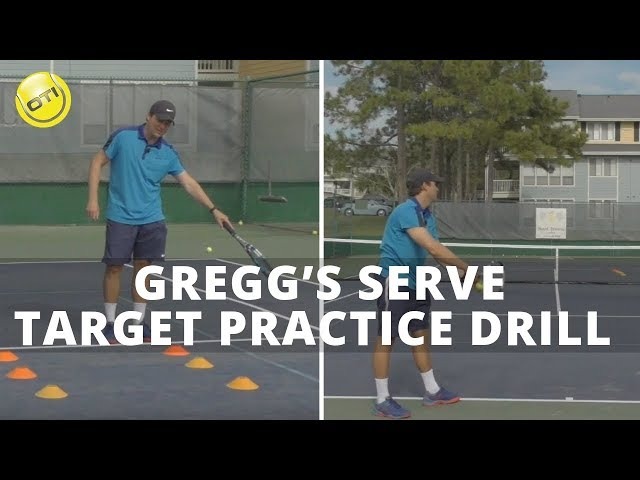
Serving suits solo practice because you start every ball. On a permitted empty court, aim into the diagonal service box and count legal landings. Use a marker to test a smaller placement area.
LTA coach Matt Smith describes an exercise of 10 serves from each side, with a sample consistency challenge of 16 successful serves out of 20. His intermediate progression has you choose a half of the service box before serving and reach the called half at least five times in 10 attempts.
Adjust the difficulty to your level. The LTA serve-practice lesson describes the full progression. For a longer sequence of service targets and repetitions, see serve practice drills.
Decide Whether a Ball Machine Is Worth the Setup
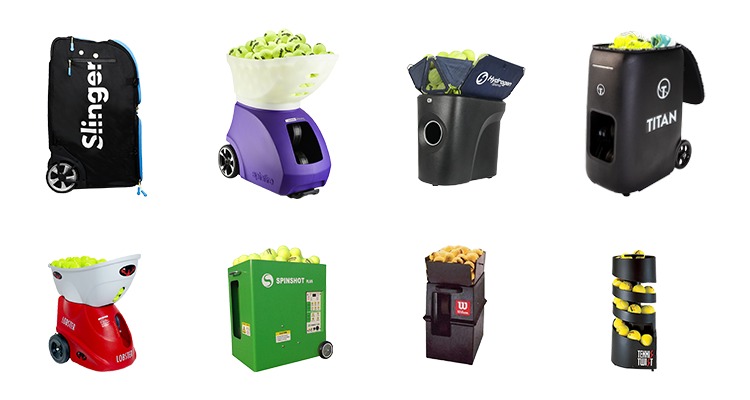
A ball machine earns its place when its repeatable feeds let you practice a specific incoming shot and the equipment is practical to use. A nearby wall or a self-feed session is easier when the machine needs transport, setup, court booking and ball collection.
| Decision factor | Tennis wall | Self-feed | Ball machine |
|---|---|---|---|
| Main equipment | Racket, ball, suitable wall | Racket, balls, safe striking area | Machine, balls and court access |
| Control of incoming ball | Depends on your previous shot and rebound | You start each shot | Configurable feed, depending on machine |
| Timing | Can get rushed | You choose when to start again | Adjustable feed interval, depending on model |
| Setup effort | Low when the wall is nearby and permitted | Usually modest | Transport, preparation and collection |
| Useful skill focus | Contact rhythm and controlled rebounds | Individual stroke setup and contact | Repetition of a chosen incoming ball type |
| Main limitation | Unpredictable or hurried rebounds | No real incoming opponent shot | No real opponent preparation or intent |
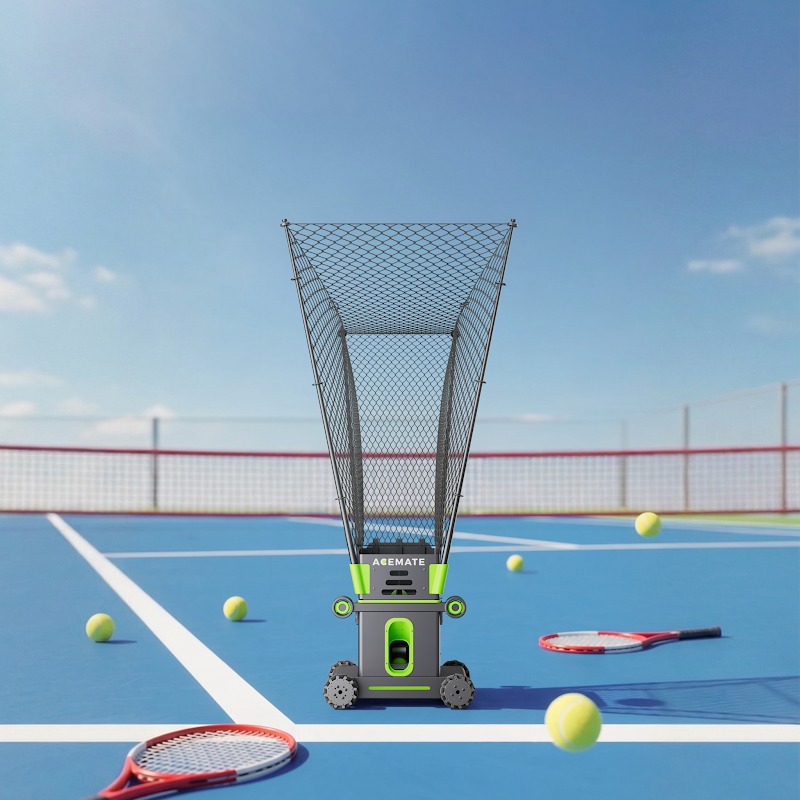
A machine lets you isolate a repeated incoming ball, such as an awkward high backhand or a lower approach shot. Check what your model can do. Basic machines don't run every programmed sequence.
Say you have 30 minutes. The wall is close and needs one ball. The machine needs a court reservation, transport and a basket to collect afterward. Under those conditions even a capable machine leaves little hitting time.
For a longer session on a suitable court with a specific incoming-ball problem, the extra preparation pays off.
When a machine fits your session, use ball-machine drills for specific feeds.
Track One Useful Result From Each Solo Session
A useful practice record answers one question: under a given set of conditions, what happened when you tried the skill you picked?
Pick a result you can count that matches the drill. Success might be a serve landing in a defined area, a self-fed groundstroke reaching a chosen zone or a wall rebound that lets you make another controlled contact.
| Method | What to count | Keep the same |
|---|---|---|
| Serving | Landings in the selected service target | Target, serving side and what counts as an attempt |
| Self-feed | Controlled contacts reaching the intended area | Drop setup and target |
| Wall practice | Rebounds that allow the intended controlled stroke | Target, general pace and available space |
| Shadow movement | Completed movement sequences | Movement cue and practice area |
Decide what counts as a success before you start counting. Changing the rule halfway through makes the result hard to compare later.
Keep a minimal log: date, venue, method, skill goal, attempts, successes or notes, conditions and one adjustment for the next matching session.
Hypothetical sample practice log
Venue: Empty tennis court
Method: Serving
Serving side: Deuce court
Goal: Land in the same selected diagonal service target
Attempts: 20
Successful landings: 12
Next comparison: Repeat 20 attempts from the deuce side into the same target, then compare landings
Your numbers can vary between sessions even when your ability hasn't changed.
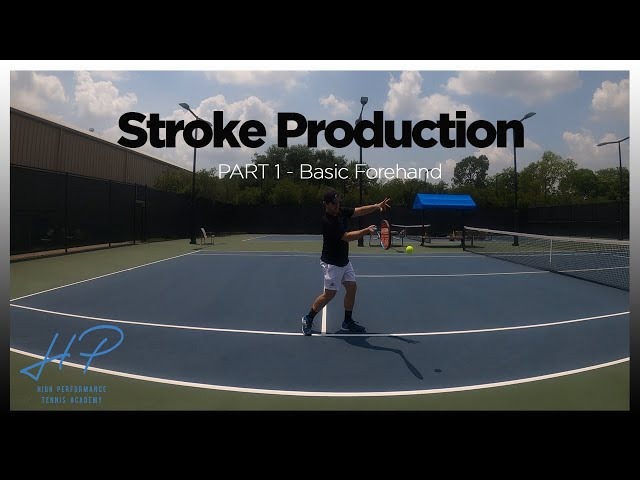
A short private recording adds another view when you're unsure how a stroke looks. Pick one visible feature and compare it with what you meant to do. A recording can't diagnose the technical cause on its own. Follow venue rules and keep nearby people out of the footage.
Know What Solo Practice Cannot Teach and When to Play With Someone
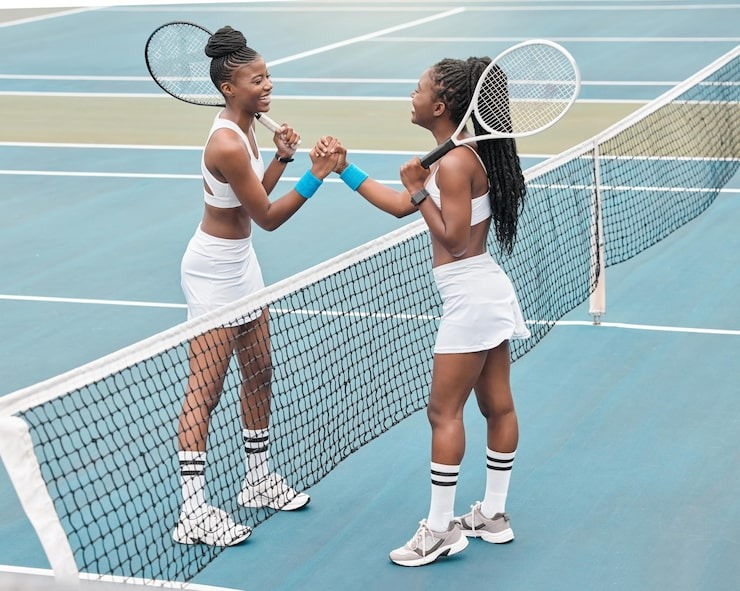
Solo practice isolates a stroke, serve target or movement pattern. Live tennis adds what a wall, self-feed or programmed machine can't fully reproduce: another player's preparation, changing shot direction, variable depth and decisions under the score. A clean self-fed forehand tests whether you can prepare for and execute a controlled contact. Returning a partner's forehand also asks you to read the ball, move to it and adjust. The same gap separates a serve-target exercise from serving in points.
When a partner is available, work through the demands of the game in this order:
- Solo repetition: Check that you can perform the movement or hit the target with a controlled feed.
- Partner rally: See how the stroke holds up when timing, depth and direction vary.
- Selected points: Use the stroke while choosing shots and responding to a score.
- Ordinary play: See how it works in a normal match or recreational game.
In a 2019 study, Krause and colleagues examined 33 junior tennis players across three serve-practice conditions over six weeks. Improvement did not rise in a straight line as practice conditions came closer to competition.
The Krause study abstract covers junior players only. Use the progression above to check how a rehearsed skill holds up as incoming balls and choices become less predictable.
When a trained stroke breaks down against unpredictable balls, a short rally or point-level trial shows whether timing, movement or shot choice changed. If the problem is reading an opponent or a persistent technical error, arrange partner practice or qualified coaching. A regular hitting partner near your playing level can cover the first.