
If you're a recreational player with a safe practice wall, wall drills are worth doing as long as you can hit and recover without rushing your swing. When your preparation falls apart, allow another bounce or feed one ball at a time. Then test the stroke with a partner or coach on a real court before you judge your progress.
You can have a decent rally with another player, feed balls confidently from a machine, and still look completely lost when you face a wall. The ball returns before you've settled your feet. Your comfortable forehand becomes a hurried flick, and the next rebound sends you chasing across the pavement.
A wall changes the time you have to prepare for the next shot.
When Wall Practice Is Worth Your Time
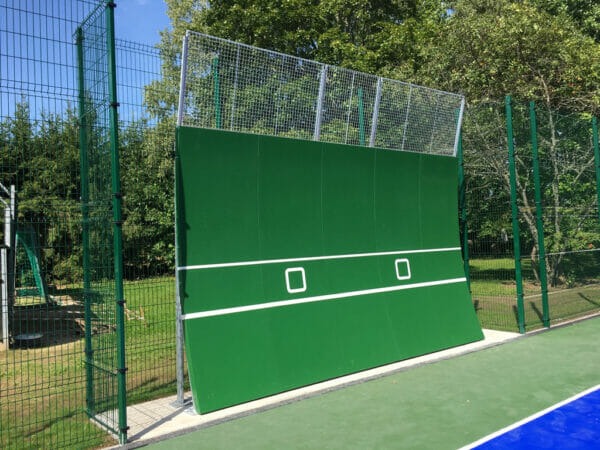
A wall works for rehearsing forehand or backhand contact, aiming at a broad target, and recovering after a rebound you can predict.
Pick one objective per session: target contact, forehand preparation, backhand preparation, ready-position recovery, or compact volley touch. The wall can't help you read an opponent, judge true shot depth, or practice tactical rallies. For those, try other ways to practice tennis alone. If the return forces you to change your swing, switch to a simpler exercise.
Set Up a Safe, Controllable Hitting Space
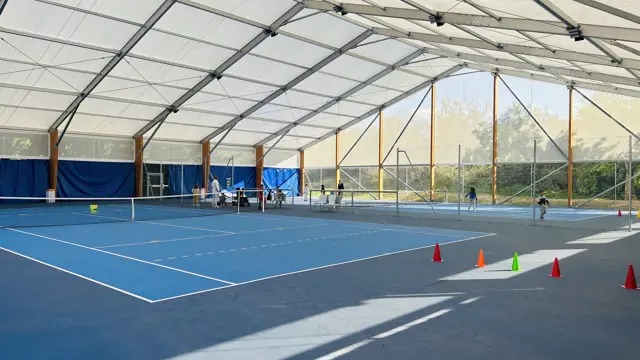
Use a wall you're allowed to use, with open space for the ball's return and room to move without colliding with anything. A dedicated court backboard is the best choice. An apartment wall, school building, or garage door may be restricted or put other people and property in the path of stray balls.
Check the space before you hit:
- Permission: Check that you're allowed to hit balls against it.
- Wall and ground: Look for damage, protrusions, slippery patches, uneven pavement, and anything that could make returns unpredictable.
- Clearance: Leave room to move and recover, and keep people and windows out of the ball's path.
- Ball and target: Pick a suitable ball and a broad, visible part of the wall to aim at.
If a check fails, find another spot. Stop if anything hurts.
A regular tennis ball can come back faster than a newer player can handle. The ITF Play and Stay program describes slower red, orange, and green introductory balls. Try one if pace is your problem.
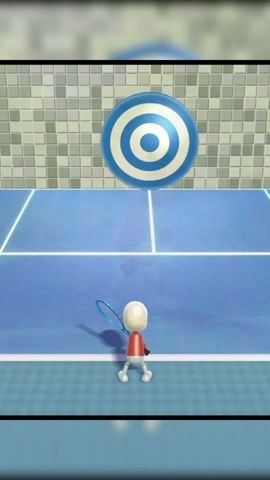
Stand far enough back to watch the ball return and set up a comfortable swing. If the rebound arrives awkwardly, adjust your distance a little and keep your effort and target the same. You're looking for more preparation time and a bounce you can reach.
Your First Wall Drill: One Clean Forehand or Backhand
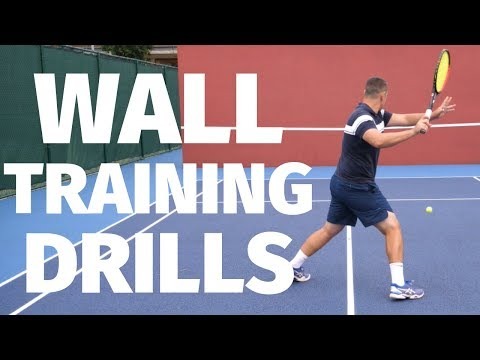
Start with one ball and one stroke. A forehand or backhand toward a broad wall area is enough to give each attempt a clear purpose.
Drop or feed the ball yourself, swing at a manageable pace, and recover to a balanced ready position. If another hit would mean a scramble, catch the return and start again. Keep the same stroke and target for these first contacts.
A player taking lessons found continuous wall rallies frustrating because the shots kept climbing high:
Hi everyone! I’ve recently started playing tennis. In my lessons we’re currently working on forehands and backhands, but I feel like 1–2 lessons per week aren’t enough for me to improve. So I was thinking of starting to practice against a wall a couple of times a week to work on my strokes, timing, and preparation. Do you have any suggestions or maybe a training routine I could follow? I tried just rallying against the wall, but it didn’t go very well, most of my shots were going really high.
You want an easy preparation, a hit that lands where you aimed, and a return you can reach without flailing. If a single hit feels out of control, slow the pace down.
Why the Wall Feels Fast: Choose One Bounce, Two or Reset
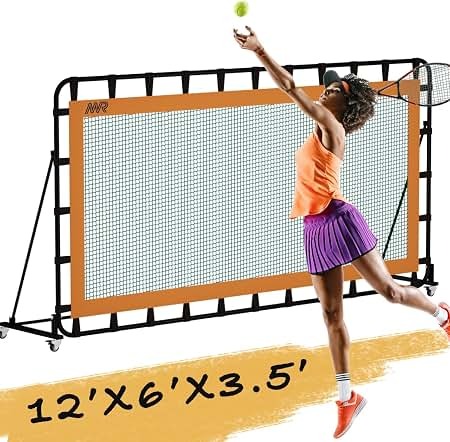
Against another player, the ball crosses a court before reaching you. Against a wall, it rebounds and comes back over a much shorter distance. That can make a familiar groundstroke feel hurried, particularly if you try to swing fully at every rebound.
The deciding question is whether you can prepare and finish the stroke while staying balanced.
| Practice mode | When to use it | What it trains | Switch when |
|---|---|---|---|
| One ground bounce | You can prepare and recover after each return | Contact timing and recovery in continuous play | Your swing shortens or you lose balance |
| Two ground bounces | The first-bounce return rushes a full groundstroke | More time to prepare a fuller swing | You're still late, or the second bounce is hard to handle |
| Catch-and-reset | Even a slower return leaves you scrambling | One deliberate hit at a time | You're ready every time and can string hits together |
Two bounces are fine for this kind of practice. Under standard tennis rules, a player must return the ball before its second bounce; wheelchair tennis allows a return before the third bounce.
A recreational player who felt confident with a partner and a ball machine still felt rushed by wall rebounds:
Any time I try to hit against a wall, I feel like I’m just wildly slapping at the ball. It just feels like I can never get the ball to bounce off the wall to a place where I can get a good approach on it or have time to get a full swing in - it always feels like it’s too fast, too low, too far, etc. I’ve basically given up on it at this point because I feel like any time I try, I’m just using terrible technique and don’t want to ingrain bad habits. Even on specific tennis walls with net/target paint, it’s barely any better than a blank brick wall. Is there some sort of secret to it that’s alluding me? Should I stand a certain distance away? Use practice balls? Aim high and let it double bounce? Or should I even bother trying? Is it actually a useful way to practice my swings, footwork, timing, etc?
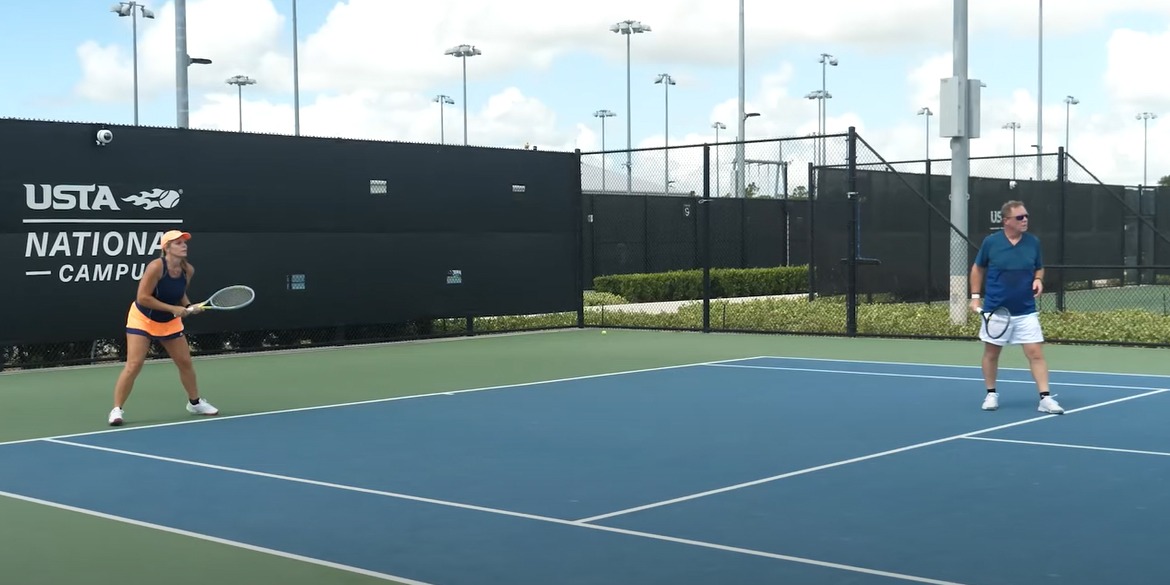
In a 2020 Tennis.com article, Steve Tignor describes wall workouts built on a one-bounce rhythm. Coach Joe Dinoffer discusses allowing two bounces against a flat wall to give a player more time for a full groundstroke in OnCourt OffCourt.
Build a Small Progression: Stroke, Direction, Recovery
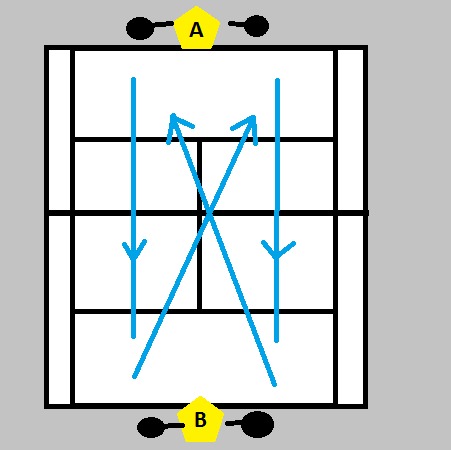
Once your contacts repeat, add one demand at a time. Each drill changes the stroke, target, or movement, and the last column gives an easier option if you lose control.
| Drill | How to do it | Ready to advance when | Easier option |
|---|---|---|---|
| Forehand only | Hit forehands to a broad wall area and prepare for each return | You recover before the next contact | Feed a fresh ball for each hit |
| Backhand only | Repeat with the backhand, keeping the target broad | Your backhand setup stays balanced | Allow an extra bounce |
| Alternate forehand and backhand | Aim slightly off-center to send the return toward the other side; move your feet, prepare, and alternate sides on purpose | Changing sides no longer starts a scramble | Work each side alone before alternating |
| Choose a direction | Pick a central, left, or right target area and watch how the return angle changes | You can prepare for the return path you chose | Widen the target or use the center |
| Compact volley touch | From a distance you can manage, intercept the return before it bounces with a short, firm volley and no full backswing | Contact stays compact and returns stay safe | Slow the pace or separate the hits |
| Recover to ready position | After a hit, regain your balance and face the next return | You finish recovering before the next contact | Slow the sequence |
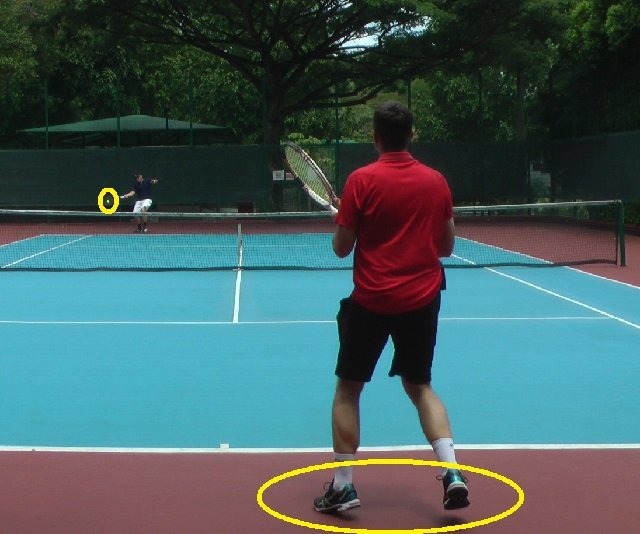
USTA's introductory red-ball instruction for kids uses alternating wall contacts. Adults can use the same task at a pace and with equipment that suit them.
For detailed stroke mechanics, see the forehand technique guide. Footwork drills train movement without needing a wall rebound.
Fix the Common Failures: Too High, Too Low, Sideways, Too Fast
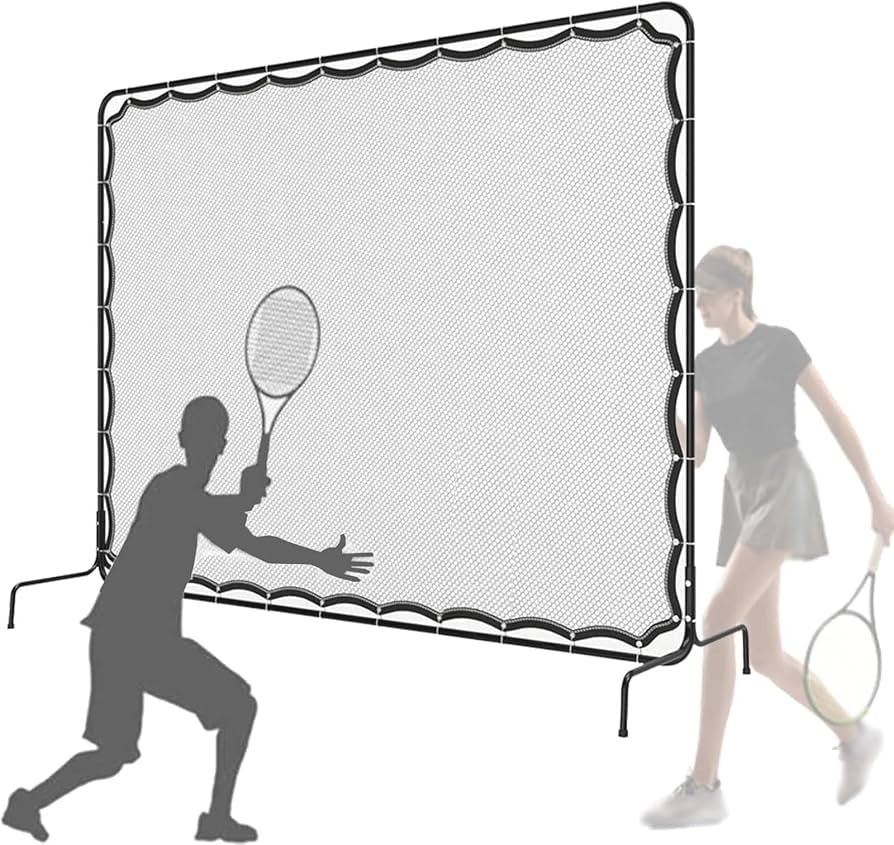
An unexpected return gives you something to diagnose. Check the wall contact height, direction, ground bounce, and your body position for clues.
| What happens | What to check | One change to try |
|---|---|---|
| The rebound is too high | Where the ball hits the wall and how hard you hit it | Aim at a different part of the wall or ease off |
| The ball drops near your feet | Where it hits the wall, where it bounces, and where you wait | Use a simpler feed and give yourself more time to prepare |
| The ball veers sideways | Your hitting direction and your position relative to the return | Aim toward a broad central area and move into the new path |
| The return arrives too quickly | Whether your preparation and balance survive the rebound | Allow a second bounce or catch and reset |
| The stroke turns into a slap | Your preparation, your effort, and whether you still control the drill | Cut the sequence down to one deliberate hit |
A player's better second session still produced awkward sideways rebounds:
It’s only my second time practicing against a wall, and I can already see some improvement. Compared to last time, I stopped jumping when I hit the ball, and I have much better control now. A lot of you suggested that I start by hitting the ball softly while standing close to the wall, so that’s exactly how I started this session. Thanks for the advice bc it really helped! I think I’ve improved a lot since my first practice, but now I’m running into a new problem. Instead of coming straight back to me, the ball keeps bouncing off to the sides, and I’m not sure what I’m doing wrong or how to control it. Any tips? Overall, though, I feel like this session was much better than the last one.
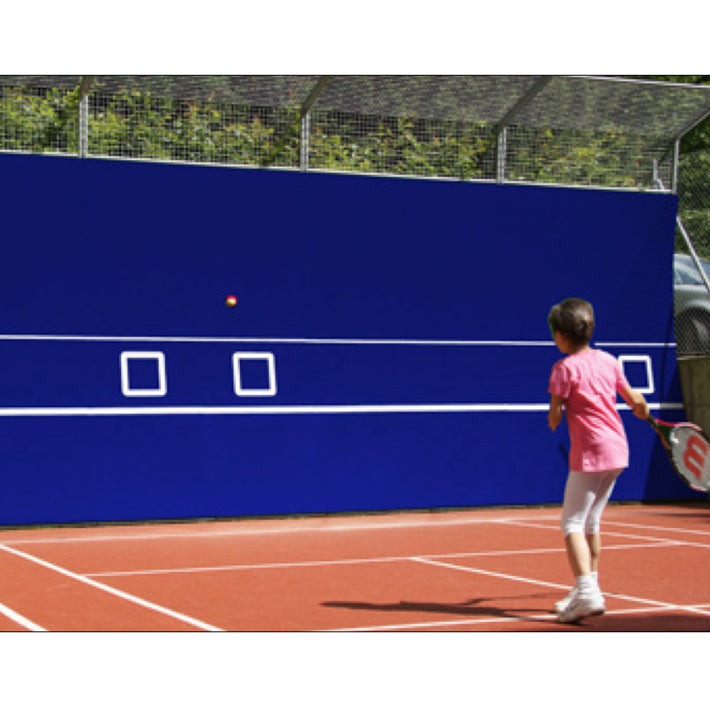
For a persistent error, note where the ball hits the wall, which way it comes back, and the one thing you changed. Then compare the next attempt under similar conditions. If the cause stays unclear, a coach or video review can separate your contact mechanics from the wall's response.
Know When to Reset and What Counts as Progress
Keeping a wall rally going is satisfying, but a streak count can hide how often you lose the swing or balance you meant to rehearse. Define success for each attempt before you start tracking.
In a personal practice log, count a clean rep when the ball reaches your intended wall area, the rebound is manageable, and you recover with balance for the next movement. Record the drill and bounce mode, the number of attempts, the number of clean attempts, and the main error you noticed. It's your own measure, not an official tennis rating with a passing threshold.
Compute the clean-rep rate as clean attempts ÷ total attempts × 100. For a hypothetical set of ten forehands aimed at a broad wall zone with two allowed bounces, six clean contacts give 6 ÷ 10 × 100 = 60%.
Compare that rate across sessions with similar targets, bounce rules, and effort.
A compact line in a notebook is enough: Forehand; two bounces; 10 attempts; 6 clean; 60%; main error: late recovery.
What a Wall Cannot Tell You About Your Shots
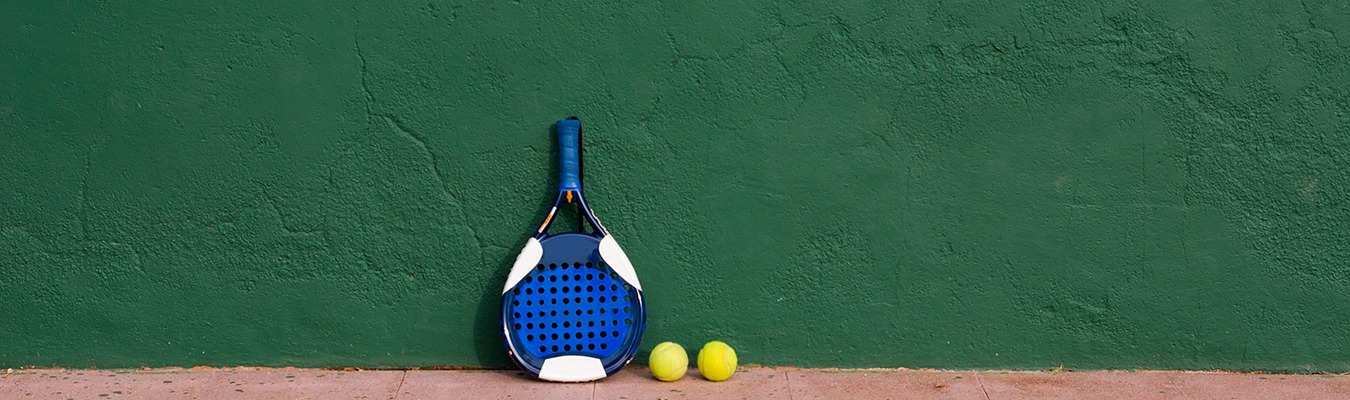
A wall tells you where the ball hit its surface and how it rebounded. On a tennis court, a typical groundstroke travels over the net and lands inside the opponent's court.
The ITF tennis glossary gives the regulation net's center height as 3 ft (0.914 m). A wall mark at that height can help with aiming, but it can't tell you how deep the ball would land. A wall also can't reproduce the changing speed, spin, direction, and timing of an opponent's shot.
Take one groundstroke you've rehearsed to a real court and hit it with a partner or coach. Check that your preparation looks the same, the ball clears the net, and it lands inside your intended court area. If the shot keeps falling short or long, use that to adjust the wall task or the stroke itself.