
Build your forehand on a grip you can repeat, an early body turn, contact slightly ahead on your hitting side, and a balanced finish. If the ball arrives too high, deep, or fast for that contact, change your position. At your next practice, compare two sets of similar easy feeds while changing one cue you can see.
How to Hit a Tennis Forehand: The Basic Sequence
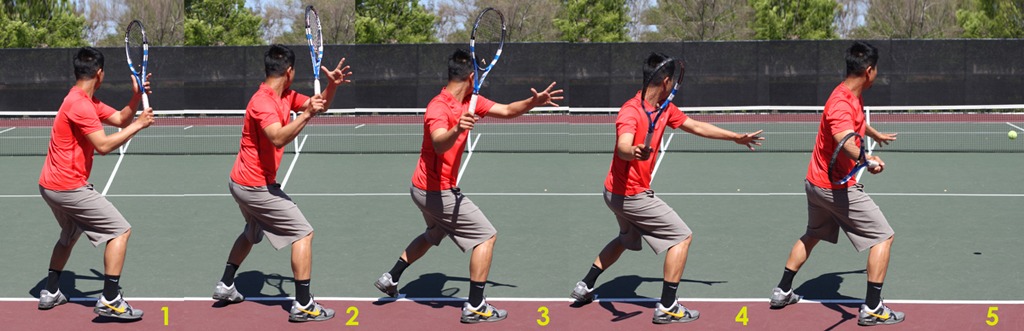
A forehand is a groundstroke you hit after the ball bounces, on your dominant-hand side. If you're right-handed, an easy forehand comes to your right. Left-handers mirror everything.
Start with slow, predictable feeds. Rally pace adds decisions about speed, bounce, and direction before the stroke feels familiar.
- Get ready. Face the incoming ball with the racket in front, knees bent, and weight balanced so you can move.
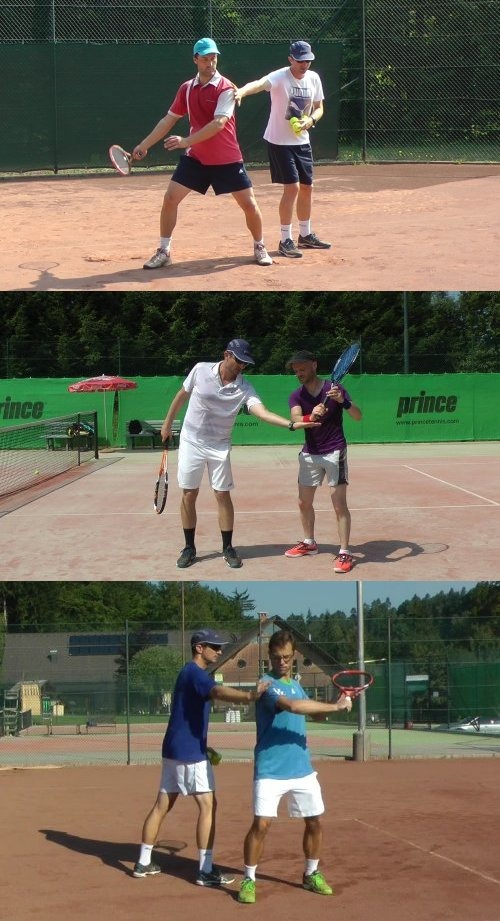
- Recognize and turn. As soon as you see a forehand coming, turn your body toward the hitting side. Your nondominant hand helps guide the racket.
- Make room. Shift your feet so the ball arrives where you can swing, without crowding your torso or forcing a long reach.
- Meet the ball. On an easy feed, hit it slightly ahead of your body and on your hitting side.
- Swing through. Move the racket forward through the contact zone with a modest upward path.
- Finish and recover. Let the racket carry on, stay balanced, and get ready for the next shot.
Walk through the sequence slowly once without a ball. The LTA's beginner forehand guide teaches the same progression from preparation to recovery.
Start with a Forehand Grip You Can Repeat
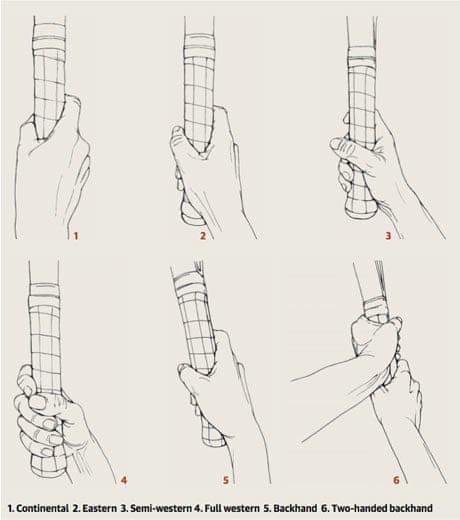
Hold the racket in a position you can reproduce between shots. A good first test is the handshake hold from beginner coaching: picture greeting someone with the handle, then settle it in your hand without squeezing harder than needed.
Eastern and semi-Western are established forehand grips. In each, your hand sits at a different angle around the handle, which changes how the racket face and contact point feel. Switching takes practice before contact feels natural again, even when a coach recommends it.
| Starting situation | What matters | Next decision |
|---|---|---|
| Current grip feels comfortable | You present the strings the same way on easy contact | Keep it while you learn the stroke |
| Learning an Eastern grip | A repeatable hand position and a contact point you can manage | Rehearse the same hold before each easy feed |
| Trying a semi-Western grip | Contact location and racket-face feel may change | Give it time, then compare how contact feels |
Grip orientation is where your hand sits around the handle. Grip size is the handle's circumference. To compare Eastern, semi-Western, and Western forehand grips in detail, treat that as a separate choice from learning this basic stroke.
Prepare Early with a Unit Turn
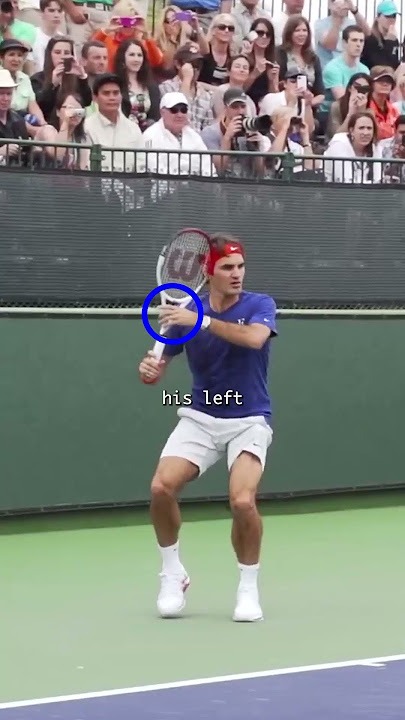
Preparation starts the moment you see which side the ball is heading to. Turn your torso and set the racket early, and you have time to move into position.
As the ball comes to your forehand side, turn your shoulders and body while your nondominant hand manages the racket. A big backswing adds distance for the racket to travel and makes timing harder. The USTA's unit-turn instruction shows how the body and nondominant hand work together before the forward swing.
Picture two right-handed players. One starts turning as soon as the feed is recognizable. The other waits for the bounce to pull the racket back. The first is organized sooner, even if the second player's racket travels farther behind the body.
Film an easy feed from the side. Check when your shoulders and racket start moving compared with when the ball reaches your hitting side. Use the bounce as a reference point. Timing shifts with ball speed, direction, and distance.
Make Space and Find a Comfortable Contact Point
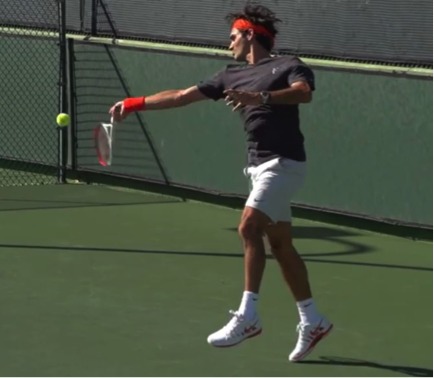
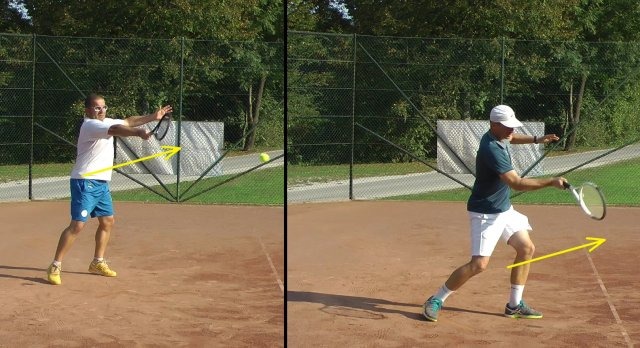
The racket needs room to travel freely through the ball. If you're crowded, your hitting arm gets trapped against your torso. If you stretch too far, balanced contact is hard.
On an easy beginner feed, the ball meets the strings slightly ahead of your torso and toward your hitting side. Small foot adjustments create that space. For a full movement program, see the tennis footwork guide. Here, you only need a workable distance from the bounce.
A ball rising toward shoulder height changes the task. Move sooner, choose a different contact position, or treat the higher ball as its own shot. A commenter in r/10s made that distinction while discussing an unfamiliar forehand:
I can’t fully tell if this is a symptom or a cause but a few of these forehands you really let the ball play you. Meaning, the ball gets up to your shoulder or head height. There are situations that this is ok but you don’t have the skill yet to handle that. I think you’ll need to fight to get the contact point closer to hip level as you work on your stroke.
That advice applies to players learning an easier contact height. Deliberate high-ball forehands call for other choices. On a few easy feeds, check whether you have room to swing and whether the ball reaches your hitting side without a last-second reach.
Swing Through the Ball, Finish Balanced, and Recover
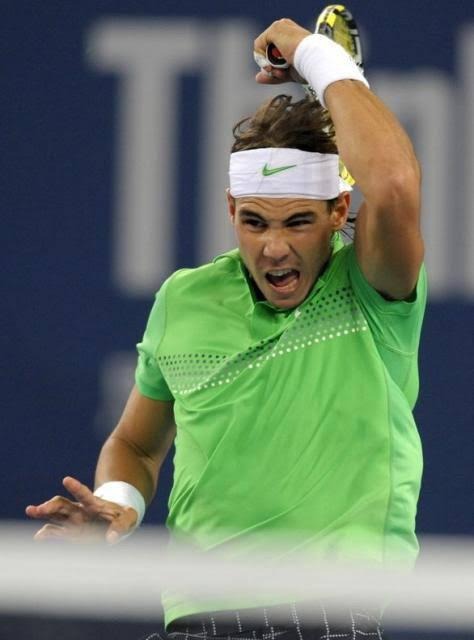
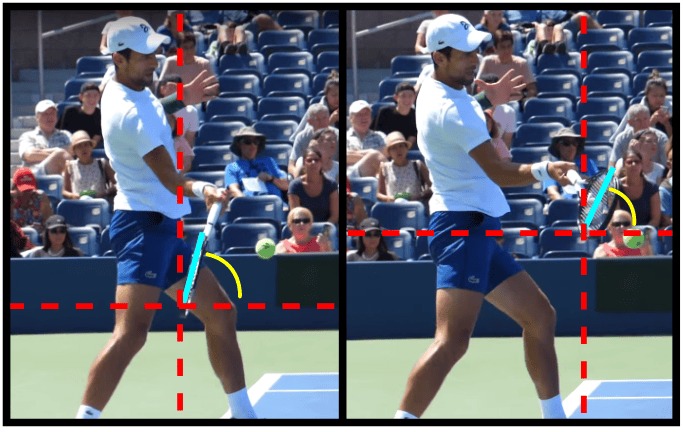
From a good contact position, send the racket forward through the contact zone with an upward path. The path changes with the incoming ball and the shot you want. A 2013 forehand biomechanics review describes how pelvis, trunk, and upper-limb movement all add to racket speed, with variation among strokes and players.
Check two things. Does the racket move through the contact zone? Do you finish balanced enough to recover? For spin, see the tennis topspin guide.
How to Fix a Forehand That Keeps Missing
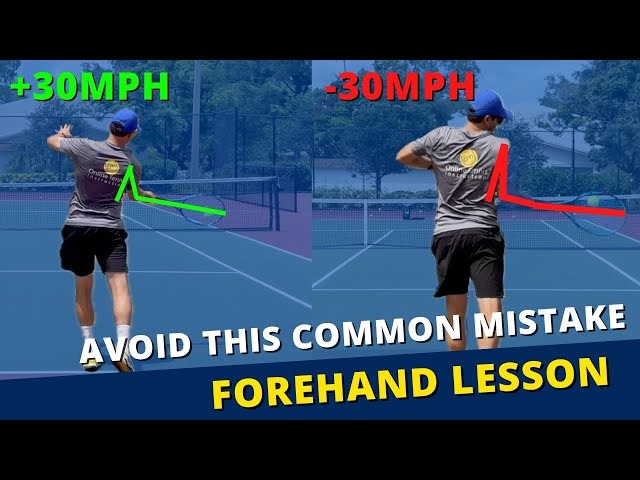
A ball in the net, a shot that sails long, or a framed contact tells you what happened, not why. To find the why, look at how the ball arrives and where you stand at contact. Similar misses can come from different mixes of preparation, spacing, racket-face angle, and swing direction.
| Observed miss | Possible contributors | What to check, and one change to try |
|---|---|---|
| Ball hits the net | Contact height, racket-face angle, timing, or swing direction | Watch whether the racket face angle changes between similar contacts. On the next similar feed, work only on repeating the same face angle through contact. |
| Ball travels long | Racket-face angle, contact timing, incoming pace, or trajectory | Compare whether the face and contact point change from feed to feed. On another easy feed, repeat the same contact location. |
| Ball meets the frame | Crowding, reaching, late preparation, or a variable bounce | Note how far the ball is from your body and whether it hit the frame or the strings. On a similar easy feed, change only your distance with one small foot adjustment and see where the ball lands on the racket. |
| Stroke feels late or jammed | Late recognition, incomplete preparation, or poor spacing | Check whether your shoulders start turning only when the ball is already near your body. Start organizing your body and racket as soon as you see the forehand. |
| Wrist looks fixed or awkward | Grip tension, spacing, timing, or a single misleading video frame | Watch the stroke from preparation through contact, with your racket face and body in view. Test only the timing of your unit turn on a similar feed. Keep the wrist relaxed and don't force pronation. |
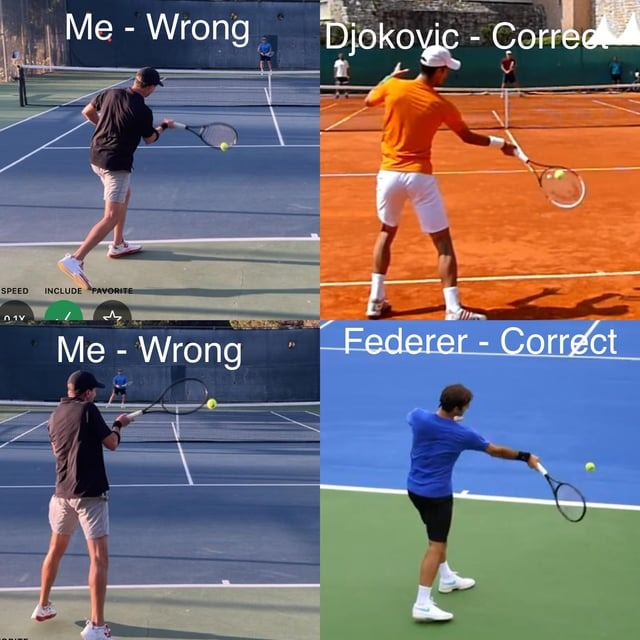
One r/10s poster bought SwingVision in a Thanksgiving sale to inspect their strokes and still found their forehand difficult to interpret.
I feel like I developed the wrong habit of hitting my forehands with a “fixed” wrist. I try to do the full motion of finishing with my elbow out but that doesn’t help my wrist. I have tried looking on YouTube for tutorials but everyone just says to keep your wrist loose and don’t force pronation. When I look at my own forehand I see a weird forehand shape in comparison to the videos and I feel that I go vertical with my arm and fixed wrist to create spin (if that makes any sense). I am losing my mind because I can’t really pinpoint what it is that I’m doing wrong. Should I force the wrist and forearm to pronate so that the head of the racket finishes first?
If the same miss survives these checks, ask a qualified coach to watch your whole stroke on court.
A Simple Forehand Practice Drill That Shows What Changed
Repeatable feeds show you whether a small adjustment changes your forehand. If you're still learning to meet the strings, the USTA's Instant Rally forehand activity uses a slower, lower-compression red-dot ball and gentle racket touches as a starting point.
Once you can handle a soft feed, try this comparison:
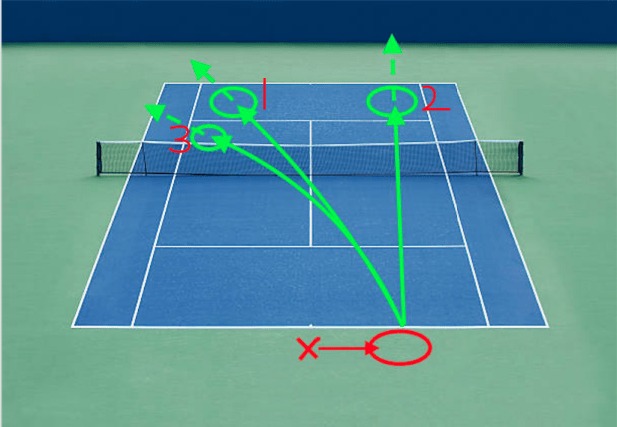
- Set one consistent feed. Ask a partner for easy balls to the same side, or self-feed. Pick a broad target area on the court.
- Hit a baseline set. Hit about ten feeds. Count clean contacts, balls in the target area, and balanced finishes.
- Change one cue. Use the adjustment that matches your most frequent miss.
- Repeat. Keep the target and incoming ball about the same, and count the same three things over another ten feeds.
- Compare. See whether the change helped before you add pace or movement.
Count a clean contact when the ball hits the strings with no obvious frame hit. Log whether the ball lands in the target area as a separate result.
| Observation | First set | Second set |
|---|---|---|
| Feed type and typical bounce | Record condition | Record comparable condition |
| Broad intended target | Record area | Keep the same area |
| Single cue under test | Baseline, no new cue | Record one cue |
| Clean contacts | Count out of about 10 | Count out of about 10 |
| Balls landing in the intended area | Count out of about 10 | Count out of about 10 |
| Balanced recoveries | Count out of about 10 | Count out of about 10 |
A higher count on similar feeds tells you the change worked in that setup. Ten balls is enough to spot a trend, not a formal test. A live rally adds unpredictable pace, direction, and bounce. When this exercise feels easy, the beginner tennis drills page offers other repetition formats.
When the Easy-Forehand Rules Need to Change
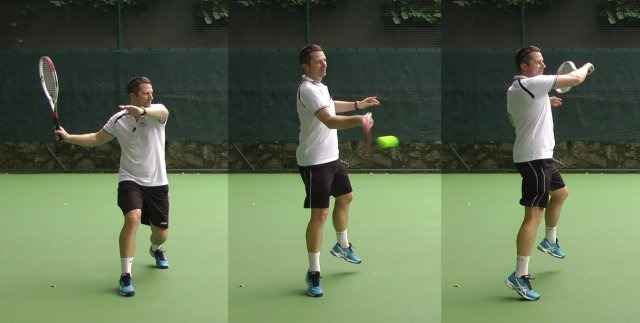
The beginner stroke is easiest to learn when a feed gives you time to set up. A deep ball that climbs above your comfortable contact height asks for earlier movement, a different contact choice, or a safer reply. A faster or wider ball takes away time and space.
If pain or a physical limitation makes the stroke unsafe for you, get guidance from a qualified professional. An introductory forehand doesn't need extreme professional preparation or finish shapes.