
For recreational players, choose the serve you can aim and repeat: flat for controlled pace, slice for sideways movement, or kick for a higher, awkward bounce when you can produce it reliably. If that choice breaks down under match pressure, use your more dependable serve and compare the results with a short placement-and-bounce check.
Flat vs. Slice vs. Kick Serves: The Differences at a Glance
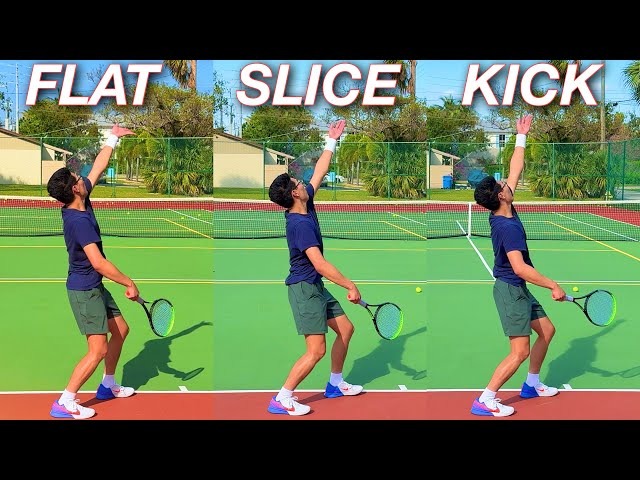
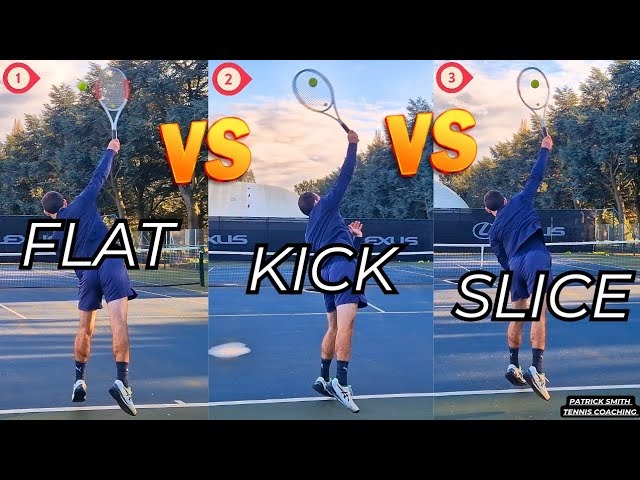
A flat serve travels straight and puts pace first. A slice adds sideways movement that can stretch the returner wide or crowd the body. A kick uses spin to shape the flight and produces a higher, often sideways bounce. What separates them is the problem each one hands the returner.
| Feature | Flat serve | Slice serve | Kick serve |
|---|---|---|---|
| Primary aim | Controlled pace | Lateral movement | Higher, awkward bounce |
| Spin profile | Little spin | Strong sidespin | Topspin and sidespin |
| Flight | Direct | Curves sideways | Arcs and dips into the box |
| After the bounce | Continues directly | Moves sideways | Jumps higher and sideways |
| Returner's difficulty | Reaction time and placement | Reach, body position and timing | Awkward contact height and timing |
| Typical tradeoff | Extra pace can cost accuracy | A weak slice sits up | An effective kick takes coordination |
| Useful when | Pace and target are repeatable | Side movement serves a target | Bounce and placement are dependable |
Choose a serve for the return you want to create. A fast ball at the returner's body, a slice that pulls them wide and a kick that reaches an awkward contact height all cause different problems, even when they land in the same service box. The LTA's guide to serve spins covers the main characteristics of all three.
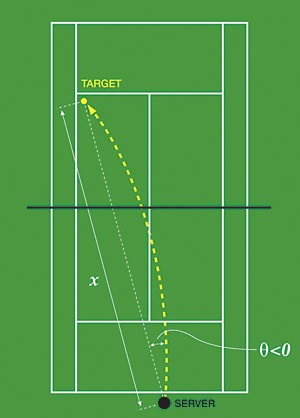
A right-handed server can slice out wide from the deuce court to pull the returner toward the sideline. A slice toward the body does something else: it crowds the returner's hitting space. For a left-handed server, the wide slice goes to the ad court. The serve works when you control the target and the movement.
Some lists name four types of serve because they include the underarm serve. An underarm serve is legal when it meets the ordinary service requirements. That category describes how you hit the serve, while flat, slice and kick describe the spin and flight of overhead serves.
What Changes: Spin, Flight, and Bounce
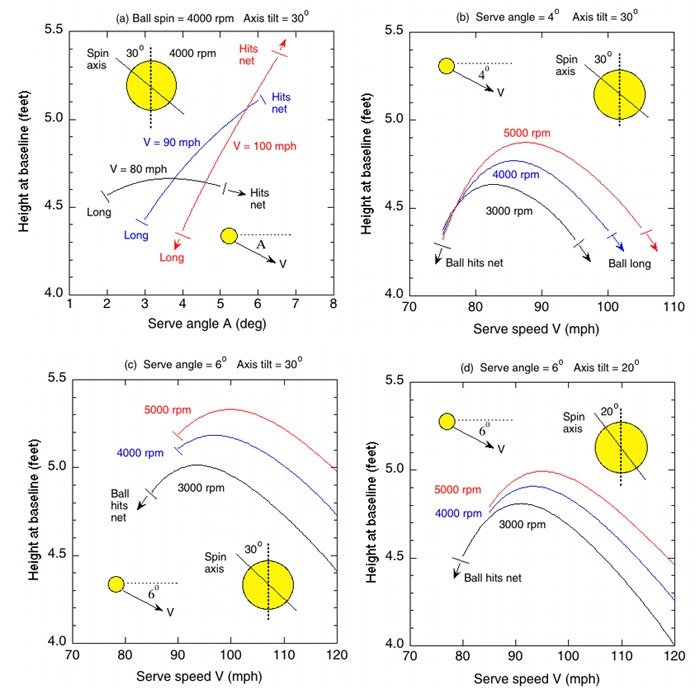
Spin influences the ball's path through the air and what happens when it meets the court. Ball speed, launch angle and playing surface also affect the result. A flat serve still rotates. The term just means little spin. Slice emphasizes the sideways component. Kick adds topspin, which helps the ball dip and bounce upward, usually combined with sidespin.
In physical terms, the ball rotates about a spin axis that can tilt. Tennis Warehouse University's kick-serve analysis explains why an effective kick carries substantial sideways spin alongside topspin.
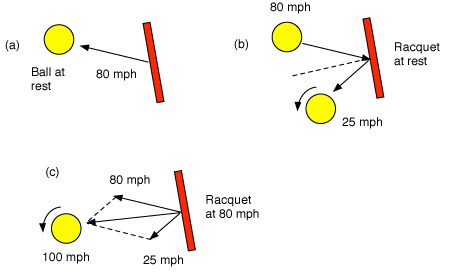
Racket movement is a separate piece of the explanation. In a 2011 motion-capture study of seven male NCAA Division I players, researchers measured how the directions of racket velocity differed across flat, slice and kick serves. In that group, the kick showed more lateral and less forward racket velocity than the flat serve.
How to Recognize a Kick Serve by Its Bounce
A kick serve combines topspin, which gives a higher, sharply rising bounce, with a sideways component that makes the bounce harder to read. The ball climbs toward an uncomfortable contact height and moves across the returner's preferred hitting position. Slice also moves sideways, so the giveaway is the kick's greater rise after the bounce under similar conditions.
That bounce doesn't need to look like a pro's. One recreational player described the expectation:
But I have yet to see those massive kick serves that have you reaching above your head on a backhand. Or massive kick serves that float in and twist out that have your head scratching how did that happen. Topspin serves are predictable and don’t kick violently. Do you see this more at 4.5? Or is this more of a mythical serve that very few players perfect?
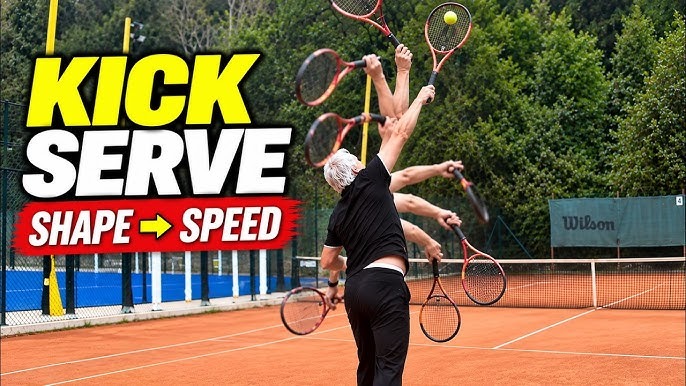
A ball that climbs above the returner's comfortable contact height disrupts timing without reaching head height. The contact zone shifts upward and sideways.
Watch from the receiving end. Note the ball's direction before landing, its rise afterward and any sideways shift in your contact point.
Which Serve Should You Use as a First or Second Serve?
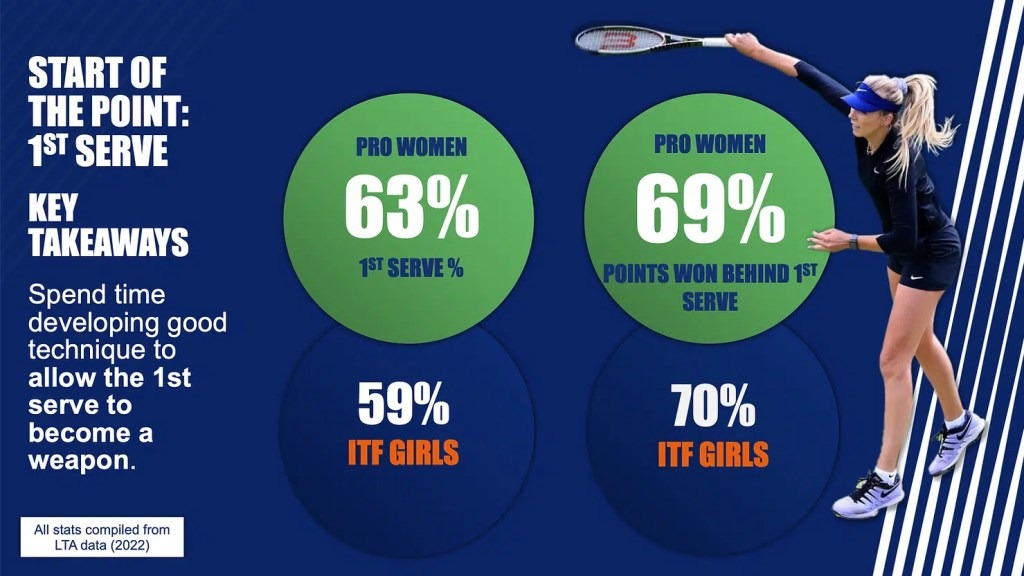
First and second serve name the order of attempts. The rules permit any properly executed flat, slice or kick on either attempt. The ITF Rules of Tennis, including Rules 16 through 20, set out how service and faults work. Two successive faults cost the server the point.
| Situation | What matters | Choice |
|---|---|---|
| First attempt, reliable placement | Whether pace or movement creates a useful return | A controlled flat, slice or kick |
| Second attempt after a fault | Getting the ball in with a useful target | The most repeatable practiced serve |
| Pressure point | Whether the serve stays under control | The serve you trust in that moment |
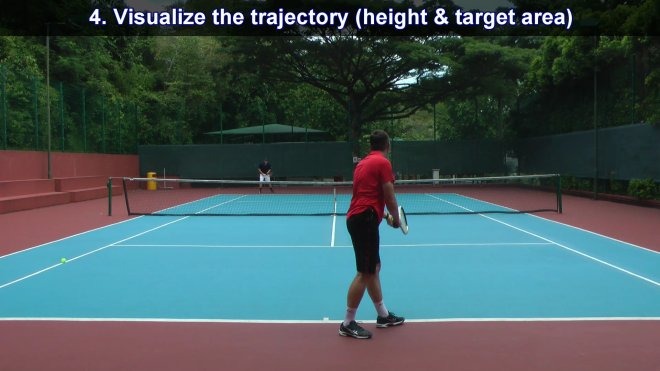
On the second attempt, another fault costs you the point. A spin serve helps only if you can land it consistently enough to start the point.
A post on r/10s shows the strain of that choice:
How did you guys develop a trustfully and consistent second serve? If my first one goes well it is good, bit flat one on, sometimes on T line or kick. Second serve I'm like playing badminton honestly... And even then I manage to make lots of double faults. Probably need to develop a good slice serve... What's the key here? I also tried to second serve my first one, which made my first serve more consistent and better. Second serve is still hell for me. Because of this it's killing me mentally as well. 'Please don't hit double fault' boom double fault. I need to develop a second serve where I can keep confident as well.....
The dilemma is familiar: several ways to hit the ball, but no serve the player trusts after a first fault. For one player a dependable slice is the answer, for another a controlled kick. For the wider problem of repeatability, see developing a reliable second serve.
The Continental Grip, Toss, and Swing Path: What Changes
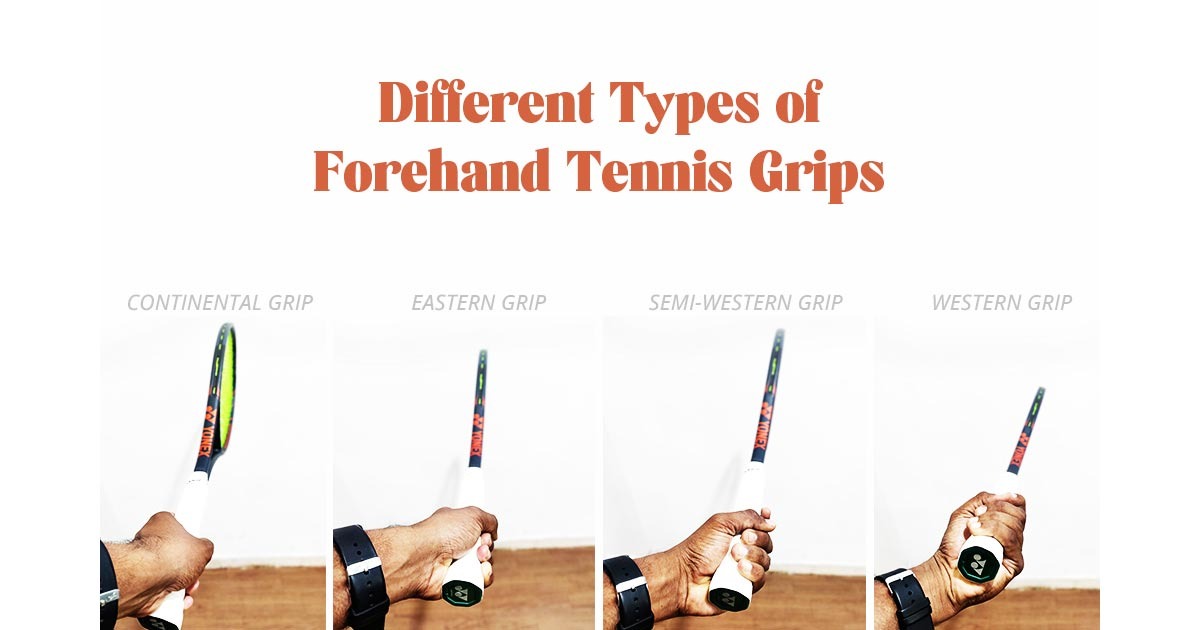
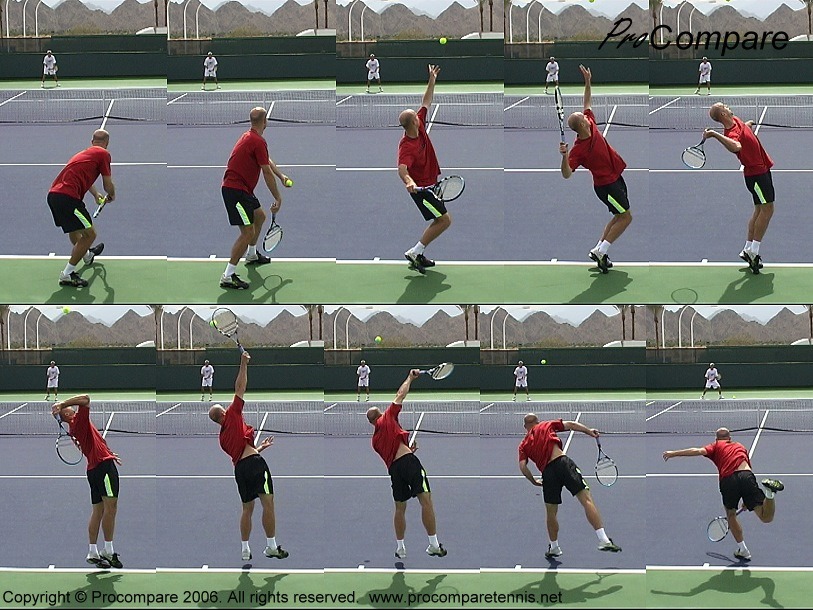
Flat, slice and kick share the same overhead service motion. The continental grip is the usual starting point because the racket can reach the ball along different paths without a grip change for each serve.
The toss sets where the ball is available for contact. On a flat serve, the racket moves more directly through the back of the ball. On a slice, the path adds a brush across the side. On a kick, the brush includes upward and sideways components. These are relative coaching cues, and contact varies with your motion, serving hand and target.
Pronation is rotation of the forearm. Internal shoulder rotation happens at the shoulder joint. Both contribute to racket orientation and speed, and each plays its own role. A deliberate wrist snap is no substitute for learning the coordinated motion.
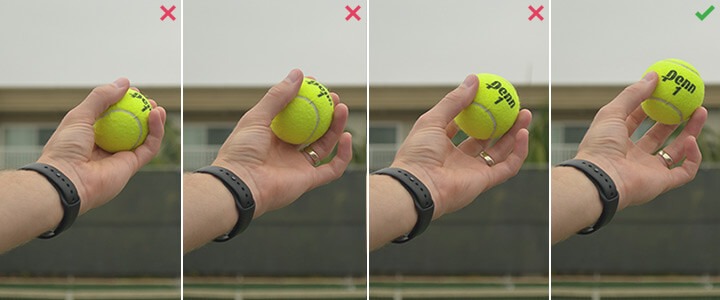
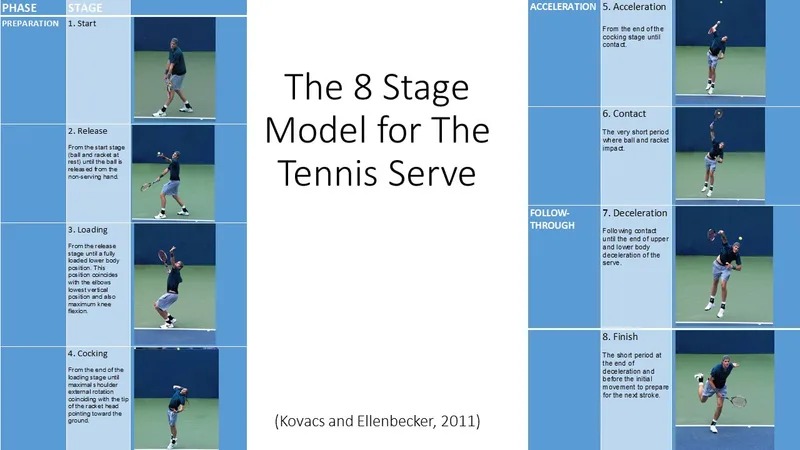
If you are still building that coordination, the full sequence is in the basic tennis serve guide. This section covers only how one familiar motion produces different flights and bounces.
Do You Need the Same Toss for Flat, Slice, and Kick?
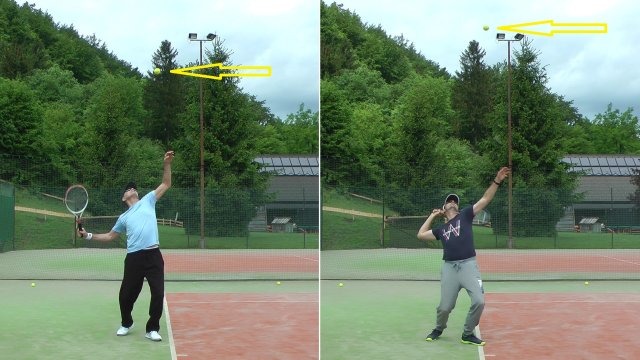
A similar-looking toss hides information from the returner, as long as you can still produce each serve well. That refinement is for players who already own more than one controllable serve.
Many players admire servers who disguise their intentions. One original question on r/10s puts it this way:
Players like Roger Federer and others who could disguise their serve well could hit flat, spin, and kick serves with the same toss, or basically the same toss to the point where it’s extremely hard or impossible to tell what type of serve they will hit. How can you learn to do this?
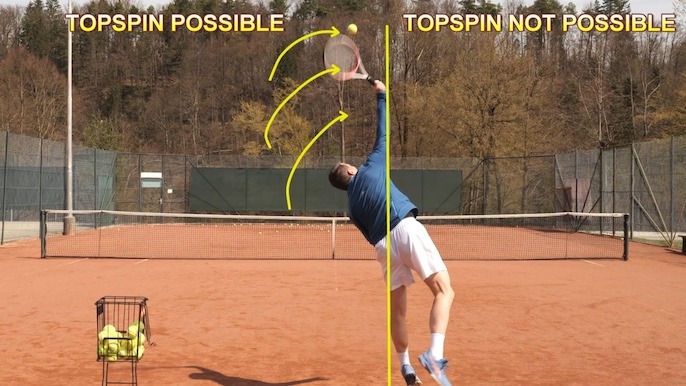
The mention of a famous player's technique is the poster's impression. The tactical question is whether the returner can read the differences before contact.
In 2015, Carboch and Süss filmed slice and kick serves by ten right-handed male professional players from the receiver's viewpoint. They found similar release positions, while the kick toss peaked farther toward the receiver's right. Racket-ball contact was about 30 cm farther right for kick than slice from that viewpoint. The sample is small, and each player's contact position depends on their motion.
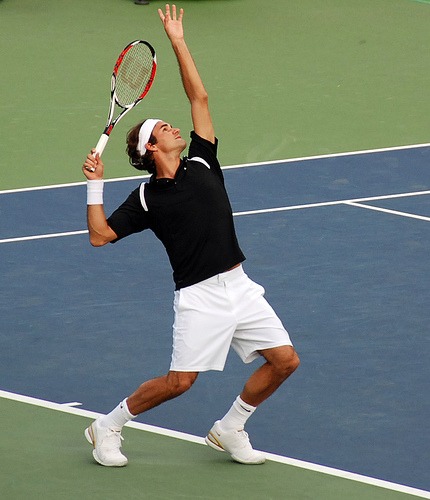
Release, highest toss point and contact are three different moments. Two serves can start from similar-looking releases and diverge later in the motion, so a close-watching returner may find information there.
If your flat, slice and kick are all reliable, a more similar presentation is worth exploring. The test is whether disguising the toss keeps your placement and contact quality. If it makes a familiar serve erratic, the benefit is gone.
Which Serve Should a Recreational Player Learn Next?
Choose the next serve by the outcome missing from your game. A more complicated serve costs training time, and that time is wasted if your current serve still struggles to find the service box.
- If placement breaks down: Build a repeatable basic motion and target before adding more spins.
- If you aim reliably but want lateral movement: Develop a slice that reaches a deliberate wide or body target.
- If you already control spin and want a different bounce: Develop a kick that climbs to an awkward contact height while staying inside the box.
When the Serve You Hit Is Not the Serve You Intended
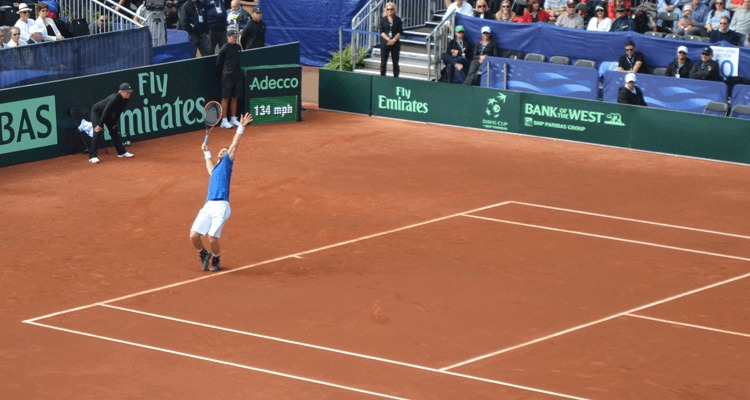
If the ball curves sideways when you meant to hit a flat serve, start by comparing your target with what the ball did. Toss, contact, racket path, face orientation and target can all contribute, so the curve alone points to no single fault. Film one comfortable serve from a clear angle, with permission from anyone in frame. If the mismatch persists, review the footage with a coach or the ball-toss guide.
A Short Court Test to Compare Your Serve Options
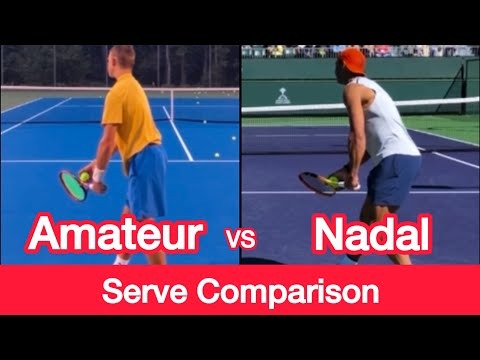
A short test on court makes the choice easier. Compare a serve you already trust with one alternative you have practiced, first for basic control, then for the ball behavior it is meant to produce.
- Set a common accuracy target. Pick a generous area in the correct service box. Hit ten comfortable serves of each type from the same side, with comparable balls and similar effort.
- Record control. Mark each serve in or out and whether it reached the target. This compares your basic ability to direct the ball.
- Record the intended effect separately. Note whether the slice moved sideways usefully or the kick bounced higher as planned. Judge a wide or body target as its own result, since a serve may be built for a different receiving position.
- Compare what you can repeat. Look at landing, placement and movement together. Repeat the test on another day before trusting a small difference.
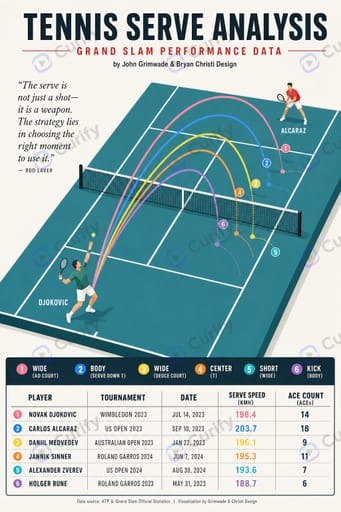
Ten serves per option is a small sample, so treat a close result as a tie.
Suppose the slice repeatedly reaches the target while a new kick produces one awkward bounce among several misses. Use the slice in ordinary points and keep the kick as a practice project. A more reliable kick would change that decision. You will find more exercises in serve drills for control and placement.
Where the Comparison Stops: Skill, Conditions, and Safety
The same serve causes different problems for different returners. Court surface affects the bounce, and speed, placement and the opponent's timing decide whether a higher ball or sideways movement bothers them.
Unfamiliar spin takes coordination. Forced backbends, strained contact positions and repeated painful attempts will not produce a controllable serve.
A 2026 narrative review by Martin and colleagues examined serve biomechanics and loading in relation to overuse injuries. The evidence does not establish an injury-risk ranking across flat, slice and kick serves. Stop any motion that causes pain, and get a qualified assessment if discomfort persists.