
For your first reliable overhand serve, use a Continental grip, stand sideways behind the baseline, toss the ball where you can reach it, and make a smooth abbreviated swing toward the diagonally opposite service box. Get a legal serve into play before you add speed or spin. If one part keeps breaking down, fix that part first. Persistent pain or a physical limitation calls for individualized help.
Serving feels different from everything else on a tennis court. You start the point yourself, choose where the ball goes, and coordinate a toss with a swing, with no incoming ball to react to. A player who rallies well can still struggle to get a serve in.
Learn to put the parts together first. Once you can see where a serve starts to go wrong, practice gets easier to organize.
Where to Stand and Where the Serve Must Go
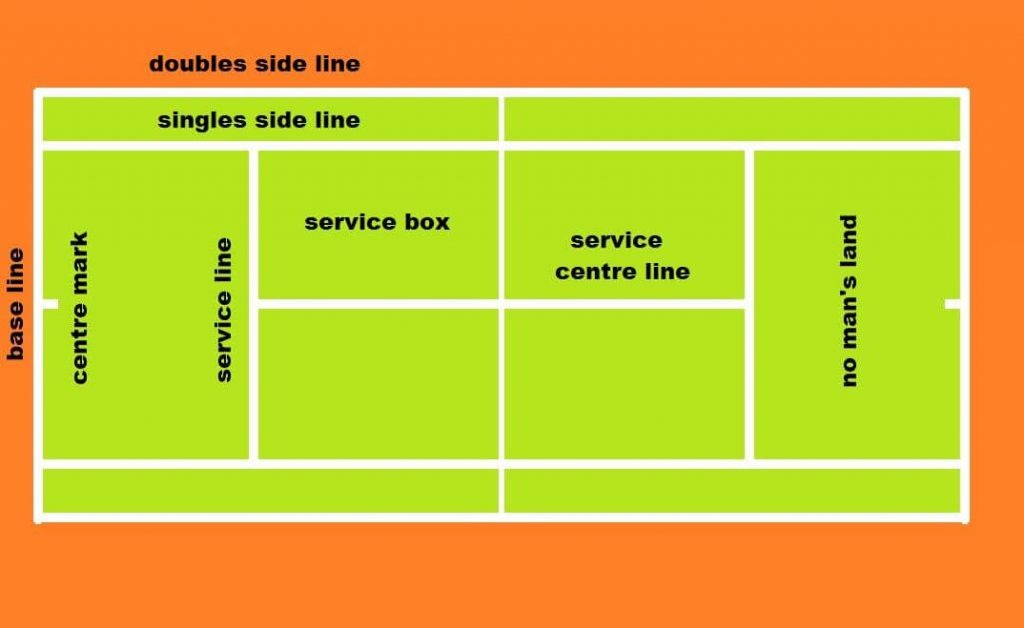
A legal serve travels from behind your baseline into the diagonally opposite service box. That box is the smaller court across the net, bounded by its service lines. A ball that touches one of those lines counts as in.
At the start of a standard game, the server stands behind the baseline on the right side of the center mark, the deuce side. The next point starts from the left, the ad side. Keep alternating sides after each point.
Stand behind the correct half of the baseline and pick out the service box diagonally opposite. Your feet must stay within the permitted serving area during the motion. Touching the baseline or stepping into the court too early is a foot fault, even if the ball lands in the correct box.
Under the ordinary serving rules, a fault on the first attempt leaves a second attempt. Two consecutive service faults lose the point. A service let is treated separately and, under the standard rules, does not use up that service attempt. Approved competition formats can use different let procedures. The ITF Rules of Tennis 2026 set out these distinctions.
The ITF rules also permit underhand serving. This guide teaches the conventional overhand motion used in beginner instruction.
Find and Keep a Continental Serving Grip
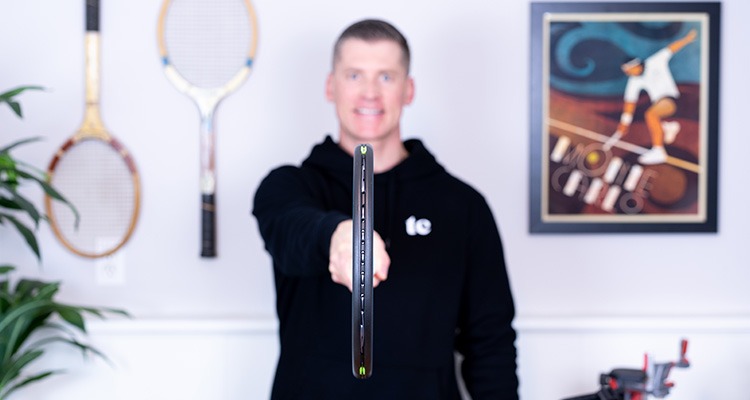
The Continental grip is the standard starting hold for an overhand serve. It sets the racket up for a throwing-style swing and lets the face turn toward the ball as the motion develops.
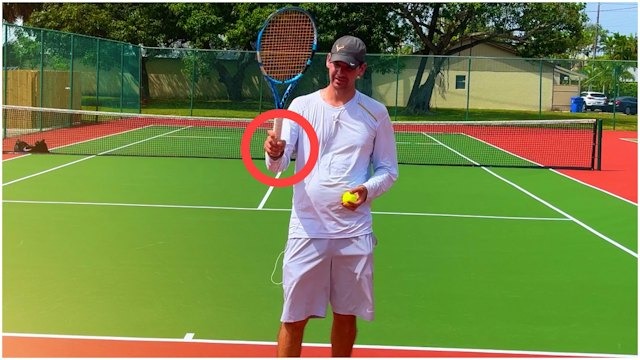
Take the handle as though you were shaking hands with it. Early in a slow serving rehearsal, the narrow edge of the racket should be more visible from the direction of the swing. The face turns toward the ball as you move into contact. The USTA Continental-grip guide illustrates this orientation.
Many beginners point the strings at the sky through the whole racket preparation. The racket then looks like a frying pan or a waiter's tray. It feels easier because you see an open racket face early.
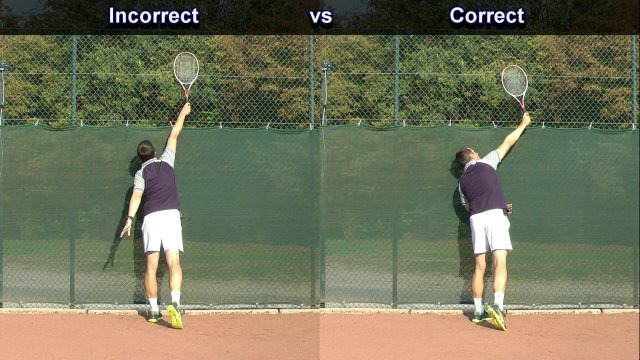
A subtler version of the same problem: you start with a Continental grip, then rotate your hand around the handle while taking the racket back. The grip you begin with is no longer the grip you swing with.
Compare your hand at setup with its position during a slow shadow swing. Pause before the imaginary contact point and look for any rotation around the handle. Keep the grip the same through the rehearsal before you add anything else. A new grip can feel awkward even when it is the right one.
Use a Balanced, Side-On Starting Position
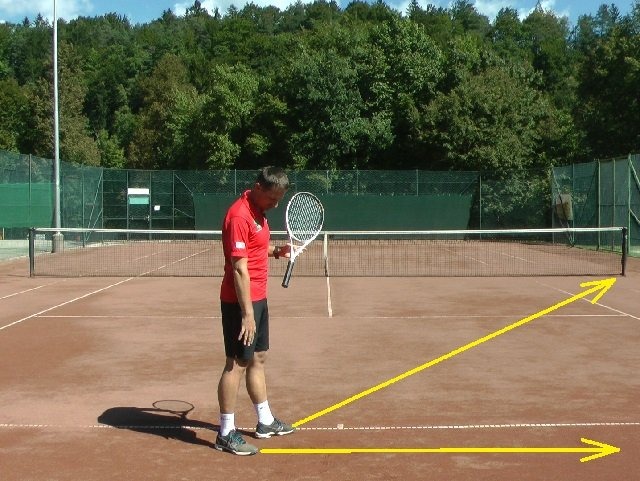
A side-on stance gives the racket room to travel toward the ball while you stay balanced. Start partly turned away from the net, eyes on the diagonal service box, with enough space to swing without a stumble. Freeze in that position for a moment before you toss, and check your balance and swing space. Your first controlled serve needs no exaggerated back arch and no professional-style jump.
Toss the Ball Where You Can Reach It
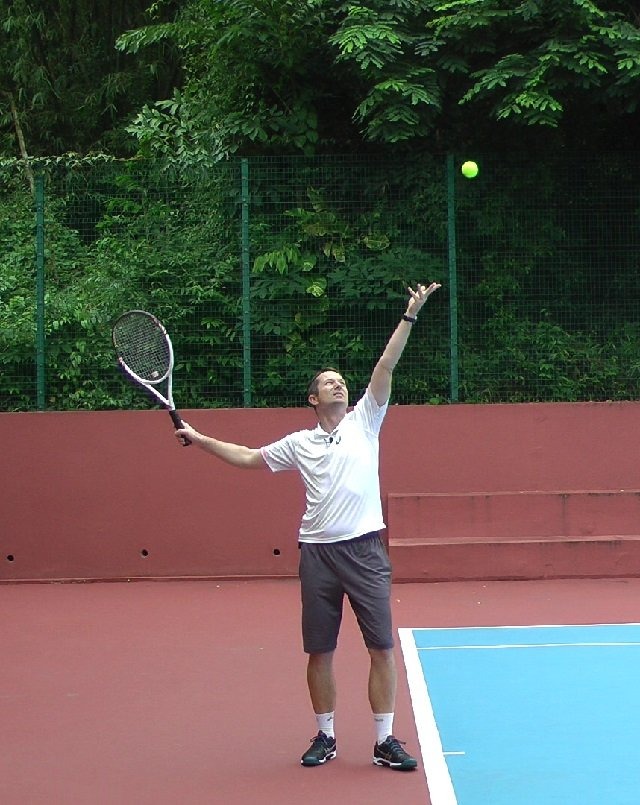
A good toss puts the ball where your racket can reach it while you stay balanced. When the ball drifts behind you, travels too far sideways or forces a lunge, the swing has to make up for it.
Hold the ball loosely in your tossing hand and lift the arm in a controlled motion. Let the ball leave the hand without a wrist flick. The USTA ball-toss instruction describes the release and a way to rehearse it.
Watch where the ball comes down relative to a contact position you can reach. Players differ in height, reach and serving motion, so no single clock-face direction or toss height fits everyone.
What happens when the toss goes wrong?
You can catch a tossed ball or let it bounce without swinging. Under ITF Rule 19, that is not a service fault. If you swing and miss the ball, the attempt can count as a fault.
That gives you a reset. Make a few tosses without hitting, and watch whether the ball rises into a reachable area. Catch or let a bad toss fall. Then try a toss-and-hit from the same position.
One recreational player described years of toss problems and conflicting advice:
I had this same problem. Horribly erratic toss that got worse when I got tight/nervous, sometimes would have to toss 3-5 times per serve before just settling for hitting a bad one and getting a weak serve out of it. Literally tried everything — changed my motion 100 times, ice cream cone thing, throwing from fingertips, throwing from palm. And everyone gave all kinds of input and advice that just ended up messing me up FOR YEARS. What finally fixed it: The realization that everything needs to be fluid and relaxed. From the toss, to the racquet motion and even when you make contact, if there’s even a hint of you ‘trying’ to do one thing or another, like make your arm move a certain way or do something you have to think about, it’s not going to work or else it won’t be repeatable. That’s pretty much it — stop ‘trying’ to serve and just serve.
Swing From a Simple Trophy Start Through Contact
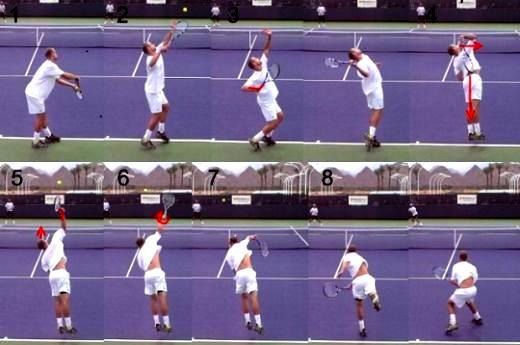
An abbreviated trophy start lets you practice coordinating the toss with the swing before you add a full backswing. It removes some moving parts from an action that already demands precise timing.
Begin with the racket raised in a preparation position, the serving arm bent and the racket ready to travel upward. The non-serving arm lifts and releases the ball. As the ball rises, the racket arm starts its throwing-style movement toward a contact point you can reach without losing balance.
The racket arm strikes the ball before it bounces and continues into a natural follow-through.
The USTA beginner serve progression introduces a throwing-related exercise and an abbreviated movement before moving toward a fuller service motion.
Feel the movement before adding pace
Think of the arm action you use to throw a ball at a distant target. That familiar movement helps organize the racket's upward swing and follow-through.
Let the arm and body move together. Don't force speed with a violent wrist snap or an exaggerated back arch. Serving involves coordinated body segments and considerable joint loading, especially in higher-level motions.
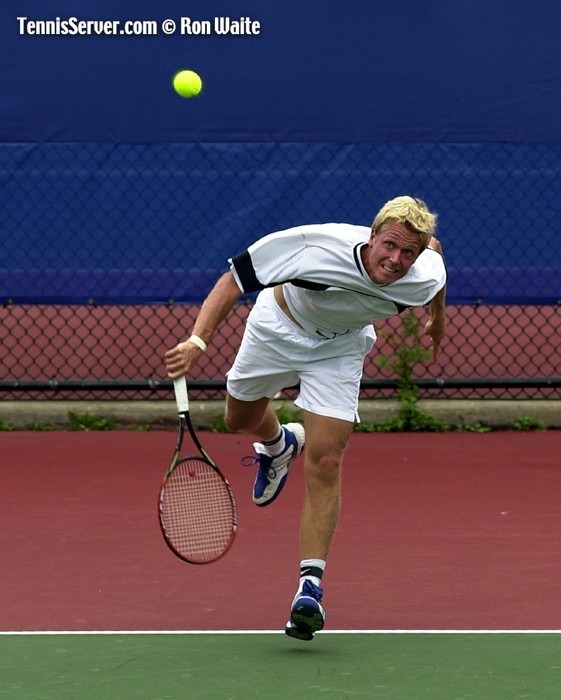
At contact, the racket travels through the ball toward the diagonal service box and into a finish that keeps you balanced.
Build Your First Complete Serve in Stages
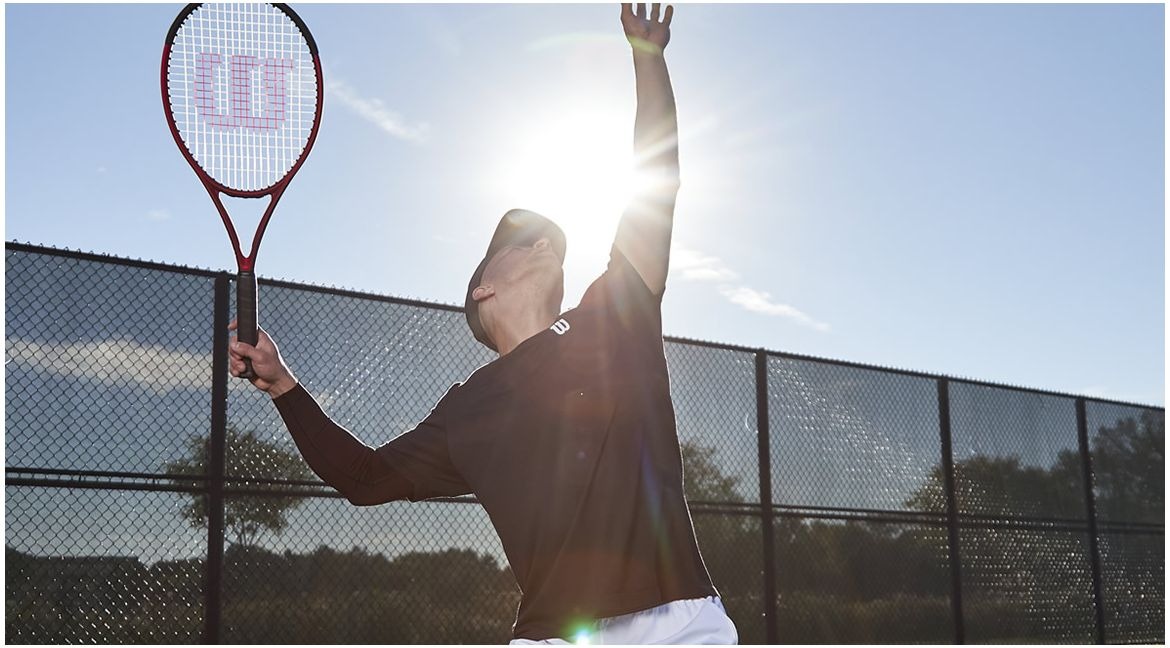
Start with a shortened swing. As the toss, contact and finish steady out, add preparation a little at a time.
- Set up. Use your grip and stance, with the racket already raised in the preparation position.
- Rehearse the compact movement. Go from the prepared position to a balanced finish until it feels easy.
- Add the ball. Toss within reach and send the ball toward the correct diagonal service box.
- Extend the motion. As the short version steadies, add a more continuous preparation and follow-through. Go back to the shorter version if the extra movement spoils contact.
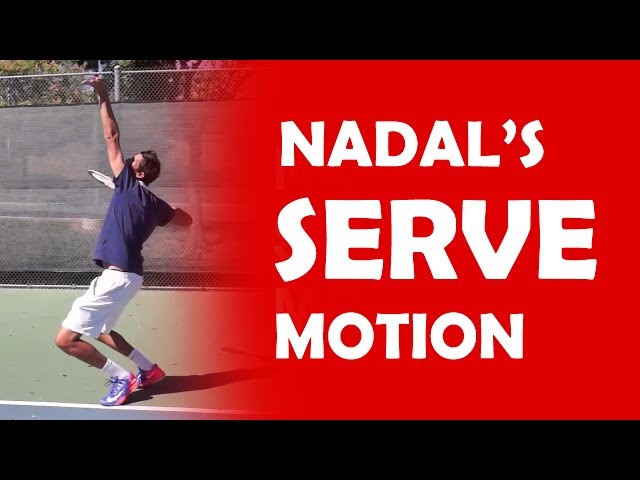
Another recreational player described rebuilding a weak serve through deliberate practice:
I picked up tennis 2 years ago and for the first 7-8 months, the serve was my Achilles heel in matches where everything fell apart. Don't be discouraged. It is a highly complex action and there are a lot of moving parts to it. I ended up completely dismantling my serve and building it back up from the ground in a systematic way. I credit a lot of my serve development to Tom Alsopp's YT channel (TPA Tennis) and his excellent videos focusing on the basic throwing motion and pronation without complicating the serve with too much noise. My suggestions: ... I did all of this with no more than 15-20 minute serve practice sessions on any given day and at most maybe 0.5-1.5 hrs in a week. But I was very intentional with recording my serves and reviewing them, especially in the early days.
Why Your Serve Misses
A missed serve tells you something specific. Start with the earliest problem you can see, such as a grip change, an unreachable toss or contact that pulls you off balance.
Different problems can produce the same ball flight, so match each miss to what you saw during the serve.
| What you notice | What to check | Fix first |
|---|---|---|
| Toss travels behind or far sideways | Release direction and where the ball comes down | Toss reachability |
| Racket looks like an open tray | Grip at setup and hand rotation during preparation | Continental-grip consistency |
| Contact requires a lunge | Ball position, starting balance and timing | Reachable contact position |
| Ball repeatedly hits the net | Contact location and trajectory | Contact point |
| Ball repeatedly travels long | Racket-face direction against your intended target | Racket-face direction toward the service box |
| Ball lands outside the diagonal service box | Correct box, direction of aim and landing point | Service-box targeting |
| A faster motion disrupts a controlled serve | Timing and the extra movement you added | The previous abbreviated stage |
After several attempts, find the earliest breakdown that keeps recurring and work on it during your next short set of serves.
A returning recreational player described losing a USTA 3.0 tournament match to weak serves and double faults:
I played my first USTA 3.0 tournament recently (I technically played a long time ago in highschool but it's been insanely long since I legitimately played) and lost mostly due to weak + double faults. 4-6, 2-6, all games won are me wining his serving rounds :(. My opponent serves pretty well too, good pace and good placement. After the game, he even acknowledges that my serve is just giving him freebies, otherwise he wouldn't have won. I know the serve mechanics/fundamentals (I was able to do jump serve reasonably back in highschool). If I can toss it right, I can hit it pretty well either flat or slice, maybe not great kinetic chain but it's there.
Check Your Progress
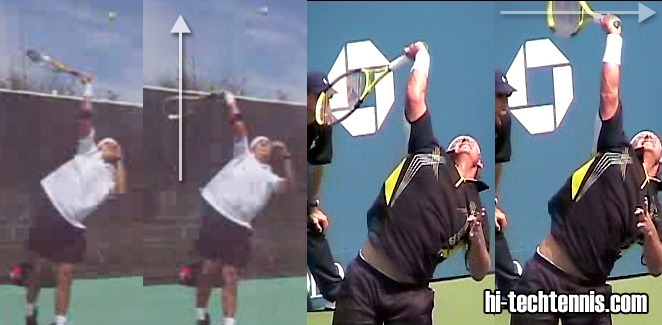
A simple record shows whether an adjustment changed anything. Keep the serving position, target and number of attempts comparable, then note what happened before and after the correction you chose above.
| Observation | What to record | What to compare |
|---|---|---|
| Correct service box | Attempts and serves landing legally inside the box | Whether direction stays consistent |
| Toss reachability | Tosses you had to chase or reach for | Whether the toss stays in a reachable area |
| Contact and balance | Attempts with a lunge, stumble or awkward contact | Whether contact stays controlled |
| Adjustment tested | The specific change and what you saw | Whether the results changed with that adjustment |
Write down the number of attempts next to each result. If the same correction brings fewer off-balance contacts or more serves in the correct box under similar conditions, keep working on that change.
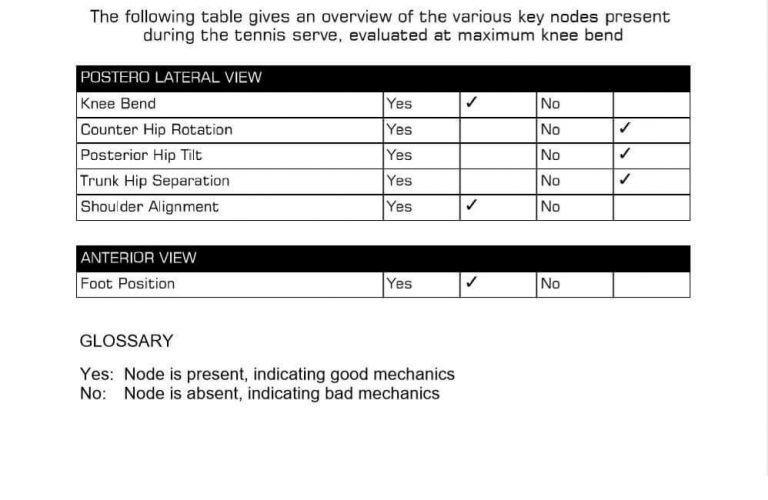
A short phone recording answers questions that are hard to judge mid-swing: where the toss went, whether your hand rotated on the handle, what happened to your balance. Place the camera where the relevant movement is visible, then review a few attempts with one question in mind.
If the movement stays hard to read, a qualified tennis coach can watch it directly and separate competing causes.
What to Work on Next
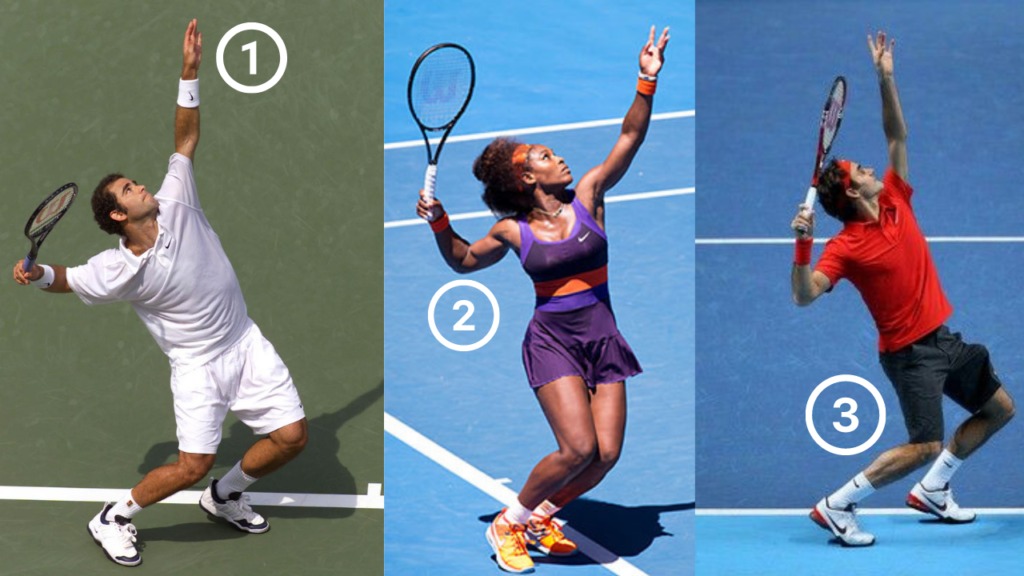
Pick your next skill based on what your basic serve already does. Once the motion is repeatable enough to practice with a specific goal, narrow your focus.
If your serve reaches the correct service box but lands in unpredictable spots, work on placement. Direct the ball toward a chosen region of the box with the same swing.
If your first serve works but your second regularly double-faults, work on second-serve reliability. The second serve follows the same target and fault rules, and another fault loses the point.
Flat, slice and kick serves have different ball-flight and spin goals. Learn them with specialized instruction once your basic action is stable.
Know When the Serve Needs Individualized Help
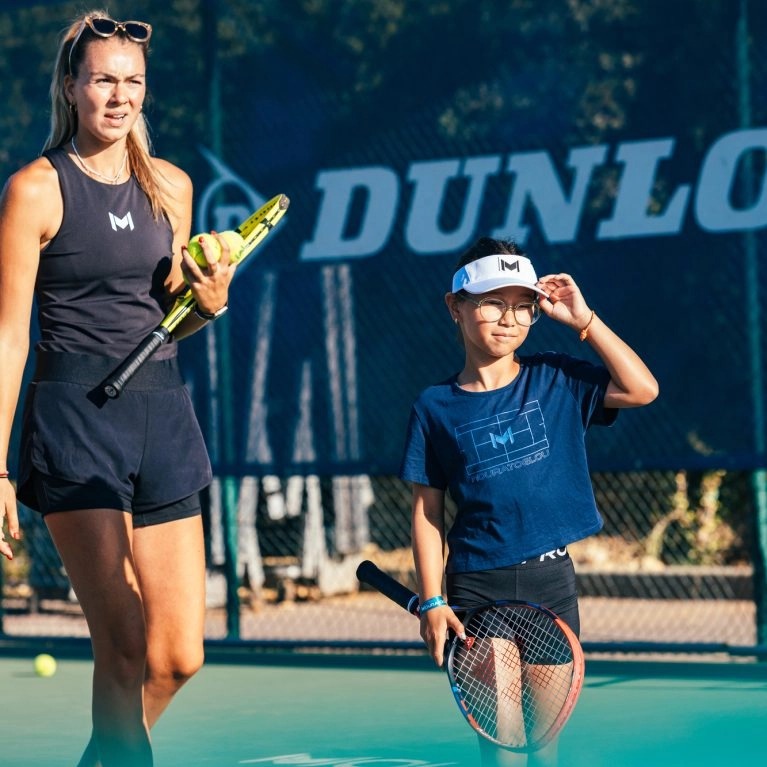
Serving should stay physically comfortable as you learn. If you feel persistent shoulder, elbow or other pain while serving, stop forcing the movement and get assessed. A tennis coach can evaluate technique. A qualified clinician can assess physical symptoms.
Studies of serving biomechanics describe substantial loading across coordinated body segments. A 2025 systematic review examined 29 studies and 130 potential injury risk factors, many with limited replication across studies.
Mobility limitations and adaptive playing needs can call for an individualized setup. A standard beginner overhand sequence can be adjusted to a player's physical capabilities with suitable instruction.