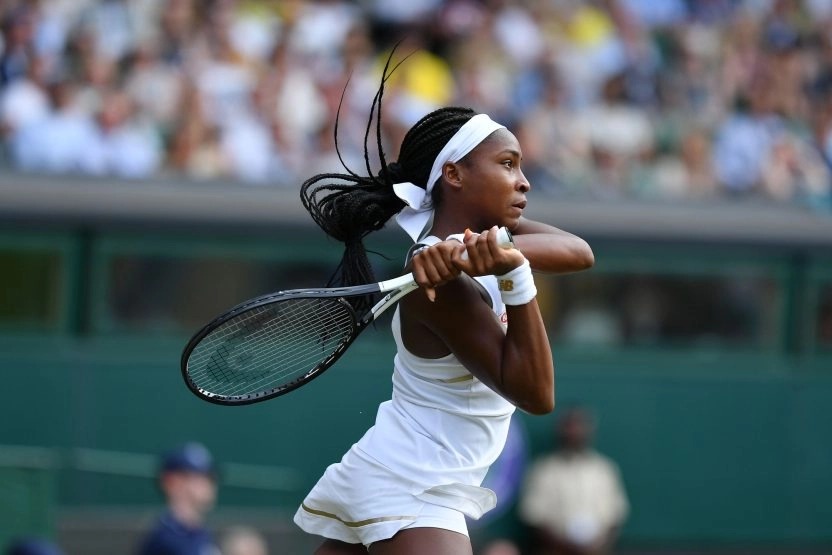
For a beginner, a good starting setup is a comfortable two-hand grip, an early turn, enough space for both arms, and a forward-and-up swing with contact out in front on the backhand side. Test it with gentle feeds and change one thing at a time when balls misfire. If the stroke causes pain, stop and get professional guidance.
A two-handed backhand can feel cramped before the racket even starts forward. The ball comes toward your less familiar side, your hands need room to move together, and a late turn leaves little time to set up the swing.
If your backhand keeps floating long, clipping the net, or catching the frame, check contact point, racket face, and timing first.
How to Hold a Two-Handed Backhand Grip
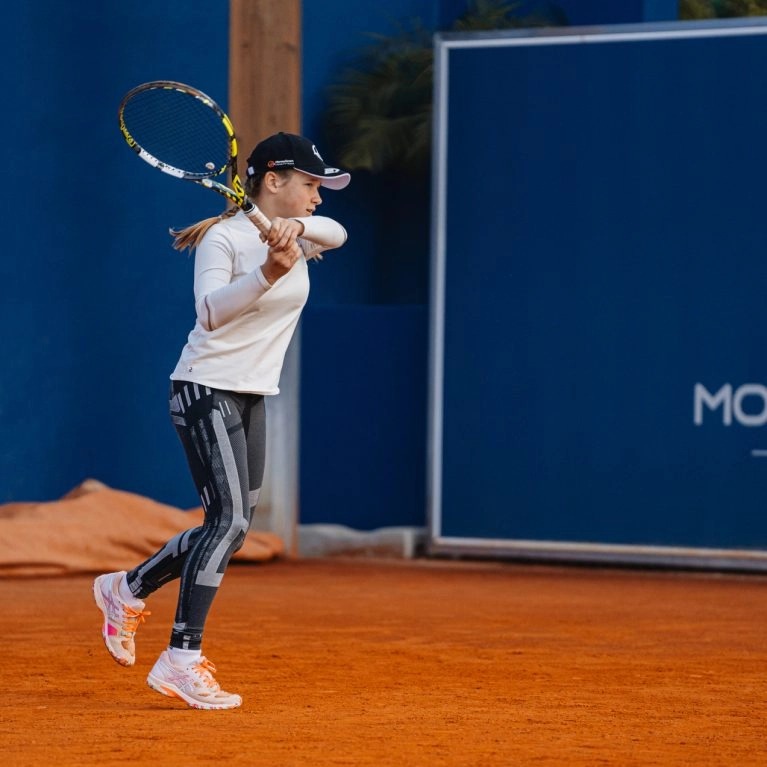
For a right-handed player, the right hand holds the bottom of the handle, nearest the butt cap, and the left hand goes directly above it. For a left-hander, reverse it: left hand lower, right hand above.
A good beginner combination is a lower hand close to a Continental grip and an upper hand in an Eastern forehand grip. Imagine the upper hand holding the racket for a forehand on that side of your body. The USTA's beginner backhand guidance explains the two-hand arrangement and why racket-face control matters. The USTA's instructional manual shows an upper-hand range from Eastern toward semi-Western. In every case, both hands should sit together on the handle and the racket should move comfortably through a slow swing.
Moving from the ready position into the grip
Between shots, you can support the racket with your non-dominant hand near the throat. When you recognize a backhand and turn, your dominant lower hand shifts from its forehand hold toward Continental while the upper hand settles onto the handle. The USTA Net Generation School Team Tennis Manual shows this preparation sequence.
To check your setup, put your dominant hand nearest the butt cap and the other hand above it, then make a few easy shadow swings. The racket face should stay under control and your wrists should stay comfortable.
Grip orientation describes how your hands sit around the handle. Grip size describes the handle's circumference. They are separate equipment and technique questions.
Turn Early and Make Room for the Ball
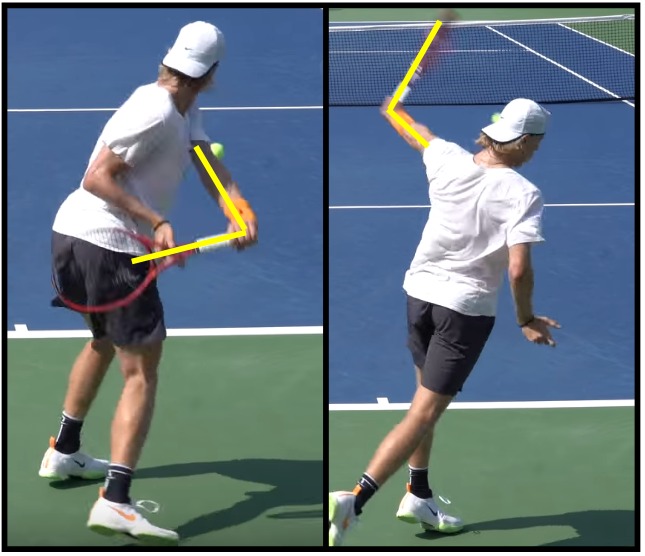
A dependable two-handed backhand starts with preparation. A split step, an early shoulder turn, and small positioning adjustments create room for both arms to swing.
As your opponent strikes the ball, make a small split step so you're ready to move. Once you recognize the backhand direction, turn your shoulders and torso sideways with the racket. This is the unit turn: your upper body and racket prepare together.
Keep the turn compact. Pulling the racket far behind your body complicates the swing against a quick ball.
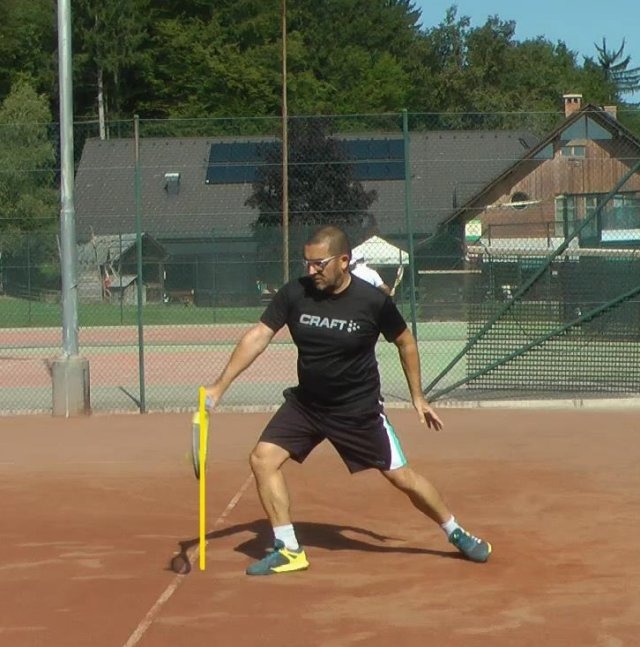
Your feet finish the setup. Take larger steps to reach the ball's general area, then smaller ones as the contact position becomes clear. You need enough separation from the ball for the racket to travel forward without both arms folding against your ribs.
A ball that comes close to your back hip crowds you. A ball that lands too far away forces you to reach. Contact belongs between those two, and its exact spot changes with the bounce and your movement.
A neutral or somewhat closed stance works for an ordinary beginner feed. Faster, wider, or unusually bouncing shots call for a different stance.
Check when your shoulders turn
Have a partner send five easy balls to your backhand side and, if possible, film from the side. Watch when your shoulders start turning relative to each bounce. If you usually start after the bounce, turn earlier and keep everything else the same.
For movement patterns beyond this stroke, see tennis footwork and recovery steps, including split steps, positioning, and court movement.
Swing Forward and Up to Meet the Ball in Front
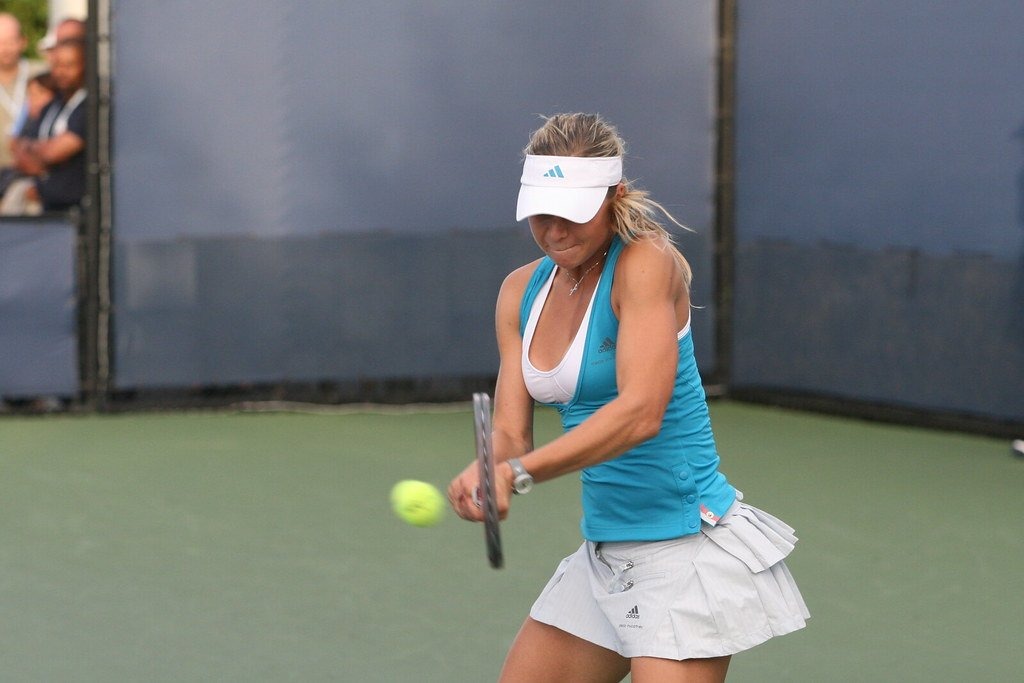
From a balanced preparation, let the racket head move below the incoming ball and swing forward and upward through contact. Meet the ball ahead of your body on the backhand side, with space for both arms.
The forward part of the swing sends the racket through the ball. The upward part adds topspin. Your torso and arms work together as the racket travels toward contact.
Racket face and swing path have different jobs
The racket face is the direction the stringbed points as it meets the ball. It sets the ball's launch. The swing path is the direction the racket travels through that contact, including its forward and upward parts.
A high finish can follow several different racket paths through contact, so to understand a miss, watch what happens around impact.
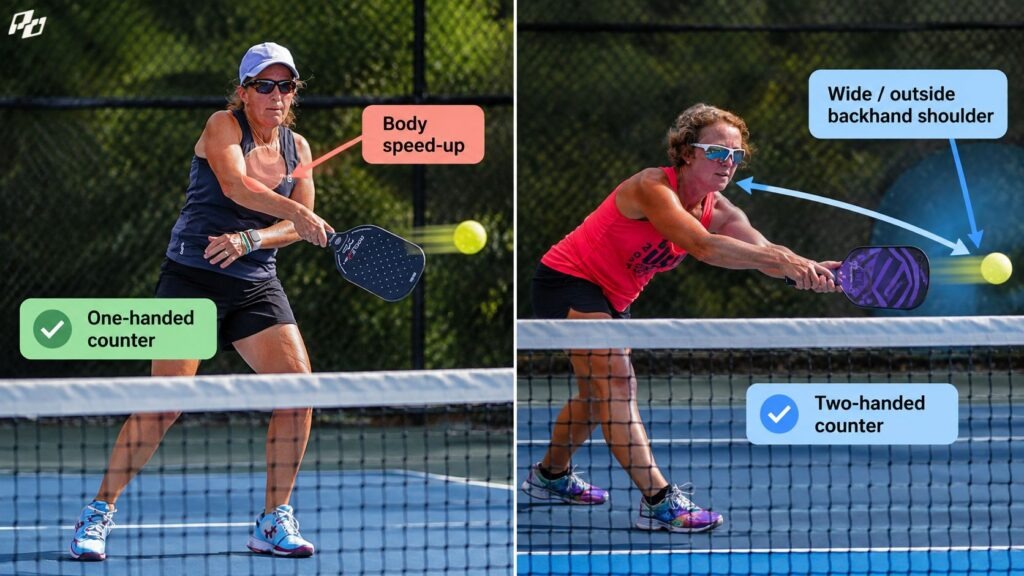
Contact distance changes with your proportions, the incoming bounce, and your body position. Aim for a balanced forward contact that leaves your arms room to work.
Find the contact area with an easy feed
Pick an imaginary contact point ahead of your backhand side. Make a slow shadow swing through that spot and notice the path and the room between your arms and torso.
Then try an easy self-feed and compare where the racket meets the moving ball. Look for the same forward contact and a smooth continuation through it.
Finish the Stroke and Recover for the Next Shot
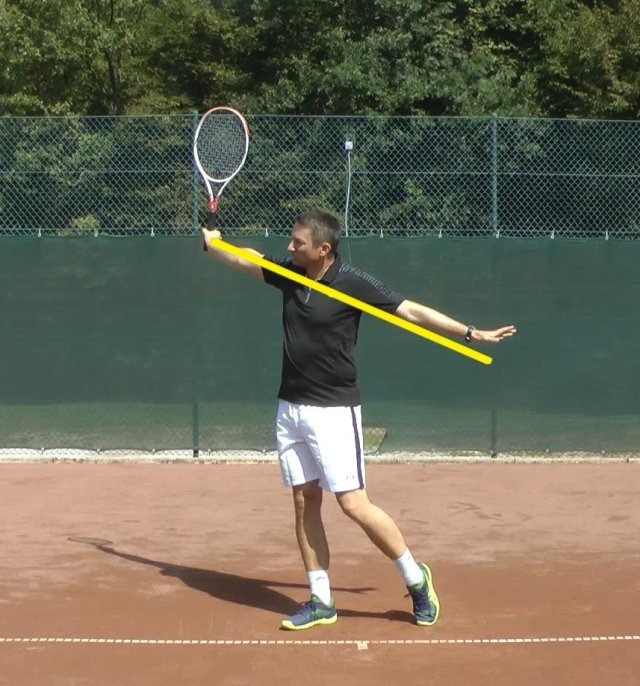
After the strings meet the ball, let the racket continue forward into a balanced follow-through. Your arms and torso finish the movement together, and you return toward a ready position.
The finish can travel across the body and rise with the swing. Its length and height depend on the incoming ball, your stance, and the time before the next shot. You don't need to copy one professional's final racket position.
The USTA Net Generation School Team Tennis Manual illustrates a left-handed two-hander on printed page 90, including contact, extension, and finish. A right-handed player can mirror the body positions in that sequence.
Make three relaxed shadow swings, pausing after each finish. Check that you return to readiness without an extra step or a loss of balance. If momentum carries you off position, slow down and finish under control.
Why Your Two-Handed Backhand Misses: A Troubleshooting Checklist
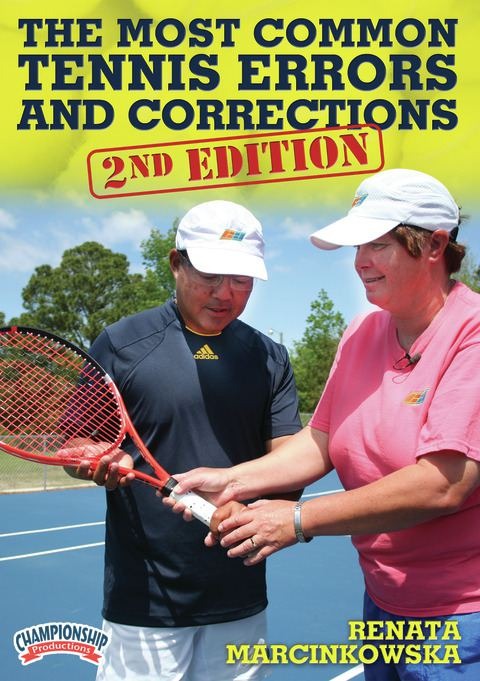
A recurring miss points to something specific. A ball in the net, a shot sailing long, or a crowded contact can come from different mixes of timing, spacing, face angle, and racket path. Pick one thing to check first and change only that.
| What happens | First thing to check | Fix to try |
|---|---|---|
| Ball clips the net or drops short | Contact point, racket-face angle, forward/upward swing path | Meet the ball ahead of your body with a controlled upward path |
| Ball floats high or sails long | Stringbed orientation, contact position, balance | Control the racket face at a moderate swing speed |
| Ball catches the frame or feels jammed | Body-to-ball spacing and last positioning steps | Leave more room for both arms before the swing |
| Racket arrives late on fast balls | Split-step timing, unit turn, size of preparation | Start a compact unit turn earlier |
| Shot has little controllable topspin | Racket drop, forward/upward path, spacing at contact | Hit a gentle ball along a forward-and-up path without adding swing speed |
If the problem remains, move to the next variable the same way.
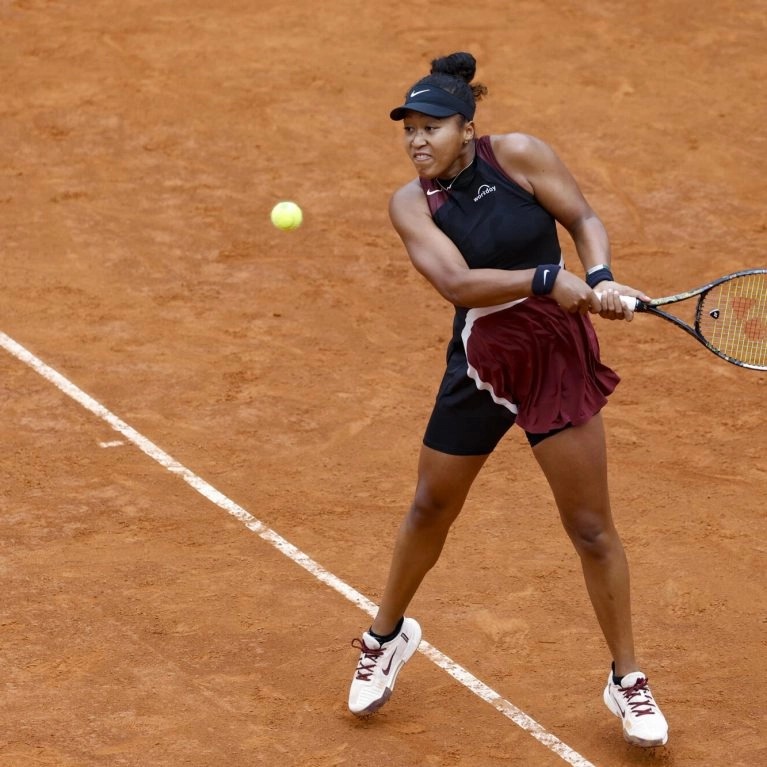
What Does Each Hand Do on a Two-Handed Backhand?
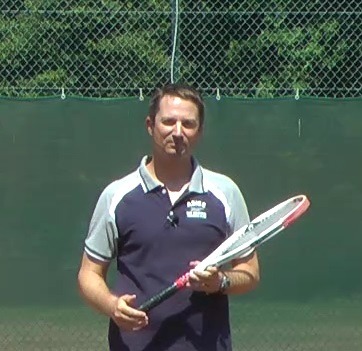
Both arms work with the torso during a two-handed backhand. The upper, non-dominant hand helps you feel how the racket travels forward through the shot.
For a right-handed player, that upper hand is the left; for a left-hander, it is the right. Coaches sometimes call it the driving hand. The phrase is a teaching cue for participation and control and does not assign a fixed percentage of power to either arm.
What grip research can tell us
One study of 16 right-handed players, first published online in 2022, tested different grips for the non-dominant upper hand. The grips changed aspects of racket and arm movement and post-impact ball speed. Accuracy was similar across them.
A separate 2020 study of 16 sub-elite players reported greater horizontal racket-head velocity with an Eastern upper-hand grip than with a Continental one. It found no significant advantage in accuracy or spin rate. Both studies used small samples of trained players.
Feel the upper hand's contribution
Hold the racket lightly with your upper hand alone and make one slow shadow swing like a forehand on that side of your body. Use no ball and no forceful acceleration.
Put the lower hand back on the handle and make an ordinary two-handed shadow swing. Notice how the upper hand takes part while the torso and both arms complete the motion.
Practice Your Two-Handed Backhand Without Guessing
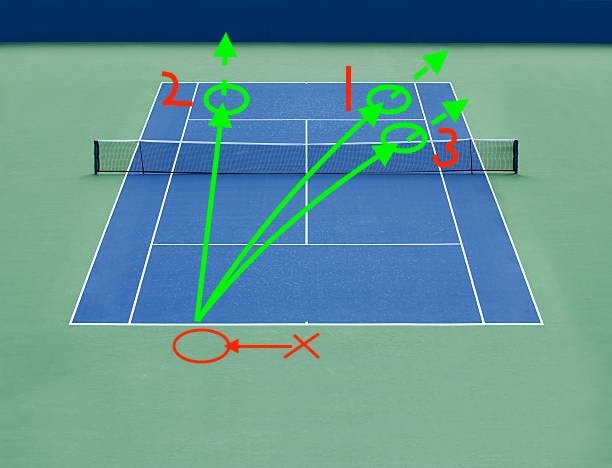
Start under conditions that let you recognize a clean contact. Add a moving ball, then make the incoming shot less predictable step by step.
Stage 1: Shadow the stroke
Move through preparation, forward contact, finish, and recovery with no ball. Use a relaxed tempo and a swing small enough to feel your turn flow into the forward motion.
Stage 2: Hit gentle, repeatable feeds
Ask a partner for easy feeds to roughly the same backhand area, or use self-feeds. Pick a broad target zone inside the opposite court. Aim for clean string contact and a ball that lands in the court.
Stage 3: Add a controlled rally
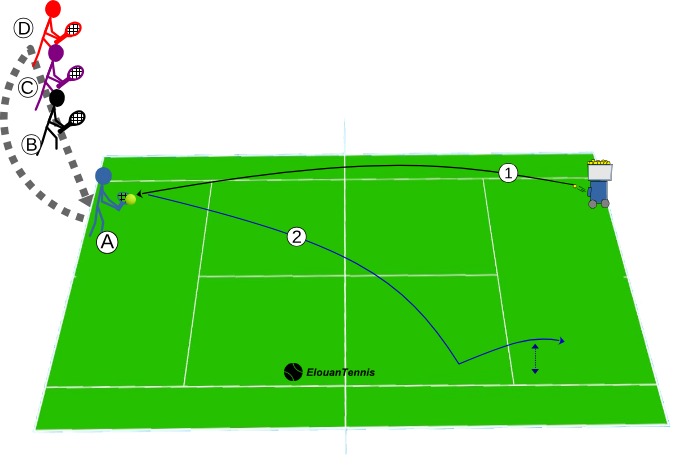
Move to a short cooperative rally or predictable ball-machine feeds once basic contact feels repeatable. Then change speed, depth, and height gradually. A faster feed adds a timing problem, so save it for after the easier comparison.
Use one scorecard to compare the change
Hit 20 easy feeds per set and record the results.
| Set | Feed and target | Clean contacts | Balls in court | Balls in target |
|---|---|---|---|---|
| Before adjustment | 20 gentle feeds, one backhand area | ___ / 20 | ___ / 20 | ___ / 20 |
| After one adjustment | 20 comparable feeds, same target | ___ / 20 | ___ / 20 | ___ / 20 |
| Later check | 20 comparable feeds in another session | ___ / 20 | ___ / 20 | ___ / 20 |
Count a clean contact when the ball meets the stringbed in a centered, controlled way. Record balls in court separately from balls that reach the target area. The two counts can move in different directions, even within one set.
Write down the single adjustment you chose from the troubleshooting table. Compare the first two sets with the same feeder, target, and incoming conditions as far as possible. A later check shows whether the change repeats on another day.
For example, cleaner contact with no change in target hits means one part of the stroke improved while directional control still needs work.
For more general exercises involving groundstrokes, volleys, and rallies, see beginner tennis practice drills.
Adjust for High Balls, Low Balls, and Awkward Stances
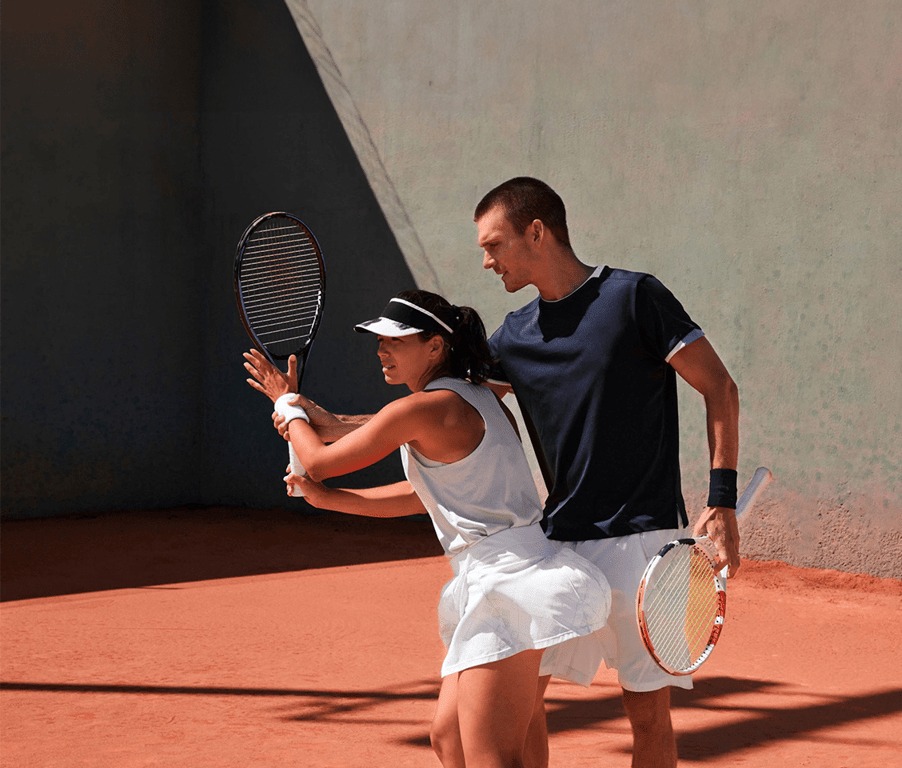
For an easy beginner feed, the Lawn Tennis Association suggests meeting the ball at about knee-to-waist height, with contact ahead of the body. For a bounce outside that range, adjust your feet and timing to keep contact in front of your body, and keep your preparation compact when the shot leaves little time.
In a study of 14 male players, the higher-accuracy group adjusted racket velocity and face orientation as impact height changed. Those findings concern racket movement during impact.
If the Two-Hander Still Feels Wrong, Know When to Change Course
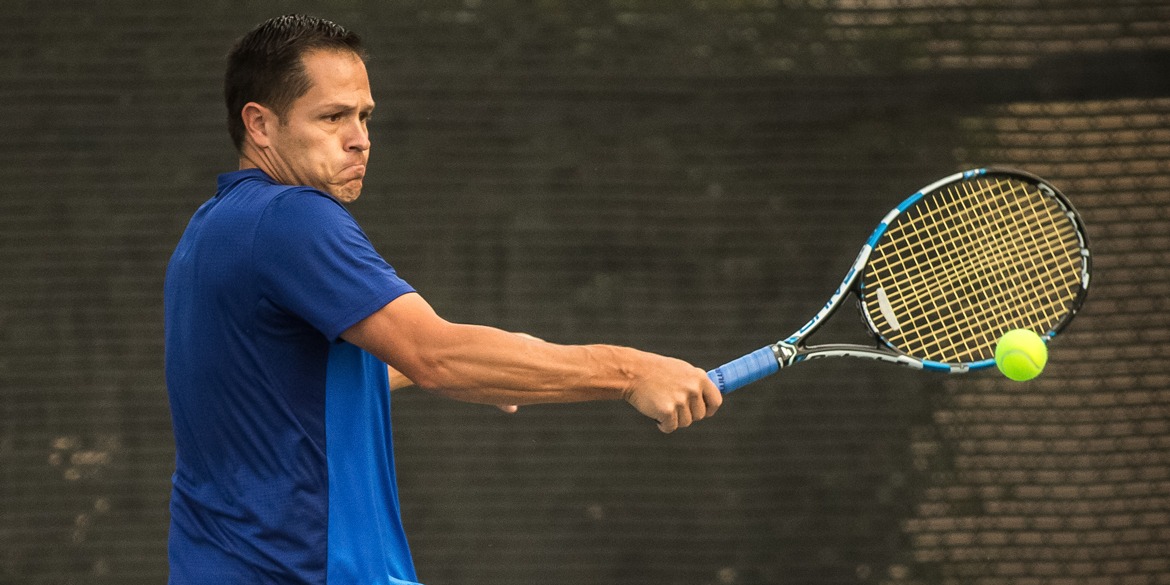
Some players considering a two-handed backhand already have a one-handed stroke. Their problem can be trust in that shot during matches as much as basic swing mechanics.
One tournament player described that choice in a discussion about switching backhands:
Anyone successfully switched from 1 to 2-handed backhand that can share some tips? I am 4.0 player who plays 3-4 times per week, have a decent one handed backhand but when I play tournaments and get tight I slice 80% of the time because I’m scared to miss. If I play a big server I return 2-handed, since I feel more in control and can block it back. All in all I would say my OHBH is a weakness and really wondering if I should commit to switching to get better. I love to get to a point where I feel like I can attack from both sides.
The player describes a match-pressure problem and a preference for returning two-handed. Which backhand to commit to depends on how each fits their game.
When contact stays unreliable despite a controlled adjustment, a qualified tennis coach can watch your preparation and spacing from outside the swing. If you're weighing a usable one-hander against a developing two-hander, the dedicated comparison of one-handed and two-handed backhands covers that choice.