
For a reliable one-handed topspin backhand, start with a comfortable Eastern backhand grip, turn early, create space, and meet the ball clearly in front; then build consistency from controlled feeds to rallies. If the ball is too high or fast for balanced contact, adjust your position or choose a controlled slice or block instead, and use the next practice set to test one correction at a time.
A gentle feed to your backhand can feel wonderful. You turn, make clean contact and send the ball deep. Then someone drives a heavier ball into the same corner, and your racket suddenly feels awkward. The contact is late, your arm is crowded, and the shot barely clears the service line.
The difference begins before the swing. A framed ball points to spacing or timing. A clean hit that sails long points to the racket face or swing. Learning this stroke means building a repeatable sequence and knowing which part breaks down on a given feed.
Should You Learn a One-Handed Backhand?
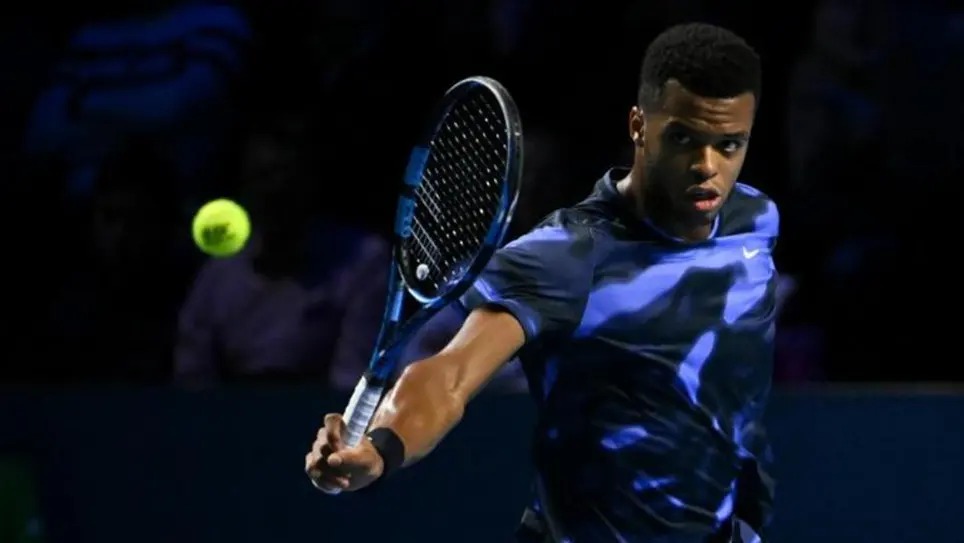
The one-handed topspin backhand is worth learning if you enjoy the movement and can make repeatable contact. It rewards early preparation, comfortable spacing and a swing that extends freely through the ball. Some beginners find a two-handed backhand easier to stabilize.
One beginner described the dilemma in r/10s. After struggling with a two-hander during group lessons, the player tried one hand and felt an immediate difference. The instructor preferred a different learning progression.
Beginner, started group classes 6 weeks ago, and my backhand is horrible compared to my other shots. The movement is just so unnatural/uncomfortable for me. 75% i’m framing it or straight to the net. One day i decided to try 1HBH, and it was night and day. Every aspect of my shot: power, spin, control and confidence all 3x after 90 min of playing. The improvement from only one day is legit shocking. My instructor scolded me when I started doing it and said that only old timers play that way and two handed is the best way to learn. I’m horrified of developing bad habits early in my time playing. Should I bear down and work on 2H or ride w the 1H?
A comfortable movement encourages practice. Those numbers are one player's impression after one session. Deeper, faster, higher balls will show whether the stroke holds up.
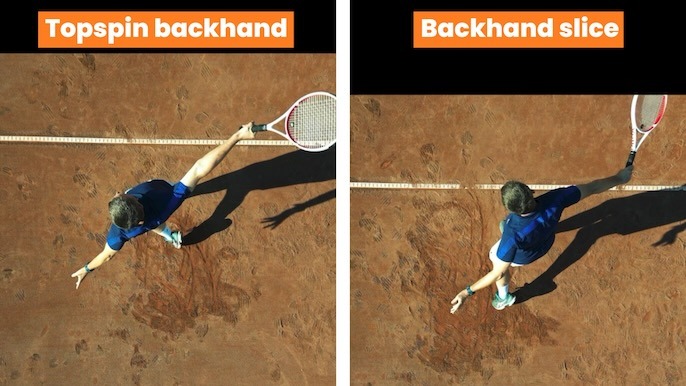
To choose between styles, hit a series of gentle feeds with each. Check whether you prepare in time, make clean contact and send the ball to a useful area. An instructor can tell a promising movement from a habit that only works on an easy ball. Whichever you pick, judge it by repeatability as the feeds get harder.
Choose Your One-Handed Backhand Grip
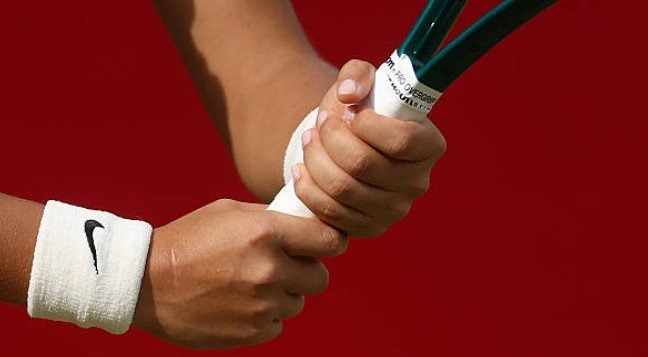
Eastern is the starting grip for a one-handed topspin drive. Place the base knuckle of your index finger on the top flat bevel of the racket handle. From a Continental grip, rotate your hand one bevel counterclockwise if you're right-handed, or clockwise if you're left-handed, viewed from the butt cap. Support the racket near its throat with your free hand while you change grip, and practice finding the same hitting-hand position before each feed.
Get Ready Early: Unit Turn and Setup
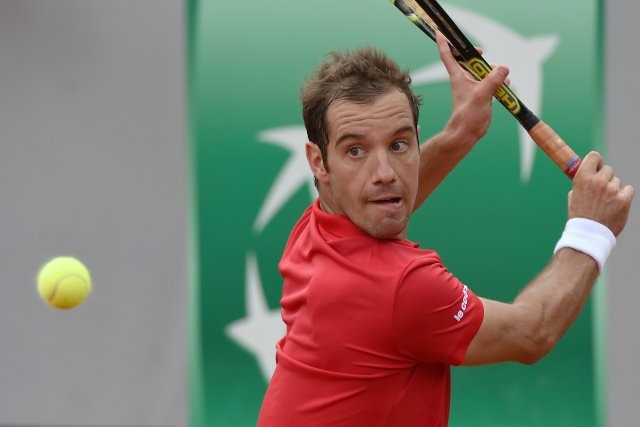
A solid one-handed backhand begins with a shoulder turn while you still have room to move. If you wait until the ball bounces to organize the racket, even a sound swing arrives late.
The USTA's Net Generation teaching manual splits the stroke into seven connected phases: preparation, unit turn, loading, hitting, contact, extension and finish. Together they form one continuous movement.
Start balanced, with your knees flexed. Recognize the incoming backhand, turn your shoulders and torso with the racket, and move your feet into a side-on position that leaves room for the forward swing. Your non-hitting hand supports the throat during preparation and releases as the hitting arm starts forward. Left-handed players mirror the setup.
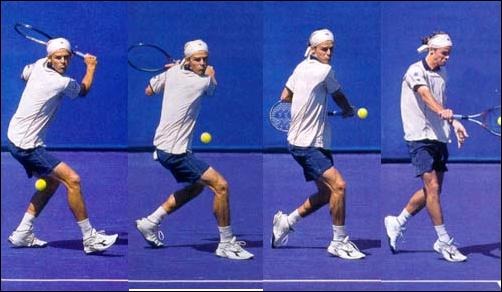
The unit turn organizes the racket and shoulders together. A large, separate takeback costs time, especially on deep or fast feeds. Rehearse without a ball: start in the ready position, recognize an imaginary backhand, turn and settle your feet so the racket can travel to a contact point in front of you. On a gentle feed, your shoulder turn should be underway before the ball crowds your hitting side.
Find the Right Contact Point and Spacing
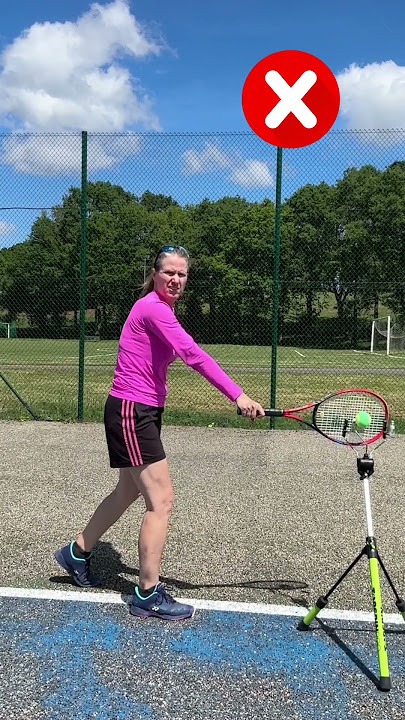
Meet the ball ahead of your hitting-side shoulder, with enough room beside your torso to extend the racket through contact. For initial contact work, a gentle feed reaching roughly knee-to-waist height after the bounce is a manageable starting ball.
From a side view, the ball should be ahead of your body when the strings meet it. From behind, the racket should pass without your upper arm trapped against your torso. Reaching the right spot on court guarantees neither.
The USTA's one-handed backhand lesson stresses earlier preparation and contact farther in front of the body. If the ball reaches your hip before the racket arrives, you can't extend smoothly.
In a 2002 biomechanics study of 18 male collegiate players, Reid and Elliott reported ball contact 0.59 m in front of the body for the one-hander versus 0.40 m for the two-hander under their test conditions.
Ask a partner for an easy feed and check whether contact is ahead of your body and the racket has space to continue toward the target.
If an easy feed feels clean but a deeper one jams you, you are either arriving too late for forward contact or standing too close to the ball. Both can happen on the same shot.
Swing Up and Through: Topspin, Extension, and Finish
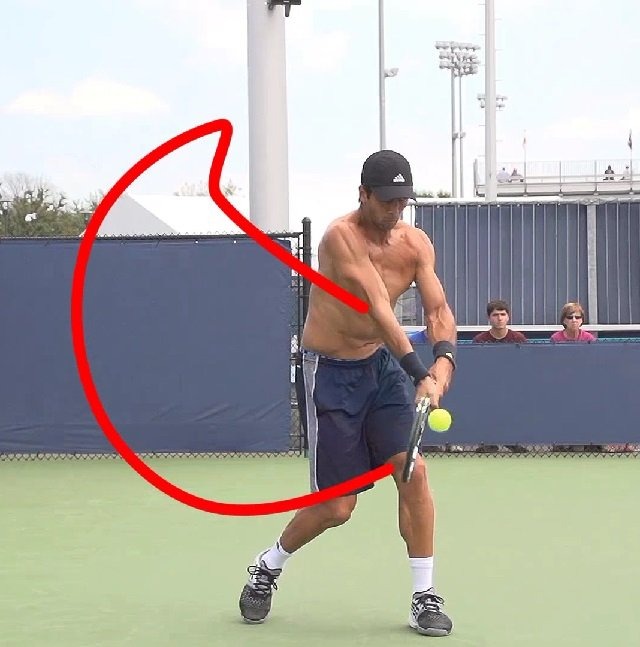
For a topspin drive, let the racket head drop below the incoming ball, then swing forward and upward through contact. Racket path and string-bed angle work together to send the ball forward with spin.
A generous backswing feels natural on a slow feed. With less time, keep the motion compact. An abrupt wrist flick adds another moving part just when clean contact matters most.
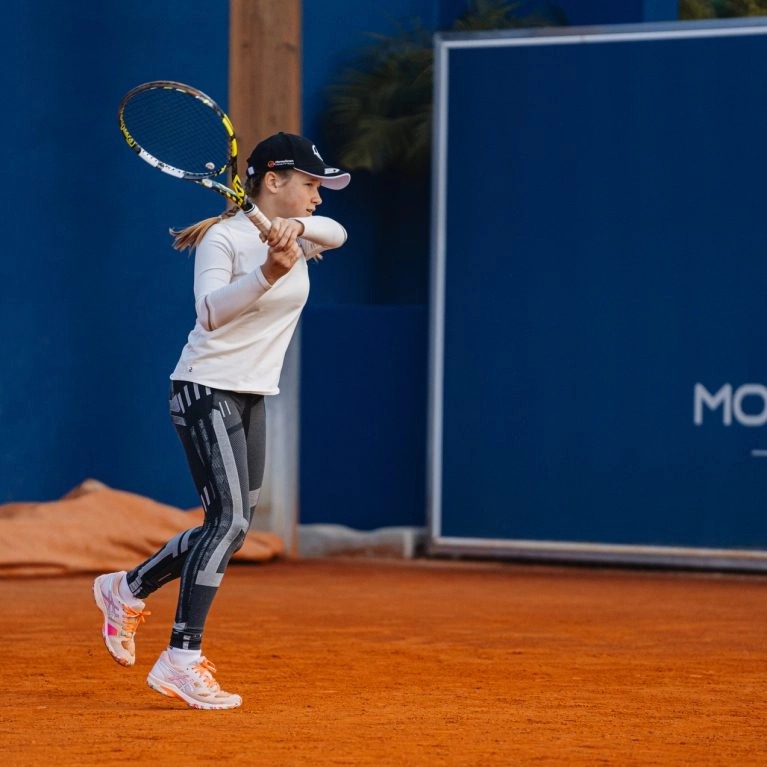
After impact, let the hitting arm continue toward your target before the racket rises into a natural finish. As the hitting arm travels forward, the free arm extends backward to counterbalance the motion and limit torso opening. Stay balanced enough to recover for the next shot.
On a waist-height feed, check that the racket travels from below the ball up through the strike zone. The finish varies with contact height, grip and incoming pace.
Troubleshoot the Miss: Net, Long, Frame, or No Pace
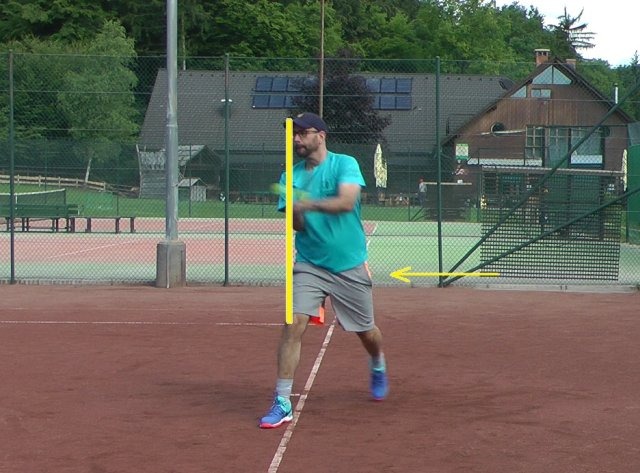
A recurring miss tells you where to look. Identify the ball's actual flight, pick one mechanical checkpoint, and compare it on similar feeds.
A ball that catches the frame is a different problem from one that meets the strings cleanly and sails long. Several causes can produce a similar result, so the table lists what to check for each miss.
| What happens | Check | Test |
|---|---|---|
| You frame the ball or feel jammed | Lateral spacing, late turn, contact beside your torso | Use an easy feed and watch the gap between ball and body |
| The ball repeatedly hits the net | Contact height, racket-face orientation, forward and upward path | Keep the feed gentle and watch face and path |
| The ball floats or travels long | Open racket face, late contact, too much lift | Hold feed and target steady and check one variable |
| The shot has little depth or pace | Rushed preparation, poor balance, limited extension | Slow the feed enough to finish a balanced forward stroke |
| Direction changes unpredictably | Inconsistent contact point, racket face or preparation | Compare similar feeds aimed at one broad target |
If three easy feeds go into the net, swinging harder upward only hides the problem. Check the racket face too.
Change one thing at a time, repeat a comparable ball and watch the flight. Altering grip, foot position, takeback and racket face together leaves you unable to tell which one mattered.
Adapt to High Balls, Fast Returns, and Match Pressure
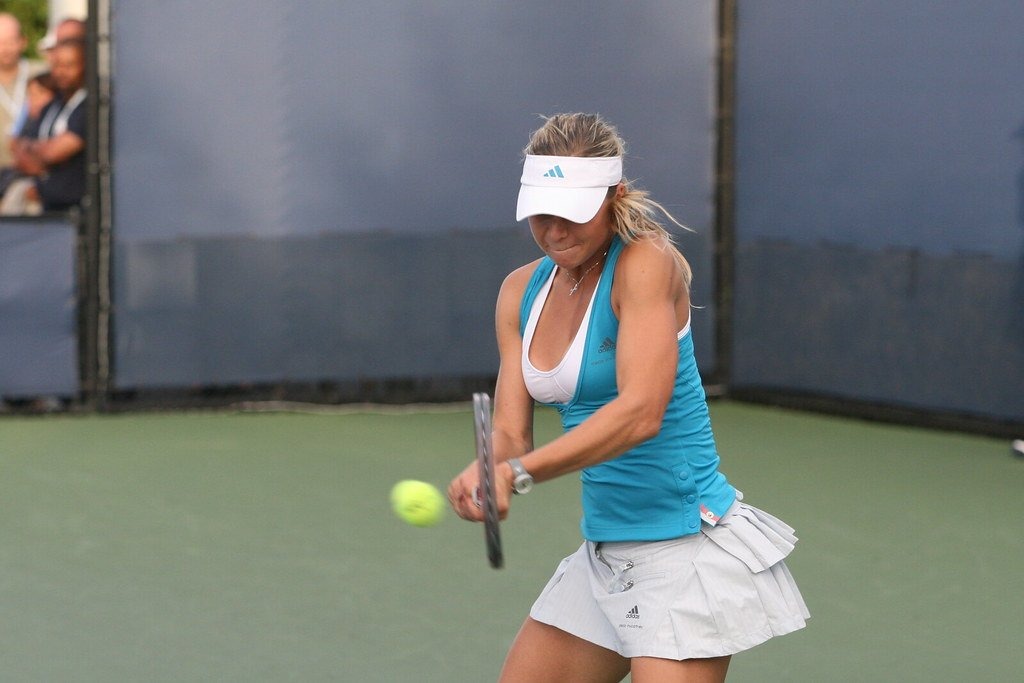
A high or fast ball changes the decision before the swing begins. Available time, bounce height and your court position decide whether a full one-handed drive is practical.
| Incoming situation | Do this | When it fits |
|---|---|---|
| High ball you can reach early | Step in and take it before it climbs beyond a comfortable contact zone | You're balanced and ready to meet it ahead |
| Deep ball with room behind you | Move back and let it descend | You have space and time to recover |
| High or fast ball that leaves you rushed | Use a compact block or controlled slice | A shorter response gives you a playable reply |
A fast serve leaves little time for a full groundstroke takeback, so compact contact or another familiar return style is easier to organize.
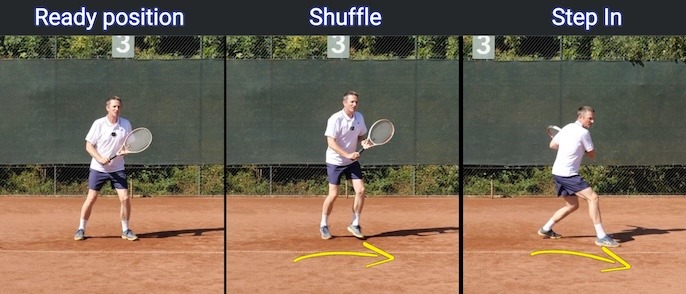
Match pressure changes the context again. A recreational player in r/10s described trusting a one-handed backhand during ordinary play but relying on other responses in tournaments:
Anyone successfully switched from 1 to 2-handed backhand that can share some tips? I am 4.0 player who plays 3-4 times per week, have a decent one handed backhand but when I play tournaments and get tight I slice 80% of the time because I’m scared to miss. If I play a big server I return 2-handed, since I feel more in control and can block it back. All in all I would say my OHBH is a weakness and really wondering if I should commit to switching to get better. I love to get to a point where I feel like I can attack from both sides.
A stroke that works in a calm rally has to hold up when the point is contested or the ball arrives faster.
On the next high, deep or unusually fast feed, decide before the bounce whether you can meet it comfortably in front while balanced. Choose the drive if that contact is available. Otherwise make the controlled reply that keeps the rally alive.
Practice the One-Handed Backhand from Feeds to Rallies
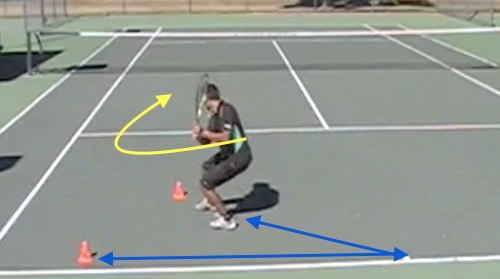
Stage your practice so you add one source of difficulty at a time. The progression runs from a rehearsed movement to controlled feeds, placement and rally play, with pressure only after the easier stage feels usable.
| Practice stage | What to do | Move on when |
|---|---|---|
| Movement rehearsal | Use the established grip, turn and forward-contact position without an incoming ball | You move without rushing |
| Gentle feeds | Hit repeatable waist-height feeds from a partner, suitable ball machine or feasible self-drop | Contact stays clean and balanced |
| Target placement | Aim similar feeds toward a broad central or crosscourt target | You hold direction without forcing pace |
| Cooperative rally | Trade backhands at a controlled pace with increasing movement | Your intended contact holds as position changes |
| Light match pressure | Introduce a scored point or more demanding feed | Preparation and shot choice hold up when the outcome matters |
For the target stage, choose a region comfortably inside the court. A target on the baseline makes results hard to compare, because even small changes in feed difficulty punish a target that narrow.
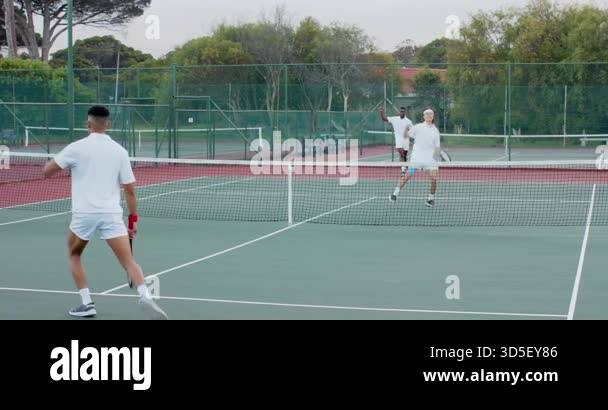
In a cooperative rally you also recognize direction and reposition while your partner chooses the next ball.
If a harder stage produces repeated frames or loss of balance, reduce feed difficulty and return to the last stage that worked. Repetitions and rate of improvement vary by player.
If the motion causes persistent pain, stop and see a qualified professional.
Check Your Progress Without Guessing
Compare similar practice situations to decide whether a correction is worth keeping. Record where the ball lands and what you notice about contact, since a shot can land in the target while still feeling late or crowded.
Choose a broad crosscourt area and record 20 feeds per set.
| Practice sample | Balls into intended target | Contact observation |
|---|---|---|
| Baseline set | ___ / 20 | __________ |
| After one correction | ___ / 20 | __________ |
| Repeat under similar conditions | ___ / 20 | __________ |
Keep the feed's pace, starting position and target consistent. Gentle self-feeds and returns against a powerful server are different tasks, so don't compare them.
Say you make 9 of 20 feeds into the chosen target before a spacing correction and 13 of 20 afterward. Repeat the test under comparable conditions to confirm the change. Another player could improve the target count while still meeting the ball too late, which is why the contact note matters.
A side-on video shows where the racket meets the ball relative to your hitting shoulder and whether preparation starts early enough. A view from behind reveals crowded spacing. Get permission before filming other people and observe court rules.
If the same contact error persists on repeatable easy feeds, ask an experienced coach to watch it directly. A short sample tells you about the tested conditions only. Match performance shows up over more varied situations.