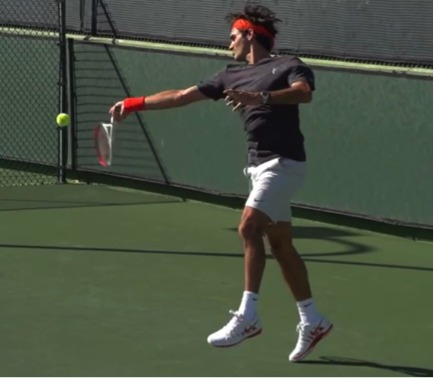
Keep your grip if your forehand lands deep and feels comfortable. Try Semi-Western when high-bouncing balls keep beating you or you want more topspin. Western suits players who live on high contact and accept weaker low-ball and net play.
How to Identify Eastern, Semi-Western, and Western on Your Racket
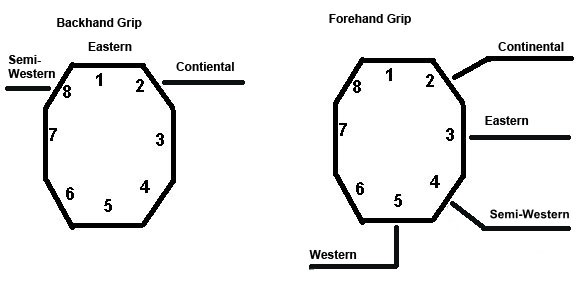
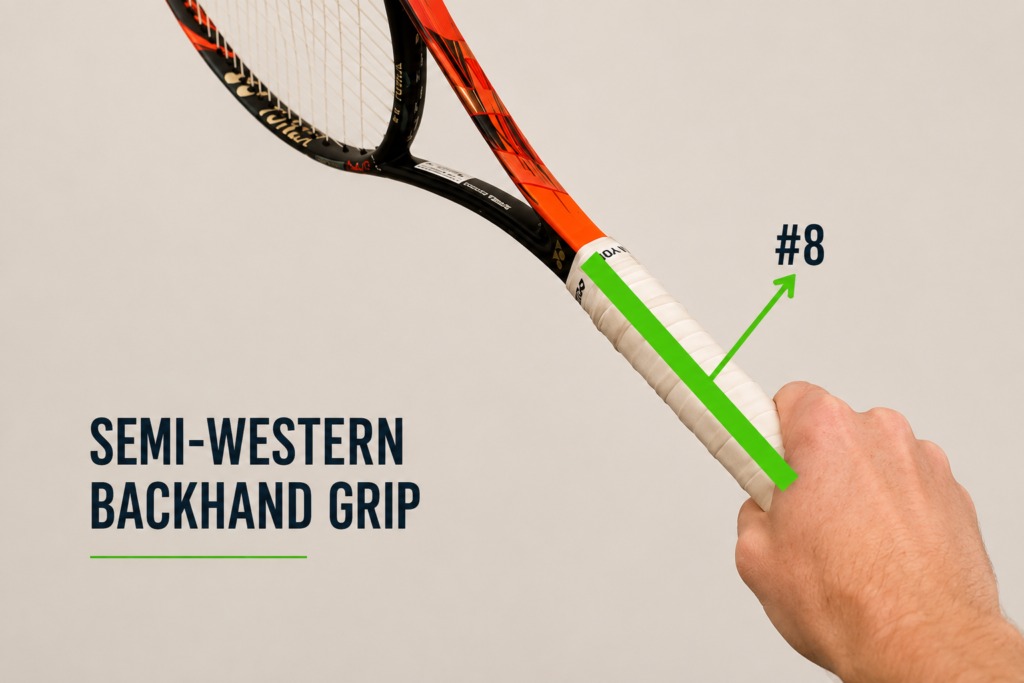
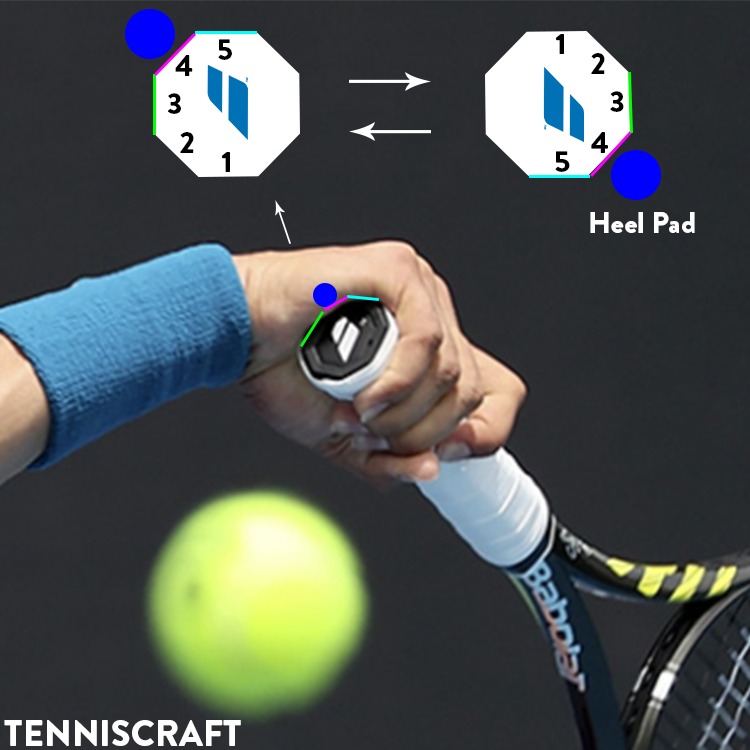
The handle is an octagon with eight flat surfaces called bevels. Grip names describe where your hand sits on them. You can find the three positions with a racket in your hands, as long as you use one numbering convention throughout.
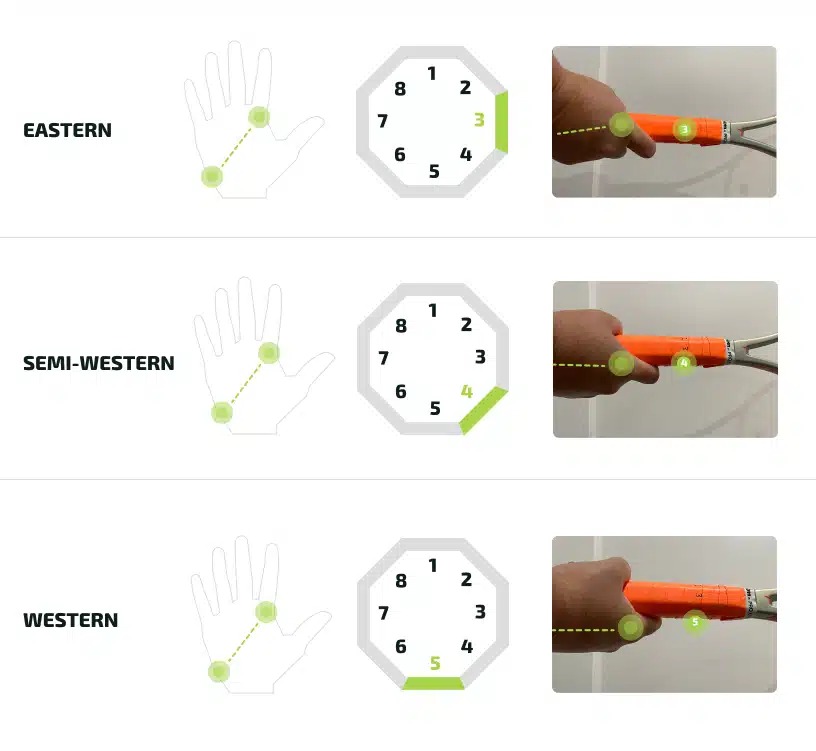
For the right-handed illustration, hold the racket with the strings vertical and look straight at the butt cap. Call the top flat surface bevel 1 and count clockwise. Hold the racket by the throat with your free hand so the handle is clear. Place the base knuckle of your index finger over the chosen bevel and wrap your fingers naturally. Check that the heel pad of your palm sits near that bevel too.
- Eastern: Right-handed index knuckle near bevel 3; left-handed near bevel 7.
- Semi-Western: Right-handed index knuckle near bevel 4; left-handed near bevel 6.
- Western: Right-handed index knuckle near bevel 5; left-handed near bevel 5.
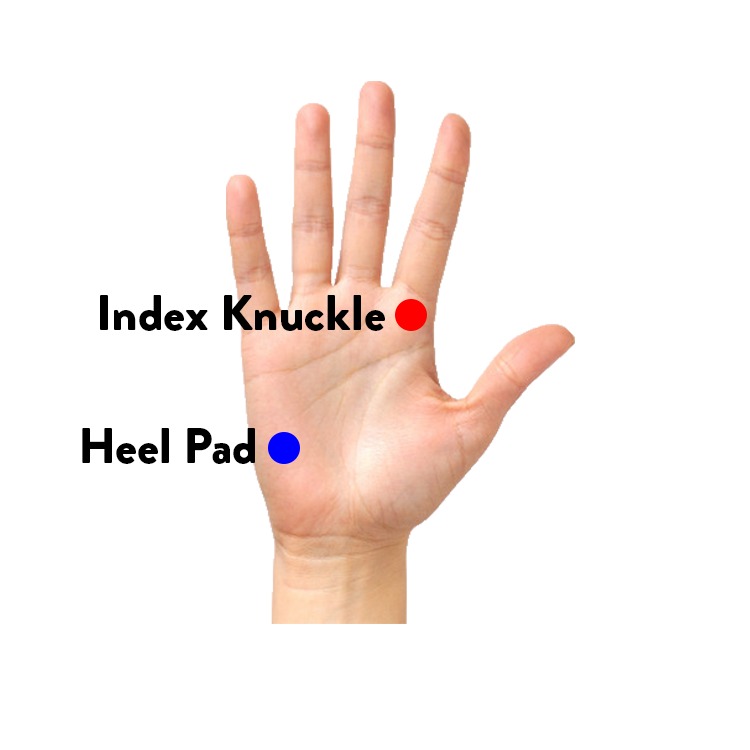
The heel pad may straddle a neighboring bevel, and finger spread varies from player to player. The left-handed numbers use the same top-bevel-as-1 butt-cap view, with the hand mirrored.
A 2012 Tennis.com grip guide calls Continental bevel 1. Under the top-bevel-as-1 convention used here, Continental is bevel 2. A bevel number only means something with its drawing's viewpoint.
Here, grip means hand orientation on the racket. Handle circumference and overgrip thickness are separate equipment-fitting questions.
Eastern vs. Semi-Western vs. Western: The Trade-Offs Side by Side
Eastern suits low-to-middle contact and a direct, driving forehand. Semi-Western suits mid-to-higher contact and topspin-oriented rallying. Western moves the hand farther around the handle for a high-contact style.
| What matters | Eastern | Semi-Western | Western |
|---|---|---|---|
| Index knuckle, defined right-handed view | Near bevel 3 | Near bevel 4 | Near bevel 5 |
| Common comfortable contact | Lower to middle | Middle to higher | Higher |
| Contact position in front of the body | Forward | Farther forward | Farther forward still |
| Typical shot tendency | Direct drives; topspin remains possible | Drives and topspin-oriented rallies | Higher-contact, spin-oriented strokes |
| Low incoming ball | Relatively accessible | Needs more adjustment | Hardest of the three |
| Shoulder-high ball | Needs contact or preparation adjustments | Comfortable | Comfortable |
| Changing toward Continental for volleys | Smaller hand movement | Bigger hand movement | Biggest hand movement |
| Beginner starting point | Solid teaching choice | Solid coached choice | More specialized starting choice |
The deciding trade-offs are the contact heights you face most and the shots you must play after your forehand. These tendencies come from a forehand biomechanics review.
Hand position and racket face at impact
Your starting grip is one variable. The racket face keeps moving through preparation, swing and contact. A 2023 wearable-sensor study examined 40 players, including 21 classified as Eastern, 17 as Semi-Western, and two as Continental. In its Eastern/Semi-Western comparison, the difference in racket-face angle at impact was not statistically significant.
Which Grip Fits Low Balls, Shoulder-High Balls, and Your Court Position?
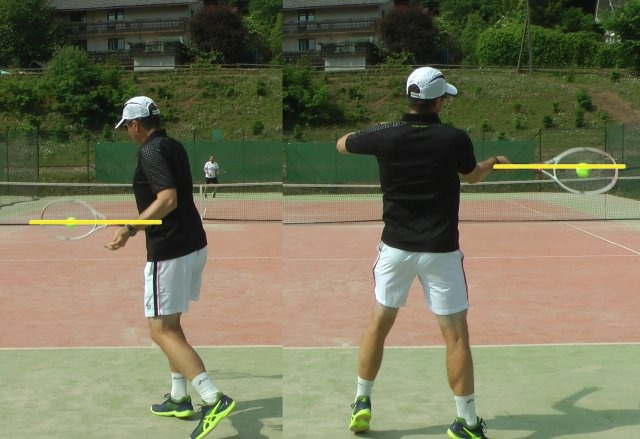
A ball that skids below your preferred contact height is a different problem from one that climbs toward your shoulder. Ask whether the difficulty follows the incoming ball or follows late preparation and poor spacing.
| Situation | What the grip changes | Other cause to check | How to tell |
|---|---|---|---|
| Low, skidding ball | More Western grips need a bigger adjustment to lower contact | Late arrival or failing to lower the body | Does the miss lessen when you reach the bounce in balance? |
| Waist-high rally ball | Several grips produce a workable drive | Contact too close to the body | Is there room for a free swing at contact? |
| Shoulder-high baseline ball | Semi-Western or Western feels more natural | Late preparation or poor positioning | Can you meet the ball comfortably after preparing earlier? |
| Short, low approach | Your usual grip may need a different contact adjustment | Rushing forward without setting your spacing | Does the approach improve when you arrive with time to set up? |
Picture a short ball that barely clears your knees. You have to move forward, lower your body and choose a contact point before the ball drops farther. Changing the bevel alters how the racket sits in your hand, but getting to the ball on time changes the shot far more.
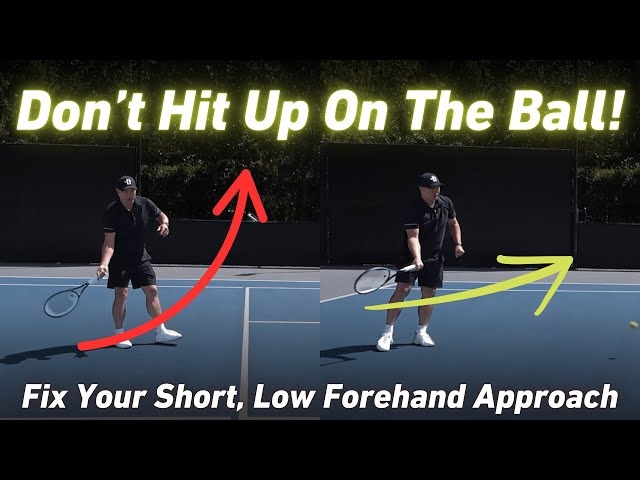
Then the next ball rises toward your shoulder, and a Semi-Western or Western grip feels more accommodating.
Which Forehand Grip Should a Beginner Start With?
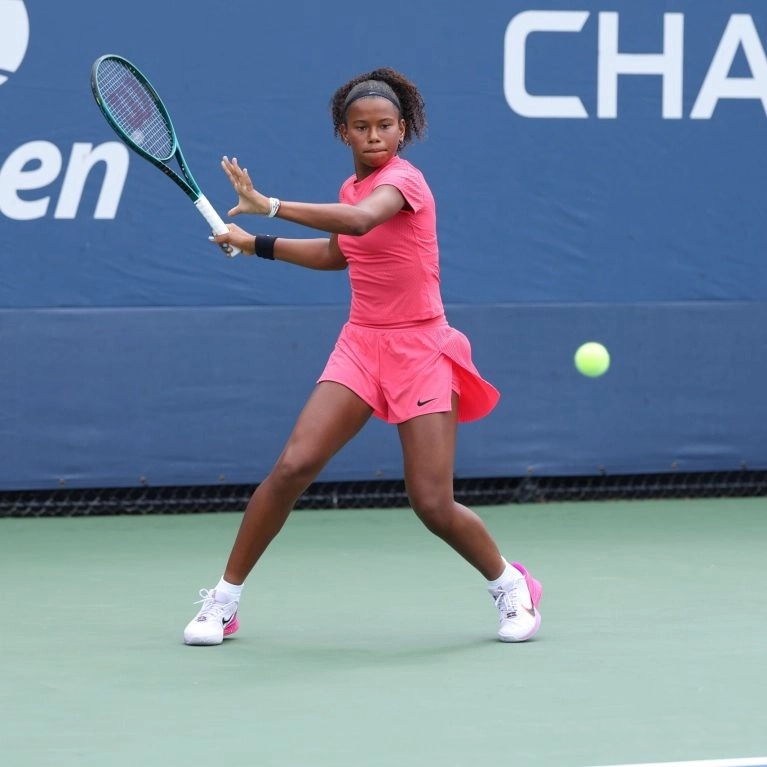
Eastern is a credible first grip for learning comfortable, repeatable forehand contact. Semi-Western is also an established teaching option, particularly when a coach shapes the stroke around the player's contact and rally conditions.
The USTA Net Generation school-team manual introduces learners to an Eastern-like forehand position and describes how the non-dominant hand helps with grip changes.
A 2024 survey of accredited tennis coaches included 226 respondents from 40 countries. Researchers grouped 140 as less experienced and 86 as more experienced. Semi-Western was reported as a taught grip by 67.9% and 65.1% of those groups, respectively, and Eastern by 48.6% and 48.8%. Coaches could name more than one grip.

Stick with one grip for the first block of lessons, so your coach can establish a consistent contact point and a repeatable rally, then reassess. Western may suit a particular learner, but its low-contact and grip-transition demands make it a more specialized default.
Should You Keep Your Current Grip or Switch?
After years of forehand practice, your contact point, depth and directional control are built into the stroke. A grip change is worth considering when a specific problem keeps recurring and the gain matters enough to justify learning a new contact pattern.
One lifelong Eastern player described a first-day switch to Semi-Western:
I've played with the eastern grip my whole life, but I always find myself trying to deliberately generate extra topspin to keep up with other players who hit baseline shots with a lot of drive. I tried playing with the semi-western grip yesterday and, damn, the topspin comes so naturally. Supposedly, the semi-western grip will also help with hitting shots near the shoulder level and above, and I'm starting to see that too. In situations where I don't have time to move into a better position, I can still hit pretty good shots when the ball is near shoulder height. In long baseline rallies, I feel like the semi-western grip provides a bit of extra security with keeping my shots in, as I have more leeway with my swing and I can rely on the topspin to drag the ball in. I can also return with enough drive that the opponent can't attack on my shot as easily. On the other hand, I'm having a lot more trouble placing the ball onto the court with the intended depth, but maybe this just takes time to get used to.
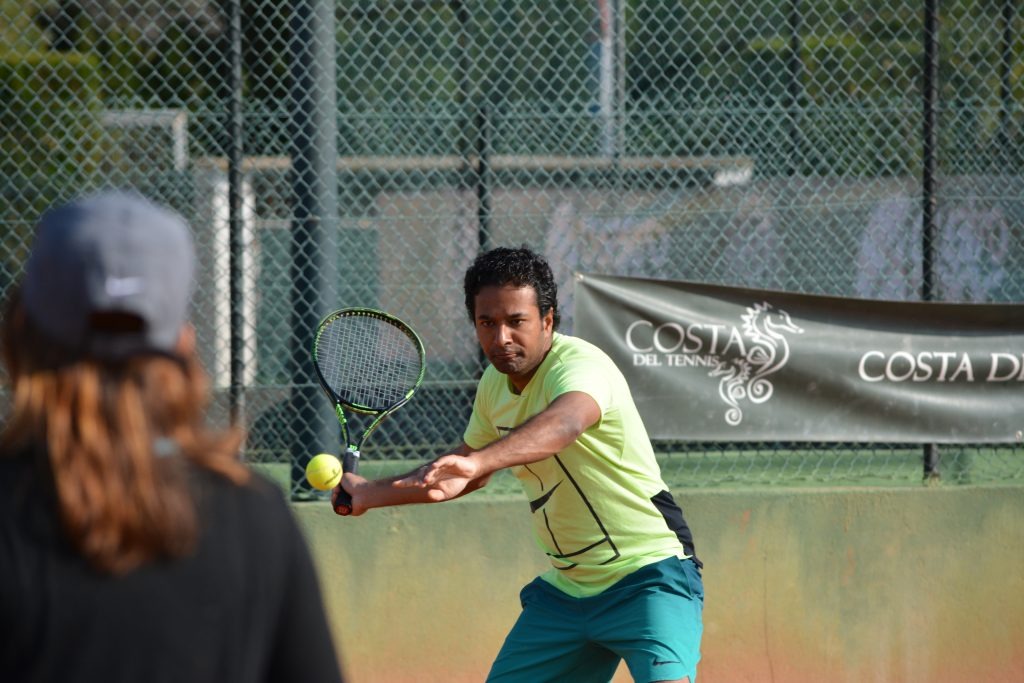
Another player described a much longer attempt:
I tried switching to a semi western for abt 2 years and ultimately went back to eastern grip. The main reason i wanted to switch was to produce more spin naturally on my fh. However my fh only suffered and became a liability. Sure my spin rate went up but my consistency and directional control suffered significantly. I committed to it thinking it would eventually click but never did. I switched back to my eastern grip and instantly was better. Eastern fh is the natural shot for me and was able to work on my spin rate way better with that grip than semi. If ur committed to switch be prepared for a gruelling and frustrating process. To me i view that attempt as a waste of time that i should've put towards my eastern fh.
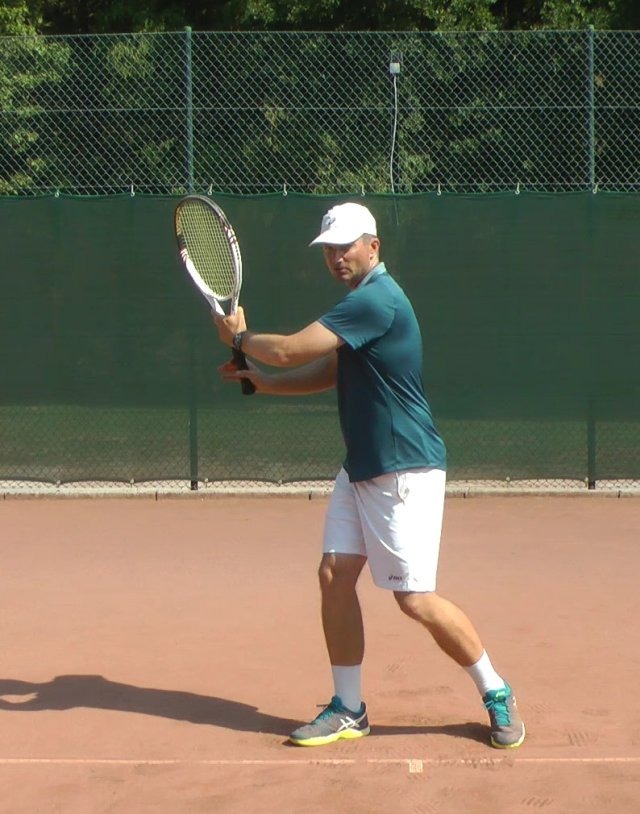
A decision filter for your own forehand
- No recurring limitation: Name the shots you already place reliably. A grip change has no problem to solve.
- High-bouncing rallies or an unmet spin goal: Pick the ball or shot you want to improve and test Semi-Western against your current grip.
- A high-contact style that already suits your stroke: Western works if you accept the low-ball and net-transition costs.
Write down one recurring error, one gain you want, and one existing shot you'd hate to lose. That gives your test a purpose.
How to Test a Forehand Grip Change Without Changing Everything Else
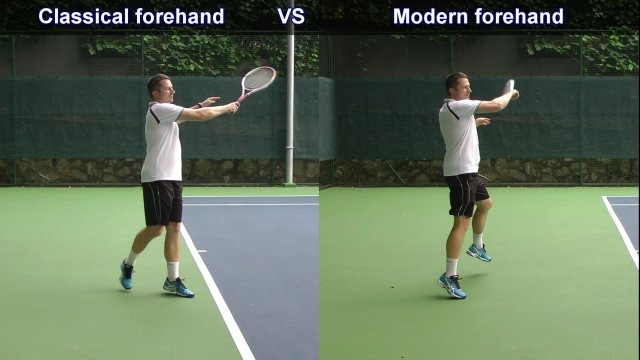
Keep the same racket and string setup while you compare your current grip with the one you're testing. Use a comparable feed and target so you can see changes in depth and direction, not just the new feel of the stroke.
One player reported an immediate improvement after switching to Semi-Western, while also explaining that the racket had changed:
I just recently switched. I got a new racket and it felt like there was zero power and none of the spin I was supposed to get - until I switched from eastern to semi western and WOW! I used to have to muscle power out of the eastern and now I swing easy, there's tons of power and top spin with the semi-western. You just have to be careful on the low balls and I still like eastern way more returning serves.
The result felt dramatic, but the racket changed too, so you can't tell which change did the work.
Make the comparison repeatable
- Set a baseline: Pick a court target and record your usual grip against similar feeds, ideally from a partner, coach or ball machine.
- Change one variable: Use the alternative grip at similar ball height, pace, placement and preparation.
- Record and compare: Count attempts and balls that land in. Note depth, direction, ball flight, comfort and effort, plus any mismatched feeds or fatigue. Review more than one session before deciding whether the gain is worth the relearning time.
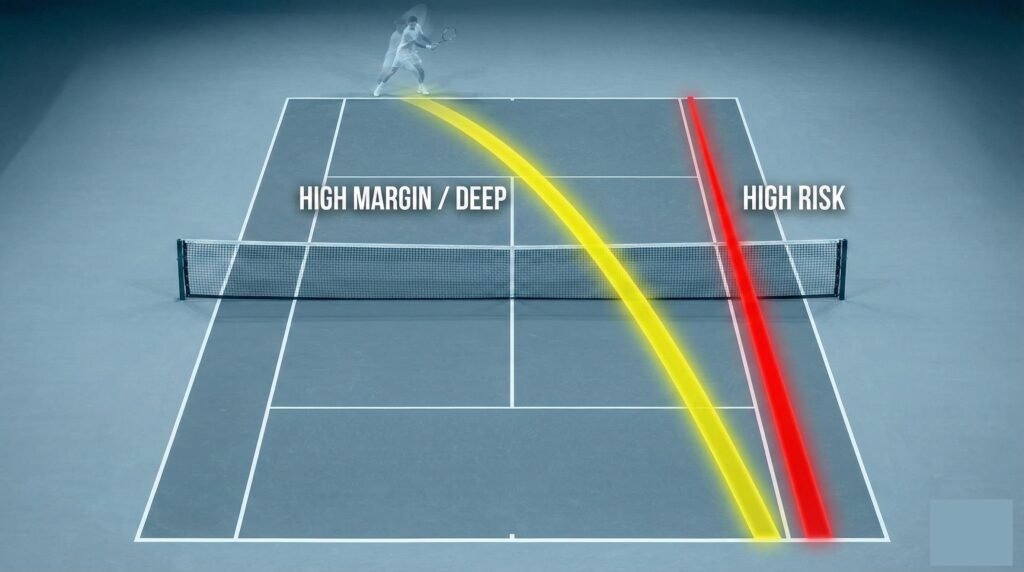
Count a ball as in if it clears the net and lands inside the court. Record intended depth and direction separately, using the same criterion for both grips.
| Feed height | Grip | Target / attempts | Balls in | Depth / direction | Comfort and notes |
|---|---|---|---|---|---|
| Low / skidding | Current | _____ | _____ | _____ | _____ |
| Low / skidding | Trial | _____ | _____ | _____ | _____ |
| Waist-high | Current | _____ | _____ | _____ | _____ |
| Waist-high | Trial | _____ | _____ | _____ | _____ |
| Shoulder-high | Current | _____ | _____ | _____ | _____ |
| Shoulder-high | Trial | _____ | _____ | _____ | _____ |
Paired rows can show a trade-off, such as more comfortable high-ball contact at the cost of low-ball depth.
If the new grip hurts, stop and get it checked before you play again.
Can a Grip Between Eastern and Semi-Western Work?
A position between the named Eastern and Semi-Western bevels can work, because real hands don't settle into textbook placements. One r/10s player found a comfortable intermediate position and adapted in roughly two to three months while keeping a preferred driving style. If you have a defined limitation and want to keep your familiar shots, consider this smaller change first.
When the Grip Is Not the Real Problem
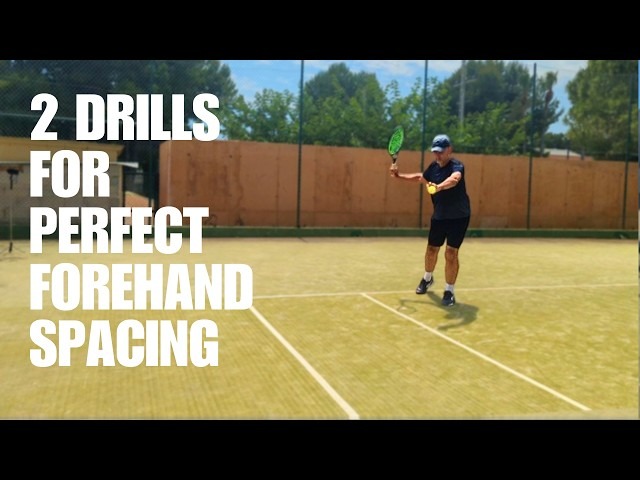
A rushed forehand fails when you arrive late, crowd the ball or make contact behind your preferred point. Those errors show up with Eastern, Semi-Western or Western, because the starting hand position is only one part of how a moving racket meets the ball.
A short rear-view or side-view recording shows whether you prepare early, leave space between body and ball, and meet the ball in front at a usable height. A coach can review the same footage. If the problem is in your stroke or movement, go to the forehand technique guide or tennis footwork guide. For a different ball-flight problem, see topspin technique.