
Hit a drop shot when you are balanced, the incoming ball is easy to handle, and your opponent is deep in the court or still recovering from the last shot. Prepare as you would for a normal groundstroke, then brush the ball with a short, gentle swing so it clears the net and lands short. If you are stretched or your opponent is already moving forward, play a safer groundstroke. Build control with partner feeds before you try the shot in a live point.
A drop shot can turn an ordinary baseline exchange into a scramble. You play the ball just beyond the net, and an opponent who was comfortable behind the baseline suddenly has to cover the front of the court.
The hard part is choosing the moment. A decent drop shot at the wrong time gets run down, and a good opportunity disappears if you rush the swing. Practice goes faster once you can tell the two situations apart.
What Makes a Tennis Drop Shot Different From a Slice?
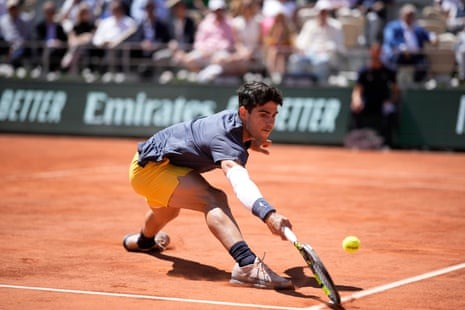
A drop shot is a groundstroke played short on purpose, usually with less pace and some underspin, to pull an opponent forward. A slice stays low and often travels deep. A short-angle groundstroke pulls the opponent sideways. A drop volley is hit before the ball bounces. Decide which result you want before you practice: a short landing, a deep slice or a wide angle.
When Should You Try a Drop Shot in a Rally?
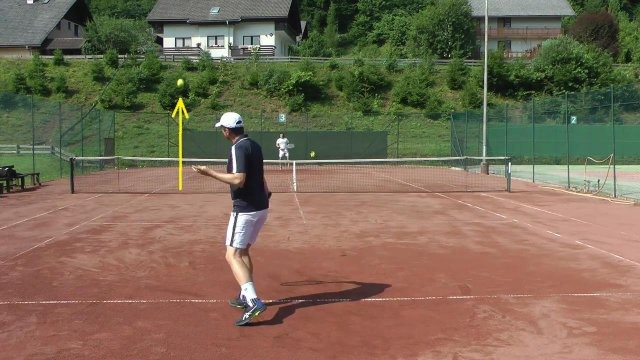
Start with your own position and the incoming ball. A deep opponent helps only if you are balanced. If you are scrambling backward and barely reaching the ball, skip the drop.
Check three things before you commit: your balance and court position, the pace and height of the incoming ball, and where your opponent is moving.
| Rally situation | Your contact | Opponent's position | Decision |
|---|---|---|---|
| You step inside the baseline to a ball you can handle | Balanced, with time to prepare | Deep behind the baseline | Hit a drop shot |
| A high, deep moonball pushes you backward | Retreating or reaching awkwardly | Recovered near the middle | Keep the safer rally ball |
| A slower ball arrives in your strike zone | Controlled | Already approaching the service line | Hit a shot that keeps them back |
| You reach a midcourt ball after moving forward | Balanced, with space to swing | Still recovering from a wide exchange | Drop shot into the open front court |
A slow ball is not automatically an easy ball to drop. A high defensive shot pushes you away from your preferred contact point, especially when it lands deep. By the time you settle under it, the opponent has often recovered.
When you do have a good ball, pick the landing area from your opponent's position. Aim the short shot away from the side they are covering to lengthen their run. If they are already charging one side of the net, a predictable drop into their path gives away the advantage.
What professional match data shows
An ATP Tour analysis published in February 2023 reported that players won approximately 51.5% of points involving forehand drop shots in its elite men's dataset, compared with about 67.7% for Carlos Alcaraz. The figures come from professional matches and say nothing about recreational success rates.
How to Hit a Drop Shot: Grip, Preparation, Contact
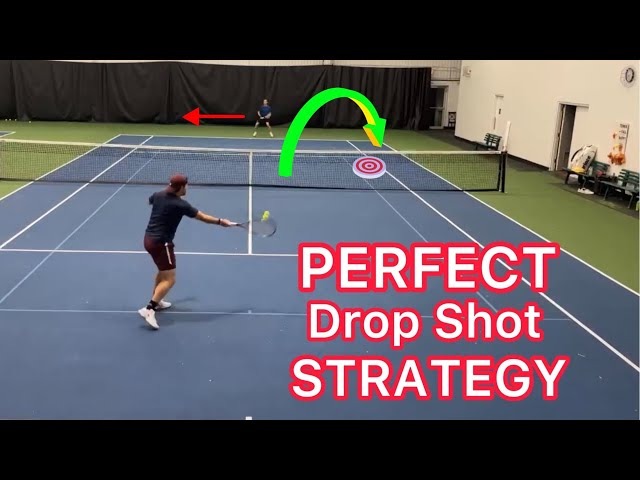
A good drop shot needs a short swing, a slightly open racket face and just enough lift to clear the net. The motion feels light, and the racket guides the ball to a short landing.
Five parts of the stroke
- Arrive balanced. Get into a position where the ball sits a comfortable distance from your body. A jammed contact leaves no room for touch.
- Pick your grip. The Continental grip is the usual starting point for sliced and underspin drop shots, and it gives you good control of the racket face.
- Prepare like a normal groundstroke. Set up as you would for the regular shot from that side. If you open the racket face fully and early, your opponent reads the shot.
- Brush softly through contact. Hold the racket firmly but relaxed. Bring a slightly open racket face to the back of the ball and brush down and through it with a short, smooth motion. That adds underspin and takes pace off the ball. Let the racket follow through a short distance. A sudden chop or a full stop makes the flight hard to control.
- Clear the net, then land short. Give the ball enough height to cross the net. Too much loft gives the opponent time to arrive, and too little sends even a gentle shot into the net.

Racket face and swing speed work together. A softer swing cuts the pace you send forward, and the face sets the trajectory.
The LTA's Heather Watson lesson covers timing, changing grips, disguising the stroke and practicing it.
Forehand vs. Backhand Drop Shots and Disguise
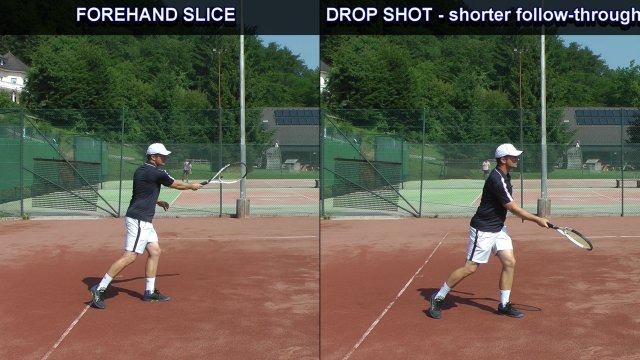
Both strokes aim at the same result: a short, controlled reply to a ball you can handle. The preparation differs because the racket reaches contact from opposite sides of the body.
On the forehand, start with your normal groundstroke setup. If you show an open racket face right away, your opponent reads the touch shot early. Keep the preparation believable for as long as you can.
On the backhand, a compact slice-like preparation is often part of your normal game, so the move to touch feels familiar if you have practiced a backhand slice.

How much disguise do you need?
A recreational player can start a normal-looking forehand takeback and finish with a smaller swing. Another player needs to set the touch grip earlier to control contact. Both approaches work at different stages. A late grip change lets advanced players disguise the shot longer, but if you are still developing touch, it adds a timing demand that produces mishits. Use a simpler, repeatable preparation until you can place the shot.
To check your disguise, record forehand and backhand practice swings and pause each one before contact. Compare the early racket setup with your normal groundstroke, and look for any grip change that disrupts your contact.
Why Your Drop Shot Hits the Net, Floats, or Goes Long
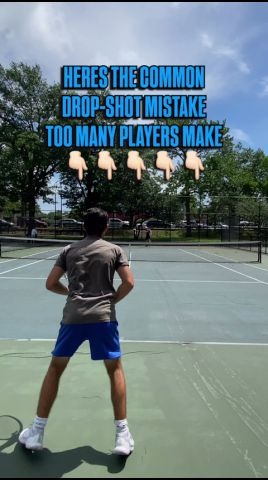
After a miss, look at the ball's flight and at the situation that produced it. A netted shot from an easy feed calls for a different fix than a netted attempt made while retreating from a deep moonball.
| What happened? | Cause | One useful check | Adjustment to test |
|---|---|---|---|
| Ball hits the net | Not enough clearance, poor contact, or an awkward incoming ball | Watch the flight on similar feeds | Add a little lift and keep the swing short |
| Ball lands too deep | Too much forward pace, or a feed that is hard to absorb | Compare landing depth on similar balls | Soften the forward stroke and use an easier feed |
| Ball floats high | Too much loft or poorly controlled pace | Watch the highest point of the flight and your opponent's approach | Use less lift and a shorter stroke for a lower trajectory |
| Opponent reads it early | Visible grip or racket-face change | Review your preparation before contact | Keep the early setup close to your normal stroke |
| Opponent reaches a good short ball | They had time or good positioning | Note where they stood when you chose the shot | Pick a better moment, or get ready for the next reply |
A missed landing points to your contact or the incoming ball. A retrieved short landing points to the opportunity you chose.
One recreational player described trying different answers to opponents who kept sending back deep, high balls:
Today I played some matches against moon ballers. They were genuinely the most annoying matchesI’ve played thus far. For example, I would hit in the corner and guy just moon balled it pretty deep and high and by the time I was ready to hit the shot he was already in the middle waiting, and I was wondering what to do against them. I was thinking of hitting angles (mostly crosscourt) so that they just couldn’t get to it in time or if the did it would be a very short moonball that I could overhead, but that didn’t work because my ball wasn’t going crosscourt enough. Instead I would end up hitting it in the alley and if it did go crosscourt it wasn’t too far from the opponent. Another strategy I tried was dropshotting the ball or giving the opponent a short slice but it was either too slow or hit the net Does anyone have a better strategy or a way where I could actually be precise and tricky with the aforementioned hitting angles/better slices and dropshots?
The opponent was often back in the middle before the player hit the next ball. A failed drop in that spot comes from both the incoming ball and the decision to try it.
Change one variable at a time
After a miss, label the attempt: net, deep, floating, obvious or retrieved.
Then reproduce a similar incoming ball and change one thing. Keep the feed and preparation the same and adjust the flight, or keep the stroke steady and pick a more comfortable contact. If you change grip, racket angle, swing length and target together, a better landing tells you nothing about which change worked.
Practice Drop Shots With a Partner, Then in Live Rallies
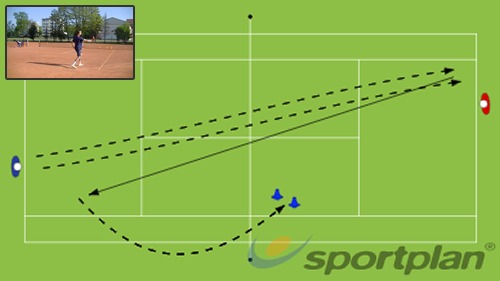
Live rallies add changing ball height, pace and opponent movement to a stroke you first learn from steady feeds.
Stage 1: Repeatable feeds
Have a partner feed balls you can handle to the same area. Agree on a short landing zone and hit a comfortable stroke from a balanced position. Log each attempt as a good landing, a net error or a ball that goes past the short area.
You can also track where the second bounce lands, as long as you watch from the same spot each time.
Stage 2: Controlled variation
Ask your partner to vary the feed within a range you can handle. Some balls invite a drop and others call for a normal rally shot. You now have to spot the opportunity and keep your contact consistent.
Stage 3: Cooperative rally game
Start with three or four normal rally shots before either player can attempt a drop. An attempt counts when the ball lands in the court and bounces a second time before the service line. A miss or a longer landing ends the attempt. Agree on these conditions with your partner before you start.
These rules are a training convention, separate from official scoring. Coaching drills use different bounce targets: a 2010 Tennis.com exercise described a five-bounce target before the service line, while a Tennisnerd lesson uses second-bounce placement as a check.
A simple practice scorecard
| Stage | Record | What the record shows |
|---|---|---|
| Repeatable feeds | Attempts, good landings, net misses, long misses | Whether contact and short placement repeat |
| Variable feeds | Attempts at suitable balls, passes, landing results | Whether you spot usable balls before committing |
| Rally game | Drops landed, agreed second-bounce result, opponent retrievals | Whether your placement holds up under a real decision and opponent movement |
A change in feed, target or rally format changes what the scorecard measures, so keep them the same between sessions.
What to Do After the Drop Shot Is Returned
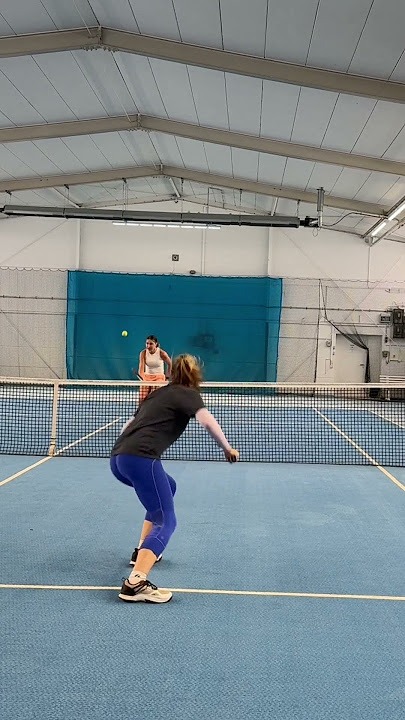
The point goes on when your opponent reaches the drop shot. Your next position depends on where the ball lands and how easily they get to it.
If the drop forces a rushed, low contact, take a balanced step diagonally forward as the opponent moves to the ball. That covers a short reply or a lifted return. If the ball sits high and the opponent has time to swing hard, don't charge forward blindly. Stay ready for a firm passing reply.
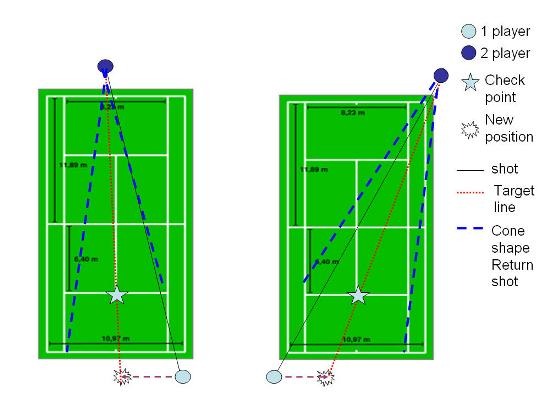
Test the transition with a partner who retrieves a drop, then play the next two shots. Notice whether you could move and set your feet before the reply arrived, or whether you were still watching the first ball land.
Are Repeated Drop Shots Fair in Competitive or Social Tennis?
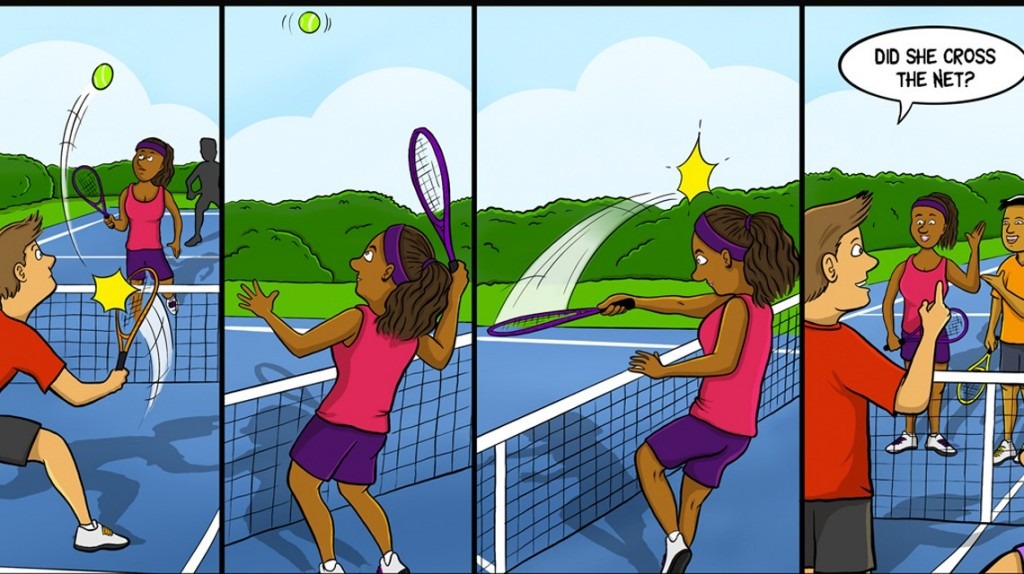
Repeated drop shots are fair in competitive play. A cooperative hitting session is different, because partners may have agreed to rally, practice a particular stroke or keep the session easy.
In one account of a close amateur tournament semifinal, a player described an angry opponent after winning with frequent drop shots:
So today I had the semifinal for my first amateur tournament, and I won, but it was a super tight match. At the end of the match, my opponent was really angry and told me I did not deserve it, I played really ugly, using a lot of drop shots, and that is a really shitty way to play and to win. She was so angry she didn't even shake hands, or clear her part of the court, and just stormed off.
In a friendly hitting session, settle first whether you are rallying cooperatively or playing points.