
Get set before the server hits the ball, keep your swing short against fast serves, and hit with enough margin to start the rally. Step in and drive a slower serve when you have time for clean contact. When you feel rushed, block or redirect. Your goal is a return that lands in play and leaves you ready for the next shot.
The return of serve: the basics
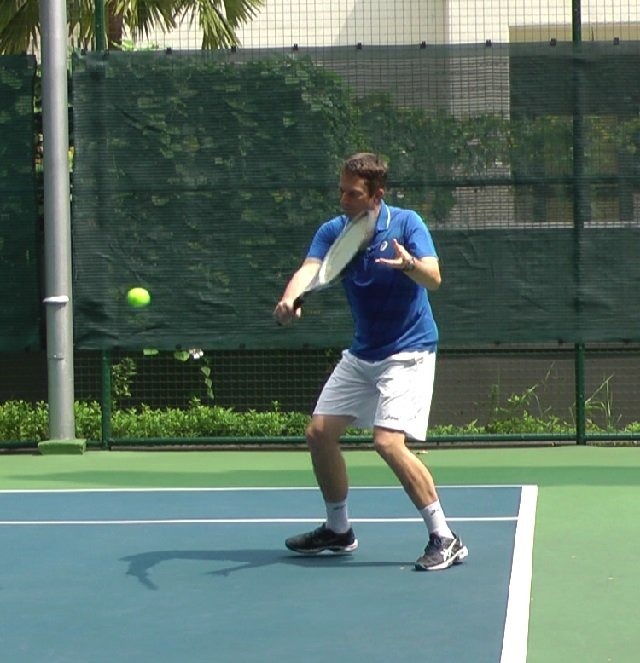
To return a serve, get ready before the server strikes the ball, read its direction, move into a balanced contact position and hit it back into the opponent's court. The serve must land in the diagonally opposite service box. Let it bounce once, then return it before a second bounce, as the ITF Rules of Tennis require. A return that starts the rally keeps you in the point, even when the serve leaves no room for a big swing.
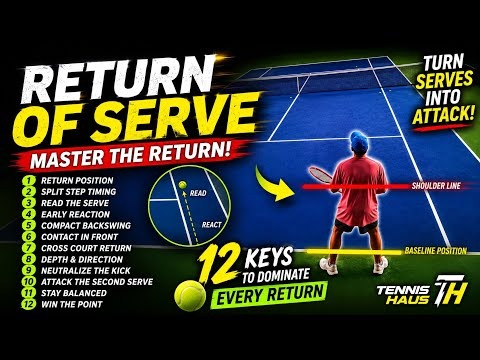
Where to stand and what to read before contact
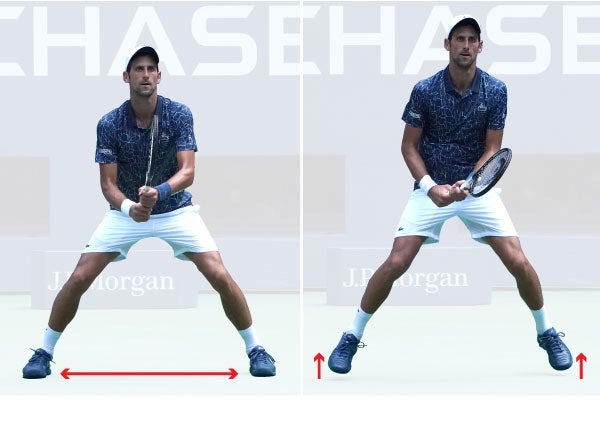
Start where you can see the serve and reach it, yet stay close enough to join the next shot. Begin roughly centered between the likely wide and T serve locations, then adjust for the server's patterns and your own reach.
Against a powerful serve, stand farther behind the baseline. You get more time to reach the ball with the racket ready, but a wide serve pulls you farther off the court and you have more distance to recover after contact.
Against a manageable serve, stand nearer the baseline or move forward as the ball arrives. You meet the ball before your opponent has much time to recover. That advantage disappears when the serve rushes you into awkward contact.
Watch a few serves from the same opponent and separate three placements:
- Down the T: The ball travels toward the center service line. You usually move less sideways, but you must adjust quickly near your body.
- Into the body: The ball crowds your hitting space. Move your feet to make room for the racket.
- Wide: The ball pulls you toward the sideline, so balance and recovery matter most.
The deuce and ad courts both have all three placements, but the direction you move depends on the side.
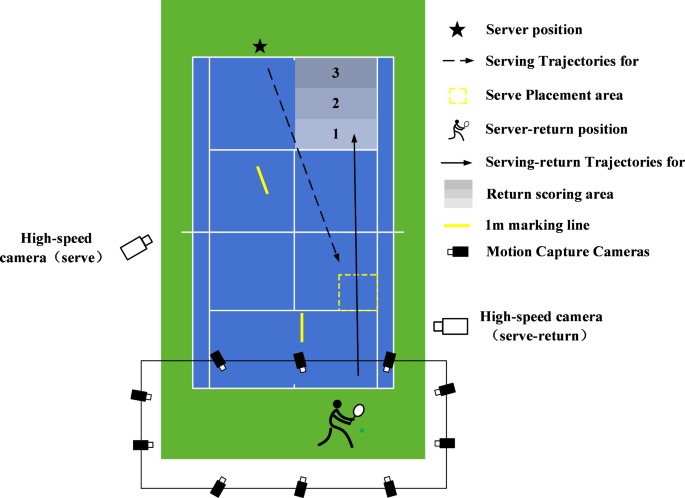
A flat serve, a curving slice and a high-bouncing kick arrive on very different paths. Knowing what your opponent tends to hit helps you prepare, but the actual flight and bounce decide how you move.
Eight former or current male ATP top-250 players interviewed in a 2018 study described using both contextual information and movement cues to anticipate serves. These are cues worth noticing, scaled to recreational play.
A 2019 systematic review of 62 anticipation studies rated eight as highly representative. Its findings on moving early toward an anticipated first-serve direction apply only under representative testing conditions. Watch the server's toss and delivery, stay ready to move, and use the ball's early flight to confirm direction before you commit to one side.
Why a return feels different from a regular forehand
In a cooperative rally you get a familiar rhythm. On a return, the server controls the timing, direction, pace and spin of the first ball, so a perfectly good forehand can feel rushed.
The split-step helps. Start in an alert, balanced stance with the racket ready. Hop as the server hits the ball, then push toward the ball once you see where it's going. Land balanced so you can push off with either foot.
Match your racket preparation to the time you have. On a fast serve, turn your shoulders and use a shorter takeback than in a comfortable baseline rally, then swing through the ball with control. A compact return still has a real swing and follow-through.
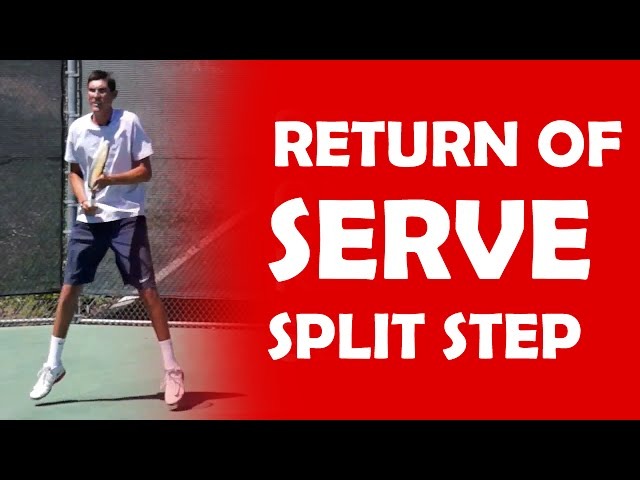
Grip choice matters here. Some players wait with the grip for their most likely return, while others change between forehand and backhand grips as they prepare. A change that feels easy in a slow rally can feel awkward against a quick serve. Use whichever setup lets you prepare both sides without losing time before contact.
An iTPA photographic analysis of Novak Djokovic shows the width of his ready position and the timing of his decision step. Use it as a visual example of good preparation.
Why fast serves end up in the net: diagnose contact and swing
Reaching a fast serve and returning it well are separate problems. You can read the direction in time to get the racket on the ball and still lack time for the full topspin swing you use in a rally.
A recreational player described that frustration:
So I’m somewhere between a 3.0 and 3.5. One of the things I have difficulty dealing with is returning fast serves. The problem is that I’m often hitting them into the net. What’s going on? I find that if I chip it back, I’m more consistent with getting it back but I want to be able to hit a topspin return.
Against a fast serve, block or redirect. Keep the racket prepared near the contact area, swing short and use the incoming pace. You still need the right racket-face angle, stable contact and enough height to clear the net.
A drive asks for more. You must organize the racket path and contact point while the ball is arriving, so a rushed attempt ends in the net or past the baseline. Topspin pays off when the ball gives you time to hit it cleanly.
USTA guidance on first- and second-serve returns backs a higher-percentage response to a tough first serve and more initiative on a manageable second serve.
Late preparation, cramped contact or a flight path that stays too low send fast returns into the net.
Slow, spinning, and second serves: when to step in and drive
A slower serve gives you time. Use it to set your feet before you swing, because a big swing is as unreliable as a rushed block when your spacing is off.
First and second serves hint at what an opponent will try. A heavy kick, an awkward body placement or a wide trajectory can leave you no room to attack even on a second serve.
| Incoming serve | Main challenge | Best return choice |
|---|---|---|
| Fast, flat first serve | Limited preparation time | Compact block or controlled redirect |
| Slower second serve with manageable bounce | Setting up contact without overswinging | Balanced drive toward a planned target |
| High-kicking serve to the backhand | Uncomfortable contact height | Adjust to the bounce; use a neutral return if needed |
| Wide slice serve | Lateral reach and an exposed court | Get your feet set and put the ball in play |
| Serve into the body | Restricted swing space | Make room with your feet and prepare compactly |
In singles, a wide serve often invites a crosscourt return with margin. Against a serve down the T or into your body, start with the middle of the opposing court. These percentage choices appear in USTA return strategy and LTA coaching; adapt them to the ball you can reach in balance.
If the serve sits up within easy reach, move forward and drive it toward your chosen area.
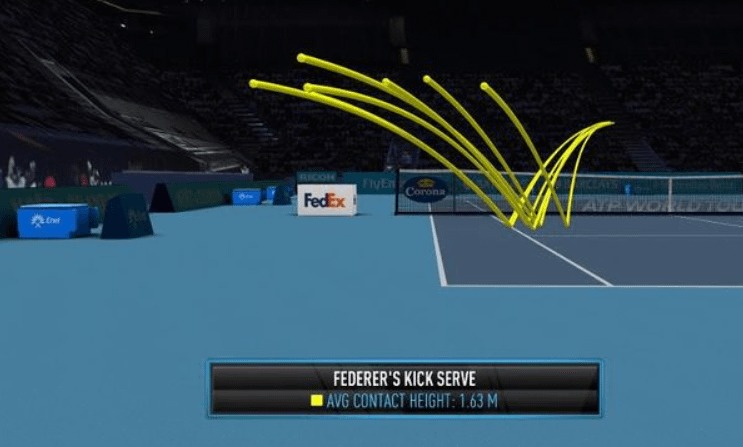
If you start a big swing on a slow serve before you set your distance from the ball, you end up reaching, crowding yourself or hitting at the wrong height. The speed is comfortable, but the spacing is the problem. An adjustment step creates room for a drive without a bigger swing.
Returning in doubles: keep the net player out of the point
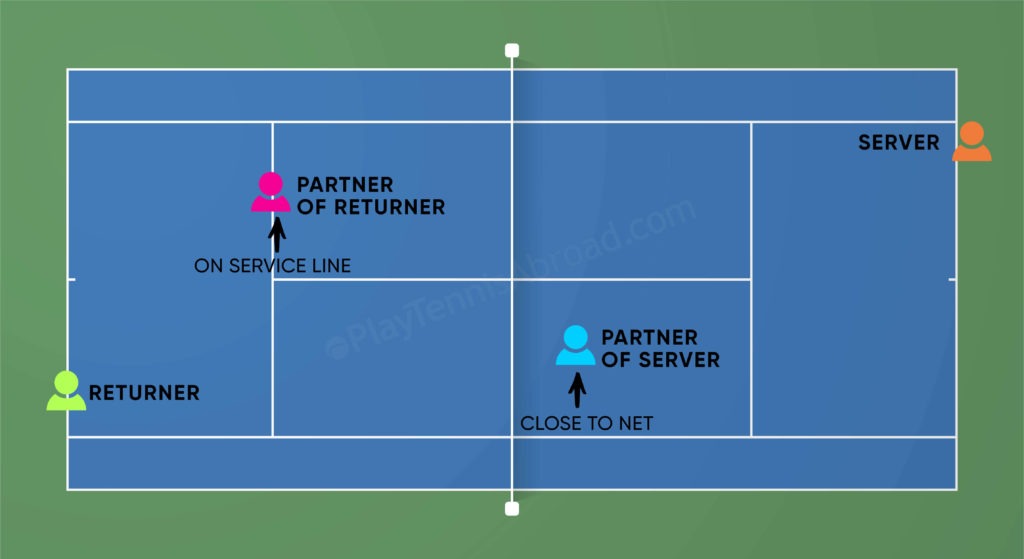
In doubles, a return that lands inside the court can still give the net player an easy shot. The server's partner can cross to intercept it, a tactic known as poaching.
One player described that problem while trying to make safer returns:
I'm looking for thoughts / insight on improving return of serve. I had a rough couple of days on court (playing doubles) where my returns usually went long or into the net, no matter whether I was trying to "go big" or just get it in. My usual adjustment in these cases is to just chip it in to start the point, but that worked less well in doubles for me as it would get picked off by the guy at the net.
A chip is a fine answer to a serve. In doubles, though, a high floating chip that passes near an alert net player gives that player time and space to attack.
Aim with three people in mind: the server, you and the opposing net player. Returning crosscourt toward the server is a good starting option because it keeps the ball farther from the net player. Height, speed and the net player's position decide how much protection that line gives, and a skilled net player can still intercept a floating crosscourt ball.
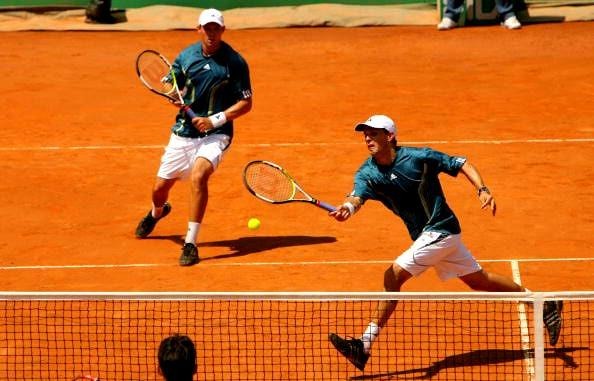
A deeper controlled return, or a lower ball toward the server, reduces the easy volley. A lob works when the net player's position allows it, but a poorly controlled lob gives the opponents another attack.
Why returns go long, feel jammed, or float short
The same miss can come from late preparation, contact height, racket angle or the trajectory you chose. The miss alone doesn't tell you which.
| What you observe | Likely cause | One adjustment to try | What to look for |
|---|---|---|---|
| Return catches the net | Late preparation, face angle or low trajectory | Prepare the racket before the ball reaches your side | More net clearance while the ball still lands in |
| Return sails long | Crowded spacing, too much swing effort or face angle | Take an adjustment step to contact the ball at comfortable reach | More returns landing in the intended area |
| Body serve jams the racket | Not enough room at contact | Move your feet to create space | A full, unhurried swing |
| Return floats short | Weak contact or a trajectory that sits up | Aim deeper with a compact, controlled stroke | Ball lands deep without sitting up for an easy volley |
| Wide serve produces a mishit | Off-balance reach | Move your feet toward the bounce before redirecting | Cleaner contact without a stretched swing |
| Doubles return gets poached | Ball enters the net player's reach | Change the lane, height or depth | Fewer easy interceptions in similar situations |
Pick your most repeatable error and name it: net, long, jammed, floating or off-balance. Test one correction at a time so you can see whether the same error shrinks. If the cause stays unclear, a coach or a video of your stroke can show the contact problem.
How to practice returns when you cannot find a server
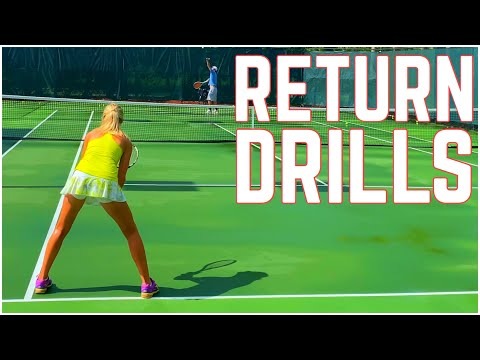
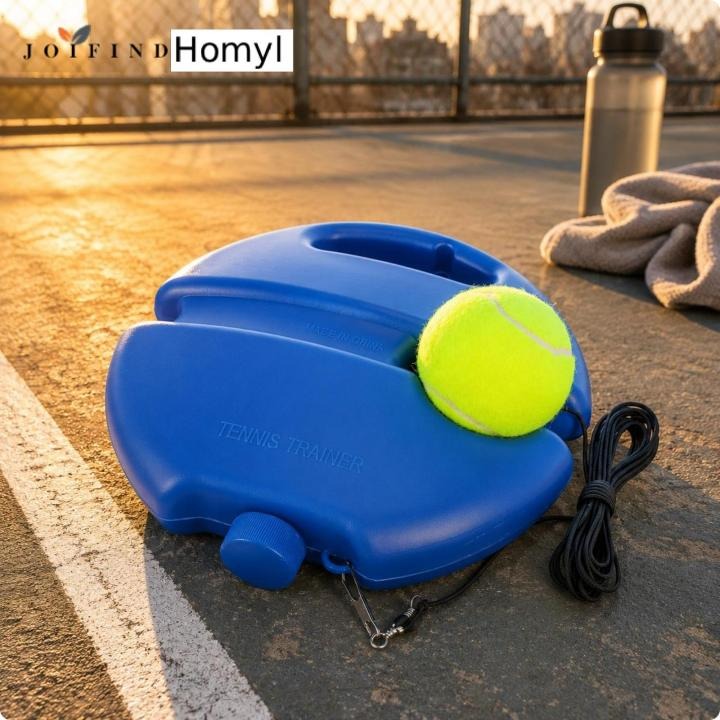
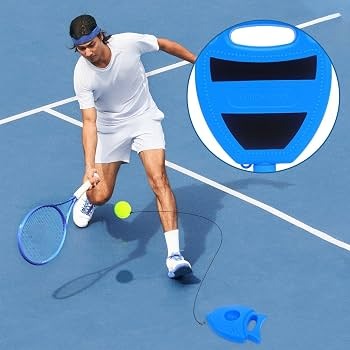
You can rehearse preparation and contact without a server. A ball machine works best if you have one. A wall with a controlled feed is a simpler way to work on footwork and compact contact.
With a ball machine, start with a predictable feed to one side at a manageable speed. Hold the racket ready, split-step as the feed starts, turn compactly and hit to a chosen area. Reset your feet before the next ball. Once contact feels good, vary the side or height of the feed so you have to decide how to move.
A wall trains a different skill. Feed a moderate ball, let it rebound, then take the adjustment steps to meet it with a short, controlled stroke. Leave room for an unhurried swing and get balanced again after contact. This drill builds readiness and spacing.
One Reddit player described the problem:
Return of serve is currently my most glaring weakness. Weirdly, I struggle with more with slower serves in my strike zone, but I can hit redirect winners off of big flat first serves. I think my problem is tracking the ball with my eyes. It's difficult to find people on weeknights to practice with.
Machine feeds come without a real toss and delivery, and a wall bounces differently. Only a live server tests how you read direction and handle serve variety under score pressure.
The USTA's The Return Game includes Side Shuffle, Trap and Reaction activities. Each isolates movement or contact before you have to make a full return.
A useful progression:
- Predictable feed: Build balanced contact on a known placement before adding choices.
- Two possible feeds: React to a choice of directions or bounce heights.
- Varied live serves: Add the toss, delivery, pace and spin once you have a serving partner.
- Points under score: Choose your return while the rally continues.
Track your returns over ten similar serves
Getting a racket on the ball is one result. A legal return that lands in play and leaves you ready for the next shot tells you more.
Pick a serve category and a target area before the first ball. Ten attempts make a manageable group for comparing adjustments.
| Serve group | Receive position or adjustment | Return shot | Planned target area | In play / 10 | On target / 10 | Ready for next ball / 10 |
|---|---|---|---|---|---|---|
| Fast first serves to backhand | __________ | __________ | __________ | ___ | ___ | ___ |
| Slower serves to forehand | __________ | __________ | __________ | ___ | ___ | ___ |
| Wide serves from one side | __________ | __________ | __________ | ___ | ___ | ___ |
Fill in one row for the serve category you are working on. Leave the others blank until you have run their own groups of ten.
- In play: The return lands within the opponent's court or is played by an opponent before it lands. A ball hit into the net, or out without being touched, does not count.
- On target: The return reaches the planned area. In doubles, a ball poached by the opposing net player counts as in play but not as on target.
- Ready for next ball: You recover enough balance and court position to answer the following shot.
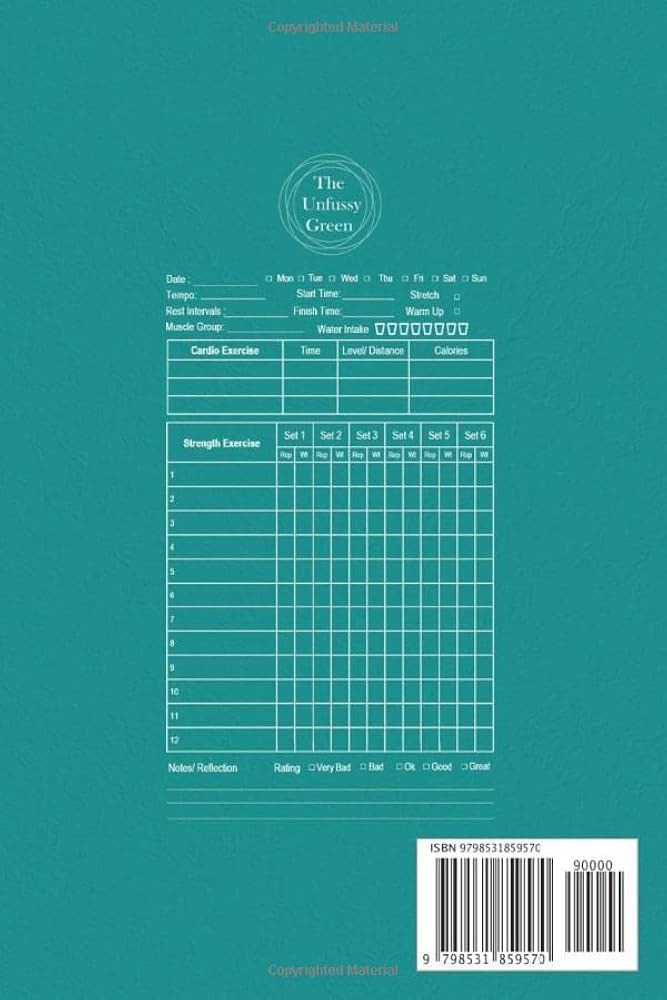
For example, compare a compact backhand block against first serves of similar pace and placement. Record each group of ten. For the next set, change only the receiving depth or shot choice and keep the target area the same. Keep the version that puts more returns in play and leaves you ready for the next ball.
In doubles, also note whether the opposing net player intercepted the return. That exposes a target problem even when the ball landed inside the court.
Ten returns give you practice feedback, not proof of lasting improvement. Compare sessions using similar serves and conditions.