
For a full-size tennis court, the net must be 36 inches at the center and 42 inches at the posts or required singles-stick supports. The dip is intentional. Approved red and orange junior formats use different center heights.
What Is the Regulation Height of a Tennis Net?
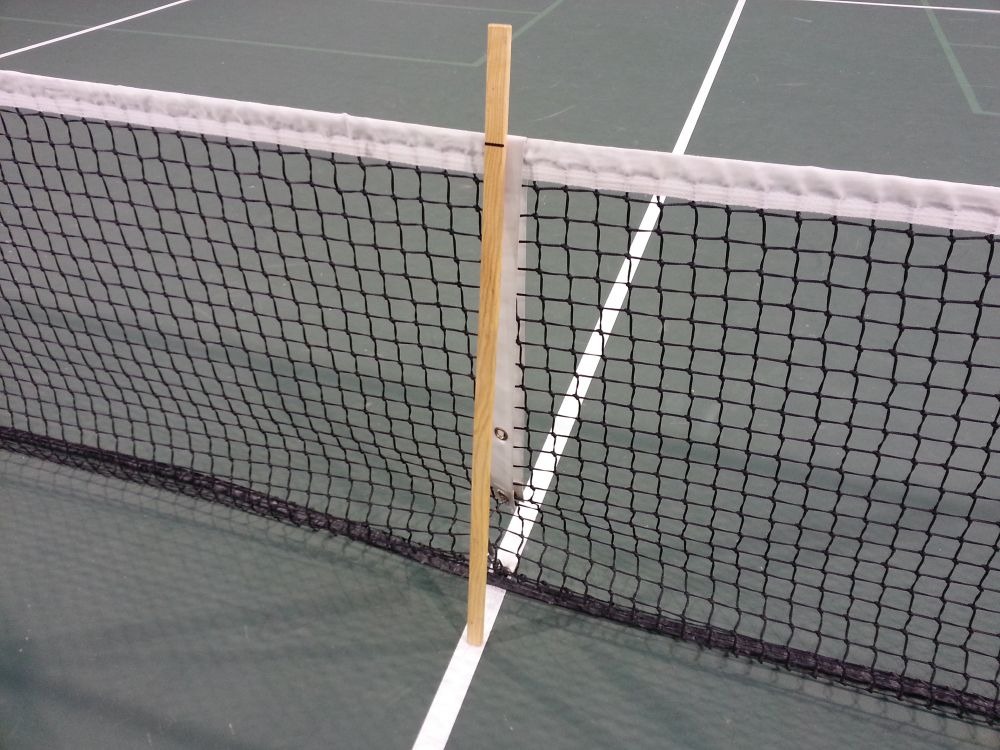
The International Tennis Federation specifies two heights for the same net. The center strap sets the lower one, and the net posts or required singles-stick supports set the higher one.
| Location | Feet and inches | ITF metric measurement |
|---|---|---|
| Center of net | 3 ft (36 in) | 0.914 m |
| Net posts | 3 ft 6 in (42 in) | 1.07 m |
| Required singles-stick supports | 3 ft 6 in (42 in) | 1.07 m |
These are the full-size court measurements in Rule 1 of the ITF Rules of Tennis 2026. The ITF gives the support height as 1.07 meters, a rounded metric equivalent of 42 inches.
For the rest of the playing area, including the lines and surface, see the tennis courts and playing surfaces guide.
Why Is a Tennis Net Lower in the Middle?
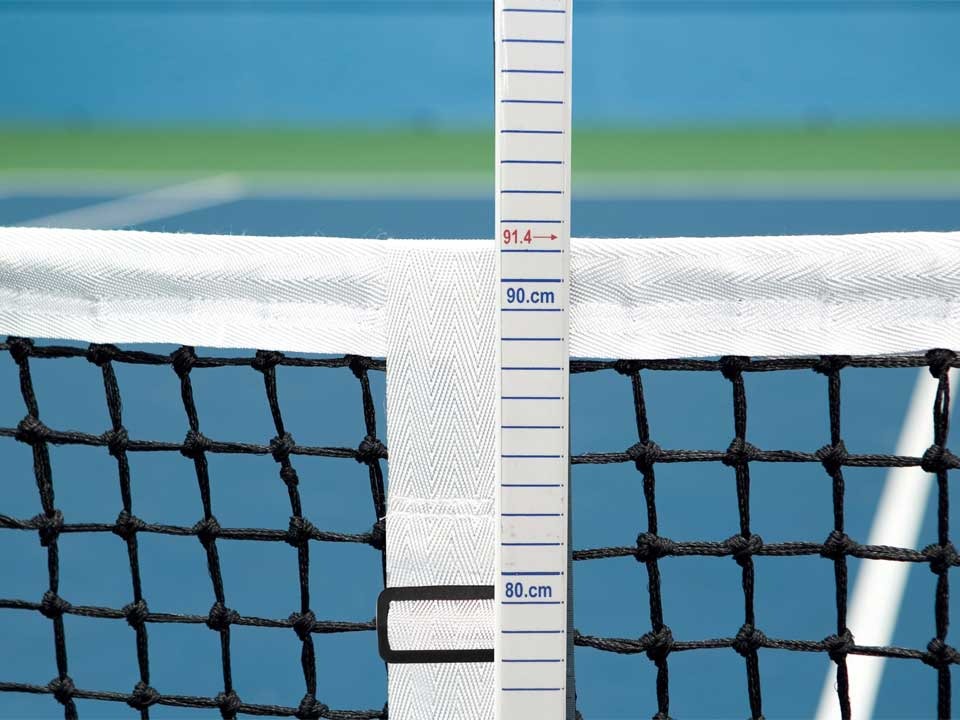
The top cord or cable runs between the posts, and a white center strap pulls the middle down to regulation height. The white top band covers the cord and measures 2 to 2½ inches deep on each side. The center strap can be no more than 2 inches wide. A visible dip is normal.
How to Measure Tennis Net Height Correctly
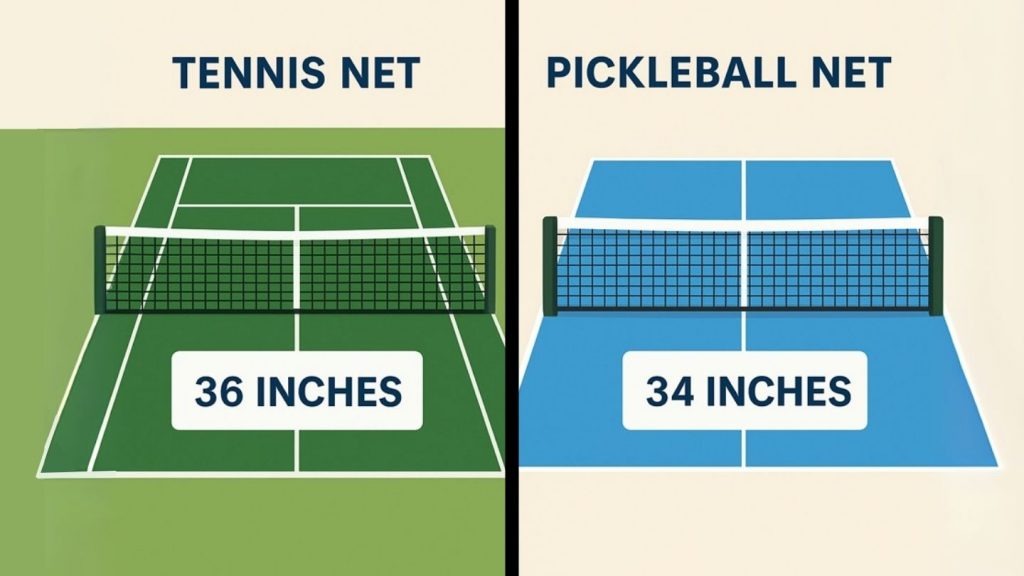
Use a tape measure or a net gauge. Measure from the playing surface to the top of the net band.
- Find the midpoint. Locate the white center strap where the net crosses the middle of the court.
- Measure straight up. Hold the tool vertically, with its lower end on the court surface, and read the height at the top of the band. The full-size center target is 36 inches.
- Check the supports. Measure where the cord passes over the posts or required singles sticks. The target is 42 inches.
- Repeat odd readings. If a measurement looks inconsistent, reposition the tool and check again.
From the baseline the dip looks deeper than it is, so measure it. Don't eyeball it with a racket or a hand span.
Does Net Height Change for Singles and Doubles?
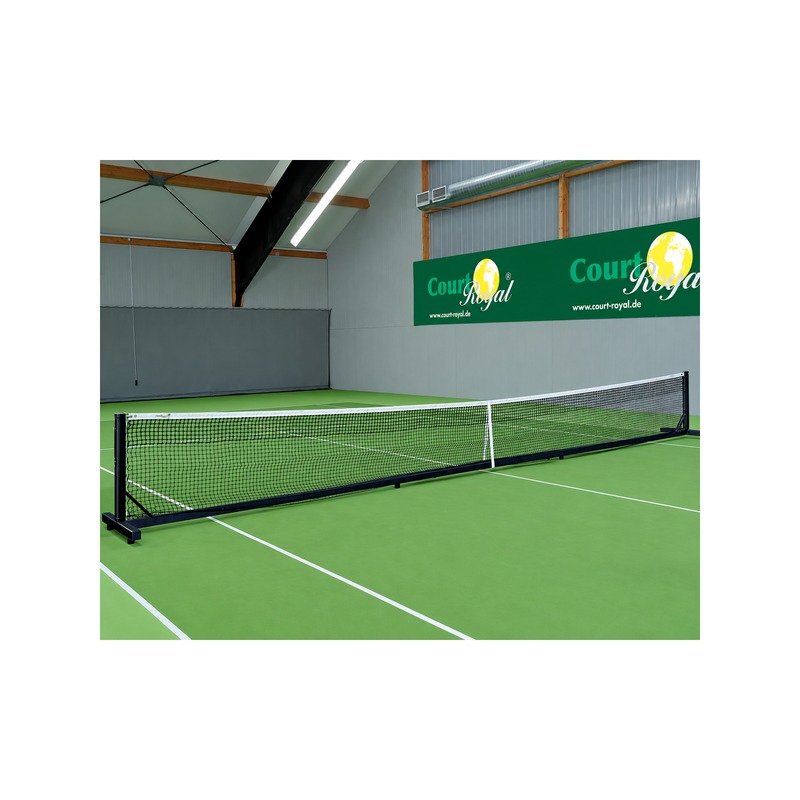
Full-size singles and doubles use the same center height. Only the support positions change.
| Playing arrangement | Position of posts or sticks | Support height |
|---|---|---|
| Doubles net for doubles | Post centers 3 ft outside the doubles sidelines | 42 in |
| Dedicated singles net | Post centers 3 ft outside the singles sidelines | 42 in |
| Doubles net used for singles | Singles-stick centers 3 ft outside the singles sidelines | 42 in at the sticks |
On a public court with a permanent doubles net, a singles match needs two singles sticks at the specified positions. Their centers sit outside the singles sidelines, with the sticks on diagonally opposite sides of the net as described by USTA. A court with dedicated singles posts needs no extra sticks.
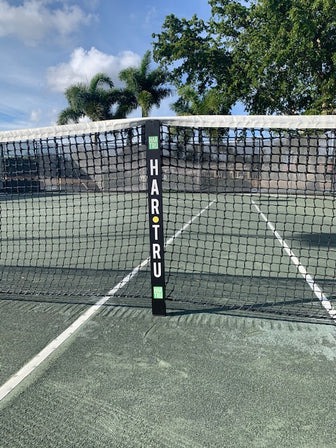
The singles and doubles court dimensions guide explains the sidelines and doubles alleys that determine those positions.
USTA's Friend at Court 2026 gives a specific interruption rule: when a singles stick falls during a point, play stops immediately and that point is replayed.
What If the Tennis Net Looks Too High or Too Low?
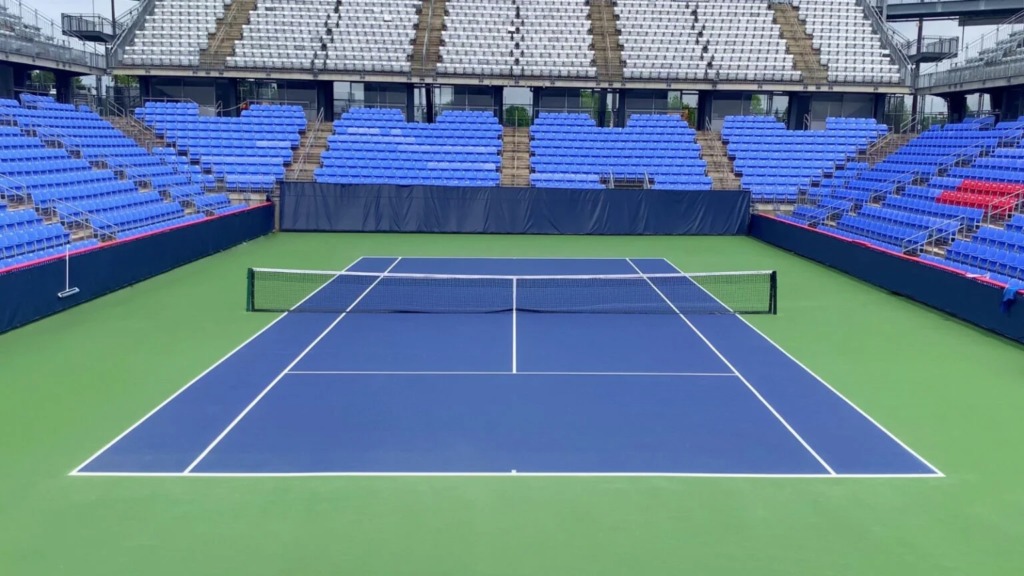
Work out which part is off: the center, a post or stick, the singles setup, or the hardware.
| Observation | Likely cause | What to do |
|---|---|---|
| The middle looks lower than the ends | Normal regulation dip | Measure it to confirm |
| The measured center is too high or too low | Center height is off | Have staff reset it |
| The center reads correctly but a support looks unusually high | Support height is off | Take the separate support reading |
| A doubles net is used for singles without sticks | Missing singles sticks | Set up singles sticks |
| The center strap is loose or missing | Strap problem | Have staff fix the strap |
| A post or cable is leaning, moving, or damaged, or something makeshift is propping up the net | Unsafe equipment | Stop playing and tell the facility |
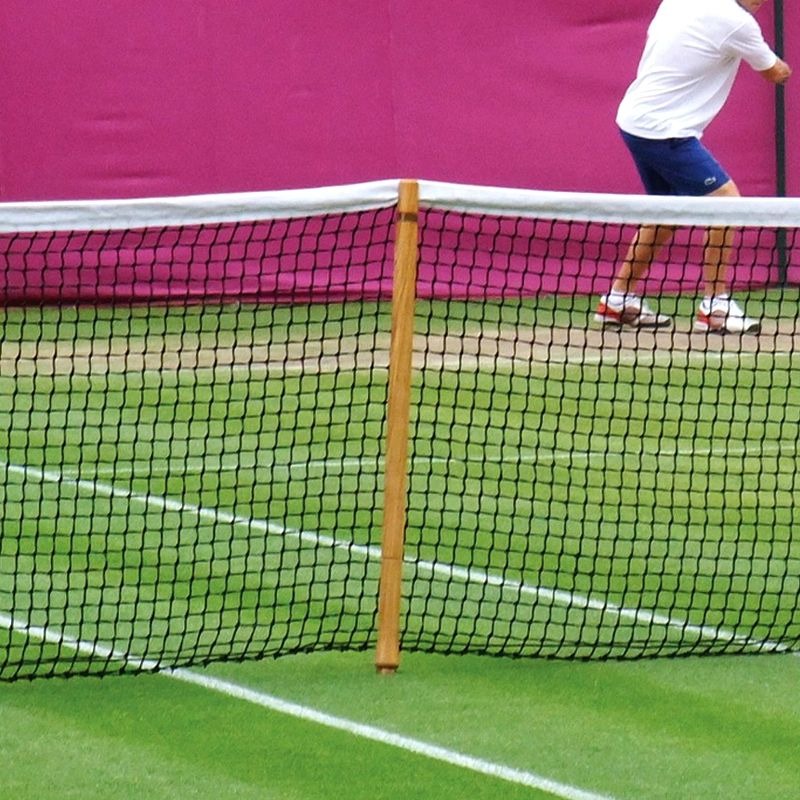
How Is a Tennis Net Adjusted to Regulation Height?
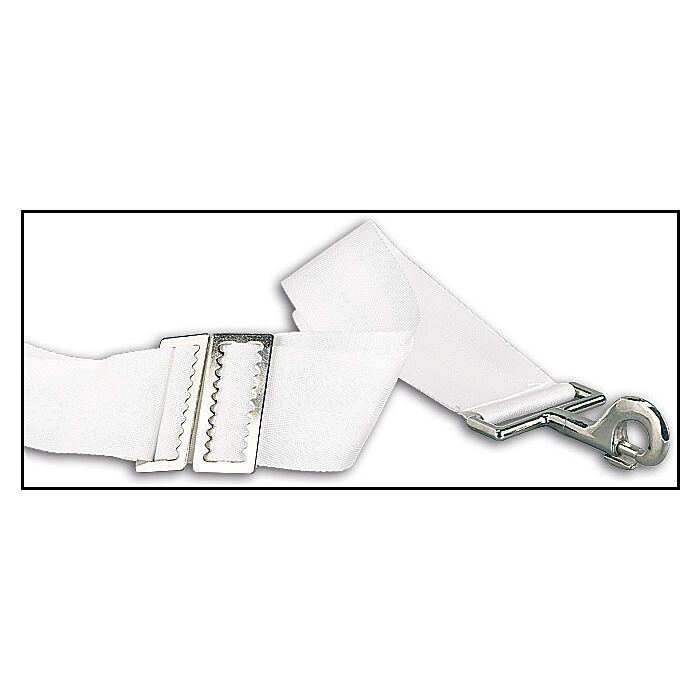
USTA Friend at Court 2026, Comment 1.1, recommends checking and adjusting net-cord tension before the first match of the day and before each following match. It also gives a setup sequence for courts without a tension-measuring device.
- Loosen the center strap. This frees the midpoint before you adjust cord tension.
- Set the intermediate center height. Adjust the cord until the center is approximately 39 inches (991 mm).
- Set the playing height. Tighten the center strap to bring the middle to 36 inches (914 mm).
The 39 inches is only a setup step before the strap is tightened. Regulation center height during full-size play is 36 inches. USTA's full procedure is in Friend at Court 2026.
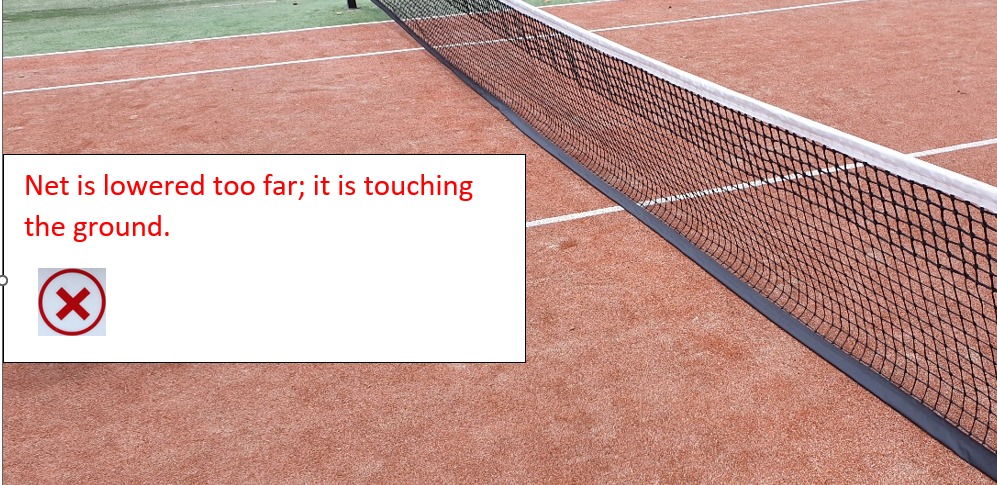
A facility may let you adjust the strap but lock the cable tensioner and posts. If the center or supports need correcting, ask the court operator or an official to arrange it. Don't force a locked mechanism or crank a damaged, unstable, or unfamiliar tension-loaded assembly.
What Should You Do If the Net Is Damaged or Someone Disputes Its Height?
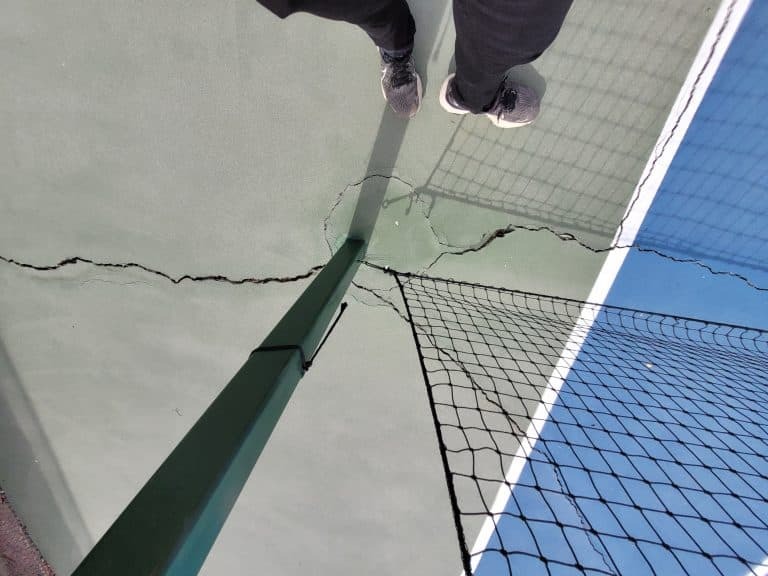
Without a shared measurement, a net-height argument can quickly turn into an argument about the match itself. One player described an opponent returning from his car with a crank during a casual ladder match in 2024:
He proceeded to crank it up way higher than regulation and said “oh that’s so much better”. It kinda pissed me off and threw me off my game a bit. I didn’t know what to say. Luckily I still won 6-2 7-5 so I just shrugged it off.
The post includes no measurement, so we can't tell how high the net really was. In a recreational match, propose measuring it together. In organized competition, take an unresolved dispute to the referee or event director and follow the event's procedure. Under USTA's The Code, points played in good faith count. Principle 2 gives the example of a point played before the net was found four inches too high: that point stands.
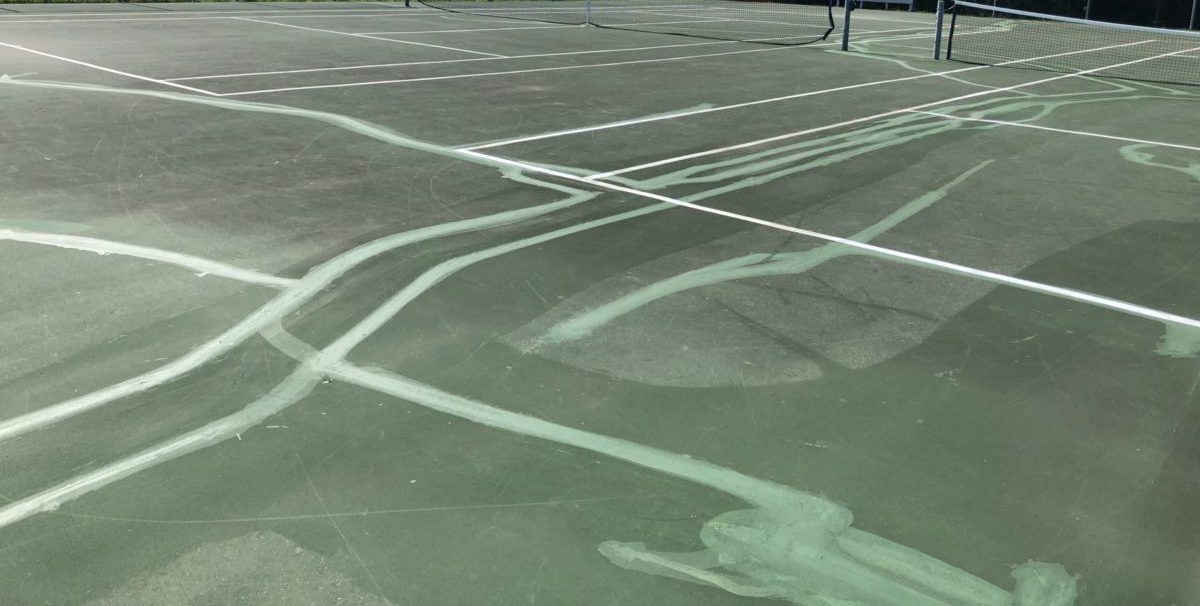
Unstable posts, damaged cables, and improvised props are a safety problem. Stop using that setup, report it to the facility, and move to another court if one is free.
Are Junior Tennis Nets Always 36 Inches High?

For ITF 10-and-under red and orange courts, the permitted center height can be lower than the full-size standard.
| Court format | Permitted center height | ITF metric range |
|---|---|---|
| Full-size regulation court | 36 in | 0.914 m |
| Red court | 31.5 to 33 in | 0.800 to 0.838 m |
| Orange court | 31.5 to 36 in | 0.800 to 0.914 m |
A red-court net at 32 inches in the center is within the ITF's permitted red-court range. Under USTA's defined Red Ball Tennis format, though, the net center is 33 inches on a 36-foot court. USTA Orange Ball Tennis specifies 36 inches at the center on a 60-foot court.
Green-ball play uses a full-size court in the cited ITF framework. For a junior program or event, identify its red, orange, or full-size category and follow the event's specification. More detail on those stages is in the junior tennis ball and court formats guide.