
For most recreational pairs starting in one-up/one-back, the default is a baseline player and a net partner who move together as the shot develops. Two players guarding permanent left and right halves is the wrong model. When a wide ball, poach or lob changes the roles, cover the most dangerous reachable reply. If nobody is sure who owns a side of the court, call a switch.
Where should all four players stand before a doubles point?

A conventional doubles setup places one player near the baseline and one nearer the net on each team. The four players have different responsibilities, and those responsibilities explain their starting positions.
| Player | Common starting area | Main thing to watch | First responsibility |
|---|---|---|---|
| Server | Behind the baseline, on the correct serving side | Receiver and intended serve | Deliver the serve and prepare for the return |
| Server's partner | Service box, often shading toward the middle | Receiver's racket and return direction | Threaten a reachable return and cover a lane |
| Receiver | Diagonally opposite the server, prepared to receive | Serve direction and opposing net player | Return the serve and recover for the next ball |
| Receiver's partner | Around the service-line area on their side | Opposing net player and return quality | Support the returner and react to the next shot |
These are starting references. The doubles alleys are the narrow strips outside the singles sidelines, and the service line marks the back of the service boxes.
On a deuce-side point, the server serves from the right half of their end toward the diagonally opposite service box. On the ad side, the serve comes from the left half.
The receiving pair keeps its chosen deuce- and ad-court receiving assignments throughout the set; once the serve is returned, either partner may play the next ball.
The ITF's 2026 Rules of Tennis, Rule 26 Case 5, permits the server's partner and receiver's partner to stand anywhere on their own side of the net, subject to hindrance rules. The USTA doubles rules cover serving and receiving order.
Where the net player stands is a tactical choice. Shading toward the middle of the service box brings some returns within reach. Standing a little deeper gives you reaction room against sharper angles and lobs.
How should the returning team move after the return?
The returner's next move depends on the quality of the return and what the opposing net player can reach. On a deep crosscourt return that gets past the net player, the returner recovers toward the open side of the baseline and the partner can step forward in balance. If the return floats high or lands short toward the serving team's net player, the receiving partner holds near the service line or backs off a step, ready for an attacking volley. The returner gets set for the next ball.
How do you move together as the ball changes sides?
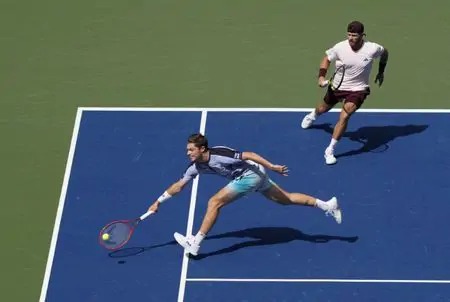
Doubles positioning changes with the threat each shot creates. If your partner is pulled wide, where you stand depends on the opponent's next available angle, your partner's route back and whether the ball gave you an attacking chance.
The LTA's doubles tactics guidance splits play into attacking, neutral and defensive situations.
| State | What you see | Net player's adjustment | Back player's adjustment |
|---|---|---|---|
| Attacking | Opponent has a difficult reply or gives up a short ball | Move into a position where you can intercept, and leave your partner a clear lane | Advance if the next shot and coverage allow it |
| Neutral | Both teams can sustain the rally | Shade toward the likely reply and keep reaction space | Recover toward the open side of the baseline |
| Defending | Opponent can attack a weak ball, deep shot or lob | Allow more depth and prepare to recover | Cover dangerous deep or open space; going two-back for a moment can help |
Watch the opponent as they prepare to hit. Racket preparation and ball position hint at direction, and your partner's location shows which space the team already covers.
Suppose a wide groundstroke drags the back player toward the doubles alley. The front player can shade toward the middle to discourage an easy central reply, but the opponent can still hit behind the front player or down the line, and that limits how far to shift. Find the side that is now unguarded and make one coordinated shift with your partner.
A short ball creates a different opportunity. The back player comes forward, and the net partner tightens up so the approaching player has a clear path to the ball. If the opponents drive the ball deep or lift it over the front player, the team backs off.
Where should the net player stand, and when should you poach?
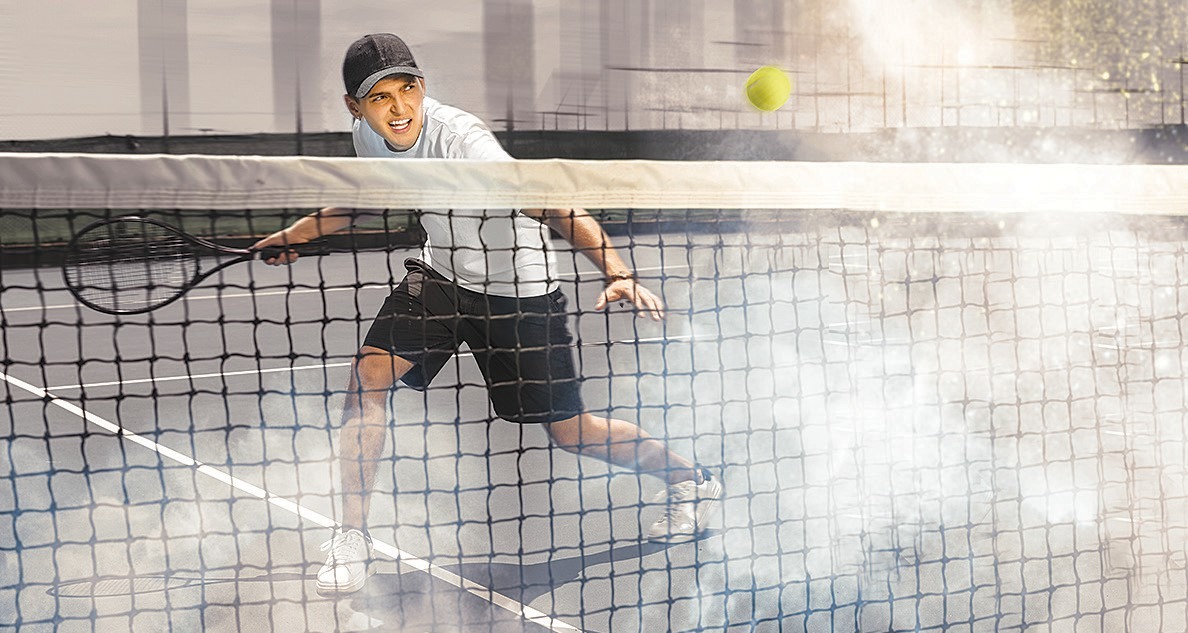
The serving team's net partner usually starts near the middle of the service box with room to react. A poach is when the net player crosses toward the middle to intercept a return headed for the baseline partner. It leaves open space that your partner must be able to cover.
Standing close to the alley protects against some down-the-line returns but gives up central interception chances. Moving toward the middle pressures crosscourt returns but exposes the line. Crowding the net reduces your time to handle sharp angles and lobs.
The Tennis.com net-positioning advice also uses the middle of the service box as its reference point.
Knowing where to stand doesn't settle the decision to cross. Some players volley well but hesitate to go. One recreational league player described that hesitation in this original post.
So I started playing in a ~3.5 level doubles league about 5-6 months ago. I volley/finish well at the net but what I'm not happy with is how often I poach. In my mind I feel I should be poaching much more often and aggressively. But objectively what seems to be holding me back are a few things: 1. I seem to have hesitation to really extend myself significantly past the center mark to poach. So there are a handful of poaching opportunities I miss. 2. I may be standing a bit too close to the net which reducing my time and the angle I need to reach the ball and poach effectively.
The player names two causes: reluctance to cross the center mark, and standing too close to the net, which cuts reaction time. Both come down to one question. Which returns can you reach while your partner still covers the side you leave?
- Poach: Cross into the return's path when you can reach the ball and your partner knows the coverage is changing.
- Hold: Keep your lane when the opponent's line pass, pace or lob threat makes crossing a bad idea.
- Show and recover: Make a brief move toward the middle to change the opponent's expectation, then return to protect the line when that is the plan.
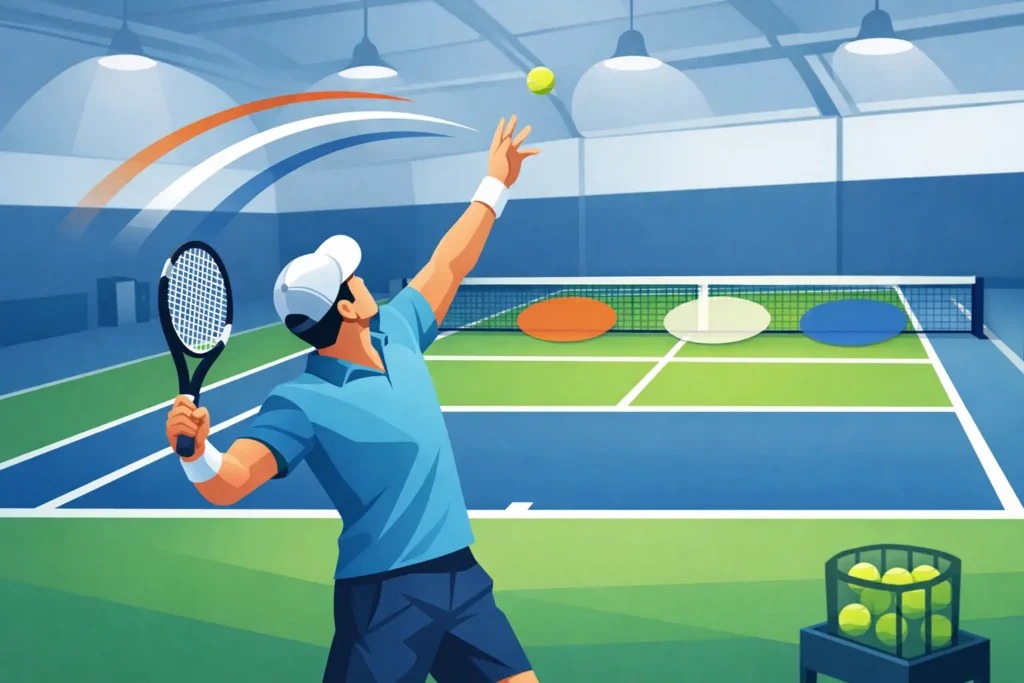
A move that starts too late puts you in your partner's way without producing an interception. When you agree on a coverage pattern, your baseline partner can anticipate the cross.
What should you do after a missed poach or a crossed-court interception?
After a net player crosses and misses, the next move depends on where both players actually stand. A full cross can leave two players in one lane. A small step lets the front player get back to the starting position.
A beginner described a point that raised exactly this question.
I'm a beginner level player and was playing doubles .. My partner served. I was stood on the service line. (or maybe my partner was returning and I was on the service line. I don't recall). But I was on the service line to start. And During the rally I was on the RHS and around the service line. A ball came towards me, I tried to intercept it, couldn't reach it, and my partner behind me got it. And we won the point. A coach standing on the side said that I should have called to say I was going for it.
In the same post, the player says the coach objected to both teammates ending up on the right, which left the left side exposed. The player thought the back partner could have covered more space without moving as far across. The post doesn't say who was serving or returning, so it can't show who should have moved.
Take a separate, hypothetical point and freeze it right after a missed interception. Right and left are as seen from your team's baseline, facing the opponents. The pair can recover in two ways:
- A recoverable reach: The front player steps toward the center, misses and still has room to get back safely. If the baseline player has held the original coverage, the front player resets before the next shot.
- A committed cross: The back player has been pulled right to retrieve a ball, and the front player has crossed right too, so both stand on the right. If the back player must stay right and the front player can safely move left, the front player takes the left lane while the back player holds the right. If the back player can recover left sooner, the front player stays right and the pair restores the lanes that way.
The back player sees the space behind the front player, so the back player calls the switch when assignments blur. On a fast interception there is little time for a detailed call.
How should you handle lobs, wide shots and emergency switches?
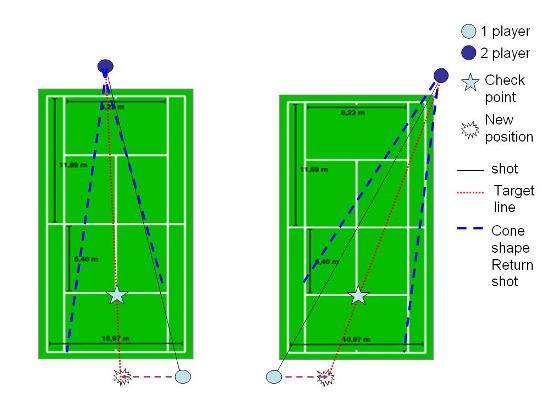
A lob changes the team's depth and who can reach the ball. If the front player can take an overhead safely, the other teammate covers the remaining space. If the ball goes beyond the front player's reach, the back player is better placed to retrieve it, and the front player adjusts to the opening that chase creates.

A wide ball creates a similar decision across the court. When the rear player moves toward the alley, the off-ball partner protects a likely central or crosscourt reply and keeps reaction room for a line shot or lob. Under sustained pressure, both players may defend deeper for a time. Assign the reachable ball first, then cover the lane the moving player leaves. Never cross through a teammate's swing, and don't chase an overhead you can't reach safely.
What should partners agree on and call during a doubles point?
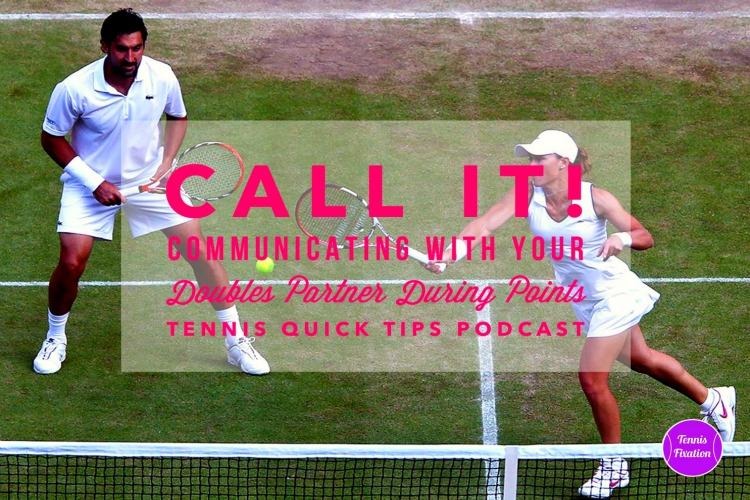
A communication plan starts before the serve. When you plan a poach, both of you should know who crosses and who covers the newly exposed side. New partners should settle on a small vocabulary and make sure they interpret it the same way.
Two cues are enough to start:
- “Switch”: The players exchange court-side responsibilities after a substantial cross.
- “Mine”: One player claims an ambiguous ball that either teammate might otherwise attempt.
If you can't reach an unexpected ball, use a short help call. These are team conventions, so agree on what each call requires.
Timing matters. A quick net interception leaves no time to announce a plan. A slower lob or a ball hanging between you gives you time to call it out loud. Experienced pairs can coordinate familiar movements silently, while new partners need to agree on the pattern beforehand.

Say the net player agrees to cross on a particular return while the server covers the line. Later in the point, a lob drops between them. One of them calls “Mine” and takes it, and the other stays clear. Each player has a defined job, and two rackets never enter the same space.
When should you change the formation or play more conservatively?
One-up/one-back is a good starting arrangement. Serve quality, opponent pressure, your mobility and the shots you have can make another formation a better fit.
| Formation | Useful situation | Main vulnerability or trade-off |
|---|---|---|
| One-up/one-back | One player pressures the net while the other covers deeper replies | The net player is exposed to a weak return or an effective lob |
| Two-up | A strong approach or attacking opportunity lets both players pressure the net | Deep lobs and passing angles demand quick reactions |
| Two-back | The pair is defending a deep ball, difficult return or sustained pressure | Less net pressure and exposure to short balls |
Against a returner who keeps attacking the line, the serving team's net player can start slightly deeper or nearer that threat. Effective lobs give the net player a reason to leave more recovery room.
The I-formation and Australian formation use special serving positions and coordinated calls. Their mechanics need an article of their own.
How can you practice doubles positioning and tell if it is improving?
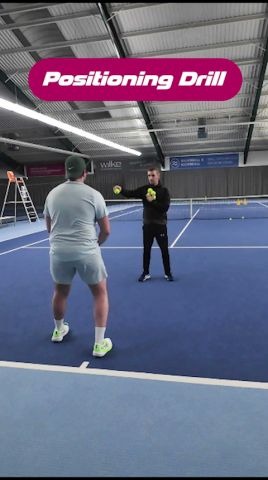
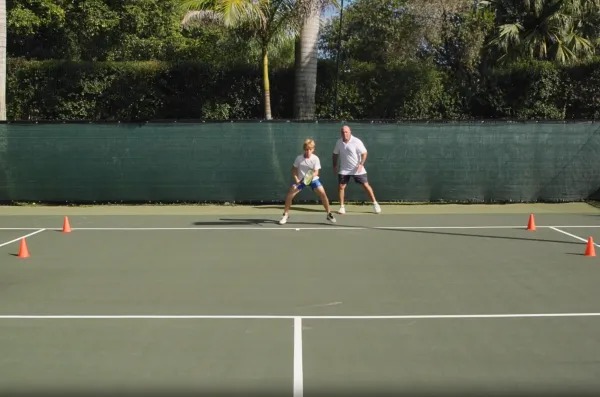
Work on one positioning problem at a time, and make sure both partners can see what happened to court coverage. Rotate positions so each of you plays front and back.
- Rotate the four roles. Start with a server, serving partner, returner and receiving partner. Change roles between short sequences.
- Rehearse a wide ball. Play or feed a shot that pulls the back player toward an alley. Let the pair react, then stop at the next natural pause.
- Add a recovery problem. In a controlled sequence, create a missed net reach or a lob. Let the team choose a reset or a switch based on where everyone ends up.
- Review the visible outcome. Note any open lane, unclaimed shared ball, interference between partners or call that sent someone the wrong way.
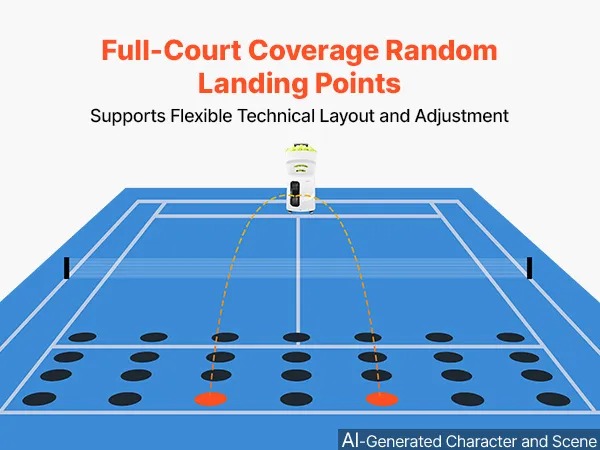
After a short practice set, each player writes down one uncovered lane or missed call. Repeat that situation once with a chosen adjustment, then check whether both players can name the next responsibility.