
To start playing tennis, bring a usable racket and balls to a court with a partner or beginner class, rally gently, then start any counted standard point with a legal serve into the diagonal service box. If neither player can serve or return reliably yet, use cooperative feeds or slower balls as practice rather than calling that an official point. After the session, choose one skill (serving, returning, or scoring) to practice next.
Should you start with a friend, a group clinic, or a private lesson?
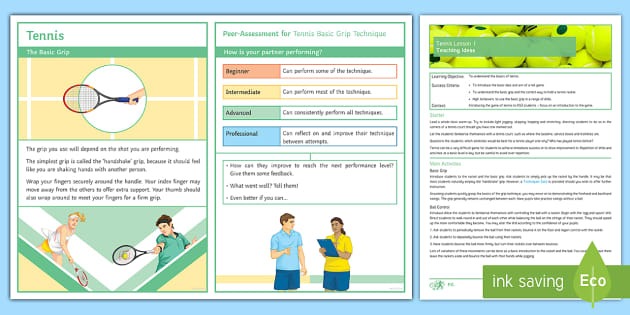
Meet a friend at a court and start hitting. If you need a partner or want instruction, try a group clinic or a private lesson.
| Starting option | Best fit | What to consider |
|---|---|---|
| Practice with a friend | You have another willing player and somewhere to hit. | Flexible pace, with limited technical feedback. |
| Group beginner clinic | You want instruction and people to practice alongside. | Confirm that the group welcomes people who have never played. |
| Private lesson | You want an instructor to focus on your individual difficulties. | Cost varies. One lesson covers several new movements at once. |
Class labels matter. A returning player already exchanges balls comfortably, while a first-timer is still learning where to stand. Never held a racket? Pick an absolute-beginner group.
You need four things:
- A tennis racket. A borrowed one is fine if it feels comfortable in your hand.
- Tennis balls. Ordinary balls work for standard play. Slower balls suit introductory practice.
- Court-appropriate footwear. Match your shoes to the surface and the facility's rules.
- Water and court access. Know where you're going and what the venue allows.
The USTA Find a Court directory helps you locate facilities in the United States. Use it to find a court, then check hours, fees, access rules, and equipment.
In Florida, USTA Florida's Love to Learn program is one example of organized instruction for adult beginners.
Where do you stand on a tennis court, and which lines matter?
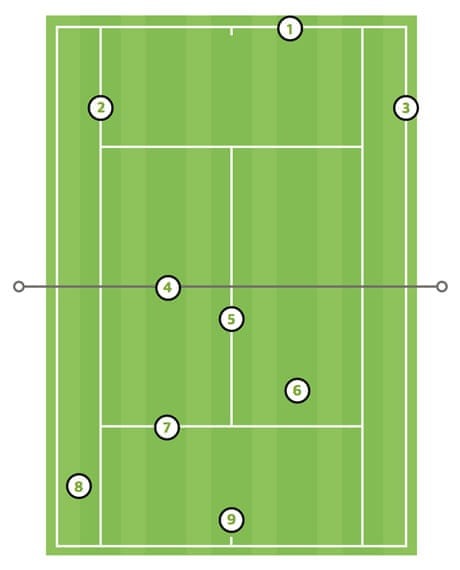
In singles, you and your opponent stand on opposite sides of the net. The smaller rectangles near the net are service boxes, and you serve into the one diagonally across.
| Court feature | What it means for your first game |
|---|---|
| Baseline | Back boundary of the court; the server stands behind it. |
| Net | Separates the players and must be crossed by a legal shot. |
| Service line | Forms the far edge of the service boxes. |
| Center service line | Divides the service area into left and right boxes. |
| Singles sidelines | Inner side boundaries used for singles play. |
| Doubles alleys | Strips beyond the singles sidelines used in doubles. |
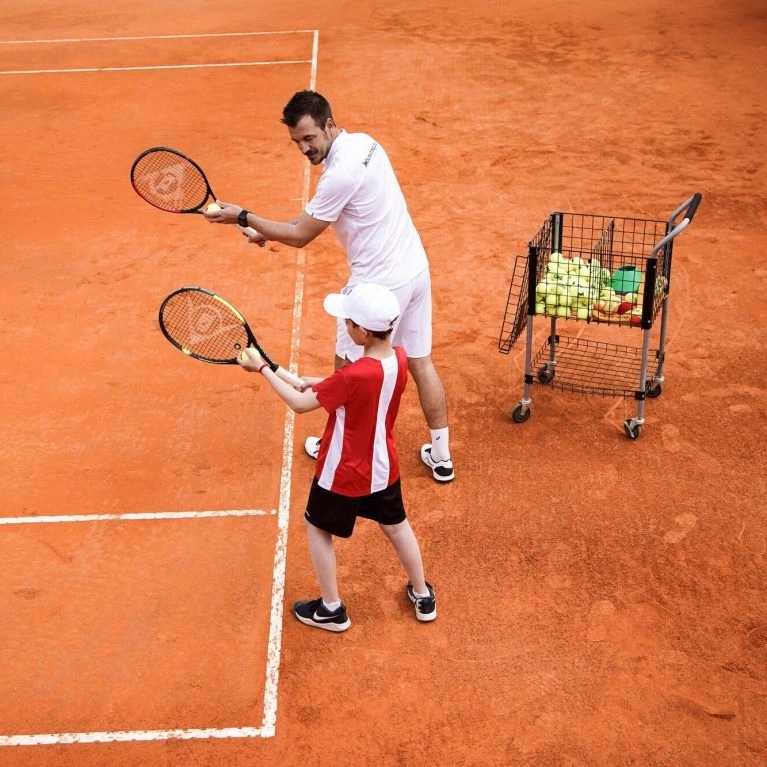
Stand behind the right half of a baseline, facing the net. Your diagonal target is the box on the opposite side. From the left half, the target switches to the other box.
After a legal serve has been returned, a groundstroke can land anywhere inside the singles court. The service boxes define the serve's target; the baseline and singles sidelines define the rally area.
A ball that touches a boundary line is in.
Can two complete beginners start by rallying?
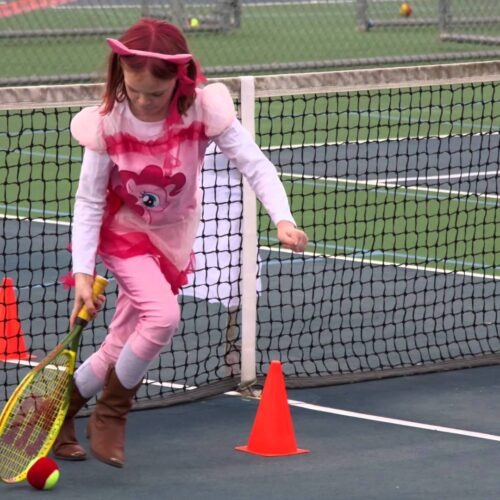
Yes. Two first-time players can start with a cooperative rally: send easy balls back and forth. Nobody needs to win the exchange. The goal is to make contact and give the other person a ball they can return.
A short-court exchange is easier than a full-baseline rally. One player gently feeds a ball to begin. Slower, low-compression balls and reduced playing areas also fit within the ITF Tennis Play and Stay approach.
A practice rally and a counted point start differently.
| Cooperative practice | Standard counted point |
|---|---|
| A player gently feeds or drops a ball to start. | The point begins with a legal serve. |
| The aim is to keep the ball going. | Players attempt legal returns and score the point when it ends. |
| Players can agree on a shorter distance or slower ball. | Tennis rules set the legal serve and the court boundaries. |

For a first session of 20 to 30 minutes, try this:
- Start close. Stand near enough to exchange easy balls without swinging hard.
- Rally cooperatively. One player feeds gently, the other returns, and you both try to keep it going for a few hits. Switch who starts.
- Play a standard point when you're ready. Serve the standard way, described below, and play the point out.
One Reddit beginner describes a first day with a friend:
Asked my buddy (another 31 year old) if he would be interested in trying it out and he agreed immediately as it sounded fun. We grabbed two cheap Wilson rackets from Walmart (because why break the bank if we're just trying it out?) and a tube of balls and went straight to the public park courts. We spent an hour just hitting it back and forth, mostly hitting it far outside the line, but we slowly got some idea of how to hit it in. My buddy found he has a decent serve for a complete novice, and I found out that I hit better backhand than forehand. Then we spent another hour playing actual sets against each other, we cleaned up our shots and figured out how to keep it in more consistently. I had an absolute blast and I think we'll be playing every so often just for fun and exercise.
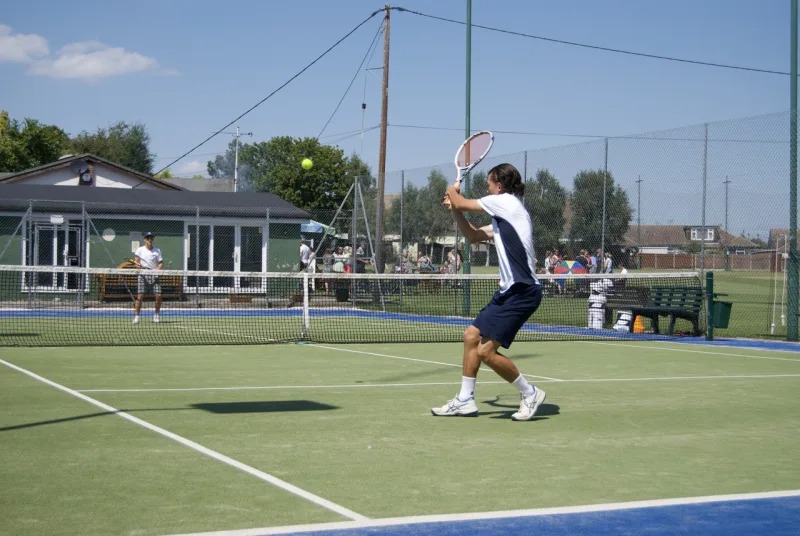
How do you start a legal tennis point?
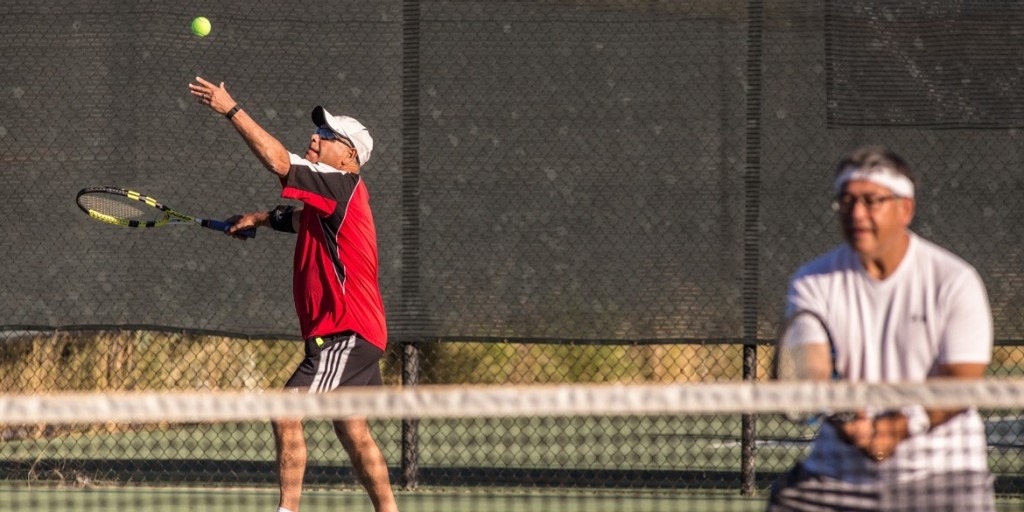
A standard point starts with a serve.
In match play, a toss decides who chooses to serve, receive, or pick the court end. One player serves the whole first game, and the receiver serves the next. In a standard set, players change ends after the first, third, and every later odd-numbered game.
Within a game, the server starts on the right side and alternates sides after each point.
To start a point:
- Take your position. Stand behind the baseline on the correct side for the point.
- Release and strike the ball. Make contact before it touches the court. An underhand serve is legal when it follows the service rules.
- Aim into the diagonal service box. The ball must clear the net and land in the correct service court.
- Play on. The receiver returns the ball after its bounce, and the rally proceeds.
What if the first serve misses?
A first fault gives the server another attempt. Two consecutive faults lose the point.
A first serve that lands beyond the correct box is a fault. If the second serve lands legally, the receiver returns it and the point continues. If the second serve is a fault too, the receiver wins the point.
A service let is different. When a serve touches the net and otherwise lands legally in the correct box, the serve is replayed. A first fault before a second-serve let still counts as a first fault.
These rules come from the ITF Rules of Tennis, including the sections on service, faults, lets, and the order of service.
What are the basic strokes you need first?

A forehand handles the ball on your racket-arm side, a backhand on the other side. A serve starts a point. A volley hits the ball before it bounces, often near the net. In your first exchanges, focus on sending a playable ball back across the net. Refine each stroke as your practice gets more consistent.
What makes you win or lose a point?

Once a serve starts a point, players return the ball across the net until one side fails to make a legal return or another point-ending rule applies.
Most beginner points end one of three ways:
- The ball lands out. If your opponent hits beyond the singles boundary without touching the line, you win the point.
- The ball fails to cross the net. If your opponent's return hits the net and doesn't cross legally, you win the point.
- The return comes too late. In standard tennis, a player must return the ball before its second bounce. If your opponent lets it bounce twice, you win the point.
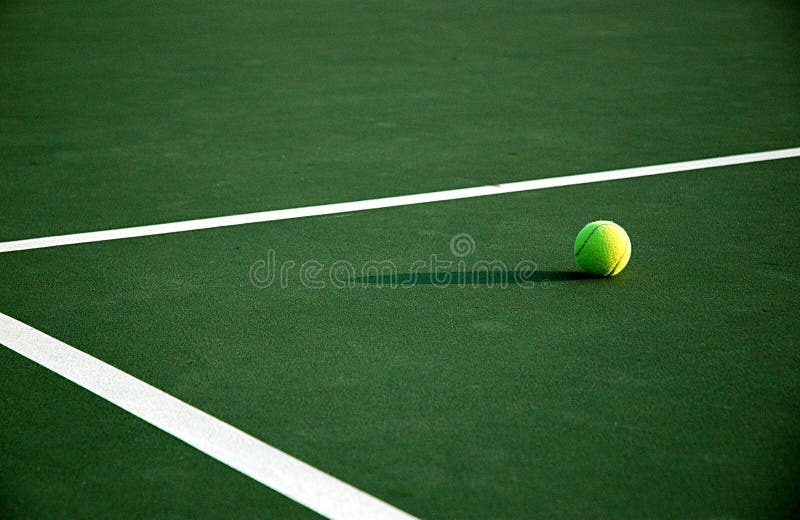
You serve legally, your opponent returns into your singles court, and your next shot hits the net. Your opponent wins the point.
If your opponent hits a groundstroke that lands entirely in the doubles alley during singles, it's out and you get the point.
Wheelchair tennis allows two bounces. The player must return the ball before the third.
How do you keep score in one tennis game?
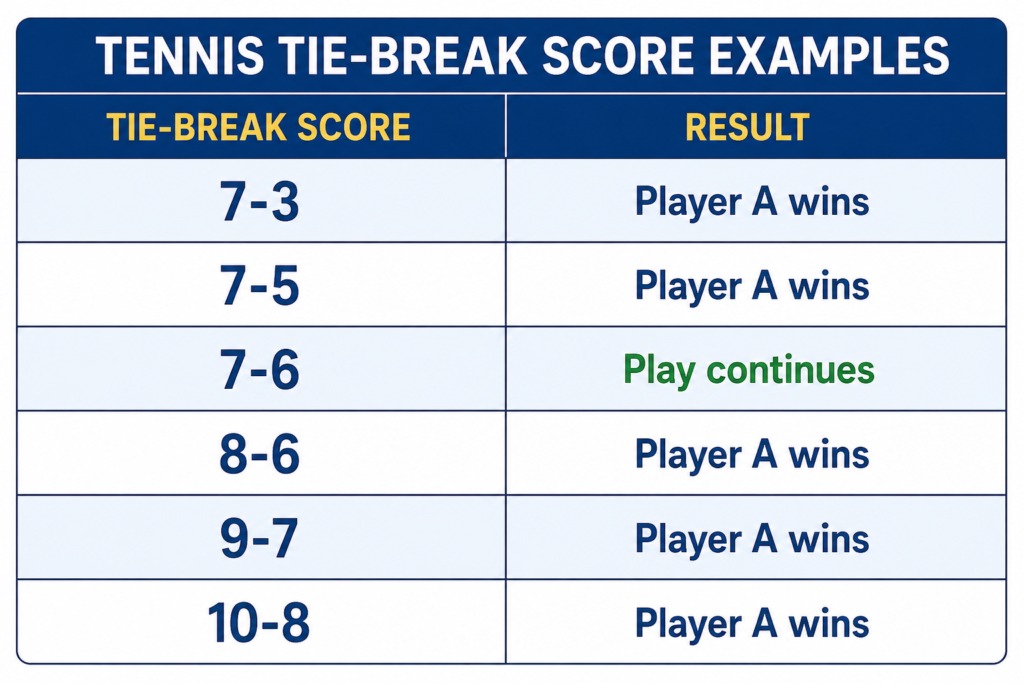
A standard game uses the calls love, 15, 30, and 40. Love means zero. The server's score is always announced first, even when the receiver wins the most recent point.
You win a game with at least four points and a two-point lead.
Here's one game, with the same player serving throughout:
| Point winner | Score call | What happened |
|---|---|---|
| Before the first point | Love-love | Neither player has scored. |
| Server | 15-love | Server wins the opening point. |
| Receiver | 15-all | Each player has one point. |
| Server | 30-15 | Server wins the next point. |
| Receiver | 30-all | Each player has two points. |
| Server | 40-30 | Server leads by one point. |
| Receiver | Deuce | Both players have reached 40. |
| Server | Advantage server | Server wins the point after deuce. |
| Server | Game server | Server wins again and takes the game. |
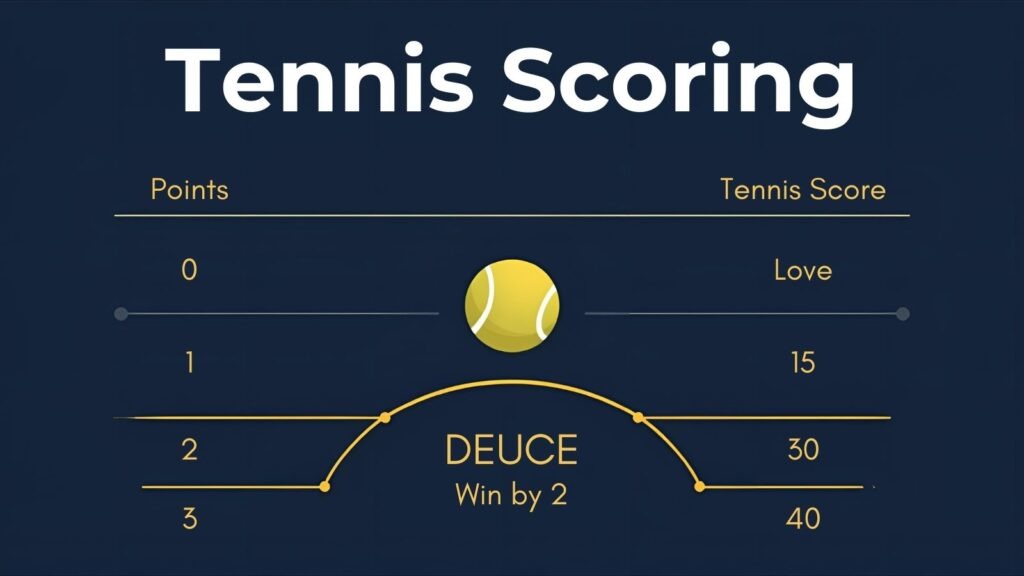
At deuce, a player must win two points in a row to take the game. If the player with advantage loses the next point, the score returns to deuce.
Games add up to sets, and sets decide a match. Some formats use no-ad scoring and other approved variations, so the table shows an ordinary advantage-scoring game. The USTA tennis scoring guide explains those formats.
To practice, read the table from top to bottom and say each call aloud.
What if you miss almost every ball?

If you keep missing, pick one contact problem and work on it. Concentrate on meeting the ball cleanly for the next few attempts and leave everything else alone.
Here's how one beginner felt after a first lesson:
I feel super stiff, slow, and kinda old not gonna lie. Like my body just doesn’t move how it’s supposed to. Also didn’t realize how hard it is just to hit a clean ball. Respect to anyone who makes this look easy.
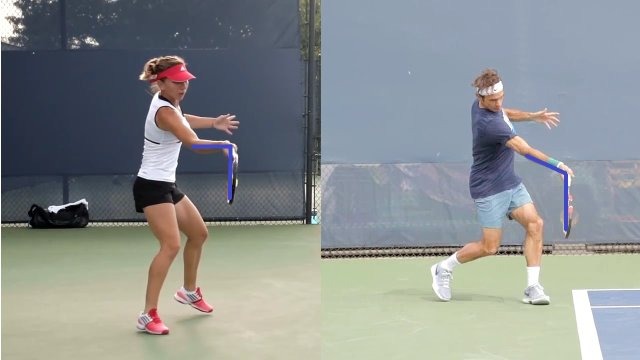
A beginner thinks about several things at once: where the ball is going, when to swing, how the racket feels, and whether the shot will clear the net. Working on one thing shows you what changed.
If your returns keep flying past the baseline, watch whether the racket meets the ball cleanly before you add another cue.
With an instructor, ask for feedback on that one difficulty.
When are you ready to play a real tennis game?
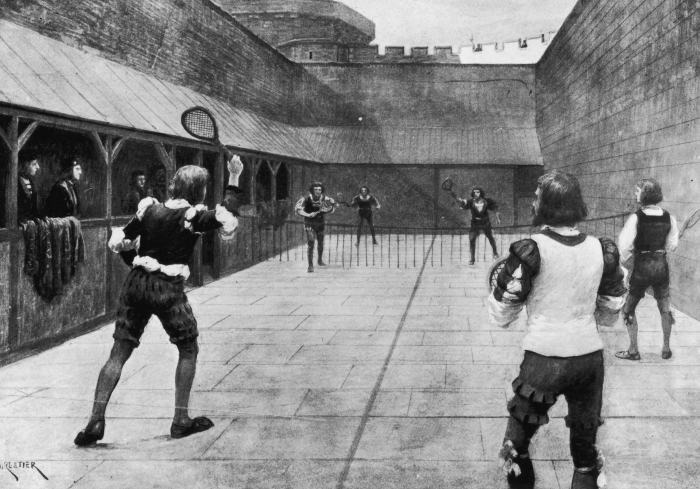
For a friendly game, readiness is practical: can you start a legal point, recognize when it ends, and keep basic score? You can try a game while your strokes are still inconsistent.
One adult beginner, four sessions in, asked when a newcomer can realistically play a match:
M-40 here. I started learning tennis and have done 4 sessions now. I’ve been into various sports like football, cricket since childhood up to early 20s. I really like what I’ve learned in the last 4 sessions but want to keep my expectations realistic. By when do you think one can actually play a match (beginner/ amateur level) at this age. I know each one’s progress can be different so it would be good to get your general perspective.
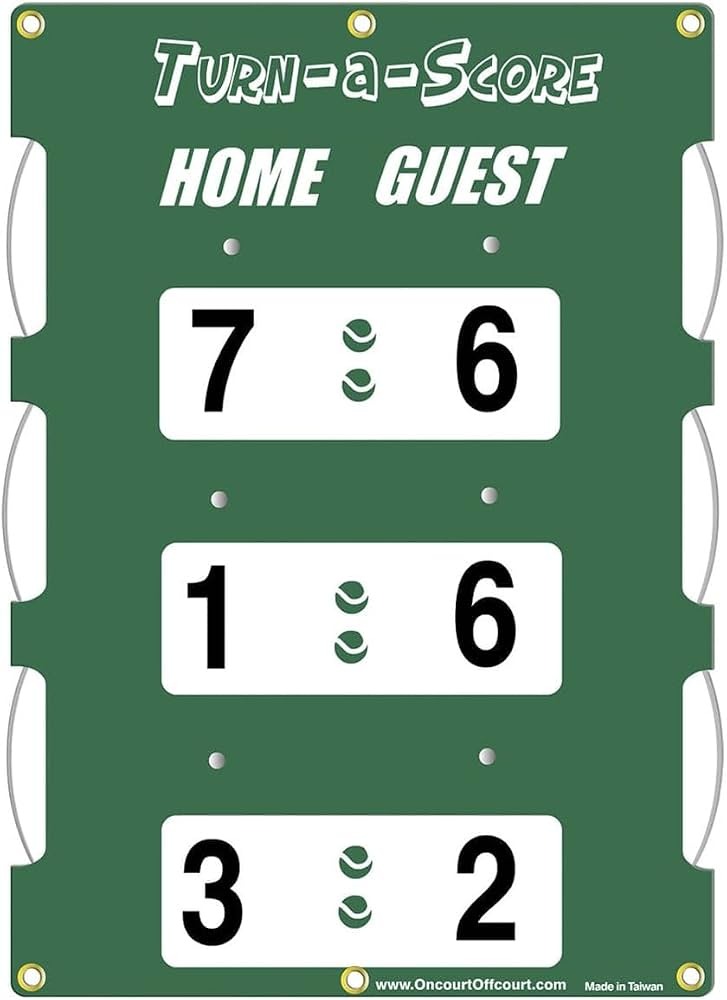
Before a friendly scored game, check three things:
- Starting a point. Can you attempt a legal serve into the correct diagonal service box?
- Recognizing the result. Can you tell when a ball is out, a return has failed, or a point has ended?
- Keeping score. Can you call love, 15, 30, 40, and deuce, server first?
If both of you pass, play an informal game with ordinary scoring. If not, keep rallying cooperatively and try again later.
What should you do after your first tennis session?
Pick the link that matches what went wrong:
- Starting the point was difficult. Follow the beginner tennis serving guide for a closer look at the stroke.
- Returning the ball was difficult. Use the forehand introduction or beginner tennis drills to focus on controlled returns.
- You lost track of the score. Continue with the complete tennis scoring guide for more examples and formats.
- You need someone to play with. Read about ways to find a tennis partner or a first-timer clinic.